
- Release Year: 2013
- Platforms: Windows
- Publisher: Mediascape Co. Ltd., Team Shanghai Alice
- Developer: Team Shanghai Alice
- Genre: Action
- Perspective: Top-down
- Game Mode: Single-player
- Gameplay: Bullet hell, Danmaku, Shooter, Spell cards, Vertical scrolling
- Setting: Fantasy
- Average Score: 99/100
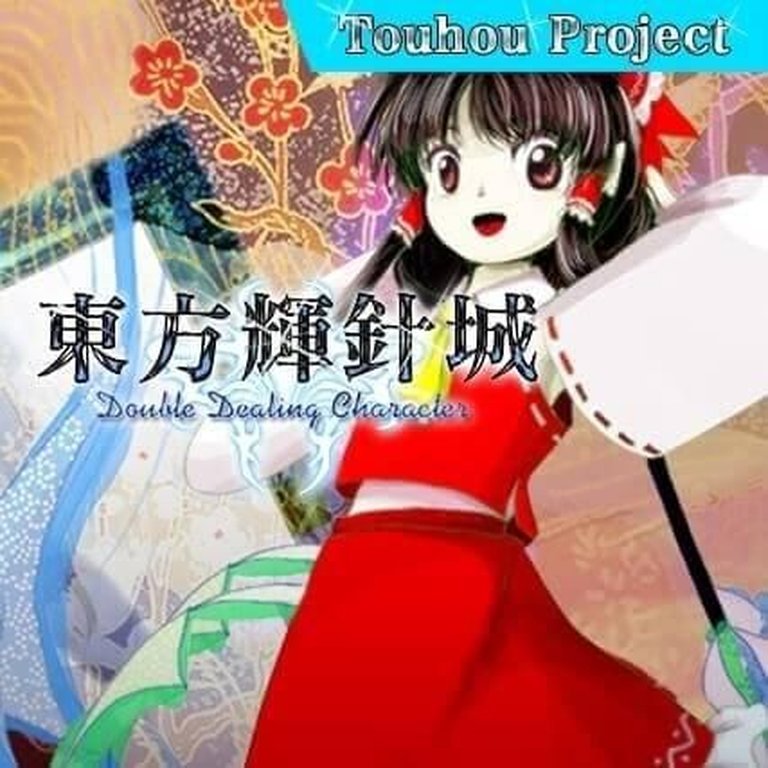
Description
Double Dealing Character is the 14th official game in the Touhou series, a 2D vertical-scrolling bullet hell shooter where players choose from three characters—Reimu Hakurei, Marisa Kirisame, or Sakuya Izayoi—to investigate a mysterious rebellion of Youkai and the sudden appearance of living tsukumogami. The game features classic danmaku gameplay, with players dodging intricate bullet patterns, collecting power-ups, and battling bosses, while introducing a refined auto-collection system that rewards strategic item gathering with bonus points and resources.
Gameplay Videos
東方輝針城 〜 Double Dealing Character. Patches & Updates
東方輝針城 〜 Double Dealing Character. Guides & Walkthroughs
東方輝針城 〜 Double Dealing Character. Reviews & Reception
raijin.gg (99/100): A niche favorite with a deeply engaging experience.
東方輝針城 〜 Double Dealing Character: A Masterclass in Bullet Hell Evolution
Introduction
In the pantheon of bullet hell shooters, few franchises command the reverence and devotion of Touhou Project. With its fourteenth mainline entry, Double Dealing Character (DDC), creator ZUN (Jun’ya Ōta) delivered a game that is both a refinement of the series’ core mechanics and a bold step into new thematic territory. Released in 2013, DDC stands as a pivotal moment in the Touhou saga, blending accessibility with depth, and narrative intrigue with mechanical precision. This review will dissect DDC’s development, narrative, gameplay, and legacy, arguing that it is not only one of the finest entries in the Touhou series but also a landmark title in the bullet hell genre.
Development History & Context
The Studio and the Vision
Double Dealing Character was developed by Team Shanghai Alice, the one-man studio helmed by ZUN. Since the series’ transition to Windows with Embodiment of Scarlet Devil (2002), ZUN has been the sole developer, composer, and designer behind each mainline Touhou game. This singular creative vision has allowed the series to maintain a consistent identity while evolving incrementally with each installment.
DDC was announced on ZUN’s blog on May 11, 2013, with a playable demo released at Reitaisai 10 later that month. The full game debuted at Comiket 84 on August 12, 2013. Notably, DDC was the first Touhou game to be officially distributed digitally via Playism, marking a significant shift from the series’ traditional physical CD releases. This digital release also facilitated its international debut in 2015, making it the first Touhou game officially available outside Japan.
Technological Constraints and Innovations
DDC was developed with a focus on simplicity and accessibility. ZUN described it as a “2000’s neo-retro Danmaku shooter,” stripping away the more complex mechanics of recent entries like Ten Desires (2011) to return to the straightforward, high-intensity gameplay of earlier titles such as Embodiment of Scarlet Devil and Subterranean Animism.
One of the most significant technical upgrades in DDC was the doubling of the resolution from the series’ traditional 640×480 to 1280×960. While this change was primarily aesthetic—retaining the same dot resolution but upscaling the UI and effects—it represented a modernizing step for the franchise. ZUN also emphasized that the game was designed to be resolution-independent, allowing players with higher-end hardware to enjoy the enhanced visuals.
The Gaming Landscape of 2013
The bullet hell genre in 2013 was a niche but vibrant space. While arcade shooters had waned in mainstream popularity, indie developers and doujin circles kept the genre alive. Touhou had long been a cornerstone of this community, and DDC arrived at a time when the series’ influence was expanding beyond Japan. The rise of digital distribution platforms like Steam and Playism provided new avenues for niche games to reach global audiences, and DDC was perfectly positioned to capitalize on this shift.
Narrative & Thematic Deep Dive
Plot Overview
DDC’s story unfolds in Gensokyo, the fantastical setting of the Touhou series, where humans and youkai (supernatural creatures) coexist. The game begins with an unusual phenomenon: youkai are rebelling, and tsukumogami (animated objects) are appearing in droves. The protagonists—Reimu Hakurei, Marisa Kirisame, and Sakuya Izayoi—discover that their own weapons are acting strangely, gaining sentience and turning against them. As they investigate, they uncover a conspiracy orchestrated by Seija Kijin, an amanojaku (a type of youkai) with the power of reversal, and Shinmyoumaru Sukuna, a kobito (a tiny, inch-high person) wielding the Miracle Mallet, a tool capable of granting wishes.
The narrative is divided into two routes for each character (Type A and Type B), with distinct endings that explore themes of power, deception, and the consequences of ambition. The story’s tone is darker than many previous Touhou entries, delving into themes of social upheaval and the corrupting influence of power.
Character Analysis
-
Reimu Hakurei: The shrine maiden of Hakurei Shrine, Reimu is the series’ perennial protagonist. In DDC, her Type A route sees her wielding a sentient purification rod, while her Type B route has her using her traditional needles. Her storylines explore her role as a mediator between humans and youkai, with Type A leaning into her more aggressive side.
-
Marisa Kirisame: The ordinary magician, Marisa’s Type A route features her using a flamethrower-like weapon, while Type B has her employing missiles that drain spiritual energy. Her narratives often highlight her cunning and adaptability, with Type B’s ending hinting at her potential for moral ambiguity.
-
Sakuya Izayoi: The maid of the Scarlet Devil Mansion, Sakuya returns as a playable character for the first time since Phantasmagoria of Flower View (2005). Her Type A route involves wielding a bewitched sword, while Type B focuses on her time-manipulating knives. Sakuya’s storylines are the most thematically complex, with Type A hinting at connections to the underworld and Type B exploring her loyalty to Remilia Scarlet.
-
Seija Kijin: The primary antagonist, Seija is an amanojaku who manipulates Shinmyoumaru into using the Miracle Mallet to overthrow Gensokyo’s social order. Her powers of reversal allow her to flip the strengths and weaknesses of her opponents, making her a formidable foe both narratively and mechanically.
-
Shinmyoumaru Sukuna: The final boss, Shinmyoumaru is a kobito who wields the Miracle Mallet. Deceived by Seija, she seeks to create a world where the weak can dominate the strong. Her character design and backstory draw from Japanese folklore, particularly the tale of the Inch-High Samurai.
Themes and Symbolism
DDC’s narrative is rich with themes of reversal and duality, reflected in its title (Double Dealing Character) and the abilities of its antagonists. Seija’s power to reverse fortunes mirrors the game’s exploration of social hierarchies and the consequences of upending them. The Miracle Mallet, a tool that grants wishes but at a cost, serves as a metaphor for the corrupting nature of power.
The game’s stages and bosses are steeped in Japanese folklore and mythology. For example:
– Stage 1 (Misty Lake): Features Wakasagihime, a mermaid influenced by the mallet’s power, reflecting themes of transformation and deception.
– Stage 2 (Canal of Willows): Introduces Sekibanki, a rokurokubi (a youkai with a detachable head), symbolizing the fragmentation of identity.
– Stage 3 (Bamboo Forest of the Lost): Kagerou Imaizumi, a werewolf, represents the struggle between instinct and control.
– Stage 4 (Above Gensokyo): The Tsukumo sisters, Benben and Yatsuhashi, are tsukumogami of musical instruments, embodying the conflict between artifice and authenticity.
– Stage 5 (Shining Needle Castle): Seija Kijin’s reversal powers challenge the player’s expectations, both in narrative and gameplay.
– Stage 6 (Shining Needle Castle Tower): Shinmyoumaru’s ambition and naivety culminate in a battle that questions the nature of power and responsibility.
The game’s endings vary depending on the character and route chosen, with some offering hopeful resolutions and others descending into moral ambiguity. Sakuya’s Type A ending, in particular, hints at darker forces at play, suggesting that the events of DDC are part of a larger, more sinister narrative.
Gameplay Mechanics & Systems
Core Gameplay Loop
At its heart, DDC is a vertical-scrolling bullet hell shooter, adhering to the Touhou series’ signature danmaku (bullet curtain) gameplay. Players navigate through six stages, each culminating in a boss battle. The game’s difficulty is divided into four modes: Easy, Normal, Hard, and Lunatic, with an unlockable Extra Stage for those who complete the game without continuing.
The core gameplay loop involves:
1. Movement and Shooting: Players control their chosen character, moving freely across the screen while shooting enemies and dodging bullets.
2. Item Collection: Defeating enemies and grazing bullets (flying close to them without getting hit) drops items that can be collected for points, power-ups, or bombs.
3. Bomb Usage: Players can use bombs (spell cards) to clear the screen of bullets or deal massive damage to bosses.
4. Boss Battles: Each stage ends with a boss fight, divided into non-spell and spell card phases. Spell cards are pre-defined attack patterns that players must survive to progress.
Innovations and Mechanics
DDC introduces several refinements to the Touhou formula:
-
Point of Collection (PoC) System:
- The most significant innovation in DDC is the PoC system, which rewards players for collecting large numbers of items at once. When players auto-collect items (by moving above the Item Get Border Line or using a bomb), they receive bonus points and resources based on the number of items collected:
- 20-59 items: Awards a bomb piece and a score multiplier (0.5x to 1.6x).
- 60+ items: Awards a life piece and a 2.0x score multiplier.
- Every fifth bomb piece is replaced with a life piece, encouraging strategic bomb usage.
- The most significant innovation in DDC is the PoC system, which rewards players for collecting large numbers of items at once. When players auto-collect items (by moving above the Item Get Border Line or using a bomb), they receive bonus points and resources based on the number of items collected:
-
Character-Specific Routes:
- Each character’s Type A and Type B routes not only alter their shot types but also change the mid-bosses and bosses in Stage 4. For example:
- Reimu A: Faces Yatsuhashi Tsukumo as the Stage 4 boss.
- Reimu B: Faces Benben Tsukumo as the Stage 4 boss.
- This adds replayability and encourages players to experiment with different characters and routes.
- Each character’s Type A and Type B routes not only alter their shot types but also change the mid-bosses and bosses in Stage 4. For example:
-
Simplified Resource Management:
- Lives and bombs are gained incrementally through fragments, with three life fragments granting an extra life and eight bomb fragments granting an extra bomb. This system is more forgiving than previous entries, where resources were often scarcer.
-
Spell Practice Mode:
- Returning from Ten Desires, Spell Practice mode allows players to practice individual spell cards, making it easier to master the game’s most challenging patterns.
Character and Shot Type Analysis
DDC features three playable characters, each with two shot types:
-
Reimu Hakurei:
- Type A (Greedy Oonusa):
- Focus Shot: A homing amulet that locks onto enemies.
- Bomb: “Merciless Purification Rod,” which deals massive damage in a short range.
- Strengths: High DPS, excellent stage control, small hitbox.
- Weaknesses: Bomb’s slow movement can hinder PoC collection.
- Type B (Persuasion Needle):
- Focus Shot: Needles that deal consistent damage.
- Bomb: “Fantasy Seal,” a homing attack.
- Strengths: Balanced, reliable.
- Weaknesses: Lower DPS compared to other shot types.
- Type A (Greedy Oonusa):
-
Marisa Kirisame:
- Type A (Eight Trigram Fire):
- Focus Shot: A short-range flamethrower.
- Bomb: “Dark Spark,” a powerful but short-range attack.
- Strengths: High point-blank damage.
- Weaknesses: Limited range, struggles in certain boss fights.
- Type B (Magic Drain Missile):
- Focus Shot: Missiles that drain spiritual energy, converting bullets into power items.
- Bomb: “Magic Absorber,” which turns bullets into P items.
- Strengths: Excellent for resource management, particularly in the Extra Stage.
- Weaknesses: Bomb’s long duration can be problematic in tight patterns.
- Type A (Eight Trigram Fire):
-
Sakuya Izayoi:
- Type A (Bewitched Sword ‘Silver Blade’):
- Focus Shot: Homing knives that explode after sticking to enemies.
- Bomb: “Another Dimension of Silver,” a barrier that blocks one hit and removes bullets.
- Strengths: High DPS, knives slow down bosses, excellent for scoring.
- Weaknesses: Requires precise timing for maximum effectiveness.
- Type B (Smart Robber):
- Focus Shot: A forward-focused attack that generates more point items.
- Bomb: “Dual Vanish,” which stops time and removes bullets.
- Strengths: Best for scoring, generates high point values.
- Weaknesses: Low DPS, bomb deals no damage.
- Type A (Bewitched Sword ‘Silver Blade’):
Difficulty and Accessibility
DDC is often regarded as one of the more accessible Touhou games, thanks to its simplified mechanics and forgiving resource management. However, it is by no means easy. The game’s difficulty curve is well-balanced, with Early stages serving as a gentle introduction and later stages (particularly Stage 5 and 6) ramping up the challenge significantly.
The PoC system adds a layer of strategic depth, rewarding players who can balance aggression (to collect items) with caution (to avoid getting hit). This system also makes bombing a tactical decision rather than a last resort, as bombing at the right moment can yield significant resources.
World-Building, Art & Sound
Setting and Atmosphere
DDC’s stages are a tour through Gensokyo’s most iconic and atmospheric locations:
– Stage 1 (Misty Lake): A serene but eerie lake, where the water’s surface reflects the gathering storm.
– Stage 2 (Canal of Willows): A haunted waterway lined with weeping willows, evoking a sense of melancholy.
– Stage 3 (Bamboo Forest of the Lost): A dense, labyrinthine forest where the full moon casts long shadows.
– Stage 4 (Above Gensokyo): A stormy sky where the Tsukumo sisters’ musical duel plays out.
– Stage 5 (Shining Needle Castle): A floating fortress turned upside-down by Seija’s powers.
– Stage 6 (Shining Needle Castle Tower): The heart of the conspiracy, where Shinmyoumaru’s ambition reaches its climax.
The game’s art style is a refinement of the series’ signature anime/manga aesthetic, with detailed character sprites and vibrant, otherworldly backgrounds. The higher resolution allows for more intricate visuals, though the core pixel-art style remains intact.
Visual Design
DDC’s visual design is a masterclass in bullet hell aesthetics. The bullet patterns are dense but readable, with distinct colors and shapes that help players distinguish between different types of attacks. The boss designs are particularly striking, with Seija Kijin’s reversal powers manifested in her asymmetrical, mirror-image attacks, and Shinmyoumaru’s tiny stature contrasting with the grandeur of her castle.
The game’s UI is clean and functional, with the PoC system’s bonuses clearly displayed to help players track their progress. The Item Get Border Line is a subtle but effective visual cue, encouraging players to position themselves strategically for maximum item collection.
Sound Design and Music
ZUN’s compositions have always been a highlight of the Touhou series, and DDC is no exception. The game’s soundtrack is a blend of traditional Japanese instrumentation and modern electronic beats, creating a sound that is both nostalgic and fresh.
Key tracks include:
– “Strange Fire Festival” (Title Theme): A haunting, rhythmic piece that sets the tone for the game’s eerie atmosphere.
– “Mermaid from the Uncharted Land” (Stage 1 Boss): A melancholic melody that reflects Wakasagihime’s tragic nature.
– “Reverse Ideology” (Stage 5 Boss): A chaotic, dissonant track that mirrors Seija’s reversal powers.
– “Little Princess” (Stage 6 Boss): A grand, orchestral piece that underscores Shinmyoumaru’s ambition.
The sound effects are crisp and impactful, with each bullet pattern having a distinct audio cue. The grazing sound, in particular, is satisfying and encourages players to take risks for higher scores.
Reception & Legacy
Critical and Commercial Reception
DDC was met with widespread acclaim from both critics and fans. It holds a 4.7/5 rating on MobyGames (based on player reviews) and was ranked as the 4th best Touhou game by Game Rant, which praised its challenging but rewarding gameplay.
The game’s digital release on Steam in 2019 further cemented its reputation, with over 14,000 units sold and a 98.52% positive review rating. Its accessibility and depth made it a favorite among both newcomers and veterans of the genre.
Influence and Legacy
DDC’s influence extends beyond its commercial success. Its PoC system has been praised as one of the most elegant scoring mechanics in the bullet hell genre, inspiring similar systems in later Touhou games and other indie shooters. The game’s narrative themes of reversal and duality have also resonated with fans, leading to extensive fan theories and interpretations.
DDC’s legacy is also evident in its impact on the Touhou fandom. The game’s characters, particularly Seija Kijin and Shinmyoumaru Sukuna, have become fan favorites, inspiring countless fan works, including music, art, and even fan games. The game’s darker tone and complex themes have also contributed to the series’ evolving narrative depth, paving the way for later entries like Legacy of Lunatic Kingdom and Hidden Star in Four Seasons.
Conclusion
Double Dealing Character is a masterpiece of the bullet hell genre, blending accessibility with depth, narrative intrigue with mechanical precision, and visual splendor with auditory brilliance. It stands as a testament to ZUN’s ability to innovate within the constraints of a well-established formula, delivering a game that is both a love letter to Touhou fans and a gateway for newcomers.
Its PoC system is a stroke of genius, transforming the act of item collection into a strategic endeavor that rewards both skill and foresight. Its narrative, while darker than many Touhou entries, is rich with themes of power, deception, and duality, offering a compelling backdrop to its high-octane gameplay. And its visual and auditory design is nothing short of breathtaking, immersing players in the eerie, enchanting world of Gensokyo.
In the pantheon of Touhou games, Double Dealing Character is a standout entry, deserving of its place among the series’ finest. For fans of bullet hell shooters, it is an essential experience—one that challenges, thrills, and captivates in equal measure. For the Touhou series as a whole, it is a defining moment, a game that pushed the franchise forward while staying true to its roots.
Final Verdict: 9.5/10 – A bullet hell masterpiece that balances accessibility, depth, and narrative intrigue with unparalleled finesse.