
- Release Year: 2012
- Platforms: Android, iPad, iPhone, Macintosh, Windows
- Publisher: 2 Monkeys Ltd., Big Fish Games, Inc, JetDogs Studios Oy, MSN Games, Screenseven
- Developer: 2 Monkeys Ltd.
- Genre: Adventure
- Perspective: 1st-person
- Game Mode: Single-player
- Gameplay: Hidden object, Puzzle elements
- Average Score: 67/100
Description
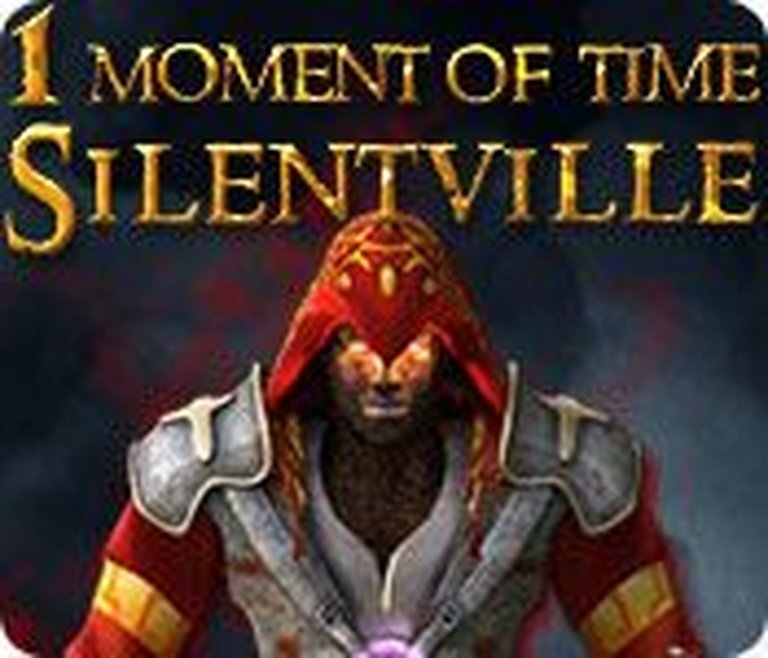
In 1 Moment of Time: Silentville, a hidden object puzzle adventure, players explore the once-idyllic village of Silentville, now eerily abandoned after a mysterious storm caused its happy inhabitants to vanish without a trace. Arriving shortly after the catastrophe, the investigator uncovers clues through innovative hidden object scenes—featuring combined items like ‘repaired broom’—and puzzles to reveal the storm’s secrets and the villagers’ fate.
Gameplay Videos
Where to Buy 1 Moment of Time: Silentville
PC
1 Moment of Time: Silentville Free Download
1 Moment of Time: Silentville Guides & Walkthroughs
1 Moment of Time: Silentville Reviews & Reception
metacritic.com (50/100): Mixed or Average
store.steampowered.com (77/100): Mostly Positive
steambase.io (77/100): Mostly Positive
caughtmegaming.wordpress.com (70/100): Ultimately, this is a fun game with a lot going for it.
1 Moment of Time: Silentville: Review
Introduction
Imagine a quaint village frozen in eternal silence, its streets echoing with the ghosts of a vanished populace, all triggered by a single cataclysmic storm—welcome to 1 Moment of Time: Silentville, a hidden object puzzle adventure (HOPA) that captures the eerie allure of a town cursed to exist outside time itself. Released in 2012 amid the booming casual gaming scene dominated by Big Fish Games, this title from indie developer 2 Monkeys Ltd. has lingered in obscurity, resurfacing on Steam in 2016 to cult appreciation. As a snapshot of mid-2010s HOPA design, it blends fable-like narration with intricate item-combination mechanics, but stumbles on technical rough edges. My thesis: Silentville is a charming, if uneven, artifact of the genre’s golden age—innovative in interactivity, yet hampered by era-specific limitations—earning it a modest place as an accessible gateway for puzzle enthusiasts, but not a timeless classic.
Development History & Context
Developed by 2 Monkeys Ltd., a small Dutch studio founded in the late 2000s, 1 Moment of Time: Silentville represents the team’s ambitious pivot toward polished HOPAs after earlier efforts like Vampireville and Mushroom Age. Led by producer Nick Oshurkov and programmer Anton Torkhov, the 13-person crew—including artists like Vitaly Gaidukov and Tatiana Gaidukova, composer Slava Muntian, and story writer Ekaterina Torkhova—crafted a compact experience emphasizing hand-drawn visuals augmented by ‘Magic Particles’ effects from Astralax. Voice work by Tim Simmons added a fable-esque narration, framing the game as a storybook tale.
Launched on June 17, 2012, for Windows via Big Fish Games and MSN Games, it arrived during HOPA’s commercial zenith. The early 2010s saw explosive growth in casual downloads, with Big Fish’s model of affordable, bite-sized adventures fueling the genre. Technological constraints were modest: targeting 1.6-1.8 GHz CPUs, 512 MB RAM, and 1024×768 resolutions, it eschewed widescreen support and relied on point-and-click interfaces optimized for keyboard/mouse. Ports to Mac, iOS, Android (2014), and Steam (2016 by Jetdogs Studios) expanded reach, adding achievements and trading cards. The gaming landscape pitted it against giants like Mystery Case Files, where 2 Monkeys’ vision—to innovate HOS with mandatory combinations (e.g., “repaired broom” via broom head + handle)—aimed to elevate puzzles beyond rote searches, though budget limits led to bugs and dated optimization.
Narrative & Thematic Deep Dive
Silentville‘s plot unfolds as a supernatural fable: Once an idyllic haven, the village of Silentville is ravaged by a freak storm of thunder and lightning, erasing inhabitants—pedestrians, trains, even birds—from existence. The silent protagonist arrives post-storm to probe this “cursed non-existence,” uncovering a greed-fueled ritual gone awry by an old man summoning otherworldly forces. Progression spans five chapters: Train Station/Police Station (gathering tools like knives and anti-rust solution); Town Hall/Lighthouse (fingerprint locks, mayor interrogations); Boutique/Park (mirror puzzles, flower essences); Gardener’s House/Gold Mine/Photo Studio (mosaic tiles, key imprints); and the climactic Mansion (safe codes, bell ritual).
Characters are archetypal yet evocative: a drunken mayor hoarding documents, a lighthouse keeper chain-smoking philosophically, a gardener tending paradox-ridden plots, and spectral figures like the train platform sleeper revived by essence. Dialogue is sparse—NPC chats deliver lore via voiced snippets—but reveals themes of temporal limbo, greed’s consequences (the old man’s hubris births the curse), and redemption through ritual (collecting mysterious symbols to ring a glue-sealed bell at 4:05). Subtle motifs recur: clocks stuck in loops, vanishing visitors symbolizing entrapment, and a journal chronicling “one moment” that shattered eternity. Critiques note disjointed delivery—hints feel useless, story lacks emotional hooks—but its fable structure, ending in curse-lifting via book-opening, imparts poetic closure, echoing The Moment of Silence influences.
Gameplay Mechanics & Systems
At its core, Silentville loops through exploration, interactive HOS, and puzzles in a first-person point-and-click framework. Sparkling scenes trigger HOS demanding multi-step interactions: combine stamps into albums, pour tea for hot cups, knit scarves from needles/yarn, or repair plungers/brooms—innovating beyond static lists by hiding components (e.g., open doors for colored items). Puzzles vary: track assembly, lily pad sorting, pipe rotations, rug-matching, mosaic rings, key unscrambling, flower-bloom timing, and physics-based shots (ropes/pulleys for door access). Progression relies on inventory (bottom bar), journal (tasks/hints), and post-train map for warping (cloud-obscured unvisited areas).
UI shines with intuitive icons (eye for zoom, hand for pickup, gears for actions, ornate arrows for exits), but flaws abound: objects hidden behind static inventory banners frustrate (e.g., bottom-screen placements), hints charge slowly in Expert mode (no sparkles), and navigation hit-detection falters on transitions. No combat/progression trees; single-player offline focus yields 3-5 hour playtime. Innovations like reskinned HOS (items shift post-search) and achievements (Steam ports) add replay, but bugs (game-breakers, finicky rotations) and backtracking (dozens of locations) expose era constraints. Casual mode eases skips/hints; overall, a methodical brain-teaser rewarding patience over twitch reflexes.
World-Building, Art & Sound
Silentville’s atmosphere is its strongest suit: a fog-shrouded, storm-ravaged village blending realism and whimsy—abandoned platforms, rose-choked police exteriors, lily-pad ponds, gold mines, and a looming lighthouse/mansion. Exploration spans 20+ scenes (park VW bug, boutique mirrors, greenhouse puzzles), fostering immersion via dynamic changes (blooming flowers, spilling grain attracting rats). Visuals employ hand-drawn 2D overlays on basic 3D models, with particle storms/lightning evoking curse’s fury; filters yield a painterly style superior to predecessors, though dated (no widescreen, low-res textures).
Sound design elevates: Slava Muntian’s symphonic score—repetitive yet enchanting piano/strings—mirrors limbo’s melancholy magic, sans clichés. Ambient thunder, creaks, and NPC voices (Tim Simmons’ narration) build tension, punctuated by puzzle jingles. SFX like sizzling kerosene or bell tolls reinforce interactivity, though voice acting feels flat/emotionless at times. Collectively, these craft a cohesive, haunting vibe—cursed stasis palpable in looping clocks and vanishing paths—making Silentville a sensory time capsule.
Reception & Legacy
Launch reception was mixed: MobyGames’ 6.1/10 (54% critics) reflected praise for “intriguing story and above-par graphics” (Software Informer, 80%) and “staying power/variety” (Caught Me Gaming, 70%), but slams for tedium, disjointed narrative, bugs, and “horrible” object placement (GameZebo 50%, TGExp 20%). Players averaged 2.8/5, citing frustrations yet value at sub-$1 pricing. Steam’s 2016 port boosted to “Mostly Positive” (77%, 586 reviews), with fans lauding puzzles/diversity amid gripes over age (loud jumpscares, optimization).
Commercially modest—Big Fish staple, Steam $0.99 sales—its legacy endures as 2 Monkeys’ HOPA swan song before mobile shifts (12 Labours of Hercules). Influences trace to Mystery Case Files; it inspired combo-HOS in later indies like Enigmatis. Cult status grew via walkthroughs/forums, but no sequels/industry ripple; a footnote in HOPA’s Big Fish era, valued for accessibility.
Conclusion
1 Moment of Time: Silentville weaves a fable of cursed stasis into interactive HOS mastery and puzzle chains, bolstered by atmospheric art/sound, yet undermined by bugs, backtracking, and dated tech. For historians, it’s a microcosm of 2012’s casual boom—innovative yet imperfect indie fare from 2 Monkeys. Verdict: Recommended for HOPA novices (7/10)—a $1 steal for brain-tickling charm, but veterans may find it quaintly flawed. In video game history, it occupies a silent niche: evocative, ephemeral, eternally affordable.