
- Release Year: 2020
- Platforms: macOS, Windows
- Publisher: JetDogs Studios Oy
- Developer: Zoom Out Games
- Genre: Action
- Perspective: Diagonal-down
- Game Mode: Single-player
- Gameplay: Time management
- Setting: Classical antiquity, Fantasy
- Average Score: 52/100
Description
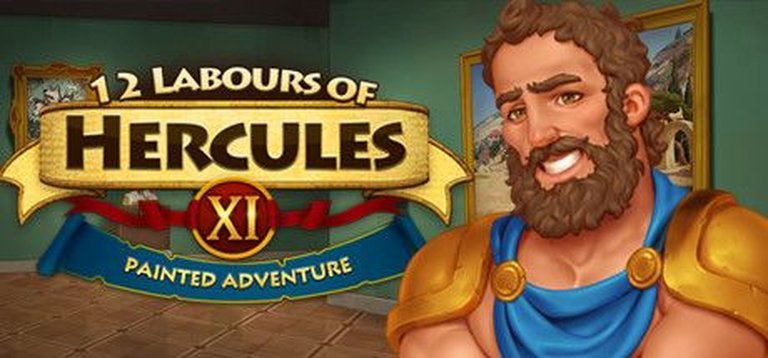
In 12 Labours of Hercules XI: Painted Adventure, modern teenage artist Emma is whisked back to Classical Greece where she teams up with the mythic hero Hercules. Using her magical art supplies, Emma can paint objects that become real, helping Hercules complete his legendary labors across 56 levels filled with puzzles, sub‑levels and bonus stages. Set in a fantasy‑infused version of ancient antiquity, the game blends point‑and‑select time‑management gameplay with diagonal‑down, fixed‑screen graphics.
Gameplay Videos
Where to Buy 12 Labours of Hercules XI: Painted Adventure
PC
12 Labours of Hercules XI: Painted Adventure Guides & Walkthroughs
12 Labours of Hercules XI: Painted Adventure Reviews & Reception
steambase.io (53/100): Mixed rating with a player score of 53/100.
store.steampowered.com (52/100): Mixed user feedback, 52% positive.
12 Labours of Hercules XI: Painted Adventure: Review
Introduction
The twelfth entry in the long‑running 12 Labours of Hercules series arrives with a bold, whimsical premise: a 21st‑century art‑obsessed teen named Emma is hurled back to the age of myth, armed only with a magical paintbrush that turns every stroke into reality. This “Painted Adventure” promises a blend of time‑management puzzles, point‑and‑select interaction, and a fresh take on Greek mythology. My thesis is that, while the game shines in its charming visual language and inventive painting mechanic, its execution is hampered by shallow depth, uneven pacing, and a design that feels more like a casual family title than a serious entry in a legacy franchise.
Development History & Context
Studio & Vision
- Developer: Zoom Out Games, a boutique studio known for the 12 Labours series.
- Publisher: JetDogs Studios Oy, a Finnish publisher that has handled the series since its third instalment.
- Creative Leads: Producers Artem Kirillovsky and Igor Minaev steered the project, while art direction was helmed by Kirill Utenkov.
The team of 29 people aimed to “bring imagination to life” by granting the player the power to paint bridges, ships, and even dumbbells for Hercules. Their stated goal was to combine the timeless appeal of Greek myth with a modern, child‑friendly aesthetic, making the game accessible to families and casual gamers.
Technological Constraints
- Engine & Graphics: Fixed flip‑screen, diagonal‑down perspective rendered in full‑HD. The game runs on a modest DirectX 9 pipeline, with a minimum requirement of 512 MB RAM and a 1024×768 resolution.
- Platform Reach: Released on Windows and macOS via Steam on 18 Nov 2020; later bundled in the 19‑in‑1 12 Labours collection.
Market Landscape (2020)
In 2020, the casual‑puzzle market was saturated with time‑management titles (e.g., Cooking Mama, Diner Dash clones) and indie narrative adventures. Painted Adventure attempted to differentiate itself through its mythic setting and the “paint‑to‑reality” mechanic, a niche concept that appealed to both fans of the series and newcomers looking for a colorful, low‑commitment experience.
Narrative & Thematic Deep Dive
Plot Overview
Emma, a contemporary girl with magical art supplies, awakens in ancient Greece and meets the demigod Hercules. Guided by an interactive “guide” (likely an in‑game tutorial), Emma assists Hercules across 56 levels, each representing a fragment of the famous Twelve Labours. The story is episodic: rescuing Megara, confronting King Eurystheus, and building bridges or ships to clear obstacles.
Characters
- Emma: Serves as the player avatar, embodying creativity and modern ingenuity. Her dialogue is light‑hearted and self‑aware, often breaking the fourth wall to explain mechanics.
- Hercules: Presented as a friendly, slightly exaggerated hero who relies on Emma’s artistic inventions. He offers comic relief and occasional exposition about the mythic tasks.
- Supporting Mythic Figures: Appear in cameo roles (e.g., Zeus, Hermes) and reinforce the series’s mythological roots.
Themes
- Imagination vs. Tradition: Emma’s paintbrush symbolizes the power of modern creativity to solve ancient problems, suggesting a dialogue between past and present.
- Collaboration: The game repeatedly emphasizes teamwork—Emma’s art and Hercules’ strength must combine to succeed, echoing the series’ long‑standing focus on partnership.
- Resourcefulness: Time‑management mechanics enforce a “do more with less” mindset, mirroring the original labours’ tests of ingenuity.
The narrative is deliberately simple, focusing on charm rather than deep storytelling. Dialogue is terse, often serving as tutorial prompts rather than character development.
Gameplay Mechanics & Systems
Core Loop
- Objective: Complete each level by painting objects (bridges, ships, dumbbells) that become solid in‑game assets, then erase them when no longer needed.
- Time Management: Players have a limited time bar per level; efficiently painting and erasing is key to success.
Controls & Interface
- Point‑and‑Select: Mouse or gamepad cursor selects paint tools; a palette appears on‑screen.
- Flip‑Screen Navigation: The world is presented in static screens; transitioning between screens occurs via “flipping” rather than scrolling.
Progression & Difficulty
- 56 Levels + Sublevels: Levels increase in complexity, introducing new paint‑tool types and obstacles (e.g., moving platforms, enemy gods).
- Multiple Solutions: Levels are designed to be solved in various ways, encouraging experimentation.
Innovative Systems
- Paint‑to‑Reality Engine: The most unique feature; every brushstroke spawns a physical object that obeys the game’s physics. This creates emergent puzzles where players can combine painted items.
Flaws & Shortcomings
- Shallow Depth: The mechanic, while novel, is limited to a finite set of objects, leading to repetitive strategies after ~30 levels.
- Time‑Pressure Overexposed: The constant ticking timer can feel punitive, especially for younger players.
- UI Clutter: The paint‑tool palette occasionally obscures important visual cues, hindering quick decision‑making.
World‑Building, Art & Sound
Visual Direction
- Cartoon‑Style Art: Bright, saturated colors with a hand‑drawn aesthetic that matches the “paint” motif.
- Fixed Flip‑Screen Layout: Reminiscent of classic 90s point‑and‑click titles; this choice simplifies rendering but can feel static compared to modern side‑scrollers.
- HD Resolution: Despite the low‑tech engine, assets are rendered in full HD, giving the game a crisp, modern look.
Sound Design
- Music: A diverse roster of composers (Michael Kotov, Dewey Dellay, etc.) contributes to a whimsical, melodic soundtrack that varies per level.
- Audio Cues: Paint‑tool selection, object creation, and timer ticks are clearly audible, reinforcing feedback loops.
Atmospheric Contributions
- The art and music together create an atmosphere that feels both mythic and child‑friendly, aligning with the game’s family‑oriented positioning.
Reception & Legacy
Critical & Commercial Reception
- Steam Metrics: 19 user reviews, 52 % positive, average player score 53/100 (Steambase).
- Critic Coverage: No major critic reviews on Metacritic; the game largely flew under the radar of mainstream outlets.
- Sales: Price points of $8.39 (Windows/macOS) on Steam, bundled in the series collection; exact sales numbers are not disclosed but the “Collected By 5 players” figure suggests modest commercial impact.
Evolution of Reputation
- The mixed community response points to a divide: fans of the series appreciate the fresh mechanic and visual charm, while casual players criticize the shallow depth and repetitive time‑management demands.
- Over time, the game has become a niche entry, remembered primarily for its paint‑to‑reality concept rather than as a landmark title.
Influence on Subsequent Games
- Series Continuation: The next instalment, 12 Labours of Hercules XII: Timeless Adventure (2021), retained the time‑management core while shifting themes, indicating that the studio learned from Painted Adventure’s reception and pivoted.
- Industry Impact: While the game did not spawn a wave of similar mechanics, its use of “painted reality” can be seen echoed in indie titles exploring creative toolsets (e.g., Scribblenauts‑style games).
Conclusion
12 Labours of Hercules XI: Painted Adventure is a bright, family‑friendly puzzle adventure that delivers an inventive painting mechanic wrapped in a mythic setting. Its strengths lie in its charming art direction, accessible UI, and the whimsical premise of a modern girl empowering a legendary hero with imagination. However, the game’s depth stalls after a dozen levels, the time‑pressure can feel unforgiving, and the static flip‑screen design feels dated.
Verdict: Painted Adventure earns a respectable place as a charming side‑note in the 12 Labours saga—a solid casual title for younger players and series enthusiasts, but not a defining moment in video‑game history. Its legacy endures mainly through its creative concept, which, despite mixed reception, showcases how myth can be re‑imagined through the lens of modern creativity.