
- Release Year: 2012
- Platforms: Android, iPad, iPhone, Linux, Macintosh, Windows Apps, Windows Phone, Windows
- Publisher: Forever Entertainment S. A.
- Developer: Forever Entertainment S. A.
- Genre: Strategy, Tactics
- Perspective: 1st-person
- Game Mode: Single-player
- Gameplay: Business simulation, Managerial
- Setting: Medieval
- Average Score: 40/100
Description
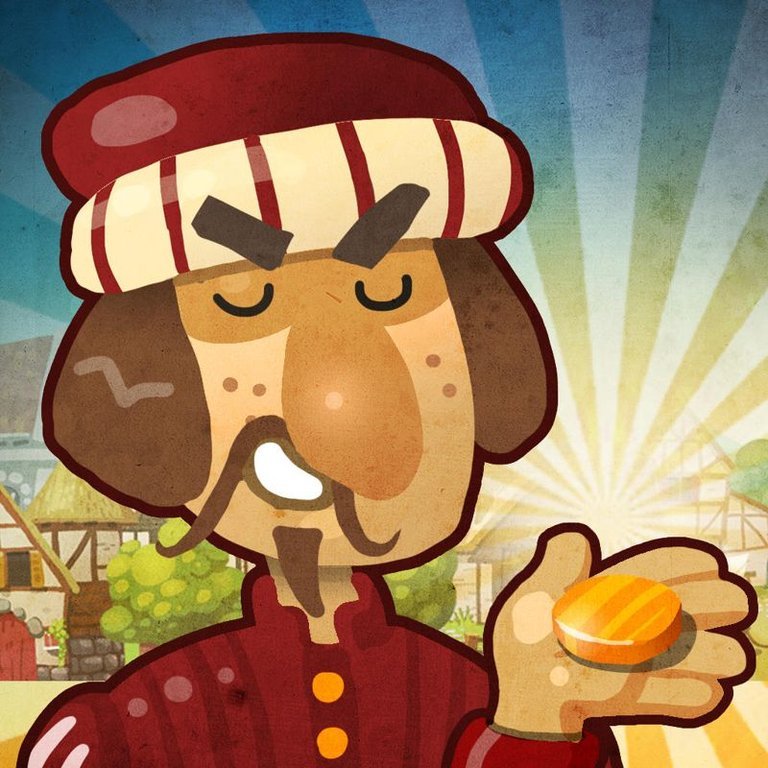
In 16-bit Trader, you play as the child of a traveling merchant seeking vengeance against the wealthy Van Talodd, who exploited your father’s labor. To surpass Van Talodd’s fortune, you must master trading by buying goods cheaply in one town and selling them at a profit in another. Navigate dangers by hiring mercenaries, gather rumors in taverns, mine jewels to boost your wealth, and eventually expand into managing a caravan and business empire—all while embracing a nostalgic 16-bit aesthetic.
Gameplay Videos
Where to Buy 16-bit Trader
PC
16-bit Trader Guides & Walkthroughs
16-bit Trader Reviews & Reception
choicestgames.com (30/100): Looks can be deceiving though and that’s very much the case for this game – but in a negative way unfortunately.
16-bit Trader: A Retro Sim’s Struggle Between Ambition and Execution
Introduction
In the pantheon of indie games capitalizing on retro nostalgia, 16-bit Trader (2012) stands as a cautionary tale—a mobile-to-PC port that encapsulates both the charm and pitfalls of minimalist design. Developed by Poland’s Forever Entertainment S.A., the studio behind the rhythm-focused Frederic series, 16-bit Trader promised a blend of mercantile strategy and pixel-art nostalgia. Yet, beneath its quaint veneer lies a game hamstrung by repetitive mechanics, unforgiving randomness, and a legacy of unmet potential. This review dissects its journey from a father’s revenge fantasy to a flawed footnote in trading-sim history.
Development History & Context
Studio Vision & Constraints
Forever Entertainment, founded in the late 2000s, carved its early identity through rhythm games and mobile-centric titles. 16-bit Trader emerged in 2012 as part of their expansion into strategy-simulation, built on Unity—an unusual choice for a game billing itself as “16-bit,” given the engine’s flexibility for 2D/3D hybrids. Producer Zbigniew Dębicki and designer Dariusz Bartoszewski led a 13-person team aiming to create an accessible trading sim evoking classics like Merchants of Kaidan. However, technological constraints of mobile-first development (the game debuted on iOS) bled into its PC ports (2015), resulting in simplistic UI and mechanics better suited to bite-sized play.
Era & Competition
The early 2010s saw a surge in mobile-to-PC ports, capitalizing on Steam’s indie boom. Yet 16-bit Trader released amid titans like FTL: Faster Than Light (2012) and Recettear: An Item Shop’s Tale (2010), which offered deeper economies and richer narratives. Forever Entertainment’s gamble—a stripped-down, “casual brother” to their own Merchants of Kaidan—felt outmatched in a market hungry for complexity.
Narrative & Thematic Deep Dive
A Thin Vengeance Tale
The premise is Shakespearean in simplicity: You play the child of a merchant murdered by his partner, the wealthy Van Talodd. To avenge your father, you must surpass Van Talodd’s riches—a blunt metaphor for capitalist revenge. Dialogue and text, penned by Maciej Wiktor, suffer from grammatical errors (e.g., “become even richer that Van Talodd”) and clichéd tavern gossip, undermining narrative immersion.
Quests & Morality
Side quests—29 in total, per Steam guides—range from fetch tasks (“deliver ale to X village”) to escort missions, but lack narrative weight. Completing them earns the Helper of Humanity achievement, yet their rewards feel disconnected from the broader revenge arc. Thematically, the game critiques exploitation (Van Talodd as parasitic bourgeoisie), but reduces its message to a grind-for-gold loop, devoid of moral nuance.
Gameplay Mechanics & Systems
Core Loop: Buy Low, Sell Lower?
The gameplay orbits three pillars:
1. Trading: Buy goods (grain, cloth, tools) in towns and sell elsewhere at markup.
2. Risk Management: Hire mercenaries to deter bandits during travel—a system derided as RNG-heavy, with raids stealing up to 50% of gold despite guards.
3. Exploration: Mine jewels in procedural caves or chase rumors in taverns for price tips.
Yet this loop collapses under repetition. Profit margins are razor-thin, and goods lack dynamic scarcity (e.g., droughts or festivals)—a stark contrast to Mount & Blade’s living economy.
UI & Progression
The mobile roots glare: touch-optimized menus feel clunky on PC, and a single, plodding soundtrack grates over hours. Progression hinges on buying wagons to form caravans, but expanding your “company” unlocks no meaningful strategies.
Bugs & Brutality
The game’s infamy stems from save file corruption (noted in Steam reviews), where players could save only once per slot. Combined with random ambushes and punitive travel costs, failure spirals are common. As critic Mark Goninon (Choicest Games) noted: “Restoring saves is the only solution—not ideal.“
World-Building, Art & Sound
Pixel Aesthetics, Hollow Atmosphere
Artist Janusz Wyrzykowski delivers vibrant, if generic, 16-bit-inspired towns. However, locales lack cultural distinction—a missed opportunity to mirror Final Fantasy’s varied biomes. The art’s charm clashes with the game’s title: it’s not authentically 16-bit but a Unity-driven facsimile, drawing player ire for false advertising.
Sound Design: A Monotonous Dirge
Karol Sollich’s score loops a single, folksy tavern melody that drones into tedium. Ambient sounds (horse clopping, market chatter) are absent, rendering the world static—a far cry from Stardew Valley’s acoustic richness.
Reception & Legacy
Launch & Criticism
16-bit Trader bombed critically, earning a 30% average from critics (MobyGames) and 2/5 from players. Reviewers skewered its “repetitive, boring gameplay” (Choicest Games) and “unfair RNG” (Steam). Its 2015 PC port fared worse, stranded in Steam’s bargain bin amid superior indies.
Faint Industry Ripples
Forever Entertainment distanced itself post-failure, pivoting to remasters (Violett) and acclaimed rhythm sequels. Yet 16-bit Trader’s DNA resurfaced in their 2017 title Merchants of Kaidan—a deeper, better-received trading sim. The game’s legacy? A case study in the perils of shallow mobile ports and nostalgic branding.
Conclusion
16-bit Trader is a pixel-art promise unfulfilled—a game where vengeance is not against Van Talodd, but the player’s patience. Its charming veneer cannot mask anemic mechanics, punitive design, and a narrative thinner than tavern ale. While a curio for simulation historians or achievement hunters (its 16 Steam trophies are low-hanging fruit), it remains a footnote in Forever Entertainment’s evolution. In the annals of retro-inspired indies, 16-bit Trader is less a trader of goods than a merchant of disappointment. 2/10.