
- Release Year: 2019
- Platforms: Macintosh, Windows
- Publisher: First Games Interactive, Immanitas Entertainment GmbH
- Developer: First Games Interactive
- Genre: Strategy, Tactics
- Perspective: Diagonal-down
- Game Mode: Single-player
- Gameplay: Real-time strategy
- Setting: Europe
- Average Score: 77/100
Description
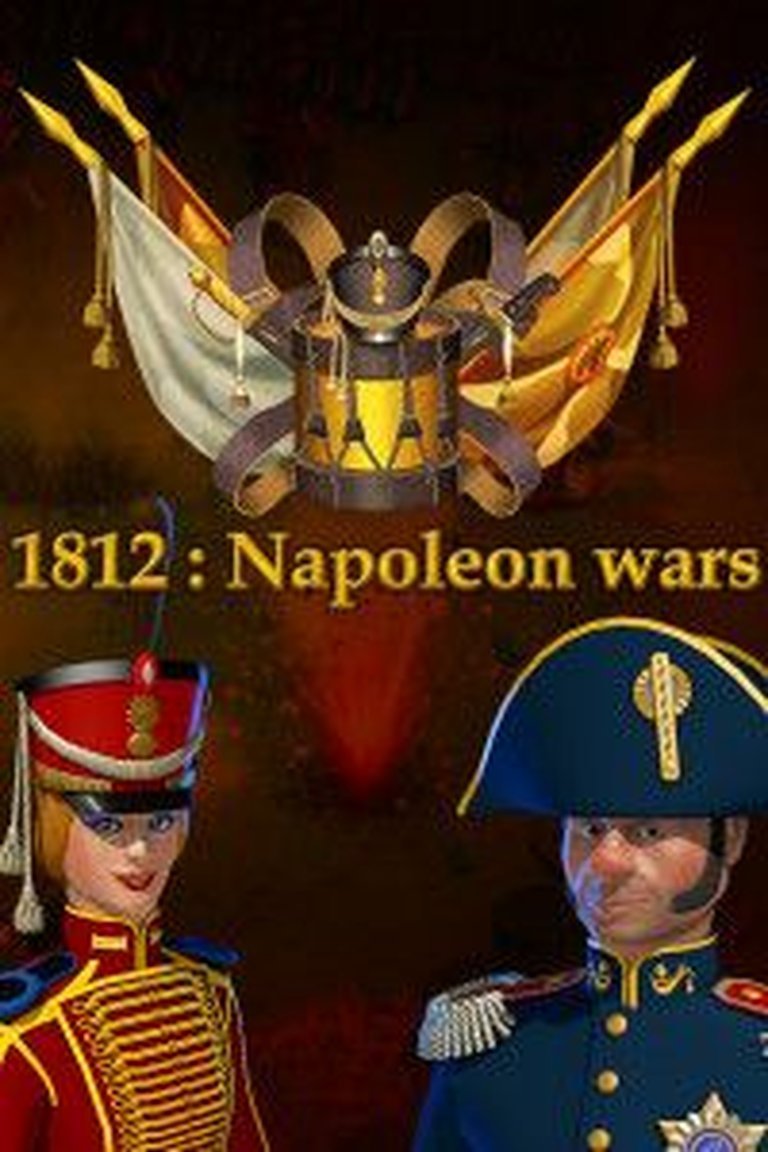
1812: Napoleon Wars is a real-time strategy (RTS) game set in Europe during the Napoleonic Wars, where players command military units in historically inspired tactical warfare. Featuring a diagonal-down perspective and real-time pacing, the game offers a single-player experience focused on war strategy, allowing players to engage in intense battles while managing units and making tactical decisions on the European battlefield.
Gameplay Videos
Where to Buy 1812: Napoleon Wars
PC
1812: Napoleon Wars Reviews & Reception
store.steampowered.com (90/100): Control of the game is very easy and it will be clear even to those who first played in this genre of games.
1812: Napoleon Wars: Review
Introduction
In the crowded landscape of historical strategy games, titles focusing on the Napoleonic Wars often cater to hardcore wargamers or grand strategy enthusiasts. 1812: Napoleon Wars, developed by the modest studio First Games Interactive and published by Immanitas Entertainment GmbH in October 2019, emerges as a distinct entry. Positioned as a “Tower Defense strategy game” with a real-time (RTS) core, it promises accessible historical conflict without the overwhelming complexity of its peers. This review delves into the game’s ambitious attempt to distill the epic struggles of Napoleon’s invasion of Russia into a compact, player-driven experience. My thesis is that while 1812: Napoleon Wars possesses commendable historical ambition and commendable accessibility, its execution in core gameplay and presentation suffers from significant limitations, resulting in a niche experience that resonates more strongly with casual strategy fans than serious historical simulators or RTS aficionados. Its legacy lies in carving out a specific, albeit modest, space for Napoleonic conflict in the indie strategy sphere.
Development History & Context
1812: Napoleon Wars is a product of First Games Interactive, a studio with a focus on historical and strategy titles, evidenced by related games like Defense of Roman Britain and the bundled Defense of Egypt. The game was developed using the Cocos2d middleware, a choice likely dictated by budget and target platform (primarily Windows and Mac) rather than cutting-edge graphical ambitions. Released on October 17, 2019, it arrived during a period where the historical strategy genre saw continued interest, but also increasing competition from both ambitious AAA projects and a thriving indie scene. The gaming landscape was dominated by live-service titles and narrative-driven experiences, making a niche, single-player historical RTS an outlier.
The studio’s vision, clearly articulated in the Steam description, was to create an accessible entry point into the Napoleonic conflict, blending historical events with a progression system (“Take the path from cornet to general”) and the popular tower defense mechanics. The nomination for the GTP Indie Cup 2019, where judges praised its “completely unexpected setting,” indicates some industry recognition for its unique thematic niche amidst a sea of fantasy or sci-fi indie titles. However, the technological constraints inherent in using Cocos2d and a small development team are evident in the game’s visual and audio fidelity, which never reach the heights of contemporary RTS giants. The release on multiple platforms (Windows, Mac, later hinted Linux via bundles) aimed for broad accessibility, aligning with the indie distribution model focused on digital storefronts like Steam where the game retails at an affordable $6.99.
Narrative & Thematic Deep Dive
The narrative core of 1812: Napoleon Wars is drawn directly from the pivotal historical campaign of Napoleon’s invasion of Russia in 1812. The Steam description explicitly lists key historical events players will encounter: “Participate in the Battle of Borodino, guerrilla, defend and liberate cities, escort convoys, defend the battery of Raevsky and Bagration’s flushes.” This focus on specific, recognizable battles and scenarios provides a solid thematic foundation, grounding the gameplay in recognizable historical drama.
The progression system (“Take the path from cornet to general”) offers a meta-narrative of military advancement. While the game lacks detailed character development or deep interpersonal dialogue, this career progression provides a tangible sense of player growth and impact within the conflict. The “non-linear plot” mentioned is likely reflected in the mission structure or the ability to choose different strategies leading to victory, offering a degree of player agency in shaping the campaign’s outcome.
Underlying themes center on the brutal realities of war, the challenges of asymmetrical conflict (guerrilla warfare vs. a professional army), and the logistical strains on invading forces (convoy escort missions). The inclusion of “change of weather and seasons, night levels” adds atmospheric layers that metaphorically (and perhaps literally) represent the harsh conditions that doomed Napoleon’s campaign, the “General Winter” that became legendary. While the narrative presentation is functional rather than cinematic – relying on mission briefings and in-game objectives rather than cutscenes or extensive text logs – the game effectively uses its historical setting to evoke the scale and stakes of the conflict, even if it doesn’t delve deeply into the political or personal complexities beyond the battlefield.
Gameplay Mechanics & Systems
1812: Napoleon Wars is fundamentally a tower defense strategy game operating under a real-time strategy (RTS) framework, as defined by its genre tags and core mechanics. The perspective is diagonal-down, and the interface relies on “Point and select” and “Multiple units/characters control,” standard for the genre.
- Core Gameplay Loop: The loop revolves around defending key points (cities, batteries, convoys) or attacking enemy positions using strategically placed defensive units (towers, artillery, infantry) and controlled hero/commander units. Players deploy units, manage resources (implied by the need to “upgrade weapons”), and utilize direct control of their commander (“take part in battles yourself”) to influence engagements.
- Combat: Combat is real-time and likely involves unit positioning, range considerations, and possibly basic unit types (infantry, cavalry, artillery) with differing strengths and weaknesses. Direct control of the commander suggests action-oriented elements, potentially allowing for more tactical intervention than traditional TD.
- Character Progression: The “cornet to general” progression likely translates to upgrades for the player’s commander unit – unlocking new abilities, improving stats (health, damage, command radius), or gaining access to better equipment/upgrades. This progression system provides a sense of advancement tied to performance.
- Innovative/Flawed Systems:
- Weather & Seasons/Night Levels: This is a standout feature. Dynamic environmental conditions can affect visibility, movement speed, unit effectiveness (e.g., artillery accuracy in rain/snow), or even spawn unique enemy types or events. This adds significant strategic depth and thematic resonance, potentially mitigating the repetitive nature of pure TD.
- Non-Linear Plot: Offering different strategic paths to victory enhances replayability and player agency. Whether this manifests as branching missions, multiple objectives per level, or different approaches to objectives is crucial.
- Flaws: The reliance on Cocos2d likely limits the complexity of unit AI and pathfinding. The core TD mechanic, while accessible, can feel simplistic compared to dedicated TD games or complex RTS micro-management. Resource management, if present, might be overly simplistic. The “Take part in battles yourself” mechanic, while adding a layer, risks feeling disconnected from the broader strategic view if not integrated smoothly. The two difficulty levels (Normal + Hard) provide basic challenge scaling but lack the nuanced options of deeper strategy games.
- UI: The MobyGames spec “Multiple units/characters control, Point and select” suggests a straightforward interface. Clarity is essential for the “easy to control” experience noted in one positive review. However, the UI could suffer from clutter or lack of depth given the technical constraints, potentially hindering information display for complex engagements.
World-Building, Art & Sound
- Setting & Atmosphere: The setting is explicitly the “Napoleonic Wars” in “Europe,” focusing on the 1812 Russian campaign. This provides a rich, well-documented historical backdrop. The atmosphere is one of wartime tension, logistical challenge, and the harsh realities of the Russian campaign. Missions like “guerrilla” combat, defending cities, and escorting convoys contribute to this atmosphere of a sprawling, desperate conflict.
- Visual Direction: While the sources lack detailed descriptions of the art style, the Cocos2d middleware and the game’s nature as an indie title suggest a functional, somewhat stylized approach. Expect top-down views with unit sprites representing different troop types (infantry, cavalry, artillery), basic environmental elements (forests, fields, rivers, urban areas), and structures (fortifications, batteries). The “free camera” perspective allows for some tactical viewing flexibility. The visual quality is likely modest, prioritizing clarity over realism or spectacle. The inclusion of weather and seasons is a significant atmospheric tool, visually altering the battlefield to reflect the passage of time and harsh conditions.
- Sound Design: The sources provide no specific details on the soundtrack or sound effects. However, one can reasonably infer a soundscape built around historical warfare: the crack of musket fire, the boom of artillery, the shouts of commands, the clatter of cavalry charges, and potentially period-appropriate or atmospheric music. Effective sound design would be crucial for immersion and situational awareness in the real-time combat. Given the indie nature, it might be functional rather than cinematic.
- Contribution to Experience: The visuals and sound work in tandem to establish the historical tone and provide functional feedback for gameplay. The weather/seasons system, visually represented, is a major contributor to both the atmosphere and the strategic layer. While the art might not be breathtaking, the clarity of unit types and battlefield layout is essential for the accessible RTS/TD gameplay. Sound, even if basic, would enhance the sense of being on a Napoleonic battlefield, making the tactical engagements more engaging despite potential technical limitations.
Reception & Legacy
1812: Napoleon Wars launched without traditional critical reviews on Metacritic, indicating it largely bypassed mainstream gaming media. Its reception is therefore primarily defined by player feedback on Steam and curated platforms like Steambase.
- Launch Reception & Player Response: The game achieved a “Mostly Positive” rating on Steam (based on 46 reviews at the time of this writing, with 86% positive). Steambase aggregates a broader base of 65 reviews, also resulting in a “Mostly Positive” 75/100 score. Positive reviews frequently highlight its accessibility (“Control of the game is very easy and it will be clear even to those who first played in this genre of games,” – Games Reviews), its addictive nature (tagged “Addictive”), and its unique historical setting. The low price point ($6.99) is also often cited favorably. Negative reviews typically criticize perceived lack of depth, simplistic mechanics, repetitive gameplay, technical issues (bugs, performance), and a lack of polish or visual fidelity expected even from indie titles. The user tags (“Strategy,” “Indie,” “Tower Defense,” “Classic,” “Casual,” “Singleplayer”) accurately reflect its positioning.
- Evolution of Reputation: Over time, the game has maintained a stable, albeit niche, positive player base. It hasn’t become a cult classic or seen a significant resurgence, but its consistent “Mostly Positive” rating suggests a core audience appreciates what it offers: an affordable, accessible Napoleonic-themed TD/RTS blend. Its nomination for the GTP Indie Cup 2019 provides a minor, positive historical footnote.
- Influence & Legacy: 1812: Napoleon Wars has had minimal demonstrable influence on the broader gaming industry or subsequent major titles. Its niche genre blend (Napoleonic TD/RTS) isn’t one that has been widely replicated. Its legacy lies instead within the strategy genre’s indie scene. It represents a specific, if flawed, attempt to bring historical conflict, particularly the 1812 campaign, to a broader audience through accessible mechanics. It serves as a reference point for small-scale historical strategy games, demonstrating both the potential (accessible narrative, unique setting, core TD mechanics) and the pitfalls (technical limitations, potential lack of depth, visual constraints) inherent in developing such titles on a budget. It occupies a small but persistent corner of the historical strategy landscape, known for its specific focus and affordability.
Conclusion
1812: Napoleon Wars stands as an earnest and ambitious indie effort within the historical strategy genre. It successfully captures the essence of Napoleon’s disastrous 1812 campaign through its mission structure and thematic elements, offering players a tangible connection to pivotal historical moments like Borodino. Its greatest strengths lie in its accessibility, low price point, and the innovative inclusion of dynamic weather/seasons that significantly enhance both atmosphere and strategic depth. The progression system from cornet to general provides a satisfying meta-narrative of advancement.
However, these strengths are counterbalanced by significant limitations stemming from its development constraints. The core gameplay, while functional and easy to grasp, risks feeling shallow and repetitive compared to more complex RTS or dedicated tower defense games. The reliance on Cocos2d middleware likely results in dated visuals, potentially clunky UI, and basic unit AI, hindering the strategic depth and immersion. The lack of critical reviews and the mixed player feedback highlight a clear divide: those seeking a casual, historically-themed TD experience find value, while those looking for robust simulation or deep strategic complexity are likely disappointed.
Ultimately, 1812: Napoleon Wars carves out a specific, modest niche. It is not a landmark title that redefined the genre or achieved widespread acclaim. Instead, its place in video game history is that of a competent, if unpolished, indie strategy game that fulfilled a specific demand: an affordable and accessible entry point into the Napoleonic Wars for players who prioritized historical theme and straightforward TD mechanics over graphical fidelity or strategic depth. It serves as a testament to the challenges and opportunities for small studios tackling historical subjects, leaving a legacy as a niche but playable chapter in the ongoing story of historical gaming.