
- Release Year: 2003
- Platforms: Macintosh, Windows
- Publisher: Illuminated Lantern, The
- Developer: Peter Nepstad
- Genre: Adventure, Educational
- Perspective: Text-based
- Game Mode: Single-player
- Gameplay: Interactive fiction, Text adventure
- Setting: 1890s, Amusement park, Belle Époque, City – Chicago, Historical events, North America
- Average Score: 72/100
Description
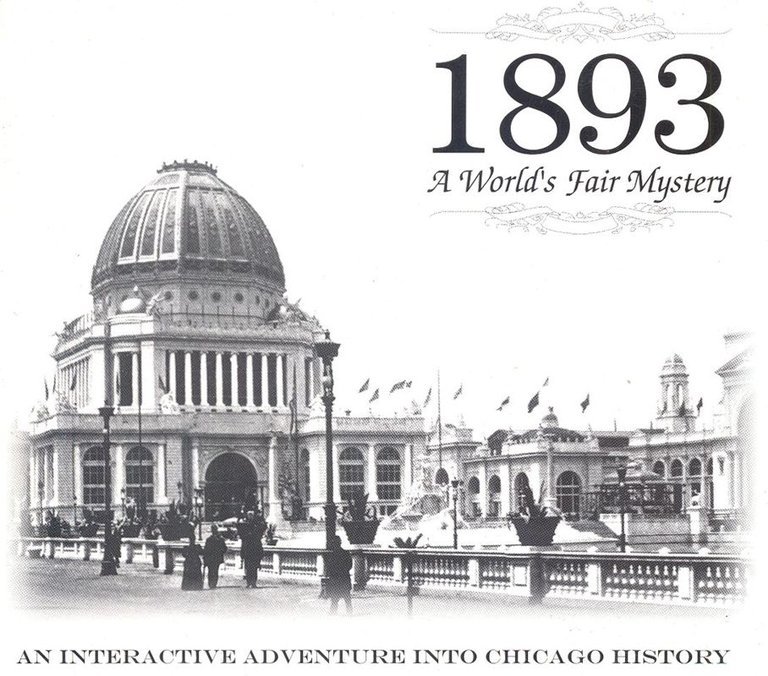
Set during the 1893 World’s Fair in Chicago, ‘1893: A World’s Fair Mystery’ is a historically detailed text-based adventure game where players assume the role of a detective investigating a diamond theft that escalates into kidnapping and murder, uncovering a grand conspiracy. Developed by historian Peter Nepstad, it features 500 authentic photographs, interactive fairground exploration, and immersive period accuracy using the TADS engine, blending educational depth with a gripping mystery narrative.
Gameplay Videos
1893: A World’s Fair Mystery Free Download
1893: A World’s Fair Mystery Patches & Updates
1893: A World’s Fair Mystery Guides & Walkthroughs
1893: A World’s Fair Mystery Reviews & Reception
adventuregamers.com : 1893 is fascinating, entertaining, deviously educational, and simply one of the most fantastic adventure games I have ever played.
ifdb.org : Don’t be intimidated – you WILL get to know this world.
mobygames.com (84/100): Best setting winner, 2002 XYZZY Award
videogamegeek.com (60/100): The best games aren’t about razzle-dazzle special effects or cheap gimmickry. They’re about story, character, and especially here, location, location, location.
1893: A World’s Fair Mystery: Review
In the pantheon of historical mystery games, few titles stand as tall as 1893: A World’s Fair Mystery. Released in 2003, this text-based adventure game is a testament to the power of narrative and historical immersion. Created by Chicago historian Peter Nepstad, the game transports players to the 1893 World’s Columbian Exposition, a pivotal moment in American history. This review will delve into the game’s development history, narrative depth, gameplay mechanics, world-building, and its enduring legacy.
Development History & Context
The Studio
1893: A World’s Fair Mystery was developed by Illuminated Lantern, a small publishing house founded by Peter Nepstad. Nepstad, a Chicago native, was the driving force behind the game’s creation, serving as the sole developer, writer, and researcher. The game was built using the TADS (Text Adventure Development System) programming language, a tool known for its robustness in creating text-based adventures.
The Creators’ Vision
Nepstad’s vision was to recreate the 1893 World’s Fair in meticulous detail, using the fair as both the setting and the central theme of the game. The goal was to provide players with an immersive historical experience, blending education with entertainment. Nepstad’s extensive research into the fair’s history and architecture is evident in every aspect of the game, from the detailed descriptions of the fairgrounds to the inclusion of 500 historical photographs.
Technological Constraints
The early 2000s were a transitional period for video games, with text-based adventures gradually giving way to more visually oriented experiences. However, Nepstad saw the potential in the text-based format, leveraging it to create a richly detailed and immersive world. The use of TADS allowed for complex interactions and a deep narrative structure, despite the limitations of the text-only interface.
The Gaming Landscape
In 2003, the gaming landscape was dominated by graphical adventures and console games. Text-based adventures were considered a niche genre, with a dwindling audience. Despite this, 1893 found a dedicated following among history enthusiasts and adventure game aficionados. The game’s unique blend of historical accuracy and engaging narrative set it apart from contemporary titles.
Narrative & Thematic Deep Dive
Plot
The game’s plot revolves around a series of thefts, kidnappings, and murders that occur during the 1893 World’s Fair. Players assume the role of a private investigator tasked with solving these crimes. The investigation leads to a complex web of intrigue, involving various historical figures and events. The narrative is non-linear, allowing players to explore the fairgrounds and uncover clues at their own pace.
Characters
The characters in 1893 are drawn from both historical figures and fictional creations. Historical figures, such as Daniel Burnham and Frederick Law Olmsted, are depicted accurately, while fictional characters add depth and complexity to the story. The dialogue is well-written, capturing the language and mannerisms of the late 19th century.
Dialogue
The dialogue in 1893 is a standout feature, providing insights into the social and cultural norms of the era. Conversations with characters are integral to the gameplay, often revealing crucial clues or advancing the plot. The dialogue is also a vehicle for historical education, offering players a glimpse into the thoughts and beliefs of the time.
Themes
The game explores several themes, including the clash between tradition and modernity, the role of technology in society, and the impact of the fair on American culture. The fair itself is a microcosm of the world, reflecting the global influences and innovations of the era. The narrative also touches on issues of class, gender, and race, providing a nuanced portrayal of American society in the late 19th century.
Gameplay Mechanics & Systems
Core Gameplay Loops
The core gameplay loop in 1893 involves exploration, investigation, and puzzle-solving. Players navigate the fairgrounds, interacting with characters, gathering clues, and solving puzzles. The game’s non-linear structure allows for multiple solutions and approaches, encouraging players to experiment and explore.
Combat
There is no combat in 1893. Instead, the game relies on investigation and deduction to solve the mystery. This focus on narrative and puzzle-solving sets it apart from action-oriented games and emphasizes the game’s educational and historical aspects.
Character Progression
Character progression in 1893 is tied to the player’s investigative skills and knowledge of the fair. As players uncover more about the fair and its history, they gain a deeper understanding of the characters and the plot. This progression is subtle but rewarding, encouraging players to delve deeper into the game’s richly detailed world.
UI
The user interface in 1893 is straightforward and functional. The text-based format allows for detailed descriptions and interactions, while the inclusion of historical photographs adds visual interest. The UI also includes a map of the fairgrounds, a visitor’s guide, and in-game hints, providing players with the tools they need to navigate the game’s complex world.
Innovative or Flawed Systems
One of the game’s innovative features is its use of historical photographs to enhance the narrative. These photographs provide a visual context for the game’s setting, immersing players in the world of the 1893 World’s Fair. However, the game’s non-linear structure and the sheer size of the fairgrounds can be overwhelming for new players, leading to confusion and frustration.
World-Building, Art & Sound
Setting
The setting of 1893 is the 1893 World’s Columbian Exposition, held in Chicago. The fair was a celebration of American progress and innovation, showcasing the latest in technology, art, and culture. The game’s recreation of the fair is meticulous, with detailed descriptions of the fairgrounds, exhibits, and attractions.
Atmosphere
The atmosphere in 1893 is one of wonder and curiosity. The game captures the spirit of the fair, with its bustling crowds, exotic exhibits, and cutting-edge technology. The use of historical photographs and detailed descriptions creates a sense of immersion, transporting players to a bygone era.
Visual Direction
The visual direction in 1893 is minimalist, relying on text and historical photographs to create the game’s world. This approach is effective, allowing players to use their imagination to fill in the details. The photographs are well-integrated into the narrative, providing visual context for the game’s setting.
Sound Design
The sound design in 1893 is subtle but effective. The game features period-appropriate music and sound effects, enhancing the game’s historical atmosphere. The use of sound is minimal, but it adds depth to the game’s world and immerses players in the era.
Reception & Legacy
Critical & Commercial Reception
Upon its release, 1893 received critical acclaim for its historical accuracy, engaging narrative, and innovative use of text-based gameplay. Critics praised the game’s attention to detail and its ability to transport players to a bygone era. The game also won the 2002 XYZZY Award for Best Setting, further cementing its status as a landmark in the text adventure genre.
Commercially, 1893 was a modest success, selling over 4,000 copies by 2010. While this may seem like a small number, it is significant for a text adventure game, a genre considered commercially defunct at the time.
Influence on Subsequent Games
1893 has had a lasting influence on the adventure game genre, demonstrating the potential of text-based gameplay and historical settings. The game’s success paved the way for other historical adventure games, such as Hidden Expedition and Mystery of the Nile. Its innovative use of historical photographs and detailed descriptions has also been emulated in other games, highlighting the game’s enduring legacy.
Conclusion
1893: A World’s Fair Mystery is a masterclass in historical adventure gaming. Its meticulous recreation of the 1893 World’s Fair, engaging narrative, and innovative use of text-based gameplay make it a standout title in the genre. Despite its age, the game remains a relevant and enjoyable experience, offering players a unique blend of education and entertainment. Its influence can still be seen in contemporary adventure games, and it continues to inspire new generations of game developers. In the annals of video game history, 1893 stands as a testament to the power of narrative and historical immersion.