
- Release Year: 2011
- Platforms: Browser, Macintosh, Windows
- Publisher: Det Danske Akademi for Digital, Interaktiv Underholdning Filmskolen
- Developer: Det Danske Akademi for Digital, Interaktiv Underholdning Filmskolen
- Genre: Action, Adventure
- Perspective: 1st-person
- Game Mode: Single-player
- Gameplay: Item management, Puzzle, Resource Management, Stealth, Survival horror
- Setting: World War I
- Average Score: 82/100
Description
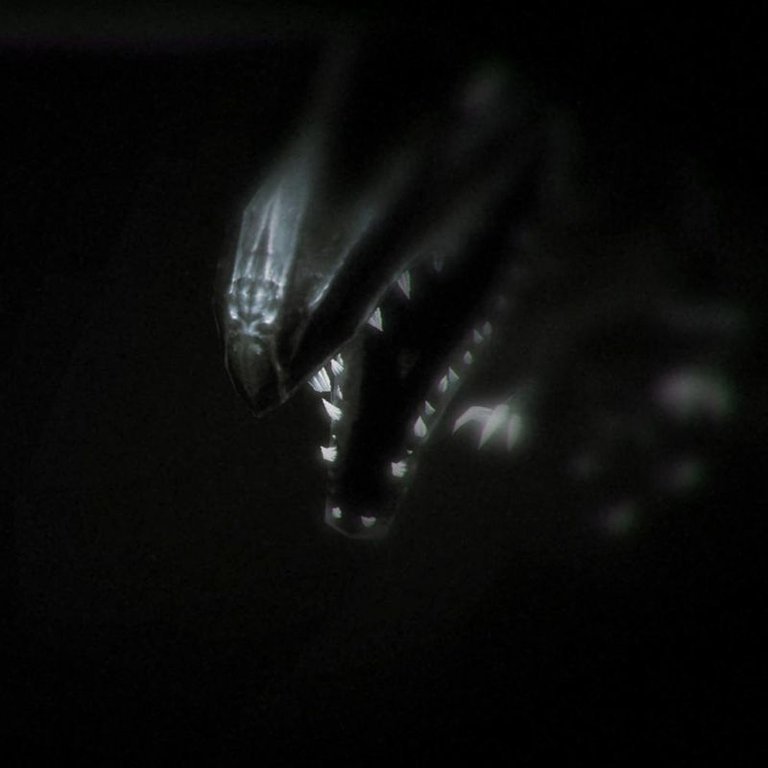
1916: Der unbekannte Krieg is a short survival horror game set in the grim trenches of World War I, viewed from a first-person perspective. Players navigate a maze-like environment as a German soldier seeking escape from raptors (dinosaurs) unleashed amidst the war-torn landscape, utilizing limited resources like a rifle, flares, and a gas mask while avoiding disorienting hazards and uncovering clues through soldier notes.
Gameplay Videos
Where to Buy 1916: Der unbekannte Krieg
PC
1916: Der unbekannte Krieg Free Download
1916: Der unbekannte Krieg Guides & Walkthroughs
1916: Der unbekannte Krieg Reviews & Reception
metacritic.com (66/100): This game was great. Sure, the graphics weren’t the best, but who cares? Graphics don’t define gameplay, especially in a horror game. The atmosphere defines a horror game, and this game certainly has fantastic atmosphere.
indiegamemag.com : As far as delivering an experience goes, 1916 is outstanding and will remain as one that will stay with me.
indiedb.com (100/100): I can honestly say this game was a masterpiece! Provided it is approached as what it is, that is, a short piece on the senselessness of war.
1916: Der unbekannte Krieg: Review
Introduction
In the annals of video game history, few titles capture the raw, disorienting terror of war like 1916: Der unbekannte Krieg. This short yet haunting survival horror game, created by Danish student collective Kriegsgraben und Stormvogel, thrusts players into the visceral, claustrophobic hell of World War I trenches—only to subvert expectations with an otherworldly twist. Born from a one-month DADIU (The National Academy of Digital, Interactive Entertainment) project in 2011, 1916 defies its indie origins to deliver an experience so immersive and psychologically unsettling that it remains a cult favorite over a decade later. Its genius lies in marrying historical authenticity with surreal horror, crafting a thesis statement on the senselessness of war through a lens of primal fear. This review dissects how 1916 transcends its student-game limitations to become a masterclass in atmosphere, mechanical innovation, and thematic resonance.
Development History & Context
1916: Der unbekannte Krieg emerged from the crucible of DADIU, Denmark’s groundbreaking educational initiative fostering collaboration between universities and art schools. Assembled in Aalborg, the Kriegsgraben und Stormvogel team—comprising 12 interdisciplinary students—conceived the game in just 30 days. This constraint, far from being a limitation, became a creative catalyst. Director David Adler and lead designer Tobias Iskov Thomsen envisioned a micro-narrative that distilled the chaos of WWI into a focused, visceral experience. Technologically, they leveraged the Unity engine, which allowed rapid prototyping while achieving the game’s signature monochromatic, grainy aesthetic.
Released on March 28, 2011, 1916 arrived during a pivotal moment in indie gaming. The success of titles like Amnesia: The Dark Descent (2010) had proven that atmospheric horror could thrive without AAA budgets. However, 1916 distinguished itself by setting its terror within a historical war context—a rarity then and now. The team’s choice to use German for environmental notes (e.g., letters and diary entries) added authenticity but sparked debate, forcing non-German speakers to navigate the trenches through visual cues alone. This design decision, initially controversial, became a deliberate tool to amplify disorientation. The game’s distribution—freeware for Windows, Mac, and browser—maximized accessibility, embodying the spirit of the burgeoning indie scene where innovation trumped polish.
Narrative & Thematic Deep Dive
At its core, 1916 is a parable about war’s dehumanizing absurdity. Players awaken as an unnamed German soldier in a trench, clutching a cryptic note: “Finde die leiten” (“Find the ladder”). The objective is simple yet desperate: escape a labyrinthine trench system. The narrative unfolds through environmental storytelling and fragmented German letters, which recount camaraderie, disillusionment, and the surreal horror of a conflict that defied rationality. As players traverse the mud-soaked corridors, they discover the fate of their comrades—mutilated corpses, discarded rifles, and hastily scribbled pleas—hinting at an unseen catastrophe.
The central twist—the invasion of raptors (robotic dinosaurs)—is both literal and metaphorical. For Adler, the raptors symbolize the irrational, primal violence of war: “The First World War was when the world lost its innocence… a conflict as nonsensical as trying to fight a dinosaur.” This surreal twist subverts war-game tropes, replacing faceless enemies with a visceral, inhuman threat. The absence of dialogue or traditional character development forces players to project their fears onto the protagonist, whose gasps, stumbles, and desperate flares for survival evoke a universal soldier. The ending—a harrowing escape to a battlefield rife with artillery fire—drives home the theme that salvation is merely a shift in hell. The raptors, absurd on paper, become a terrifying embodiment of war’s random cruelty, where survival is a matter of chance, not valor.
Gameplay Mechanics & Systems
1916’s brilliance lies in its minimalist, tactile mechanics. As a first-person “avoider” (not shooter), the game eschews traditional combat for survival. Players navigate using keyboard and mouse, with movement deliberately sluggish and disorienting to simulate fatigue and shellshock. The core loop involves scavenging—collecting flares, a rifle with precious bullets, and a gas mask—while evading raptors. Stealth is paramount; firearms are a last resort, as ammo is scarce and ineffective against the agile predators.
Innovation permeates every system:
– Environmental Interactions: Distractions are key. Players can hurl severed limbs (hands, feet) from fallen soldiers to divert raptors, transforming gore into a tactical tool.
– No-HUD Design: The absence of a heads-up heightens immersion. Items are checked by looking down at the soldier’s belt, and health is inferred from ragged breathing and blurred vision.
– Resource Scarcity: Flares offer temporary respite but are limited, forcing risk-reward decisions. The gas mask enables passage through toxic zones but feels cumbersome.
– Punishing Difficulty: With no save points, death is abrupt. A single raptor pounce ends the run, encouraging cautious exploration.
These mechanics coalesce into a state of perpetual tension. The rifle, when obtained, feels less empowering than desperate—a reminder that violence in this world is futile. Critics lauded the “brilliant design” that leaves players vulnerable from the outset, but some lamented the lack of clarity in objectives (e.g., locating German letters for clues). Yet this ambiguity is intentional, mirroring the confusion of a soldier thrust into an incomprehensible nightmare.
World-Building, Art & Sound
1916’s world is a masterpiece of oppressive atmosphere. The trenches are rendered in hazy monochrome, drenched in rain and mustard gas haze, creating a sense of claustrophobia and decay. Art director Benjamin Magnussen’s use of grain and desaturation evokes WWI photography, blurring the line between documentary and surrealism. Textures—mud splattered on boots, rust on rifles—anchor the horror in tangible reality.
Sound design is equally vital. Audio designer Morten Lund Søegaard layers auditory dread: distant artillery, the skitter of raptors, and the protagonist’s ragged breath. The absence of a soundtrack amplifies environmental sounds, making every creak or whisper feel threatening. The German letters, incomprehensible to most players, become auditory whispers, their cadence hinting at panic or despair. This sonic landscape, paired with the first-person perspective, induces genuine vertigo. One player recounted a physical jolt when shoved by a raptor, noting, “I nearly gave myself mild whiplash.” The synergy of art and sound transforms the trenches into a character—an entity that breathes, moves, and preys.
Reception & Legacy
Upon release, 1916 garnered critical acclaim for its audacity and atmosphere. Indie Game Magazine awarded it 82%, praising its “memorable experience” and ability to “really terrify you,” while GameStar lauded its “handfeste Spannung” (solid tension) despite the absurd premise. Players on IndieDB rated it 8.2/10, with one calling it “a masterpiece… a short piece on the senselessness of war.” Yet reception was mixed: some criticized the premise as “cheesy” or “cheap,” while others bemoaned the German-only notes, arguing they hindered accessibility.
Over time, 1916’s reputation has solidified as a cult classic. It is frequently cited as a precursor to games like Amnesia: The Dark Descent and Hell Let Loose, which blend historical settings with psychological horror. Its influence is evident in titles prioritizing atmosphere over action, such as This War of Mine and Tannenberg. The game’s legacy extends beyond gameplay; it’s studied in game design courses for its effective use of minimalism and constraint. As one fan noted in 2025: “Even in 2025 this game is still remembered.” Its enduring appeal lies in its refusal to explain the raptors, leaving players to grapple with war’s inherent chaos—a mystery that resonates as powerfully today as it did in 1916.
Conclusion
1916: Der unbekannte Krieg is a triumph of vision over limitation. What began as a student project evolved into a profound meditation on war’s horror, using raptors not as a gimmick but as a metaphor for the irrationality that consumes conflict. Its genius lies in its brevity: in 20 minutes, it achieves more emotional depth than many triple-A epics. The gameplay, though harsh, is a masterclass in tension; the art, a haunting tribute to WWI’s forgotten landscapes; and the sound, a symphony of dread.
While its rough edges—language barriers, sparse storytelling, and unforgiving design—may alienate some, these flaws are inseparable from its identity. 1916 is not a game about winning; it’s about enduring. In a world saturated with glorified war shooters, it stands as a vital counterpoint, a stark reminder that war’s true horror isn’t the enemy, but the void. As Adler intended, 1916 forces us to confront the dinosaurs in our own trenches—those unanswerable questions of suffering and survival. For this reason, it is not merely a game; it is an artifact, a digital time capsule that captures the essence of a lost innocence. Verdict: An essential, unforgettable journey into the abyss.