
- Release Year: 2020
- Platforms: PlayStation 4, Quest, Windows
- Publisher: Ivanovich Games SL
- Developer: Ivanovich Games SL
- Genre: Action
- Perspective: Top-down
- Game Mode: Single-player
- Gameplay: Arcade, Aviation, Direct control, Flight, Motion control, Shooter, Vehicular combat, Wargame
- Setting: Asia, Fantasy, World War II
- Average Score: 77/100
- VR Support: Yes
Description
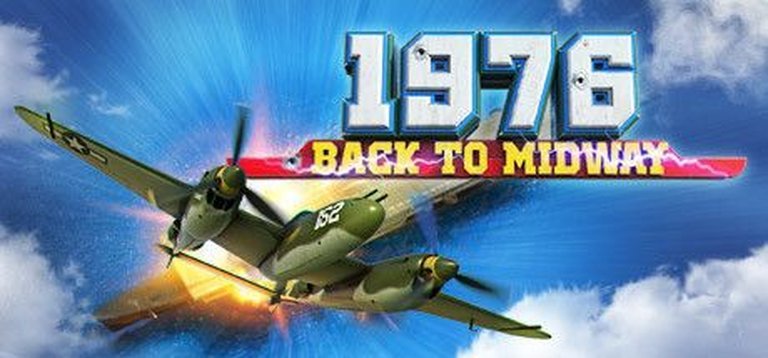
In ‘1976: Back to Midway,’ players are thrust into a dystopian 1976 where Nazi forces won World War II. Utilizing a VR time machine created by resistance scientist Dr. Ivan Ivanovich, you travel back to pivotal 1943 aerial battles to alter history and defeat the Axis powers. This arcade-style shoot ’em up blends top-down and 3D perspectives in VR, offering fast-paced dogfights, motion-controlled gameplay, and a retro-futuristic twist on classic WWII aviation combat.
Gameplay Videos
Where to Buy 1976: Back to Midway
PC
1976: Back to Midway Mods
1976: Back to Midway Reviews & Reception
metacritic.com (72/100): 1976 – Back to midway may not feature the most robust gameplay but it’s still a heck of a lot of fun.
videochums.com (72/100): Playing a shoot ’em up in VR made me realise how much potential classic arcade formulas have for the platform.
1976: Back to Midway: Review
Introduction
In an era where virtual reality (VR) often prioritizes photorealistic immersion over retro charm, 1976: Back to Midway dares to ask: What if a classic arcade shooter could transcend its 2D roots without losing its soul? Developed by Ivanovich Games, this 2020 VR title marries the frenetic energy of 1980s arcade cabinets like 1942 with a bombastic alternate-history narrative, creating an experience that’s equal parts nostalgic and novel. While its gameplay loops and technical quirks reflect the growing pains of VR experimentation, 1976: Back to Midway stands as a love letter to arcade purists—a flawed but earnest attempt to resurrect the past while gazing unflinchingly into the future.
Development History & Context
Studio Vision & Constraints
Ivanovich Games, a Spanish studio known for VR adaptations of arcade classics like Operation Warcade, positioned 1976: Back to Midway as a spiritual successor—a “quantum leap” for the genre. The team aimed to leverage VR’s spatial potential while preserving the pick-up-and-play simplicity of titles like Midway (1981). However, budget constraints and the nascent state of VR technology in 2020 forced creative compromises. The Unity engine was employed for its cross-platform flexibility, but this led to occasional performance hiccups on PlayStation VR and Quest.
The 2020 Gaming Landscape
Released amid a wave of VR innovation (Half-Life: Alyx debuted earlier that year), 1976 faced stiff competition. Yet it carved a niche by targeting retro enthusiasts craving accessible, arcade-style gameplay. Its $14.99 price point and 3-hour campaign positioned it as a mid-tier title—affordable but ambitious.
Narrative & Thematic Deep Dive
Plot & Characters
The game’s premise is gleefully absurd: In 1976, a Nazi victory in WWII has led to a dystopia where Hitler reigns as “Supreme World Chancellor” and Tyrolean pants dominate fashion. Enter Dr. Ivan Ivanovich, a mad scientist whose time machine—the Quantum Air Combat Simulator—sends players back to pivotal WWII air battles to rewrite history. The narrative thrives on self-aware camp, with Ivanovich’s fourth-wall-breaking dialogue (“Is this how fighter plane time travel works?”) echoing Rick and Morty-esque humor.
Themes & Satire
Beneath the slapstick lies sharp commentary on authoritarianism and the futility of war. The Nazis’ tyrannical rule is depicted through exaggerated propaganda and environmental details (e.g., swastika-adorned zeppelins), while the resistance’s scrappy ingenuity mirrors indie devs fighting for creative freedom. The time-travel mechanic underscores the cyclical nature of conflict—a theme underscored by the game’s roguelike upgrade system, where progress is hard-won and easily undone.
Gameplay Mechanics & Systems
Core Loop & Combat
At its heart, 1976 is a vertical-scrolling shooter with VR twists. Players control a fighter plane via traditional top-down view or enter “Immersion Zones”—first-person or behind-the-plane segments where dodging bullets feels palpably tense. The shift between perspectives is seamless, with enemies “popping off” the screen into 3D space. However, critics noted sluggish controls in immersion zones, particularly with PlayStation Move controllers.
Progression & Flaws
The permanent upgrade system lets players enhance firepower, health regen, and coin multipliers using in-game currency. While satisfying, this system undermines leaderboard integrity, as high scores rely more on grind than skill. Missions often recycle objectives (e.g., “destroy 10 fighters”), leading to repetition. Glitches, like a plane suddenly filling the screen or erratic audio mixing, further mar the experience.
World-Building, Art & Sound
Visual Design
The game’s aesthetic is a fusion of retro and retro-futuristic. The 2D battle screen emulates CRT scanlines and pixelated explosions, while VR effects—like planes flying behind the player—add depth. Enemy designs range from historically inspired Zero fighters to absurd Nazi mechs, blending history with fantasy.
Sound Design
A military-inspired synth soundtrack elevates the urgency, but audio inconsistencies plague immersion. Voice lines from Dr. Ivanovich are often drowned out by static, and boss battles suffer from abrupt volume shifts.
Reception & Legacy
Critical Response
1976 garnered mixed reviews. Critics praised its VR innovations (Video Chums: “7.2/10 – A heck of a lot of fun”) but panned its repetitive core (The VR Grid: “6.5/10 – Hampered by genre constraints”). Steam users were more forgiving (88% positive), citing its nostalgic value.
Industry Influence
Though not a blockbuster, 1976 demonstrated VR’s potential for retro revival. Its “Immersion Zones” inspired later titles like 2076: Midway Multiverse (2021), refining the concept. For better or worse, it remains a cult favorite among shmup enthusiasts.
Conclusion
1976: Back to Midway is a paradoxical gem—a game that stumbles yet soars. Its janky controls and repetitive missions betray its indie roots, but its heart pulses with unabashed reverence for arcade history. For VR adopters craving a whimsical, time-bending dogfight, this title delivers. It may not rewrite the annals of gaming, but as Dr. Ivanovich might quip: Who needs history when you’ve got style?
Final Verdict: 7/10 – A flawed but passionate ode to arcade’s golden age, best enjoyed by VR early adopters and shmup devotees.