
- Release Year: 2018
- Platforms: Browser, Windows
- Publisher: Kalopsia Games
- Developer: Kalopsia Games
- Genre: Adventure, Educational
- Game Mode: Single-player
- Gameplay: Binary choices, Interactive fiction, Text adventure
- Setting: 1970s, Europe, Sicily
Description
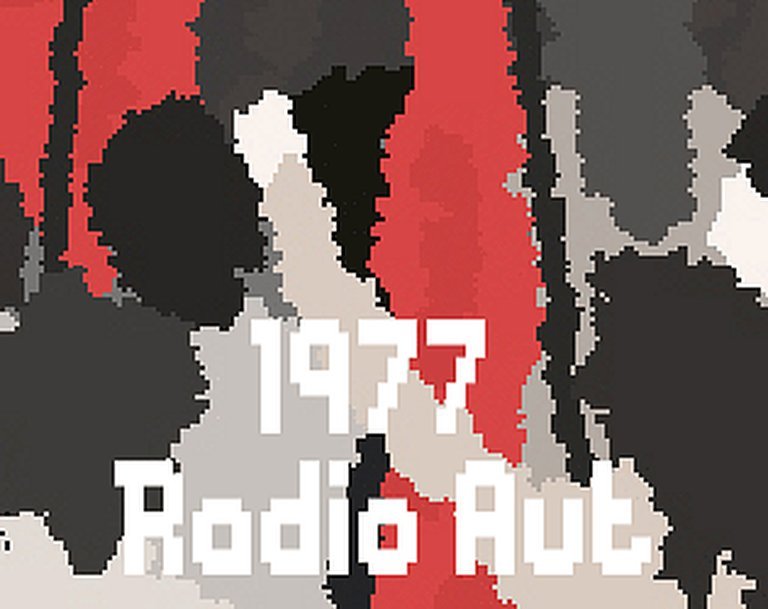
1977: Radio Aut is a short interactive narrative game set in 1970s Sicily, based on the true story of Peppino Impastato, a Sicilian anti-mafia activist and son of a mafia boss. Through binary choices spanning from 1948, players explore key moments in his life, his activism, and his role as the voice of the real Radio Aut radio station, blending adventure gameplay with educational historical content about the fight against organized crime.
1977: Radio Aut Reviews & Reception
avclub.com : 1977: Radio Aut showed me a history I had never known, and inspired me to look further into anti-Mafia activism in Italy, something I never would have thought about had I not played the game.
1977: Radio Aut: A Solemn Digital Memorial for Sicily’s Anti-Mafia Martyr
Introduction: The Weight of a Single Choice
In an industry often saturated with power fantasies, visceral spectacle, and the sanitized spectacle of historical conflict, 1977: Radio Aut arrives like a somber, necessary whisper. It is not a game about winning, but about witnessing; not about player agency in the traditional sense, but about understanding the crushing weight of circumstance and conviction. Developed in a burst of creative purpose during the 2018 Global Game Jam by Alex Camilleri, this short, free interactive narrative is a digital epitaph and a history lesson rolled into one. It tells the story of Giuseppe “Peppino” Impastato, a real-life Sicilian journalist and activist who, born into a Mafia family, dedicated his life to exposing its brutality through the alternative radio station Radio Aut before being murdered by the organization in 1978. This review argues that 1977: Radio Aut is a landmark in educational and documentary game design. Through its austere mechanics, stark aesthetic, and unflinching historical fidelity, it transcends its limitations to deliver a profound emotional and intellectual experience, successfully challenging monolithic stereotypes about the Mafia and honoring a legacy of resistance that deserves global recognition. It exemplifies how the independent game development space can serve as a vital channel for marginalized histories and personal testimony.
Development History & Context: A Jam Game Forged from Personal History
The genesis of 1977: Radio Aut is intrinsically linked to its creator’s biography and the ethos of the Global Game Jam. Alex Camilleri, operating under the moniker Kalopsia Games, is a solo developer whose portfolio reveals a consistent interest in narrative-driven, often experimental projects. The game was developed over the 48-hour timeframe of the 2018 Global Game Jam, an event that often produces fascinating prototypes, but rarely something with such deliberate historical weight and finished polish.
Camilleri’s stated motivation, as detailed on the game’s Itch.io page, is deeply personal. As a native of Palermo who left Sicily, he was struck by the profound international ignorance regarding the anti-Mafia movement. He observed that the Mafia, in global media, frequently ossifies into an offensive caricature—a romanticized trope of honor and power—which fundamentally disrespects the thousands of Sicilians, like Impastato, who were killed or lived in terror. This frustration became the game’s核心 (héxīn – core) purpose: to counter that stereotype by telling a true story of courage and systemic oppression from the inside. The technical constraints of a Game Jam—limited time, a need for simplicity—paradoxically became artistic virtues. Built in GameMaker Studio, a tool accessible to indie developers, the game’s “short interactive story” format was not a limitation but a necessary focus, ensuring the historical narrative remained undistracted by complex systems.
This context places 1977: Radio Aut in a specific niche of the 2010s indie landscape. It shares DNA with other historically-conscious “walking simulators” and visual novels that prioritize atmosphere and narrative over gameplay complexity, such as Papers, Please or 1979: Revolution: Black Friday. However, its specificity—focusing on a single, non-fiction Italian activist rather than a broad political revolution—and its origins in a Game Jam set it apart as a raw, urgent piece of digital historiography rather than a fully-featured commercial product.
Narrative & Thematic Deep Dive: The Architecture of a Martyrdom
The narrative of 1977: Radio Aut is its absolute pillar, meticulously constructed from historical records. The game spans three decades, from 1948 (Impastato’s birth) to his death in 1978, but compresses this into a series of key vignettes. The plot is not invented; it is curated from the biography of Peppino Impastato, as referenced in Camilleri’s sources (notably the website peppinoimpastato.com and books by Umberto Santino and Stefano Vitale).
Structure and Plot Beats: The story is divided into chapters, each representing a pivotal phase. It begins with childhood, establishing the central, haunting contradiction: Peppino is the son of Luigi Impastato, a respected Mafia boss (within the Cosa Nostra‘s twisted code), yet he witnesses the Mafia’s violence and exploitation firsthand. Key moments include the murder of a local Socialist Party activist, the mysterious death of his beloved uncle (also a Mafia figure), his political awakening during university in Palermo, and his founding of Radio Aut in 1977. The radio station becomes the narrative’s engine. Through it, he broadcasts satirical programs like “La cretina commedia” and investigative segments accusing the Mafia of controlling local politics and business, directly naming his father’s associates. The game’s climax is inevitable and tragic: his assassination on May 9, 1978, via a car bomb—a classic Mafia lupara bianca (white shotgun) tactic meant to destroy evidence and send a message. The chilling postscript notes his murder was only officially ruled as such by the Italian Antimafia Commission two decades later, in 1998.
Characters as Historical Vectors: Characters are drawn with minimalist strokes but are loaded with symbolic meaning.
* Peppino Impastato: The player’s avatar is not a customizable hero but a historical constant. The binary choices presented to the player do not change his ultimate fate but guide the player’s understanding of his motivations—whether to probe his mother’s silent complicity, challenge his father’s authority, or focus on his radio work. This design reinforces the theme: his path was chosen in defiance of immense pressure, not by player fiat.
* Luigi Impastato: The father is a complex antagonist. He represents the gravitational pull of the Mafia—a system of “respect,” family obligation, and silent consent. His disappointment and attempts to recruit Peppino are not mere villainy; they are the arguments of a patriarch trying to preserve his world, making Peppino’s rebellion all the more painful and significant.
* The Mother: Her silence is a thematic masterstroke. She embodies the terror and resignation of many Sicilian women trapped within the system, unable to speak against it for fear of worse consequences. Her few lines are devastating.
* Comrades and Radio Staff: Figures like his friend and fellow activist Giovanni (inspired by real-life companion Giovanni Spampinato) represent the communal solidarity of the anti-Mafia movement. Their presence highlights that this was not a lone wolf struggle, but a collective, dangerous endeavor.
Dialogue and Language: The game’s use of language is a critical, oft-cited feature. As noted by Italy for Movies, Sicilian dialect is incorporated into some dialogue, immediately grounding the experience in its specificlocale (locale). This is not just flavor; it’s an act of cultural specificity against the homogenizing “Mafia” stereotype. The English translation (the game is bilingual) is stark, functional, and often heavy with subtext. A line like “The Mafia is not an abstract thing. It’s in the land, in the offices, in the houses” cuts to the core of Camilleri’s thesis: the Mafia was a pervasive, tangible system of oppression, not a romantic Brotherhood.
Underlying Themes: The game is a dense tapestry of interconnected themes:
1. The Personal vs. The Political: Every choice Peppino makes has a familial cost. His activism is a direct repudiation of his father and the “family business,” making his struggle an intimate civil war.
2. The Power of Alternative Media: Radio Aut is the game’s central metaphor and weapon. In an environment where official channels are corrupt, the free airwave becomes a tool of truth-telling and community mobilization. The game simulates this by having players engage with script excerpts from actual broadcasts (like “Western a Mafiopoli”), making the player experience the act of subversive transmission.
3. The Banality of Evil and The System: The Mafia is not presented as cartoonish gangsters but as a normalized, integrated part of social and political life—the “system” Peppino fights. The horror lies in its acceptance by the community and institutions.
4. Martyrdom and Historical Erasure: The game’s ending is not triumphant. Peppino dies. The finality underscores the cost, and the note about the 1998 ruling highlights how the state was complicit in erasing his murder for decades. This is a story about justice delayed, not delivered.
Gameplay Mechanics & Systems: Agency as Understanding, Not Control
1977: Radio Aut consciously rejects traditional gameplay loops in service of its narrative goals. Its mechanics are deliberately simple, almost academic in their function.
Core Loop and Player Interaction: The gameplay is a linear progression through a fixed sequence of scenes, each depicting a moment from Peppino’s life. The interface is a fixed, flip-screen visual style (a retro nod, perhaps, to text adventures of the 80s), with a central text box and minimalistic character portraits or symbolic backgrounds. Player interaction is almost entirely through binary choices: “Ask” or “Don’t Ask”; “Confront” or “Remain Silent”; “Broadcast” or “Stay Quiet.” These are not morality meters that lead to different endings; they are pedagogical tools. As the AV Club review astutely notes, the game is “slim on narrative choice, as you might expect from a historical retelling.” The choice’s purpose is not to alter history but to guide the player’s attention—to choose whether to delve deeper into the psychological toll on his mother, the economic mechanisms of Mafia control, or the technical details of running a pirate radio station. The “correct” choice is often the one that aligns with Peppino’s historical courage, but the game rarely punishes the “cautious” choice with a game-over; it simply provides less insight, subtly reinforcing the idea that silence also has a cost.
Character Progression and Systems: There is no character progression in an RPG sense. Peppino does not gain stats or skills. The “progression” is chronological and thematic, moving him from boyhood to student to activist to martyr. The only system is the accumulation of understanding—the player’s growing comprehension of the Mafia’s systemic nature and the bravery required to resist it. The UI is deliberately sparse, with chapter select ([M] and [N] keys) allowing for revisiting scenes, encouraging players to explore different dialogue paths to piece together the full picture.
Innovation and Flaws: The game’s innovation is in its narrative architecture. It uses the interactive medium not to simulate a world, but to mediate a historical testimony. The binary choice system, while limited, actively engages the player in the process of investigation. The flaw, from a conventional game design perspective, is a near-total lack of replayability once all branches are seen. Its 10-15 minute duration is both a strength (perfect for an educational setting) and a weakness for those seeking deeper immersion. Some may find the passivity—watching events unfold based on historical fact—frustrating. However, within its designed purpose as an interactive documentary, this passivity is the point. The player is an observer of a life already lived, a witness to a history that cannot be changed.
World-Building, Art & Sound: Evocation Through Absence
The game’s world is not built through explorable 3D spaces or dense inventories, but through potent, minimalist suggestions.
Visual Direction and Art: The “Fixed / flip-screen” style (per MobyGames) consists of still, often slightly desaturated or gritty images. These are not detailed scenes but evocative tableaus: a stark family home interior, a crowded university classroom, the dimly lit control room of Radio Aut. The character art is simple, symbolic portraiture. This aesthetic is powerful in its restraint. It avoids the trap of over-representation. The Sicilian landscape is implied through text and music rather than rendered, allowing the player’s imagination, fueled by the grim subject matter, to fill in the oppressive atmosphere of a town under Mafia influence. The art style aligns with the game’s ethos: it is a memorial plaque, not a spectacle.
Sound Design and the Radio Motif: This is arguably the game’s most potent element. As the title implies, radio is central. The soundscape is built from two key components:
1. Ambient Sound: Subtle, moody background tracks that suggest place—the murmur of a café, the bustle of a street, the tense quiet of a family dinner.
2. The Broadcasts: The game’s emotional peaks are the segments where Peppino’s voice (or the text of his scripts) is heard over the airwaves. The AV Club review correctly highlights that the “soundscape… complements its simple presentation.” Hearing the excerpt from “La cretina commedia”—a satirical, biting critique of Mafia-controlled politics—breaks the fourth wall of the narrative and thrusts the player directly into the subversive act of broadcasting. It makes the player feel the risk, the defiance, and the power of that specific historical moment. The use of actual scripts from Impastato’s archives (cited on Itch.io) gives these segments an electrifying documentary authenticity.
Atmosphere and Setting: The setting—Sicily in the 1960s and 70s—becomes a character through textual description, dialect, and thematic weight. The game doesn’t need to render the glorious architecture of Palermo; it renders the social architecture: the looks of avoidance, the unspoken rules, the fear in a mother’s eyes. The atmosphere is one of simmering tension beneath a surface of normalcy, perfectly captured by the game’s slow pacing and oppressive musical tones.
Reception & Legacy: A Quiet Catalyst for Historical Curiosity
At launch in February 2018, 1977: Radio Aut existed almost entirely in the ecosystem of the Global Game Jam and the Itch.io community. Its commercial “release” was nominal, as it has always been free. MobyGames records a tiny player count (1) and a 4.0/5 average from a single rating, while Itch.io shows a much healthier 4.4/5 from 84 ratings, suggesting a small but deeply appreciative audience.
Critical Reception: The most significant critical attention came from outlets like The AV Club, whose review by Dante Douglas provides the most lucid analysis of the game’s impact. Douglas frames it perfectly: “Games, like any other medium, can be used to detail the intricacies of a struggle that the audience did not directly take part in.” He identifies its core power as being in a “less explored” angle—not the glory of battle, but the pain of resistance. This review became a key touchstone for understanding the game’s ambition. Other coverage was sparse, typical for a small, non-commercial release, but the tone was uniformly respectful and often moved by its subject matter.
Legacy and Influence: Its legacy is not one of mainstream influence on AAA mechanics but of proof of concept and ethical inspiration.
1. Educational Tool: Its clear, short, factual structure makes it an ideal candidate for classroom use in history, media studies, or sociology courses focusing on civil disobedience, Mafia history, or Italian politics. Its free, browser-based nature removes all barriers to access.
2. A Model for “Documentary Games”: It stands as a clear example for future developers wanting to tackle real histories. It shows that a powerful story, told with fidelity and respect, does not require a large budget or complex systems. The choice to forgo player-driven outcomes to preserve historical truth is a bold and defensible design stance.
3. Cultural Preservation: In line with Camilleri’s mission, the game has undeniably brought the story of Peppino Impastato to an international, gaming audience that would almost certainly never have encountered it. The fact that this review itself is being written based on sources that now include his biography is testament to its success as an educational vector. It joins other media, like the 2000 film I Cento Passi (which Camilleri lists as a resource), in keeping this history alive, but in a new, interactive form.
4. A Counter-Narrative: Its most important legacy may be in providing a direct, interactive counterpoint to theMafia glorification found in so many games and films. Games like Mafia: The City of Lost Heaven or The Godfather games build entire ludic universes around organized crime. 1977: Radio Aut does not allow the player to be the Mafia; it asks the player to understand its victims and resisters. This is a vital corrective.
Conclusion: A Defiant Whisper in the Archive
1977: Radio Aut is not a game for everyone. It offers no power fantasy, no puzzle to Solve, no thrilling combat. It is, instead, for the curious, the historically-minded, and those who believe that games can be vessels for somber truth. Its limitations—the binary choices, the short duration, the static art—are the very things that focus its laser-like beam on its subject. It is a game that understands its subject so well that it refuses to exploit it for entertainment value. The tragic arc of Peppino Impastato’s life is presented not as a “what if” scenario but as an immutable lesson, and the player’s role is to bear witness.
In the vast, often amnesiac archive of video games, 1977: Radio Aut is a crucial entry. It demonstrates the medium’s capacity for memorialization and education on a deeply human scale. Alex Camilleri has created more than a game; he has built a digital memorial and a accessible historical document. By choosing to tell this specific story in this specific way, he has honored Peppino Impastato’s legacy far more effectively than any tradition-bound “historical” epic could. It is a quiet, defiant, and essential piece of work—a five-star act of remembrance that earns its place in gaming history not through innovation in mechanics, but through unwavering integrity of purpose. As the AV Club piece concludes, it shows how powerful this medium can be when it turns its gaze from the conquerors to those who, against all odds, dare to speak the truth.
Final Verdict: A landmark in documentary and educational game design. Its historical fidelity and emotional resonance far outweigh its minimalist gameplay, making it an essential, sobering experience for anyone interested in the potential of games as a vehicle for truth.