
- Release Year: 2010
- Platforms: Windows
- Publisher: magnussoft Deutschland GmbH
- Genre: Compilation
- Game Mode: Single-player
Description
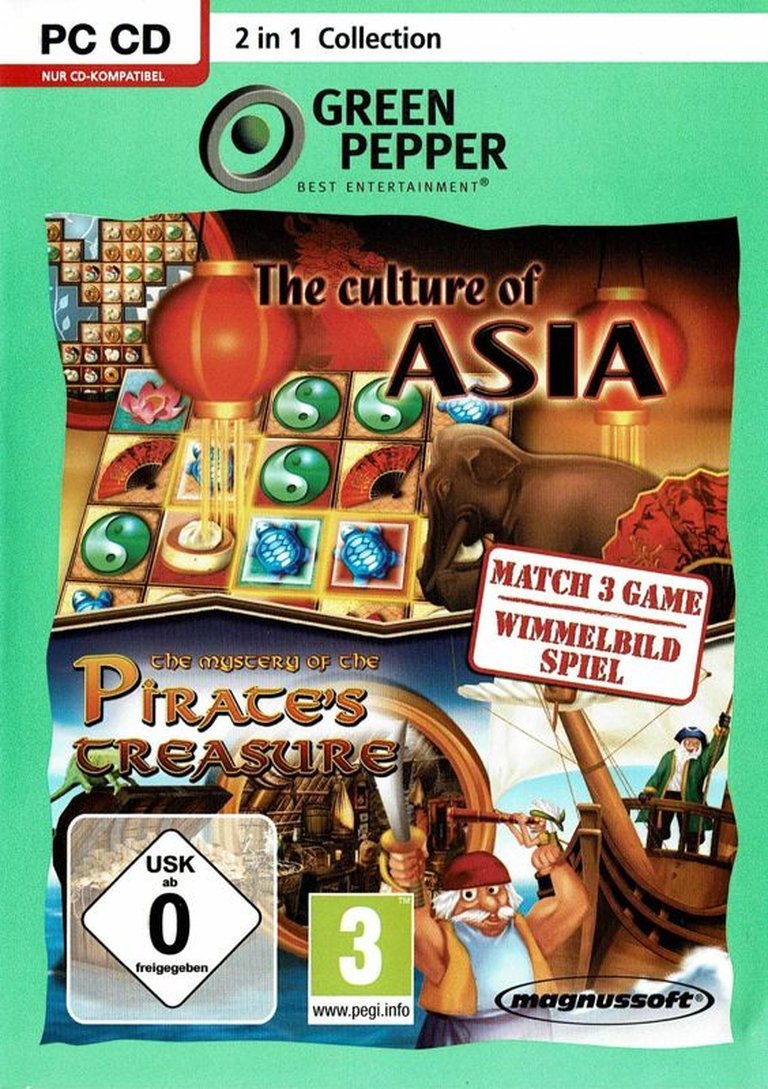
The ‘2 in 1 Collection: The Culture of Asia & The Mystery of the Pirate’s Treasure’ is a compilation game that offers two distinct adventures. The first game, ‘The Culture of Asia,’ immerses players in the rich cultural heritage of Asia, allowing them to explore various traditions and landmarks. The second game, ‘The Mystery of the Pirate’s Treasure,’ takes players on a thrilling quest to uncover hidden pirate treasures, filled with puzzles and secrets to unravel.
2 in 1 Collection: The Culture of Asia & The Mystery of the Pirate’s Treasure: Review
Introduction
In the vast ocean of video game compilations, 2 in 1 Collection: The Culture of Asia & The Mystery of the Pirate’s Treasure stands as a curious artifact—a relic of early 2010s budget gaming that embodies both the ambitions and limitations of its era. Released in 2010 by German publisher magnussoft Deutschland GmbH, this dual-title package attempts to marry education and adventure, offering players a dive into Asian cultural history and a swashbuckling treasure hunt. While its legacy is overshadowed by obscurity, this compilation serves as a fascinating case study in the era’s commodification of niche gaming experiences. This review unpacks its design, context, and underappreciated role in preserving genre diversity during a transformative period for PC gaming.
Development History & Context
Studio Background & Vision
Magnussoft, a German publisher active in the 2000s and early 2010s, specialized in budget-friendly software, from productivity tools to low-cost games. Their catalog often targeted casual audiences, with compilations like this one aiming to maximize value by bundling disparate experiences. The Culture of Asia and The Mystery of the Pirate’s Treasure were likely acquired or licensed from smaller developers, reflecting magnussoft’s strategy of repackaging existing content for retail shelves.
Technological Constraints & Era
By 2010, digital storefronts like Steam were gaining momentum, yet physical CD-ROM compilations still catered to markets with slower internet adoption. The game’s CD-ROM format and PEGI 3 rating suggest it targeted families or educational institutions, prioritizing accessibility over technical ambition. The lack of advanced graphics or sound—common for budget titles of the time—highlights the compromises made to keep production costs low.
Gaming Landscape
This compilation arrived during a transitional phase for PC gaming. While AAA studios leaned into cinematic narratives and online multiplayer, smaller publishers like magnussoft filled gaps with bite-sized, thematic experiences. The bundling of The Culture of Asia (an educational title) with The Mystery of the Pirate’s Treasure (an adventure game) mirrors the industry’s experimentation with hybrid audiences—a gamble that yielded mixed results.
Narrative & Thematic Deep Dive
The Culture of Asia: A Surface-Level Exploration
Though specifics are scarce, the title implies an educational focus on Asian history, art, or traditions. Likely structured as a series of interactive lessons or mini-games, it may have covered topics like calligraphy, festivals, or geography. The lack of critical reception suggests its execution was functional but shallow, missing the depth of contemporaries like Where in the World Is Carmen Sandiego?
The Mystery of the Pirate’s Treasure: Adventure by Numbers
This component likely follows a standard treasure-hunt plot, tasking players with solving puzzles or navigating environments to uncover loot. Pirate-themed games were popular in the 2000s (e.g., Monkey Island), but budget constraints probably reduced this entry to simplistic mechanics and barebones storytelling. Themes of exploration and discovery would have been central, albeit without narrative nuance.
Shared Themes: Discovery & Accessibility
Both titles emphasize learning and exploration—one through cultural immersion, the other through adventure. However, the pairing feels disjointed, lacking a cohesive thread beyond their shared appeal to casual玩家.
Gameplay Mechanics & Systems
Compilation Structure
The two games operate as separate executables, typical of early 2010s compilations. Menu navigation would have been rudimentary, with no shared UI or progression systems.
The Culture of Asia: Edutainment Mechanics
Assuming it follows genre conventions, gameplay might involve:
– Point-and-click interactions with cultural artifacts.
– Quiz-style challenges testing knowledge of Asian history.
– Minimal player progression beyond unlocking informational segments.
The Mystery of the Pirate’s Treasure: Adventure Lite
Potential mechanics include:
– Inventory-based puzzles (e.g., combining items to progress).
– Static environments with hidden-object elements.
– Linear progression with little replay value.
Flaws & Innovations
While neither title introduced groundbreaking systems, their simplicity could be seen as a strength for novice players. However, the lack of polish—clunky controls, repetitive tasks—likely undermined engagement.
World-Building, Art & Sound
Visual Direction: Budget Authenticity
The Culture of Asia likely relied on stock imagery or basic 2D art to depict temples, landscapes, and artifacts. The Mystery of the Pirate’s Treasure probably featured generic pirate aesthetics—rustic taverns, tropical islands—rendered with limited detail.
Sound Design: Functional but Forgettable
Expect MIDI-style music and sparse voice acting, if any. Ambient sounds (e.g., ocean waves for the pirate game) would have been simplistic, serving as background filler rather than immersive tools.
Atmosphere: A Missed Opportunity
While the themes had potential, execution likely failed to captivate. The educational title may have felt like a digital textbook, while the pirate adventure lacked the charm or humor of its peers.
Reception & Legacy
Commercial & Critical Reception
No reviews or scores are documented, signaling minimal marketing and a niche audience. The game’s commercial performance is similarly opaque, though magnussoft’s budget model suggests it was profitable at low sales thresholds.
Evolution of Reputation
Today, the compilation is a footnote, remembered—if at all—as an example of the budget CD-ROM market’s last gasp. Its absence from retrospectives underscores its lack of innovation.
Influence on the Industry
While not directly influential, it reflects broader trends: the bundling of educational and casual games, the decline of physical media, and the challenges of catering to fragmented audiences.
Conclusion
2 in 1 Collection: The Culture of Asia & The Mystery of the Pirate’s Treasure is neither a masterpiece nor a disaster. It is a time capsule—a modest, utilitarian product that aimed to educate and entertain with limited resources. For historians, it offers insight into the budget gaming ecosystem of the early 2010s; for players, it serves as a reminder of how far accessibility and design have advanced. While its place in gaming history is minor, it deserves recognition for its earnest, if flawed, attempt to bridge worlds.
Final Verdict: A forgettable but culturally significant compilation—a relic best suited for completists and retro gaming archeologists.