
- Release Year: 2016
- Platforms: Windows
- Publisher: BrainCraft Gaming, FlynnFour Games
- Genre: Action
- Perspective: Diagonal-down
- Game Mode: Single-player
- Gameplay: RPG elements, Shooter
- Setting: Europe, Post-apocalyptic
- Average Score: 28/100
Description
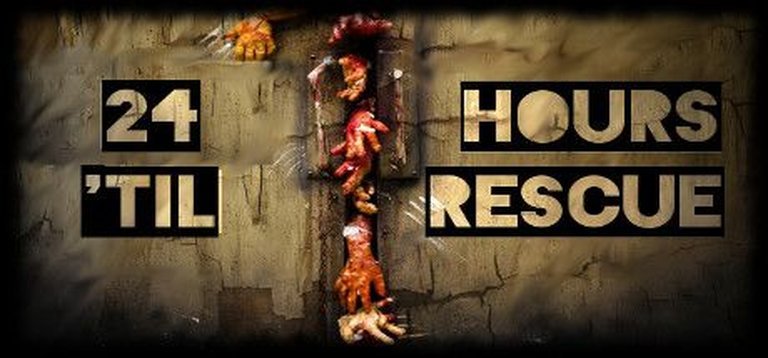
24 Hours ‘Til Rescue is set in a dynamic, post-apocalyptic European city overrun by the undead, where players must survive for 24 hours until rescue arrives by scavenging for weapons and supplies, finding fellow survivors, and undertaking perilous journeys through infected locations like hospitals and sewers.
Gameplay Videos
Where to Buy 24 Hours ’til Rescue
PC
24 Hours ’til Rescue Cracks & Fixes
24 Hours ’til Rescue Patches & Updates
24 Hours ’til Rescue Mods
24 Hours ’til Rescue Guides & Walkthroughs
24 Hours ’til Rescue: Review
Introduction
In the saturated landscape of indie survival horror, 24 Hours ’til Rescue (2016) emerges as a stubborn, uncompromising relic of a bygone era—a 2D pixel-art descent into urban hell where every second counts and death is a constant companion. Developed by the duo of J. Fletcher and Michael Flynn under the banners of FlynnFour Games and BrainCraft Gaming, this Windows-exclusive title arrives at a peculiar moment in gaming history: the peak of the “roguelike” craze, yet built on RPG Maker with a deliberate defiance of modern conveniences. Its legacy lies not in technical prowess or groundbreaking innovation, but in its raw, punishing philosophy: survival is a series of calculated gambles, and escape is a victory measured in high scores, not story. This review argues that 24 Hours ’til Rescue is a flawed, yet fascinating artifact—a masochistic love letter to resource scarcity and emergent storytelling that, for all its jank, captures a unique brand of tension few games dare to replicate.
Development History & Context
FlynnFour Games, a small outfit helmed by Michael Flynn, was no stranger to post-apocalyptic simulations. Their 2015 title Apocalypse Hotel: The Post-Apocalyptic Hotel Simulator! served as both a spiritual predecessor and engine framework for 24 Hours ’til Rescue. The collaboration with publisher BrainCraft Gaming positioned the title as a budget-friendly ($3.99 Steam release), emphasizing accessibility over polish. Technologically, the game leveraged RPG Maker’s limitations to its advantage: diagonal-down 2D scrolling fostered claustrophobic urban vistas, while the engine’s tile-based constraints forced innovative environmental storytelling. Released February 19, 2016, the title arrived amidst a wave of zombie-themed indies (e.g., Dead Rising spin-offs, Zombie Night Terror) but distinguished itself through its relentless difficulty and time-locked mechanics. The creators’ vision, as stated in the Steam blurb, was unapologetically hardcore: “Dying is part of the game.” This ethos, coupled with the burgeoning trend of “permadeath” in roguelikes (e.g., Rogue Legacy), positioned 24 Hours ’til Rescue as a niche offering for masochists—a deliberate counterpoint to the streamlined survival experiences dominating the market.
Narrative & Thematic Deep Dive
The narrative is a masterclass in minimalist storytelling. Set in a European city under siege by undead, the premise is brutally simple: escape within 24 hours as rescue arrives “slim to none.” The world-building is emergent, not explicit. Through environmental clues—barricaded streets, scrawled notes on walls, and time-specific events—the game suggests a societal collapse rooted in bureaucratic failure (e.g., the “crazy mayor” who hoards supplies while the city burns). Dialogue is sparse, relegated to survivors’ last words (“Help me!” or “Run!”) and cryptic radio snippets, reinforcing isolation. Ten playable characters, each with unique backstories implied through their starting locations and stats (e.g., a prepper with bonus scavenging vs. a soldier with combat perks), serve as narrative lenses. Their untimely deaths at specific times (e.g., a character vanishing at 18:00) inject urgency and foster a meta-narrative of loss. Thematically, the game fixates on futility. The 24-hour timer is both a constraint and a metaphor for hopelessness—players are trapped in a cycle of scavenging and dying, learning only through failure. The hospital questline, requiring a “Patient 0” sample, hints at a larger conspiracy, but remains unresolved, mirroring the chaos of its setting. This abstraction makes the city itself the true antagonist: a character built from pixelated ruins and existential dread.
Gameplay Mechanics & Systems
24 Hours ’til Rescue’s gameplay is a punishing loop of risk assessment and resource management. Core mechanics include:
- Character & Progression: Ten characters, but only two unlocked initially. Others must be “found” alive in the city, becoming AI companions. Each has distinct stats (health, speed, scavenging) and starting points, encouraging replayability. Permadeath is default, though a “casual” mode exists (sans high-scores).
- Crafting & Looting: The heart of the system. Hundreds of items—from canned food to scrap metal—are lootable from every building. Crafting transforms these into guns, ammo, or health snacks, but requires precious time and inventory space. This creates agonizing choices: craft a chainsaw or save metal for ammo?
- Combat: Top-down shooter mechanics with tank-like controls. Ammo is scarce, and zombies swarm in predictable yet overwhelming numbers. Stealth is nonviable due to limited line of sight and sound design, forcing players into desperate shootouts.
- Time & Events: A day/night cycle with real darkness (requiring light sources) and time-sensitive missions (e.g., rescue a survivor before 10 PM). Missions send players to the infested hospital, sewers, or mayor’s mansion, often with inadequate preparation.
- UI & Polish: The RPG Maker foundation shows. Clunky inventory menus, hit detection quirks, and unresponsive controls frustrate. The “Sandbox” tag is misleading; the city is semi-open, but quest markers and objectives funnel players linearly.
Innovation lies in its integration of time pressure with permadeath. Dying isn’t a setback—it’s a lesson. Yet, the game’s difficulty often feels unfair: a single zombie can end a run, and crafting timers often clash with combat urgency. This tension, however, is 24 Hours ’til Rescue’s defining trait.
World-Building, Art & Sound
The European city, rendered in pixel art, is a triumph of environmental storytelling. Hand-crafted districts—from residential blocks to industrial zones—are littered with details: a toy soldier in a nursery, a half-eaten sandwich on a diner counter. These fragments imply lives shattered, amplifying the horror. The “dynamic” world is less interactive than advertised but evocative: barricades block paths, fires illuminate alleyways, and abandoned cars create chokepoints. Sound design complements this ambience. Distant groans of zombies punctuate silence, while crafting sounds (scraping metal, boiling pots) add tension. The day/night cycle shifts the atmosphere: daylight offers visibility but exposes players, while night’s darkness forces reliance on flares or gunshots, drawing enemies. Despite its budget origins, the art direction leans into grit. Pixelated gore and flickering lights enhance the post-apocalyptic vibe, though repeated tile textures reduce immersion. The hospital’s dim corridors and the sewers’ rat-infested dampness are standout locations, turning traversal into a visceral experience.
Reception & Legacy
At launch, 24 Hours ’til Rescue polarized audiences. Metacritic lists no critic scores, but Steam reviews reflect a “Mostly Negative” reception (28/100 on Steambase, based on 88 reviews). Critics praised its atmosphere and tension but condemned its jank and unfair difficulty. A common refrain: “Dying is part of the game” felt less like a design philosophy and more like an excuse for poor balancing. Player reviews echoed this, with complaints about “unforgiving controls” and “tedious backtracking.” Yet, a niche community emerged, drawn to its roguelike elements and high-score chasing. Its legacy is modest but enduring. As a prequel to Apocalypse Hotel, it showcased FlynnFour Games’ commitment to post-apocalyptic settings, influencing similar indie titles (e.g., Small Hours, 2019). Culturally, it became a cautionary tale about “hardcore” design—proving that difficulty without depth alienates more than it engages. Today, it’s remembered as a curio: a $3.99 “survival experience” for masochists, preserved in digital archives like MobyGames.
Conclusion
24 Hours ’til Rescue is a game of contradictions—artfully crafted yet technically flawed, brutally difficult yet compellingly tense. Its strengths lie in atmosphere and emergent storytelling, turning a pixelated city into a character of decay. Its weaknesses—unresponsive controls, unfair design, and repetitive loops—prevent it from being a classic. Yet, in an era of sanitized survival games, its refusal to coddle players feels radical. It belongs in the pantheon of “difficult” indie titles not for its polish, but for its uncompromising vision: survival isn’t about winning, but about learning to die better. For the patient masochist, 24 Hours ’til Rescue offers a unique, harrowing dance with oblivion. For most, it’s a historical footnote—a reminder that some games are less about escape, and more about the desperate scramble to survive the next hour. Verdict: A flawed but fascinating artifact of post-apocalyptic indie gaming.