
- Release Year: 2002
- Platforms: Windows
- Publisher: US – ACTION, s.r.o.
- Genre: Compilation
- Perspective: Not applicable
- Game Mode: Single-player
- Average Score: 73/100
Description
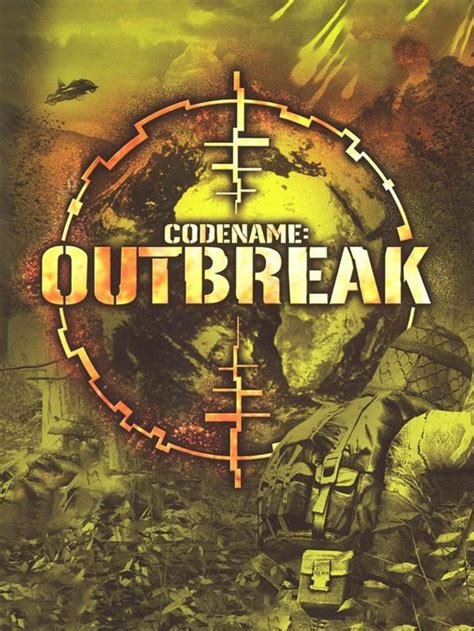
The 2in1 Pack bundles two distinct games: Hooligans (2002) and Venom Codename: Outbreak (2001). Hooligans is an action game centered around football hooligans, while Venom Codename: Outbreak is a first-person shooter where you battle parasitic aliens that have invaded Earth following a meteor shower. Players can enjoy both titles with their unique gameplay mechanics and storylines.
2in1 Pack – Hooligans / Venom Codename: Outbreak Cracks & Fixes
2in1 Pack – Hooligans / Venom Codename: Outbreak Reviews & Reception
gamespot.com : Aside from a few novelty options, Codename: Outbreak is an uninspired first-person shooter that really doesn’t stack up against the glut of similar games currently out on the market.
2in1 Pack – Hooligans / Venom Codename: Outbreak Cheats & Codes
PC
Press ~ to open the console and enter codes.
| Code | Effect |
|---|---|
| xenux | Adds a syringe to each corpse for a 10% health boost |
| god | Grants immortality (enter during briefing). Health drops to 0, then increases to 250%, but player remains functional |
2in1 Pack – Hooligans / Venom Codename: Outbreak: Review
Introduction
In the annals of video game history, certain compilations emerge not as polished masterpieces but as time capsules of ambition and experimentation. The 2002 2in1 Pack – Hooligans / Venom Codename: Outbreak is precisely such an artifact—a budget-priced bundling of two titles, one a fledgling tactical shooter from the studio that would later birth S.T.A.L.K.E.R., and the other an enigma lost to time. While Venom Codename: Outbreak offers a fascinating, if flawed, glimpse into the early work of GSC Game World, Hooligans remains a footnote, its details obscured by the mists of obscurity. This review dissects the pack’s legacy, arguing that its true value lies not in its gameplay but in its role as a cultural and developmental artifact—a bridge between the old guard of Eastern European game development and the emergent complexity of 2000s FPS design.
Development History & Context
GSC Game World’s Ambitious Leap
Venom Codename: Outbreak (2001) emerged from GSC Game World, a Ukrainian studio then primarily known for the historical strategy series Cossacks. The project marked a radical pivot to first-person shooters, spearheaded by lead programmer Sergey Zabaryansky and designer Roman Lut. Their vision was to create a “tactical 3D-shooter” emphasizing realism and squad-based strategy, a departure from the run-and-gun ethos of contemporaries like Half-Life or Quake. The game was originally titled Venom in Eastern Europe but rebranded Codename: Outbreak for Western markets, published by Virgin Interactive as part of its budget “Anytime Anywhere 20 Bucks” series—a move that positioned it alongside titles like Original War and Screamer 4×4.
Technological Constraints and the Gaming Landscape
Developed for Windows, the game operated within the limitations of early 2000s hardware. Its engine prioritized vast, open environments (a rarity in 2001) over graphical fidelity, with sprawling outdoor levels that stretched the boundaries of then-current systems. This ambition clashed with the era’s dominant trends: while Western studios were refining cinematic storytelling and scripted sequences, GSC focused on emergent gameplay and environmental interaction. The budget release, however, meant it was overshadowed by AAA titles like Return to Castle Wolfenstein and Medal of Honor: Allied Assault, relegating it to cult-classic status.
Hooligans, bundled alongside Outbreak, adds little context. Released in 2002 by an uncredited developer, it appears to be a soccer hooligan-themed game, but virtually no details about its development, team, or mechanics survive in the public record. Its inclusion in the pack remains a curiosity, possibly a low-effort filler to pad the compilation’s value.
Narrative & Thematic Deep Dive
Venom Codename: Outbreak: Invasion and Hubris
The plot of Venom Codename: Outbreak is a straightforward sci-fi thriller: a meteor shower deposits parasitic spores in Montana, infecting humans and turning them into mind-controlled “beasts.” Players lead a two-person strike force (chosen from a roster of recruits) to contain the outbreak, culminating in a mission to destroy the alien hive mind on a remote island. Thematic depth emerges from its subtext—scientific hubris (the meteor’s initial study) versus military futility, mirrored in the game’s punishing difficulty and reliance on stealth over brute force.
Characters are archetypal: the stoic Captain Wilson, the expendable scientist Dr. Aris, and faceless squadmates differentiated only by stat spreads. Dialogue, however, is marred by stilted localizations, with Eastern European accents clashing against Americanized mission briefings (“WHERE arethey shooting from?”). The narrative’s strength lies in its structure: missions escalate from containment (clearing a research facility) to global stakes (disarming nuclear missiles), mirroring the aliens’ rapid spread.
Hooligans: The Unknown Quantity
Without documented plot or characters, Hooligans defies analysis. Its title suggests a focus on soccer hooligan culture, but whether this manifested as a management sim, a brawler, or a narrative-driven adventure remains pure speculation. Its absence from historical records renders it a black hole in the pack’s lore.
Gameplay Mechanics & Systems
Venom Codename: Outbreak: Tactical Ambition with Flawed Execution
Outbreak’s core innovation lies in its “universal weapon” system: a single firearm with interchangeable barrels (machine gun, laser, sniper rifle, rocket launcher), each requiring separate ammo. This encouraged loadout planning but felt implausible—why would a shotgun barrel rotate into a sniper rifle? Armor selection further added depth, with suits optimized for urban, desert, or forest environments, though visual distinctions were minimal.
Squad mechanics defined its tactical edge. Players controlled a two-person team, switching between characters and issuing orders (“Hold Fire,” “Cover Me”). The AI partner, while occasionally competent (e.g., navigating ladders), often bugged out, freezing in doorways or ignoring stealth. Missions demanded patience: night levels required silent takedowns using the infinite-ammo laser, while day missions favored sniping from dense foliage. Inventory management was clunky, with health kits and PDAs occupying space that could’ve been used for more ammo.
Multiplayer supported 16-player deathmatch and capture-the-flag, plus co-op for 13 of 14 missions—a rarity in 2001. Yet, lag and poor netcode made these modes unplayable on modern systems without VPNs.
Hooligans: A Void of Data
No gameplay details for Hooligans exist in the source material. Its inclusion in the pack implies a simple, arcade-style experience, but without screenshots or reviews, it remains unanalyzable.
World-Building, Art & Sound
Venom Codename: Outbreak: Atmosphere Over Polish
The game’s world-building excelled in scale. Levels blended indoor labs with vast, treacherous outdoor terrains—jungles, mountains, and alien-infested facilities. While textures were muddy and character models rudimentary, environmental details shone: individual pine needles swayed in the wind, and distant landmarks (e.g., a domed facility visible from a mountain road) created a sense of place.
Art direction was inconsistent. Pre-rendered cutscenes boasted cinematic quality, but in-game visuals suffered from dated animations and poor enemy designs (infected humans lacked distinct features). Sound design was equally mixed: weapon effects lacked punch, and ambient noises were sparse, but the laser’s silent hum effectively built tension. Voice acting, however, was infamously wooden, with NPCs delivering lines in monotone, amplifying the game’s budget constraints.
Hooligans: A Silent Enigma
No artistic or auditory descriptions survive for Hooligans. If it retained a soccer theme, its world-building might have centered on stadiums or urban riots, but this is pure conjecture.
Reception & Legacy
Venom Codename: Outbreak: Critical Divide
Upon release, Outbreak polarized critics. PC Gamer US lambasted it with a 50% score, citing “buggy” AI and “uninspired” design, while GameSpy awarded 75%, praising its “stunning detail” and cooperative mechanics. Players echoed this duality: some lauded its tactical depth as ahead of its time, while others mocked the voice acting (“Isee no-one!”).
Commercially, it struggled. As a budget title, it lacked marketing clout, and its rough edges alienated mainstream audiences. Yet its legacy endures. GSC Game World refined its ideas in S.T.A.L.K.E.R.: the universal weapon’s modular spirit evolved into artifact-based gameplay, and the focus on open levels foreshadowed the series’ free-form missions. Modder communities keep co-op alive, and GOG’s 2015 re-release reintroduced it to a new generation.
Hooligans: Lost to History
Hooligans left no critical footprint. Its obscurity is so profound it doesn’t even appear on MobyGames’ trivia or credits pages.
Conclusion
The 2in1 Pack – Hooligans / Venom Codename: Outbreak is less a cohesive product than a historical Rorschach test. Venom Codename: Outbreak stands as a valiant, if flawed, predecessor to S.T.A.L.K.E.R., its tactical ambitions and environmental scope hinting at GSC’s future genius. Its flaws—buggy AI, stilted voice acting, and an implausible weapon system—are inseparable from its charm, a relic of a time when studios experimented without AAA safety nets.
Hooligans, by contrast, is a void. Its presence in the pack underscores the era’s bundling practices, where obscure games were paired with nascent titles to justify a budget price. Without documentation, it remains a ghost—fascinating only in its absence.
Verdict: For historians and genre enthusiasts, this pack is a must-own artifact. Venom Codename: Outbreak warrants revisitation as a window into Eastern European game development’s formative years, while Hooligans serves as a reminder of how many projects vanish into obscurity. Modern players should temper expectations: this is not polished entertainment, but a compelling slice of gaming archaeology. Its place in history is assured—not as a classic, but as a testament to the risks and rewards of mid-budget ambition.