
- Release Year: 2014
- Platforms: Macintosh, Windows
- Publisher: Viva Media, LLC
- Developer: Artifex Mundi sp. z o.o.
- Genre: Strategy, Tactics
- Perspective: Diagonal-down
- Game Mode: Single-player
- Gameplay: Tower defense
- Setting: Fantasy
Description
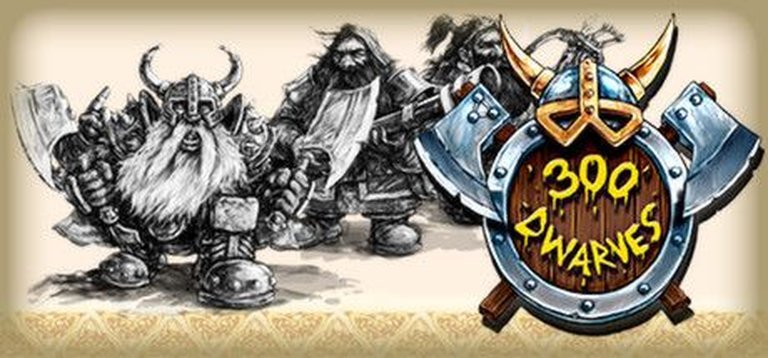
300 Dwarves is a real-time tower defense strategy game set in a fantasy kingdom under siege by Goblins, Orcs, and Trolls. Players must strategically deploy dwarven warriors and defensive towers across diverse environments like mountains, caves, and deserts to repel the invasion and protect the realm.
Where to Buy 300 Dwarves
PC
300 Dwarves Free Download
PC
300 Dwarves Cracks & Fixes
300 Dwarves Guides & Walkthroughs
300 Dwarves Reviews & Reception
steamcommunity.com : 300 Dwarves is a simple port of a tower D but it lacks the depth and more importantly balance needed for the game to be enjoyable for casual players or hardcore plays.
300 Dwarves: Review
Introduction
In the crowded pantheon of tower defense games, few titles manage to carve a distinct identity through sheer thematic specificity. 300 Dwarves, released in 2013 by Artifex Mundi, stands as a curious artifact of the genre’s casual renaissance—a vibrant, hand-painted ode to dwarfcraft and fantasy warfare. At its core, this is a straightforward real-time strategy game where players command an elite dwarven mercenary force to defend the besieged Kingdom of Fairbridge from goblin, orc, and troll hordes. Yet beneath its accessible exterior lies a game grappling with identity: a blend of accessible mechanics and systemic flaws, wrapped in a charming but inconsistent art style. This review deconstructs 300 Dwarves not merely as a game, but as a cultural artifact—a Polish-developed product reflecting the genre’s mid-2010s boom, the rise of Unity-driven casual games, and the enduring power of dwarf-centric fantasy. While it ultimately lands as a niche curiosity rather than a genre-defining masterpiece, its legacy offers fascinating insights into the intersection of accessibility, artistry, and ambition in the casual gaming space.
Development History & Context
300 Dwarves emerged from Nimbi Studios, a Kraków-based Polish developer (later rebranded as Artifex Mundi for broader publishing), a studio primarily known for hidden-object adventures like the Grim Legends series. Its development was a calculated pivot into the lucrative tower defense genre, capitalizing on the post-Plants vs. Zombies craze for accessible strategy games. The project was spearheaded by producer Mariusz Szynalik and a core team of 34 creators, including programmers Charles Ryt, Mateusz Odroniec, and Witold Petriczek, alongside artists Jan Jasiński and Tomasz Ściolny. Technologically, it leveraged the Unity engine, enabling cross-platform compatibility (Windows, Mac, iOS) while maintaining modest system requirements—a Pentium IV 1.0 GHz processor and 512 MB RAM were sufficient, reflecting its casual ambitions.
The game’s release in June 2013 coincided with a saturated tower defense market dominated by titles like Kingdom Rush and Defense Grid. Artifex Mundi positioned 300 Dwarves as a “beginner-friendly” entry, emphasizing its simple controls and hand-drawn aesthetics. However, its development context reveals tensions: the studio’s expertise in narrative-driven adventures clashed with the genre’s systemic demands. Polish developers often blend technical precision with folkloric themes, and 300 Dwarves embodies this—its dwarven arsenal (e.g., explosive charges, binding runes) reflects Slavic fairy-tale logic, while its real-time combat evokes Western RTS traditions. Published by Viva Media in the West and Crescent Moon Games on iOS, the game suffered from inconsistent localization and post-release support, notably on macOS where players reported critical launch failures. These context fractures hint at the game’s underlying struggles: a studio straddling casual and hardcore audiences, with a vision that outpaced its technical execution.
Narrative & Thematic Deep Dive
The narrative of 300 Dwarves is a paean to heroic resistance, stripped to its fairy-tale essence. The Kingdom of Fairbridge, a vaguely medieval human realm, faces annihilation from goblin, orc, and troll legions regrouping in the mountains. Players assume the role of an anonymous dwarven commander, leading a mercenary force hired to repel the invasion. The plot unfolds across 12 campaign maps, from castle walls to desert valleys, framed by a recurring mantra: “The Kingdom was saved, this time. The war continues.” This cyclical framing elevates the narrative beyond mere conquest, positioning the dwarves as eternal guardians—artisans turned warriors in a world perpetually on the brink.
Characterization is archetypal yet effective. The dwarves are paragons of craftsmanship: their towers are “finely crafted” weapons, each imbued with unique magical properties (e.g., the Forge’s molten projectiles, the Ranger’s piercing arrows). Enemies embody classic fantasy tropes: goblins are swarming cannon fodder, trolls are hulking brutes, and undead introduce aerial threats. Dialogue is minimal but purposeful, with Ian Transue’s gravelly dwarf voices reinforcing their gruff, pragmatic ethos. The underlying theme is the triumph of ingenuity over brute force. Dwarves triumph not through sheer numbers but through superior engineering—towers act as extensions of their will, turning the battlefield into a symphony of contraptions. This resonates with broader fantasy lore (e.g., Tolkien’s dwarven forges) while subtly celebrating Polish craftsmanship. Yet the narrative’s simplicity is also its weakness; the “secret of the goblin’s strength” remains unexplored, reducing conflict to binary good vs. evil without deeper moral ambiguity.
Gameplay Mechanics & Systems
300 Dwarves streamlines tower defense into a digestible loop, but its core systems reveal both accessibility and imbalance. The gameplay operates in real-time, with players placing and upgrading five primary tower types—Cannon, Forge, Ranger, Barracks, and Alchemist—across linear paths. Each tower specializes in enemy archetypes: Cannons slow ground troops, Rangers target flying foes, and Forges deal area damage. Progression hinges on resource management: gold earned from defeated foes funds towers and upgrades, with 32 tiers of enhancement unlocking “uber towers” with game-altering abilities (e.g., a Cannon that stuns enemies). Three commander powers add tactical depth: explosive charges, binding runes, and a battle cry that boosts allied damage.
The campaign’s 12 maps escalate in complexity, introducing 30 enemy variants (from basic goblins to flying wraiths) that necessitate strategic adaptation. However, the systems buckle under pressure. Balance issues are pervasive: ground enemies often consume so much gold that aerial units slip through gaps, forcing players to rely on niche tower placements (e.g., Rangers near exits). The UI, while clean, obscures critical information—tower ranges aren’t visually indicated, and upgrade paths feel arbitrary. Difficulty spikes in late levels, punishing players for early missteps, while the two post-campaign “battle maps” feel tacked-on.
Multiplayer or co-op is absent, emphasizing a solo experience. The real-time pacing creates tension, but the absence of pause functionality during planning phases frustrates newcomers. Ultimately, 300 Dwarves succeeds as a “gateway” tower defense game but fails to evolve its mechanics beyond genre basics, its depth constrained by its casual mandate.
World-Building, Art & Sound
The world of 300 Dwarves is a tapestry of fantasy clichés enlivened by artistry. The Kingdom of Fairbridge and its environs—mountains, caves, deserts—serve as a backdrop for dwarven ingenuity. The narrative leans into mythic geography: the goblin homeland is a labyrinth of tunnels, while Fairbridge’s walls symbolize fragile civilization against wilderness. This environmental storytelling mirrors classic pulp fantasy, though lore is sparse beyond the manual’s intro.
The visual direction is the game’s standout element. Hand-drawn scenes and animations evoke storybook charm, with lush, painterly backgrounds and charmingly exaggerated character designs. Dwarves are stout, bearded, and clad in leathers, wielding steampunk-esque cannons; enemies are caricatures of menace—goblins with jagged teeth, trolls with mossy hides. This style, rooted in Slavic fairy-tale illustration, creates a distinct identity, though some animations feel stiff, particularly in tower attack sequences. The Unity engine limitations are evident in texture repetition and flat lighting, but the art compensates with personality.
Sound design reinforces the atmosphere. Rafał Szumny’s score blends Celtic-inspired melodies with percussive battle rhythms, while Ian Transue’s gruff dwarf voices lend gravitas to commands. Sound effects—clangs of cannons, hisses of alchemical potions—are crisp but lack dynamism. The audio-visual synergy creates an immersive, if repetitive, ambiance, though the lack of environmental variety (deserts, caves, and mountains reuse similar palettes) dilutes the world-building impact.
Reception & Legacy
300 Dwarves’s reception reflects its identity as a flawed but endearing niche title. Critical reception was muted; Metacritic lists no scores, and major outlets largely ignored it. On Steam, it holds a “Mixed” user rating (53% positive across 78 reviews), with praise for accessibility and art style countered by complaints about balance and technical issues. Pocket Gamer awarded it a 5.3/10, criticizing its “poor design” and “unbalanced” gameplay. Community discourse on platforms like Steam highlights enduring frustration: players noted money-management flaws, Mac crashes, and a lack of innovation compared to contemporaries like Kingdom Rush.
Commercial performance remains undocumented, but its availability on multiple platforms suggests modest success. Its legacy is subtle. Artifex Mundi continued its focus on casual games, with 300 Dwarves serving as a bridge between hidden-object adventures and strategy titles. The game’s Polish development roots highlight Eastern Europe’s growing role in the casual market, while its dwarf-themed artistry prefigured later titles like The Dwarves (2016). Culturally, it exemplifies the mid-2010s trend of “casualization” in strategy genres, though its impact on the tower defense space is minimal. Today, it survives in the niche of “comfort games”—a charming, if flawed, relic for players seeking low-stakes fantasy battles.
Conclusion
300 Dwarves is a microcosm of ambition constrained by accessibility. As a tower defense game, it offers a polished, approachable experience with delightful hand-drawn visuals and a charming dwarf-centric theme. Its core mechanics—tower placement, resource management, and enemy waves—are executed cleanly, making it an ideal entry point for genre newcomers. Yet systemic flaws in balance, UI design, and technical consistency prevent it from transcending its niche. The game’s narrative, while thematically resonant, remains underdeveloped, and its late-game challenges feel punitive rather than rewarding.
Historically, 300 Dwarves occupies a curious space: a product of Artifex Mundi’s transition into strategy gaming, a reflection of Unity’s democratizing impact on indie development, and a testament to the enduring appeal of dwarf fantasy. It lacks the innovation of Plants vs. Zombies or the polish of Kingdom Rush, but its earnest craftsmanship and Polish folkloric charm ensure a niche place in gaming history. For players seeking a lighthearted, visually rich romp through classic fantasy tropes, it remains a worthwhile diversion. For connoisseurs of the tower defense genre, however, it stands as a cautionary tale of accessibility at the expense of depth. In the annals of video game history, 300 Dwarves is not a landmark, but it is a footnote—colorful, flawed, and undeniably memorable.