
- Release Year: 2016
- Platforms: Windows
- Publisher: Crunchy Leaf Games
- Developer: Bird in Sky
- Genre: Action, Role-playing
- Perspective: Top-down
- Game Mode: Single-player
- Gameplay: Open World, Side quests, Space Exploration, Space Races
- Setting: Futuristic, Sci-fi
- Average Score: 88/100
Description
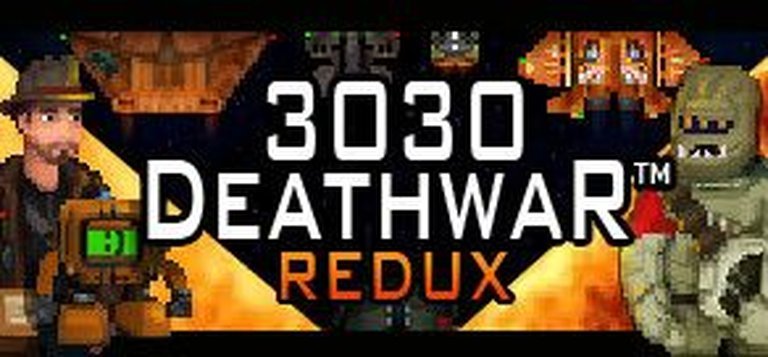
3030 Deathwar: Redux is a top-down, sci-fi role-playing game set in a futuristic space odyssey. It is an enhanced version of the original 3030 Deathwar, featuring an extended adventure with additional characters, side quests, and space races. The game offers graphical improvements, balanced gameplay, and a reworked tutorial, providing players with a rich space exploration experience.
Gameplay Videos
3030 Deathwar: Redux Patches & Updates
3030 Deathwar: Redux Mods
3030 Deathwar: Redux Guides & Walkthroughs
3030 Deathwar: Redux Reviews & Reception
metacritic.com (85/100): A triumphant return to form for the series.
store.steampowered.com (94/100): Very Positive
steambase.io (94/100): Very Positive
brutalgamer.com (84/100): 3030 Deathwar Redux is way out of this world. (…) A MUST HAVE for any space adventure lover!
opencritic.com (85/100): A triumphant return to form for the series.
3030 Deathwar: Redux Cheats & Codes
PC
Install PLITCH, start 3030 Deathwar Redux – A Space Odyssey and use the PLITCH cheats.
| Code | Effect |
|---|---|
| +500 Money | Adds 500 money |
| +1,000 money | Adds 1,000 money |
| +10,000 Money | Adds 10,000 money |
| +250,000 Money | Adds 250,000 money |
| Infinite fuel | Grants infinite fuel |
| Infinite ship-hull | Grants infinite ship-hull |
| Infinite ship-shield | Grants infinite ship-shield |
| Infinite Battery | Grants infinite battery |
| Infinite Suit Damage | Grants infinite suit damage |
| Inifnite after-burner-fuel | Grants infinite after-burner-fuel |
| Decrease Money | Decreases money |
| Low shield | Reduces shield |
| Low ship-hull | Reduces ship-hull |
| Weak engines | Weakens engines |
| Weak thrusters | Weakens thrusters |
| Low split | Reduces split |
| Low ammo | Reduces ammo |
| Low fuel | Reduces fuel |
3030 Deathwar Redux: A Space Odyssey Review
A Love Letter to ’90s Sci-Fi and Space Exploration
Introduction
In an era dominated by photorealistic graphics and live-service models, 3030 Deathwar Redux: A Space Odyssey (2017) defies expectations. Developed by British studio Bird in Sky and refined with publisher Crunchy Leaf Games, this indie gem revives the spirit of ’90s space sims and LucasArts-style adventures with a wry, self-aware grin. Its thesis is simple yet bold: A small team can craft an expansive, genre-blending universe brimming with charm, humor, and player agency. A decade after its original 2007 release, the Redux edition polished its rough edges, earning cult acclaim as a flawed but fiercely imaginative homage to classics like Elite, Frontier, and Space Quest.
Development History & Context
Bird in Sky, a duo comprising Matt Griffiths and Mic Newsam, began 3030 Deathwar in 2006 with a clear vision: Merge top-down space trading/combat with point-and-click adventuring. The original 2007 release was a passion project shackled by obscurity and technical limitations. Its 2D sprite-based aesthetic and ambitious scope clashed with a mid-2000s market pivoting to 3D AAA titles.
In 2014, modder Max Dohme (later of Galactic Glitch fame) revitalized the game, collaborating with Griffiths to re-release it with bug fixes and quality-of-life improvements. By 2017, Redux emerged from Steam Early Access, leveraging player feedback to expand the story, refine UI, and introduce features like space races and planet landings. Despite its archaic codebase—unchanged from 2007—Redux became a testament to iterative design, embodying the indie ethos of “doing more with less.”
At release, 3030 Deathwar Redux faced a crowded field of space sims (No Man’s Sky, Elite Dangerous), yet carved a niche by prioritizing intimate storytelling over procedural generation. Its hybrid mechanics and cheeky tone evoked a bygone era when The Dig and Indiana Jones and the Fate of Atlantis ruled adventure gaming.
Narrative & Thematic Deep Dive
Set in 3029, humanity clings to a “Safe Zone” after self-replicating nanobots (the “Cleaners”) ravaged the galaxy. Players embody John Falcon, a sardonic freelancer straddling Cowboy Bebop’s Spike Spiegel and The Maltese Falcon’s Sam Spade. Falcon’s misadventures—losing his ship, dodging pirates, and unraveling a conspiracy—unfold through 10 acts, blending noir tropes with sci-fi absurdity.
The narrative’s strength lies in its refusal to take itself seriously. Subplots riff on ’80s buddy-cop flicks (Beverly Hills Cop), Star Trek: TNG (via Falcon’s robot companion, Kent), and even Red Dwarf’s slacker existentialism. Dialogue oscillates between witty banter and groan-worthy puns, with NPCs like cage-fighter-turned-mechanic Frank and tea-obsessed Captain Liu adding levity. Yet beneath the humor simmers a critique of late-stage capitalism: quarantine lockdowns, resource hoarding, and a shadowy “Council” evoke dystopian parallels.
Themes of autonomy versus determinism emerge through Falcon’s choices. Will he side with anarchic Taoists fighting the Cleaners, or exploit the chaos for profit? The game’s open-ended structure lets players flirt with piracy, salvage, or altruism, though these choices rarely diverge the core plot. Quibbles aside, Redux’s expanded ending—a Red Letter Media-inspired climax blending slapstick and gravitas—elevates its B-movie script into something memorable.
Gameplay Mechanics & Systems
3030 Deathwar Redux interweaves two distinct loops:
1. Top-Down Space Sim: Pilot ships across 30 star systems, trading goods, mining asteroids, and dogfighting pirates. Combat is arcadey but satisfying, with customization options akin to Escape Velocity.
2. Side-Scrolling Adventure: Dock at stations to walk, talk, and solve environmental puzzles reminiscent of Sam & Max Hit the Road.
Innovations & Flaws:
– Trading & Economy: A dynamic market system lets players profit from regional shortages (e.g., Delavian Chocolate as pirate contraband), though depth pales next to EVE Online.
– Ship Customization: Over a dozen vessels—from nimble interceptors to hulking miners—can be outfitted with shields, tractor beams, and wormhole scanners. Juggling fuel and repair costs adds tension.
– Missions: Main quests are inventive (e.g., photographing planets, rescuing stranded pilots), but side jobs grow repetitive (fetch quests, bounty hunting).
– Clunky UI: Early game overloads players with keybinds (e.g., Tab + 1 + D to dock), though a reworked tutorial mitigates this.
The Redux edition introduced gunplay and planetary exploration—half-baked additions that feel tacked-on—but polished core systems like salvaging derelict ships, a highlight for completionists.
World-Building, Art & Sound
The retro-futuristic aesthetic channels Flashback and Beneath a Steel Sky, with pixel-art stations teeming with Easter eggs (e.g., Space Quest’s Tiny’s Used Spacecraft). Parallax scrolling and animated billboards breathe life into otherwise static backdrops, while derelict ships ooze Alien-inspired dread.
Kent, Falcon’s robot sidekick, steals scenes with his Adventure Time-esque design and Data-like curiosity. His ASCII-expression face and detective subplots add heart to the chaos.
The soundtrack—curated from The Kyoto Connection’s ambient electronica—is a masterstroke. Tracks like No Headphones Required evoke Blade Runner’s melancholy, while a “YouTube Safe Mode” option (to dodge copyright strikes) showcases developer pragmatism.
Reception & Legacy
At launch, Redux earned mixed reviews (72% on MobyGames, 85% from COGconnected) praising its ambition but critiquing repetition. Steam players (94% positive) lauded its charm and depth, dubbing it a “hidden gem.” Over 40,000 copies sold cemented its cult status, with Space Game Junkie anointing it “Space Game of the Decade.”
Its legacy lies in bridging generational gaps. Older gamers relived ’90s nostalgia, while newcomers savored its irreverence amid a sea of self-serious sci-fi. Though overshadowed by FTL or Rebel Galaxy, Redux inspired indies like Shortest Trip to Earth to blend genres fearlessly.
Conclusion
3030 Deathwar Redux is a triumph of scrappy creativity. Its janky UI, uneven pacing, and undercooked mechanics are undeniable, yet these flaws are eclipsed by sheer personality. Like Falcon’s patched-up shuttle, the game is more than the sum of its parts—a labor of love that rewards patience with humor, heart, and cosmic wonder.
In video game history, Redux deserves recognition not for polish, but for proving that passion and nostalgia can coalesce into something uniquely delightful. It’s a time capsule of ’90s design ethos, a middle finger to AAA conventions, and above all, a damn fun space odyssey.
Final Verdict: 8/10 – A rough-around-the-edges love letter to sci-fi’s golden age, essential for adventurers willing to embrace its quirks.