
- Release Year: 1995
- Platforms: Windows
- Publisher: Microsoft Corporation
- Developer: Microsoft Corporation
- Genre: Action
- Perspective: Top-down
- Game Mode: Hotseat
- Gameplay: Pinball
- Average Score: 85/100
Description
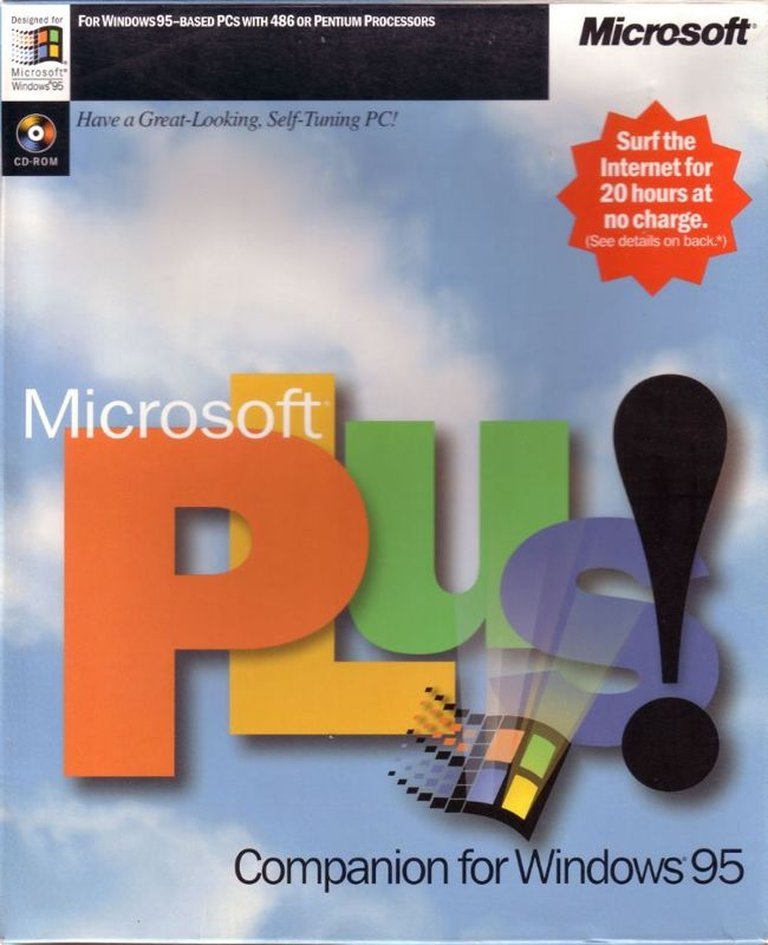
3D Pinball: Space Cadet is a digital pinball simulation set on a futuristic space-themed table, where players control flippers to navigate a ball through obstacles and features like wormholes, embodying a space cadet mission. Originally part of the Full Tilt! Pinball game developed by Cinematronics and published by Maxis, it gained immense popularity as a pre-installed game in Microsoft Plus! for Windows 95 and subsequent Windows versions, known for its crisp controls, iconic sound effects, and nostalgic appeal as a staple of early computer gaming.
Gameplay Videos
3D Pinball: Space Cadet Free Download
3D Pinball: Space Cadet Guides & Walkthroughs
3D Pinball: Space Cadet Reviews & Reception
imdb.com (90/100): 3D Pinball: Space Cadet is perhaps the most famous digital pinball machine ever.
neoseeker.com (80/100): Best Pinball game I’ve ever played.
3D Pinball: Space Cadet Cheats & Codes
3D Pinball: Space Cadet (PC)
Type codes before launching the ball or during gameplay as specified in cheat descriptions.
| Code | Effect |
|---|---|
| hidden test | Enable debug mode and control the ball with the mouse |
| bmax | Unlimited balls (never lose a ball) |
| 1max | Earn extra balls |
| gmax | Activate the Gravity Well |
| rmax | Complete promotion or increase rank |
| hmax | Score of 1,000,000,000 |
| omax | Play in red |
3D Pinball: Space Cadet: A Monumental Survey of Computing’s Most Played Demo
Introduction: The Soundtrack of a Generation
To a certain generation, the low, resonant hum of a computer booting up is inextricably linked to a specific, piercing sound effect: the whirr-clunk of a pinball plunger launching a chrome sphere into a neon-drenched cosmos. This auditory trigger, instantly summoning muscle memory to the ‘Z’ and ‘/’ keys, is the calling card of 3D Pinball: Space Cadet. More than a mere game, it was a universal digitalartifact, pre-installed on hundreds of millions of machines, serving as countless users’ first—and for many, only—formal introduction to the intricate mechanics of pinball. This review argues that 3D Pinball: Space Cadet transcends its humble origins as a bundled Windows demo to achieve a unique, paradoxical status in video game history: it is simultaneously one of the most widely played and most misunderstood games ever made. Its legacy is not one of critical darling or commercial blockbuster, but of pervasive cultural osmosis, a perfect storm of technological timing, corporate bundling strategy, and elegant, accessible design that cemented its place as a foundational piece of late-20th-century interactive entertainment.
Development History & Context: From Glue Guns to Galaxy Guns
The story of Space Cadet begins not with a desire to create a classic pinball simulation, but with a rejected first-person shooter. In 1994, David Stafford, Mike Sandige, and Kevin Gliner founded Cinematronics, LLC in Santa Cruz, California, with a vision for the burgeoning Windows 95 platform. Their inaugural project was Firestorm, a 2D shooter, but they quickly pivoted to a Doom-inspired 3D title named Gluem—a portmanteau of “glue” and “them”—where players shot adhesive at enemies. This concept was presented to Microsoft, then deeply invested in promoting the new Windows 95 operating system. However, the post-Doom landscape was fraught with controversy over video game violence, culminating in the 1994 creation of the ESRB rating board. Microsoft, facing its own antitrust scrutiny, sought a family-friendly, non-violent showcase for its new OS’s graphical capabilities. As recounted by Stafford to The Daily Dot, a Microsoft executive bluntly stated a preference for a pinball game over Gluem.
Faced with an ultimatum and a prototype OS to develop for, Stafford made a snap decision, committing the small studio to an 18-to-20-hour-a-day development crunch to build a 3D pinball engine from scratch. The technological constraints were significant but opportune: Windows 95’s new graphics APIs allowed for textured, rotating 3D objects—a novelty for the masses—but required careful optimization. The resulting game was a technical marvel for 1995, rendering a dynamic, multi-plane table with real-time physics calculations. Crucially, this was not conceived as a standalone product but as a tech demo for the full commercial package Full Tilt! Pinball (1995), developed by Cinematronics and published by Maxis. Full Tilt! featured three distinct tables: the space-themed Space Cadet, the pirate-themed Skulduggery, and the fantasy Dragon’s Keep, all running at a higher 1024×768 resolution.
Microsoft licensed only the Space Cadet table for inclusion in the Microsoft Plus! Pack for Windows 95 (a paid add-on suite), and later bundled it directly with Windows 98, Windows ME, Windows 2000, and Windows XP. This bundling strategy, driven by Microsoft’s desire to provide a “premium” out-of-box experience, made Space Cadet one of the most distributed video games in history. Its removal from Windows Vista in 2007 was primarily due to 64-bit architecture incompatibilities, a technical death knell for the 32-bit engine, though its cult status ensured it lived on through fan ports and preservation efforts.
Narrative & Thematic Deep Dive: The Ambition of the Space Cadet
On the surface, Space Cadet presents a straightforward pinball fantasy: a table styled as the deck of a spaceship on a mission. However, a closer inspection reveals a surprisingly coherent, if minimalist, narrative framework rooted in Cold War-era sci-fi tropes. The player assumes the role of a “Space Cadet,” a rank-and-file officer aboard a vessel (the table itself) tasked with completing missions for the “Fleet.” This isn’t merely aesthetic; the entire progression system is structured as a military career.
The game’s lore is delivered through sparse but potent visual and textual cues:
* The Table as Vessel: The playfield is the ship’s command deck. The central “launch ramp” is the primary deployment tube. The wormhole portals (two circular targets at the top) are hyperspace conduits. Weapon targets (the lone red bumper at the top right) and fuel cells (the blue targets) are literal ship systems.
* The Mission Briefings: Selecting a mission from the “Command” menu initiates a text-based briefing. These are not mere gameplay instructions but in-universe orders. Examples include “Shuttle Mission” (launch the shuttle from the top ramp), “Alien Encounter” (hit the alien target), and “Capture the Flag” (send the ball through the flag stand). The language is dry, military, and perfectly complements the sterile, high-tech aesthetic.
* The Rank Structure: Progression is the core narrative driver. Starting as a Cadet, the player must complete a set number of missions (lighting all blue rank lights in the central display) to be promoted through ranks like Ensign, Lieutenant, Captain, Commander, Commodore, Admiral, culminating in the elusive Fleet Admiral. Each promotion increases the point multiplier and unlocks more complex, higher-value missions. This creates a powerful “career simulation” loop rarely seen in casual games, transforming each ball from a simple play session into a step up the chain of command.
The underlying theme is mastery through disciplined repetition. It echoes the training regimen of a space cadet: you must learn the layout of your ship (the table), the function of its systems (targets and bumpers), and execute precise maneuvers (nudges, flipper timing) to succeed. The “drain” isn’t just a penalty; it’s a mission failure, a systems malfunction. This narrative layer, though paper-thin by story-driven standards, provides potent psychological scaffolding, making the player’s skill advancement feel earnestly consequential within the game’s diegesis.
Gameplay Mechanics & Systems: Precision Physics in a Vacuum
At its mechanical heart, 3D Pinball: Space Cadet is a masterclass in accessible depth. Its systems are simple to grasp yet offer a near-infinite skill ceiling.
- Core Loop & Controls: The player launches a ball (spacebar) onto a three-dimensional playfield, using two flippers (default ‘Z’ and ‘/’ keys, or left/right arrows). The primary objective is to score points by hitting bumpers, targets, and ramps while preventing the ball from draining down the left and right out-lanes. A third ball slot allows for a total of three balls per game, with opportunities to earn extra balls. The control scheme is iconic for its simplicity and effectiveness, perfectly mapped to the left hand’s home row.
- The Mission System: This is the game’s defining innovative feature. By hitting a specific yellow dropdown target on the left side and then successfully shooting the ball up the adjacent launch ramp, the player activates a mission. A flashing arrow sequence on the display then guides the player to hit specific targets or ramps in a set order. Successfully completing the sequence credits the mission, advances the rank meter, and awards a significant point bonus. This system transforms the pinball table from a chaotic score-chaser into a puzzle box to be solved with each ball. It provides short-term goals (complete this mission) and long-term goals (reach Fleet Admiral), combating repetition.
- Physics & “Nudge” Mechanics: The game’s simulation of pinball physics is its most revered aspect. The ball has tangible weight and momentum. Hitting bumpers imparts predictable trajectories. The flippers have distinct arcs of influence. Most critically, the table tilt system (controlled by the ‘Up’ and ‘Down’ arrow keys) allows players to subtly nudge the entire playfield. This is not a cheap trick but a deep, risky mechanic. A well-timed nudge can save a ball headed for the drain or direct it toward a key target. However, excessive tilting triggers a “TILT” warning, locking the flippers and costing the ball. Mastering the nudge—feeling the ball’s path and applying just enough force—is the mark of a true Space Cadet virtuoso. This mechanic bridges the gap between digital and real-world pinball knowledge.
- Flaws & Limitations: The game’s single-table design, while a masterpiece of layout, inevitably leads to repetitiveness. The mission set, though varied, is finite. The lack of a multiplayer mode beyond local hot-seat (taking turns) is a notable omission for a social game. Some missions, particularly at higher ranks, are brutally difficult, requiring perfect, multi-stage sequences that can feel luck-dependent. The game also has no native mod support; while sound assets can be replaced, the table geometry is fixed.
World-Building, Art & Sound: A Masterclass in 1995 Espresso Aesthetics
3D Pinball: Space Cadet is a time capsule of mid-90s digital aesthetics, leveraging its constraints to create a uniquely cohesive atmosphere.
- Visual Direction & Setting: The table is rendered in texture-mapped 3D, a significant feat for its time. The perspective is fixed, looking down at an angle, creating a convincing illusion of depth. The art direction is pure “Cyber-Noon”—a bright, high-contrast, neon-on-black palette reminiscent of a 1990s computer demo or a Tron sequel. The table is a sleek, brushed-metal spacecraft control deck. The bumpers are glowing orbs. The targets are simplistic, legible shapes (triangles, circles). The most striking visual element is the hyperspace tunnel animation that plays when the ball enters a wormhole, a winding, colorful vortex that was aWow-moment for 1995 PC gamers. The HUD (Heads-Up Display) is a clean, sci-fi-inspired readout showing score, ball count, rank, and mission objectives, reinforcing the “spaceship dashboard” fantasy.
- Sound Design: The audio is arguably the game’s most iconic and effective element. Every sound is crisp, synthesized, and purposeful:
- The deep thwump of the flippers.
- The metallic clack of the ball hitting a bumper.
- The rising whoosh of the hyperspace tunnel.
- The urgent buzz of the “TILT” warning.
- The celebrative fanfare of completing a mission.
These sounds are not realistic recordings but perfect gamefeel audio cues. They provide instant, satisfying feedback for every action, creating a rhythmic, almost musical gameplay experience. The sound design does the heavy lifting for immersion, making the modest 3D models feel like physical objects in a resonant metal chamber.
Together, the art and sound create a self-contained, believable universe. It’s not a grimdark space opera; it’s a optimistic, clean, and functional “NASA-meets-arcade” vision that perfectly complemented the sleek, user-friendly image Microsoft wanted for Windows 95.
Reception & Legacy: The Demo That Outshone the Product
Space Cadet’s initial reception was muted but positive. The sole critic review on MobyGames (PC Team, 1996) rated it 3/5, praising its successful diversion from the bundled Solitaire and its visual “plus” to the desktop. However, its true reception was measured in player hours, not critic scores. Its bundling strategy guaranteed billions of play sessions, making it arguably the most played video game demo of all time.
This success cast a long, complicated shadow over its parent product, Full Tilt! Pinball (1995). Sources, including PhilSTAR Life and community preservationists, note evidence that Microsoft actively obscured the full game’s existence. In the Windows version, Cinematronics and Maxis credits are blurry red text on black, while in Full Tilt! they are bright yellow and crisp. No in-game UI element hints at other tables or a full retail version. The effect was profound: an entire generation knew “3D Pinball” as a singular, self-contained game, not a demo. This corporate branding decision, intentional or not, created a unique historical artifact where the demo’s cultural footprint completely eclipsed the source product.
Its legacy is a tapestry of contradictions:
1. The Ultimate Bundled Game: It proved that simple, high-quality casual games could enhance an OS’s perceived value and user stickiness, a practice continued with Solitaire, Minesweeper, and later, the Chrome Dinosaur Game.
2. A Pinball Gatekeeper: For millions, it was their first and often only pinball experience, shaping their understanding of the genre’s appeal—skill-based, goal-oriented, and tactile.
3. A Victim of Technological Transition: Its removal from Vista was a stark lesson in software obsolescence. Yet, its desirability only grew. Fan projects to port it to modern systems are numerous, and its clamor for return is perennial.
4. Nostalgia Incarnate: It is a pure, unadulterated nostalgia trigger. The sounds, the look, the feel—they are genetically coded to the late-90s/early-2000s PC experience. Sites like All Ages of Geek recount its power to transport users back to school computer labs and dial-up era boredom.
Conclusion: An Imperfect, Immortal Table
3D Pinball: Space Cadet is not a perfect game. It is repetitive, limited to a single table, and its difficulty curve can be frustratingly steep. Yet, to judge it solely on these modern metrics is to miss its profound historical significance. It is a perfect execution of a specific, time-bound mission: to create a visually impressive, physically satisfying, and immediately accessible game that would showcase Windows 95’s capabilities and delight users.
Its genius lies in its holistic synthesis of tight mechanics, potent audio, and a narrative frame that turned score-chasing into career progression. It took the well-worn format of pinball and imbued it with purpose through its innovative mission and ranking system. More importantly, it leveraged an unprecedented distribution channel to become a shared cultural experience. It is a game remembered not for its story or its multiplayer, but for its feel—the weight of the ball, the satisfaction of a perfectly timed nudge, the fanfare of a mission complete.
In the pantheon of video game history, 3D Pinball: Space Cadet holds a unique throne: that of the greatest game you never chose to play. It was an ambush of joy, hidden in an OS folder. It taught millions the vocabulary of pinball—ramps, bumpers, out-lanes, tilts—and for that alone, it deserves its hallowed place. It is less a masterpiece of game design and more a masterpiece of game delivery, a flawless little gem that, for a glorious period, lived on the desktop of nearly every personal computer on Earth. Its sound is the sound of a generation logging on. That is a legacy few games, however critically acclaimed, can ever claim.