
- Release Year: 2019
- Platforms: Windows
- Genre: Strategy, Tactics
- Perspective: Top-down
- Game Mode: Single-player
- Gameplay: City building, construction simulation, Real-time strategy
- Setting: Fantasy, Futuristic, Sci-fi
- Average Score: 50/100
Description
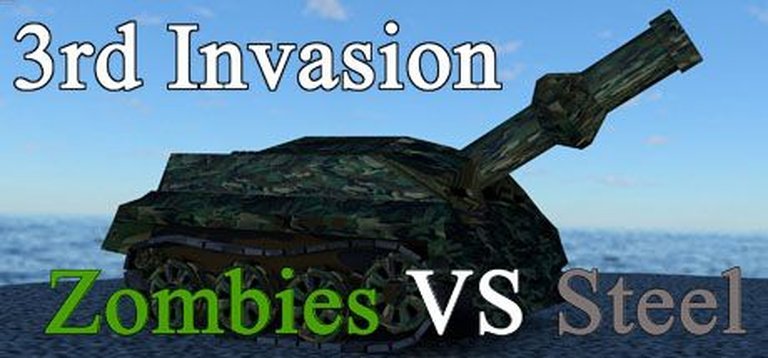
In ‘3rd Invasion: Zombies vs Steel’, players take command as a General in a real-time strategy game blending city-building and tactical warfare, set in a sci-fi/fantasy world ravaged by successive invasions. Following the Zombie Plague countered by cyborgs and the Undead Awakening battled by wizards, the third invasion looms as radars fail worldwide; build defensive bases, assemble unique armies of tanks and units, launch massive assaults or quick strikes against the evil infestation, and uncover the hidden truth to save Earth.
Gameplay Videos
Where to Buy 3rd Invasion: Zombies vs Steel
PC
3rd Invasion: Zombies vs Steel: Review
Introduction
In the crowded arena of real-time strategy (RTS) games, where titans like StarCraft and Command & Conquer have long defined the genre, few titles dare to blend zombie apocalypses with sci-fi military might and a dash of fantasy alliance-building. Enter 3rd Invasion: Zombies vs Steel, a 2019 indie RTS that positions players as the ultimate Battlefield General amid a trilogy of extraterrestrial invasions. Released on Steam for a modest $9.99, this Unity-powered gem from solo developer Jesper Skjærbæk (under the banner J. C. SpringBourne) promises grand strategy, base-building, and army command in a world teetering on the brink of the third otherworldly onslaught. Its legacy? A obscure footnote in indie RTS history, evoking the raw ambition of early 2010s Steam experiments. My thesis: While technically unpolished and critically overlooked, 3rd Invasion captures the chaotic joy of asymmetric warfare against zombies, plants, and aliens, carving a niche as a “what if RISK met Plants vs. Zombies in a tank battalion?”—a flawed but fervent love letter to armchair generals.
Development History & Context
3rd Invasion: Zombies vs Steel emerged from the boilerplate indie pipeline of late-2010s Steam, a era when Unity’s accessibility democratized game dev for solo creators amid a flood of zombie-themed titles. Developed and published by Danish creator Jesper Skjærbæk (aka J. C. SpringBourne), the game launched on February 28, 2019, for Windows, with Mac and Linux support noted in some listings—likely via Steam’s Proton compatibility. Skjærbæk’s vision, gleaned from Steam updates and ad blurbs, was a passion project blending RTS staples with personal flair: “IRL Work pays for the GameDev hobby,” as one March 2019 devlog quips, highlighting post-launch patches for unit movement, sounds, and wall strength.
The technological constraints were minimal—running on DirectX 10 hardware like an NVIDIA GeForce 6100, 1GB RAM, and just 300MB storage—reflecting Unity’s efficiency for low-spec prototypes. This era’s gaming landscape was saturated: Plants vs. Zombies (2009) had popularized tower-defense-vs-undead, spawning clones like Golf vs Zombies and God vs Zombies, while RTS evolved toward hybrids like They Are Billions (2019). Skjærbæk positioned 3rd Invasion as a “New Type of Real Time Strategy Game” with RISK-inspired area control, differentiating it via multi-invasion lore tying into prior “1st Core” cyborgs and “2nd Circle” wizards (possible nods to unmade prequels). Added to MobyGames in December 2020 by contributor BOIADEIRO ERRANTE, its sparse credits underscore solo-dev grit, with updates like poly-unit pathing and money chimes showing iterative polish amid zero-budget realities. In context, it’s a relic of Steam Greenlight’s tail-end, where hype (“Buy buy buy!” flashing trailers) clashed with execution.
Narrative & Thematic Deep Dive
At its core, 3rd Invasion weaves a pulpy sci-fi epic across three invasions, delivered via terse Steam blurbs and in-game intros. The plot hooks with foreboding: “The Storm is About to break. The Enemy are ready, are You?” Preceding waves—the 1st Invasion’s “Zombie Plague” repelled by cyborgs from 1st Core, and the 2nd’s “Undead Awaken” stalled by wizards of 2nd Circle—were extraterrestrial harbingers, signaled by global radar blackouts. Now, allied human armies airlift into the fray for the 3rd Invasion, battling zombies, carnivorous plants, and aliens (cockroach-like foes implied) to uncover “the Hidden Truth.”
Characters are archetypal: You’re the nameless General, commanding tanks, artillery, and infantry in a power fantasy—”Have You ever Want[ed] to be a General?” Dialogue is sparse, motivational posters and unit barks evoking WW2 propaganda amid fantasy-sci-fi mashups. Themes delve into united fronts against cosmic horror: Past invasions fractured defenses (cyborgs vs. zombies, wizards vs. undead), but now steel meets supernatural, symbolizing humanity’s resilience. Strategy as salvation permeates—losing battles to win wars echoes RISK’s diplomacy, while leaderboards crown “Top Generals,” gamifying heroism. Subtle motifs like radar anomalies critique blind vigilance, and asymmetric enemies (fast zombies, siege plants, alien swarms) probe adaptation vs. infestation. Achievements like “First Zombie Battle” and “Find and Visit the Alien Main Base” milestone the reveal, ending in multiple paths (implied by tags). Flaws abound—typos (“Zombie Plage,” “so fare”) and ad-blurb salesmanship (“if You are to poor”) undercut gravitas—but the lore’s ambition elevates it beyond rote undead-slaying.
Gameplay Mechanics & Systems
3rd Invasion distills RTS to essentials: real-time tactics with diagonal-down/top-down views, free camera, and point-and-select controls. Core loop? Grand Strategy survival: Harvest resources via area control (money every 60s with chimes), build defensible bases (walls, towers), muster armies (tanks for hard-hitting, light units for raids), and assault enemy HQs. Innovation lies in flexibility—”Fast Moving or Hard Hitting”—with middle-mouse group activation (patched for artillery) and open-world-like base-building on varied terrains.
Combat shines in asymmetry: Three AIs demand tactics—zombies overwhelm via plagues, plants entangle (first battle achievement), aliens swarm (cockroach clicks presage tank booms). Build behind walls for massive assaults or dispatch strike teams; discover HQs for strikes. Progression ties to victories (achievements: “Win Your First Battle”), unlocking leaderboards and endings (tags: Multiple Endings, Choices Matter). UI is functional but bare—Steam tags note Difficult, Real-Time with Pause hints at tactical depth.
Flaws mar: Early bugs (fixed poly-unit movement), vague specs (“Prozessor: Yes?”), and scam skepticism in forums suggest jank. Yet loops evoke Warcraft meets RISK, with base sim adding simulation heft. Pacing rewards experimentation—external areas fund escalation—making each battle “exciting and challenging.”
| Mechanic | Strengths | Weaknesses |
|---|---|---|
| Base Building | Defensive depth, customizable | Wall fragility pre-patch |
| Unit Control | Group commands, army variety (tanks, poly units) | Pathing issues (resolved) |
| Resource System | Area control, timed income | Reliant on expansion |
| AI Variety | 3 distinct foes (zombies/plants/aliens) | Potentially repetitive |
| Progression | Achievements, leaderboards | Linear campaign? |
World-Building, Art & Sound
Settings fuse urban decay (paved roads, houses) with fantastical battlefields—sci-fi cities host fantasy invasions, radars flicker before undead hordes. Atmosphere builds via sensory immersion: tank engines rev, cockroaches click-click, guns boom—sounds patched post-launch for money alerts. Visuals, Unity-driven 2D/3D hybrid (tags: 2D, 3D, Retro), prioritize function: free camera pans diagonal vistas, enemies vanish out-of-range for focus.
Art direction evokes low-fi charm—tanks vs. bugs paints visceral “Steel vs. Zombies,” with alien bases as lore pinnacles. Sound design amplifies tension: engine whirs signal pivots, artillery cracks punctuate. Collectively, they forge claustrophobic epic scale—bases as sanctuaries amid infestations—immersing despite primitives. No HDR or AA, but low-spec accessibility aids replayability.
Reception & Legacy
Launch reception? Meteoric obscurity—no MobyGames/Metacritic critic scores, Steam reviews barren (Steambase: 50/100 from 2 players, split positive/negative). Forums decry “awful” looks and “buy buy buy” trailers as scam bait, yet devlogs show earnest fixes. Commercially, $4.99 bundles (“The Story So Fare”) hint niche sales; zero player reviews persist, underscoring visibility woes.
Legacy evolves as forgotten indie artifact: Influences? Tangential—zombie-RTS hybrids like Zombies Invasion (2022) echo, but no direct lineage. MobyGames’ 2020 entry preserves it among Plants vs. Zombies kin, while PCGamingWiki stubs note Steam Cloud/achievements. In indie history, it exemplifies solo-dev hubris: ambitious lore in unpolished shell, inspiring via patches amid doubt. Cult potential lurks for RTS historians mining Steam’s depths.
Conclusion
3rd Invasion: Zombies vs Steel is a raw, unvarnished RTS odyssey—grand in vision, humble in execution. Jesper Skjærbæk’s saga of invasions unites cyborgs, wizards, and tanks against existential threats, with mechanics rewarding tactical flair amid base-building chaos. Yet bugs, sparse polish, and marketing misfires relegate it to obscurity. Verdict: 6.5/10—a commendable solo effort warranting emulation for genre buffs, but no pantheon entrant. In video game history, it endures as a testament to indie persistence: the third invasion may falter, but the general’s chair awaits undaunted dreamers. Play for the power fantasy; preserve for the passion.