
- Release Year: 2019
- Platforms: Windows
- Publisher: S.A.D. Software Vertriebs- und Produktions GmbH
- Genre: Compilation
- Perspective: Fixed / flip-screen
- Game Mode: Single-player
- Gameplay: Tile matching puzzle
- Average Score: 85/100
Description
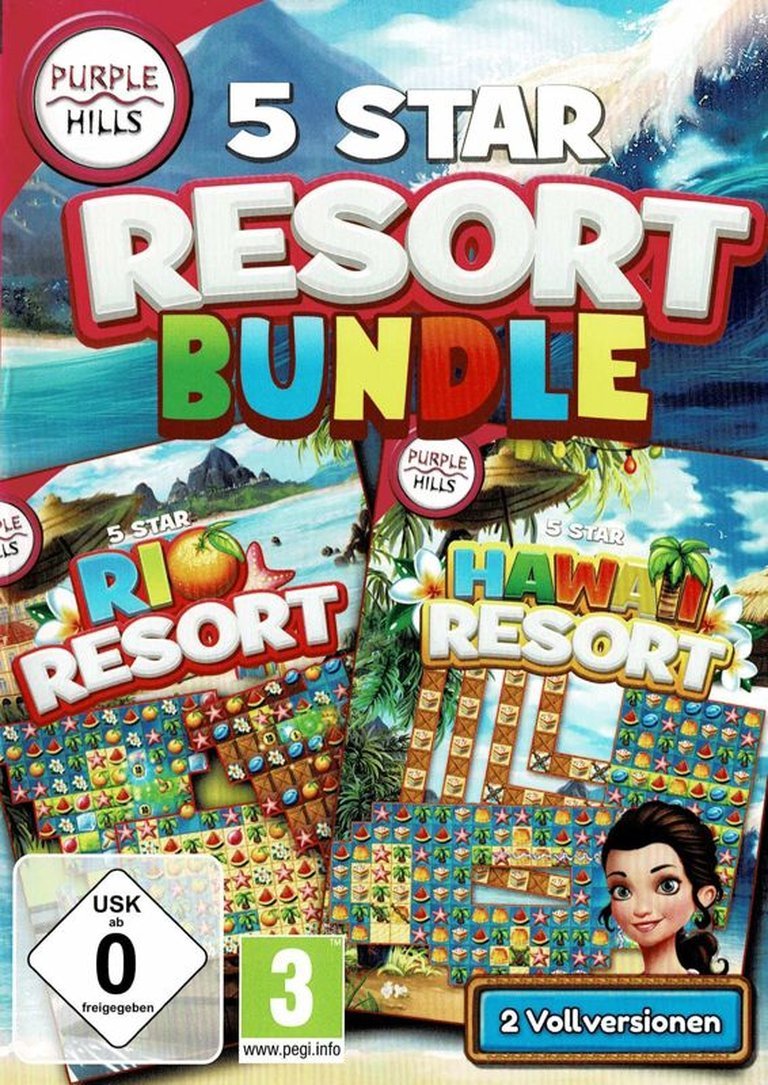
The ‘5 Star Resort Bundle’ is a compilation of tile-matching puzzle games set in luxurious resort destinations, including ‘5 Star Rio Resort’ and ‘5 Star Hawaii Resort’. Players take on the role of a resort manager or designer, strategically matching tiles to construct and upgrade hotel buildings, manage guest satisfaction, and expand their properties across vibrant, sun-soaked locations. With a mix of relaxed and timed gameplay modes, the bundle offers a blend of casual puzzle mechanics and light strategy, all wrapped in a contemporary, visually appealing setting.
5 Star Resort Bundle Reviews & Reception
ign.com (85/100): Metro Exodus is the best Metro game yet. It takes the fear-inducing formula
5 Star Resort Bundle: A Casual Puzzle Compilation That Defines Relaxation
Introduction: The Allure of Resort Management Meets Tile-Matching
Imagine a world where the stress of modern life melts away with every matched tile, where the satisfaction of constructing a luxurious resort is as rewarding as the puzzles that build it. 5 Star Resort Bundle (2019) offers precisely this escapist fantasy—a compilation of two vibrant match-3 puzzle games, 5 Star Rio Resort (2017) and 5 Star Hawaii Resort (2018), packaged into a single retail experience. Developed by the German indie studio rokapublish GmbH and published by S.A.D. Software, this bundle is a testament to the enduring appeal of casual gaming, blending strategic depth with the soothing aesthetics of tropical paradises.
At its core, 5 Star Resort Bundle is more than just a collection of puzzles; it is a celebration of creativity, resource management, and the joy of incremental progress. The games within it—Rio and Hawaii—task players with designing and managing high-end resorts, balancing guest satisfaction with architectural ambition. The bundle’s release in 2019 arrived at a pivotal moment in the casual gaming landscape, where mobile dominance was challenging traditional PC experiences. Yet, 5 Star Resort Bundle carved out a niche for itself, offering an ad-free, offline alternative to the free-to-play juggernauts of the era.
This review argues that 5 Star Resort Bundle is a hidden gem of the late 2010s, a compilation that transcends its humble origins to deliver a uniquely satisfying hybrid of puzzle-solving and light simulation. While it may lack the critical acclaim of AAA titles, its charm lies in its accessibility, its vibrant world-building, and its ability to turn mundane tile-matching into a fulfilling journey of resort construction. However, it is not without its flaws—repetitive mechanics, occasional difficulty spikes, and a lack of narrative depth prevent it from reaching the heights of genre-defining classics. Nonetheless, for fans of match-3 puzzles and management sims, 5 Star Resort Bundle remains a delightful, if underappreciated, experience.
Development History & Context: The Rise of a Casual Empire
The Studio Behind the Scenes: rokapublish GmbH
rokapublish GmbH, the German indie studio behind 5 Star Resort Bundle, is a small but ambitious developer with a clear vision: to create family-friendly, narrative-driven puzzle games that blend strategy with relaxation. Founded in the mid-2010s, the studio has consistently focused on the casual gaming market, drawing inspiration from Nintendo’s accessible design philosophy and the match-3 revolution spearheaded by titles like Bejeweled and Candy Crush Saga.
The 5 Star Resort series began in 2017 with 5 Star Rio Resort, followed by 5 Star Hawaii Resort in 2018, and culminated in 5 Star Miami Resort in 2019. The Bundle itself, released on September 6, 2019, was a retail compilation of the first two entries, aimed at providing players with a complete experience. The studio’s approach was deliberate: each installment introduced incremental improvements, from expanded linked boards to more refined visuals, all while maintaining the core appeal of resort management.
Technological Evolution: From GameMaker to GameMaker Studio 2
The development of the 5 Star Resort series coincided with a significant technological shift for rokapublish. The first two games were built using the original GameMaker engine, which, while functional, limited the scope of the studio’s ambitions. With 5 Star Miami Resort (and by extension, the Bundle), the team upgraded to GameMaker Studio 2, a more robust engine that allowed for:
– Larger, linked boards spanning multiple screens, creating a sense of scale.
– Smoother animations and more detailed sprites, enhancing the tropical aesthetic.
– Improved UI/UX, making the game more intuitive for casual players.
This upgrade was crucial in differentiating the Bundle from its predecessors, offering a more polished and immersive experience.
The Gaming Landscape of 2019: A Casual Revolution
The late 2010s were dominated by the rise of mobile gaming, with titles like Candy Crush Saga and Homescapes monopolizing the casual market. However, PC gaming was experiencing a renaissance of its own, thanks to platforms like Steam and the indie boom. 5 Star Resort Bundle entered this landscape as a premium casual experience, priced at $8.99 (often discounted to $1.79), targeting players who sought an ad-free, offline alternative to mobile puzzles.
The game’s release as a GameHouse Premiere exclusive further underscored its niche appeal. GameHouse, a publisher known for its family-friendly titles, provided a platform for 5 Star Resort Bundle to reach an audience that valued narrative-driven puzzles over endless microtransactions. However, the lack of major critical coverage—evidenced by the absence of reviews on platforms like MobyGames—highlights the challenges indie compilations faced in an oversaturated market.
The Vision: A Hybrid of Puzzle and Simulation
rokapublish’s vision for the 5 Star Resort series was to merge match-3 puzzles with light simulation mechanics, creating a game that was both relaxing and strategically engaging. The studio drew inspiration from a diverse range of titles, including:
– Bejeweled and Gems of War for core tile-matching mechanics.
– Zuma and Tumblestone for obstacle-based challenges.
– You Must Build A Boat and 10,000,000 for resource management and progression.
The result was a game where every matched tile contributed to the construction of a resort, where guest satisfaction was as important as puzzle-solving, and where the player’s choices had tangible effects on the world. This hybrid approach set 5 Star Resort Bundle apart from its peers, offering a depth rarely seen in casual puzzles.
Narrative & Thematic Deep Dive: Building Dreams, One Tile at a Time
The Story: From Rio to Hawaii, a Journey of Ambition
The 5 Star Resort Bundle weaves a lighthearted but engaging narrative across its two included games. Players assume the role of Lucy Rich, the daughter of a renowned hotel mogul, as she embarks on a journey to build and manage luxury resorts in exotic locations. The story begins in Rio, where Lucy must prove her worth by constructing a five-star resort from the ground up. Success in Rio leads to a new challenge in Hawaii, where the stakes are higher, and the guests are more demanding.
The narrative is linear but charming, with Lucy’s character arc emphasizing themes of resilience, creativity, and adaptability. As her silent assistant (the player), you are tasked with solving puzzles to gather resources, manage guest expectations, and expand the resort. The dialogue, delivered through cutscenes and in-game prompts, is humorous and family-friendly, with multiple-choice responses that add a layer of personality to the experience.
Themes: The American Dream Meets Tropical Escapism
At its heart, 5 Star Resort Bundle explores the glamour and grit of entrepreneurship, framing resort management as a metaphor for the American Dream. Each location—Rio’s vibrant culture, Hawaii’s serene beauty—serves as a backdrop for Lucy’s journey, reflecting the challenges and rewards of building something from nothing.
Key themes include:
– Creativity and Innovation: The game rewards players for designing unique buildings, from beachfront bars to spa retreats, reinforcing the idea that success comes from imagination.
– Guest Satisfaction as a Metaphor for Service: Managing guest expectations mirrors real-world hospitality, where attention to detail and quick problem-solving are essential.
– The Balance Between Relaxation and Pressure: The game’s dual modes—Limited Moves (high-pressure) and Relax Mode (leisurely)—reflect the tension between ambition and self-care, a theme resonant in modern work culture.
Characterization: Lucy Rich and the Silent Protagonist
Lucy Rich is the driving force behind the narrative, portrayed as a determined, witty, and resourceful protagonist. Her dialogue is filled with sassy retorts and motivational quips, making her a relatable and engaging lead. The player, as her silent assistant, serves as the unsung hero, making the critical decisions that shape the resort’s success.
The game’s localization efforts—spanning over 20 languages—ensure that Lucy’s personality translates across cultures, though some dialogues can feel repetitive or trope-heavy. The lack of voice acting means the narrative relies entirely on text, which, while accessible, misses an opportunity for deeper immersion.
Flaws in the Narrative
While the story is engaging for a casual game, it is not without its shortcomings:
– Predictability: The linear progression and lack of branching paths may disappoint players seeking deeper narrative complexity.
– Repetitive Dialogues: Some interactions recycle similar jokes or scenarios, which can grow tiresome over the game’s 40-hour playtime.
– Superficial Stakes: The consequences of failure are minimal, reducing tension and making the narrative feel more like a feel-good fantasy than a high-stakes challenge.
Despite these flaws, the narrative succeeds in its primary goal: to motivate and relax the player, turning each puzzle into a step toward a greater achievement.
Gameplay Mechanics & Systems: The Art of Matching and Managing
Core Gameplay Loop: Match, Build, Satisfy
5 Star Resort Bundle revolves around a hybrid gameplay loop that blends match-3 puzzles with light simulation elements. The core mechanics are as follows:
1. Tile-Matching Puzzles: Players swap adjacent tiles to create matches of three or more, clearing obstacles and gathering resources.
2. Resource Management: Resources collected from puzzles are used to construct buildings, upgrade amenities, and satisfy guest demands.
3. Guest Satisfaction: A persistent meter tracks guest happiness, which depletes if players take too long to complete tasks, adding a layer of urgency.
This loop is addictive and rewarding, with each matched tile contributing to the resort’s growth. The game’s two modes—Limited Moves (turn-based pressure) and Relax Mode (unlimited moves)—cater to different playstyles, ensuring accessibility for both casual and strategic players.
Innovative Mechanics: Linked Boards and Building Synergies
The Bundle’s standout feature is its linked boards, expansive grids that span multiple screens, requiring long-term planning and strategic foresight. This mechanic, introduced in 5 Star Miami Resort and refined in the Bundle, transforms traditional match-3 puzzles into large-scale challenges, where players must chain combos across vast areas.
Additional innovations include:
– Power-Ups: Tools like torches (revealing hidden obstacles) and reinforced crates (requiring multiple hits) add depth to puzzle-solving.
– Building Synergies: Each of the 25 constructible buildings (e.g., spas, nightclubs) affects gameplay, offering bonuses like health-themed tiles or combo multipliers.
– Achievements and Challenges: With 21 Steam achievements, the game encourages replayability through creative objectives, such as perfect matches or zero moves wasted.
Character Progression and UI Design
Progression is tied to Lucy’s narrative, with each completed level unlocking new dialogues, building options, and resort expansions. The UI is clean and intuitive, featuring:
– Point-and-select controls for tile-swapping.
– A satisfaction meter that visually represents guest happiness.
– A diagonal-down perspective for resort overview, enhancing immersion.
However, the UI is not without flaws:
– Sparse Tooltips: The game assumes familiarity with match-3 basics, which may frustrate newcomers.
– Difficulty Spikes: Later levels introduce steep challenges, particularly in linked boards, where poor planning can lead to frustration.
Flaws in the System
While the gameplay is polished, several issues detract from the experience:
– Repetition: With 100 levels per game, some puzzles feel padded, relying on recycled mechanics.
– Lack of Combat: The absence of traditional “tactics” (beyond obstacle management) may disappoint players seeking deeper strategy.
– Limited Replayability: Outside of achievements, the linear progression offers little incentive for multiple playthroughs.
Despite these flaws, the gameplay remains satisfying and well-balanced, offering a 40-hour experience that rewards patience and strategy.
World-Building, Art & Sound: Crafting a Tropical Paradise
Setting and Atmosphere: From Rio’s Vibrancy to Hawaii’s Serenity
5 Star Resort Bundle transports players to two distinct tropical locales, each with its own visual and thematic identity:
– Rio de Janeiro: A bustling, colorful cityscape where the resort must compete with urban energy.
– Hawaii: A serene, idyllic paradise where guest expectations are higher, and the stakes feel more personal.
The world evolves dynamically, with skeletal construction sites transforming into opulent resorts, reinforcing the player’s sense of accomplishment. The diagonal-down perspective enhances immersion, allowing seamless navigation across linked boards.
Visual Design: A Feast for the Eyes
Powered by GameMaker Studio 2, the game’s visuals are vibrant and detailed, featuring:
– Jewel-toned tiles that shimmer with each match.
– Exaggerated, cartoonish buildings that pop with personality.
– Smooth animations that make tile-swapping feel tactile and satisfying.
However, the art style can feel generic, with Miami’s cultural influences (e.g., Art Deco architecture) underrepresented. The 2D sprites, while charming, lack the depth of more modern casual games.
Sound Design: The Soundtrack of Relaxation
The game’s audio is a soothing blend of tropical lounge beats and satisfying sound effects, including:
– Upbeat, AudioJungle-sourced tracks that swell during combos.
– Tactile feedback from crunching crates and cheering guests.
– Ambient resort sounds (waves, birdsong) that enhance immersion.
The absence of voice acting is a missed opportunity, as text-based dialogues lack the emotional resonance of voiced interactions. Nonetheless, the sound design complements the gameplay, reinforcing the game’s relaxing atmosphere.
Atmospheric Limitations
While the world-building is effective, it is not without limitations:
– No Dynamic Weather or Day-Night Cycles: The static environments reduce immersion.
– Generic Guest Designs: The lack of diverse character models makes the resort feel less alive.
Despite these shortcomings, the cohesive aesthetic ensures that 5 Star Resort Bundle remains a visually and aurally pleasing experience.
Reception & Legacy: A Hidden Gem in a Crowded Market
Critical and Commercial Reception
5 Star Resort Bundle received modest attention upon its 2019 release, with no major critic reviews on platforms like MobyGames. This lack of coverage reflects the challenges indie compilations faced in an era dominated by mobile giants and AAA blockbusters.
However, the individual games within the Bundle fared better:
– 5 Star Miami Resort earned a 73/100 average score on Steam, with players praising its strategic depth and relaxing modes.
– 5 Star Hawaii Resort received a 3.2/5 rating on WildTangent, with users highlighting its charming visuals and satisfying progression.
The game’s GameHouse Premiere exclusivity initially limited its reach, but its eventual Steam release allowed it to find a niche audience of casual puzzle enthusiasts.
Evolution of the Series
The 5 Star Resort series continued to evolve post-Bundle, with 5 Star Miami Resort (2019) and 5 Star Resort Complete Edition (2021) expanding the formula. These later entries introduced:
– More complex linked boards.
– Enhanced building synergies.
– Additional gameplay modes.
However, the series remains overshadowed by mobile competitors, struggling to achieve mainstream recognition.
Influence on the Genre
While 5 Star Resort Bundle did not redefine the match-3 genre, it contributed to the growing trend of hybrid casual games, blending puzzles with light simulation. Its success (or lack thereof) highlights the challenges indie developers face in a market saturated with free-to-play alternatives.
Conclusion: A Relaxing Escape with Room for Improvement
5 Star Resort Bundle is a charming, if flawed, compilation that offers a unique blend of match-3 puzzles and resort management. Its vibrant visuals, relaxing soundtrack, and satisfying progression make it a standout in the casual gaming landscape, while its repetitive mechanics and lack of narrative depth prevent it from achieving greatness.
For fans of tile-matching puzzles and light simulation, the Bundle is a hidden gem—an ad-free, offline alternative to mobile juggernauts. However, those seeking deep storytelling or innovative gameplay may find it lacking.
Final Verdict: 7.5/10 – A Delightful Diversion, But Not a Masterpiece
5 Star Resort Bundle is best enjoyed as a relaxing escape, a game to unwind with after a long day. It may not redefine the genre, but it offers a polished, satisfying experience that rewards patience and creativity. In the pantheon of casual games, it stands as a testament to the enduring appeal of simple, well-executed mechanics—a tropical paradise built one tile at a time.