
- Release Year: 2007
- Platforms: Windows
- Publisher: Big Fish Games, Inc, S.A.D. Software Vertriebs- und Produktions GmbH
- Developer: Dragon Altar Games
- Genre: Puzzle, Tile matching puzzle
- Perspective: Side view
- Game Mode: Single-player
- Gameplay: Falling block puzzle, Tile matching puzzle
- Setting: Classical antiquity, Europe
- Average Score: 60/100
Description
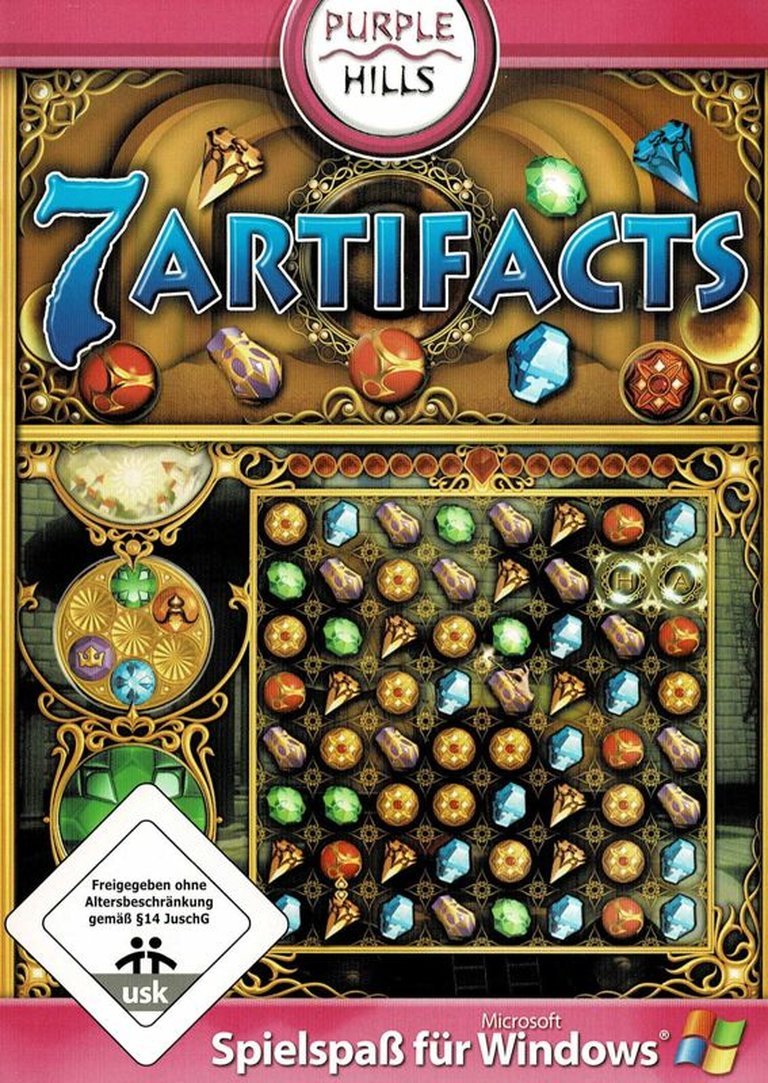
In the game ‘7 Artifacts’, players take on the role of the magician Lidia in ancient Greece, where fragments of a secret prophecy are appearing. The goal is to prevent a new war between the Gods and Titans by unraveling these prophecies through a match-three puzzle game. Players swap tiles to create matches, collect letters, and clear levels before time runs out. As they progress, they unlock bonuses and recover seven powerful artifacts, each with unique abilities to aid in their quest.
7 Artifacts Guides & Walkthroughs
7 Artifacts Reviews & Reception
gamezebo.com : fun, but ultimately a fleeting diversion.
7 Artifacts: Review
Introduction
The video game “7 Artifacts” is a legendary title that has left an indelible mark on the gaming community. Developed by Dragon Altar Games, this match-three puzzle game was released in 2007 and quickly became a favorite among casual gamers. The game’s unique blend of engaging gameplay, captivating visuals, and an intriguing storyline set it apart from other titles in the genre. This review will delve into the various aspects of “7 Artifacts,” exploring its development history, narrative depth, gameplay mechanics, and its enduring legacy in the world of video games.
Development History & Context
Studio
Dragon Altar Games, the studio behind “7 Artifacts,” was founded by a group of passionate developers who sought to create innovative and engaging puzzle games. The studio’s name is derived from the mythical dragon altar, symbolizing the mystical and enchanting themes that often permeate their games.
Creators’ Vision
The creators of “7 Artifacts” envisioned a game that would combine the best elements of puzzle games with a rich narrative and stunning visuals. They aimed to create an experience that would captivate players and keep them coming back for more. The game’s development was a labor of love, with the team meticulously crafting each level and artifact to ensure a seamless and enjoyable experience.
Technological Constraints of the Era
Released in 2007, “7 Artifacts” was developed during a time when technology was rapidly evolving. The game was created using the Big Fish Games engine, which provided the necessary tools for developing a match-three puzzle game. However, the developers had to work within the constraints of the era, ensuring that the game was optimized for the hardware of the time. Despite these challenges, Dragon Altar Games managed to create a visually impressive and technically sound game.
Gaming Landscape at the Time of Its Release
The gaming landscape in 2007 was dominated by casual games, with puzzle games being particularly popular. Titles like “Bejeweled” and “Zuma” were household names, and “7 Artifacts” entered this competitive market with the goal of standing out. The game’s unique features, such as its storyline and the seven artifacts, helped it carve a niche for itself in the crowded puzzle game genre.
Narrative & Thematic Deep Dive
Plot
“7 Artifacts” tells the story of Lidia, a magician who must unravel a secret prophecy to prevent a new war between the gods and the Titans. The game’s narrative is woven into the gameplay, with each level revealing a piece of the prophecy. As Lidia progresses through the levels, she collects seven powerful artifacts that aid her in her quest.
Characters
The game’s primary character is Lidia, a skilled and determined magician. Her journey is the central focus of the game, and players follow her as she uncovers the secrets of the prophecy. The character design is simple yet effective, with Lidia’s appearance and attire reflecting her magical abilities.
Dialogue
The dialogue in “7 Artifacts” is minimal, with most of the story being conveyed through text boxes that appear at the start of each level. The dialogue is concise and to the point, providing just enough information to keep players engaged without overwhelming them.
Underlying Themes
The game explores themes of destiny, power, and the consequences of one’s actions. The prophecy that Lidia must unravel is a central theme, symbolizing the inevitable and the unknown. The seven artifacts represent power and the means to achieve one’s goals. The game also touches on the theme of consequences, as Lidia’s actions and decisions have a direct impact on the outcome of the story.
Gameplay Mechanics & Systems
Core Gameplay Loops
The core gameplay loop of “7 Artifacts” revolves around the match-three puzzle mechanic. Players are presented with a grid of tiles, and their goal is to match three or more tiles of the same color to clear them from the board. The game introduces various obstacles and power-ups that add depth to the gameplay, making each level a unique challenge.
Combat
There is no traditional combat in “7 Artifacts.” Instead, the game’s challenges come in the form of puzzle levels that increase in difficulty as the player progresses. The combat is more mental than physical, requiring players to use their wit and strategy to overcome each level.
Character Progression
Character progression in “7 Artifacts” is tied to the collection of the seven artifacts. As Lidia collects each artifact, she gains new abilities and powers that help her in her quest. The progression system is simple yet effective, providing a sense of accomplishment as players advance through the game.
User Interface
The user interface of “7 Artifacts” is clean and intuitive. The game’s menu system is easy to navigate, allowing players to access different game modes and options with ease. The in-game interface is minimalistic, with the focus being on the puzzle grid and the artifacts.
Innovative or Flawed Systems
One of the innovative systems in “7 Artifacts” is the use of the seven artifacts as progression markers. This system not only adds depth to the gameplay but also ties the narrative and the puzzle mechanics together. However, some players might find the game’s pacing to be a bit slow, especially in the early levels. The game could have benefited from a faster introduction of new mechanics and challenges.
World-Building, Art & Sound
Setting
The game is set in a mythical world inspired by classical antiquity and European folklore. The setting is rich in detail, with each level featuring unique environments that reflect the game’s themes. The world-building is impressive, with the developers paying attention to every detail to create an immersive experience.
Atmosphere
The atmosphere of “7 Artifacts” is enchanting and mystical. The game’s visuals and sound design work together to create a sense of wonder and magic. The atmosphere is consistent throughout the game, with each level building upon the previous one to create a cohesive and immersive world.
Visual Direction
The visual direction of “7 Artifacts” is stunning. The game features hand-drawn artwork that brings the mythical world to life. The visuals are vibrant and detailed, with each tile and artifact designed to stand out. The game’s use of color and light adds depth to the visuals, making the world feel alive and dynamic.
Sound Design
The sound design of “7 Artifacts” is complementary to the visuals. The game features a soothing soundtrack that enhances the game’s atmosphere. The sound effects are satisfying, providing feedback to the player’s actions. The sound design is subtle yet effective, adding to the overall immersive experience.
Reception & Legacy
Critical and Commercial Reception at Launch
Upon its release, “7 Artifacts” received mixed reviews from critics. While the game was praised for its unique features and engaging gameplay, it was also criticized for its slow pacing and lack of innovation in the puzzle genre. Commercially, the game was a moderate success, finding a dedicated fan base among casual gamers.
How Its Reputation Has Evolved
Over the years, the reputation of “7 Artifacts” has evolved. The game is now considered a classic in the puzzle genre, with many players fondly remembering their time with Lidia and the seven artifacts. The game’s legacy lies in its ability to captivate players with its unique blend of storytelling and puzzle gameplay.
Influence on Subsequent Games and the Industry as a Whole
“7 Artifacts” has influenced subsequent games in the puzzle genre, with many developers drawing inspiration from its unique features. The game’s use of a narrative to drive the gameplay has become a common trope in the genre. The industry as a whole has recognized the value of combining storytelling with puzzle gameplay, leading to the creation of more narrative-driven puzzle games.
Conclusion
In conclusion, “7 Artifacts” is a game that stands out in the crowded puzzle genre. Its unique blend of engaging gameplay, captivating visuals, and an intriguing storyline makes it a memorable experience. The game’s legacy is a testament to its enduring appeal, with players still enjoying it years after its release. “7 Artifacts” is not just a game; it is an experience that transports players to a mythical world, where magic and destiny collide.