
- Release Year: 2006
- Platforms: Linux, Windows
- Developer: Tomas Pettersson (DrPetter)
- Genre: Action
- Perspective: Side view
- Game Mode: Single-player
- Gameplay: Action, Platform
- Setting: Space
Description
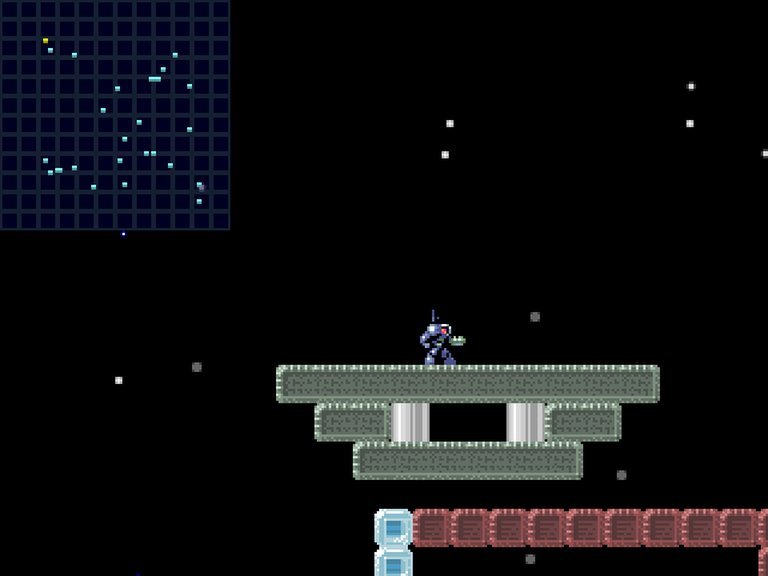
7th Swarming of the Machines is an experimental platform/action game created in 48 hours for Ludum Dare #8, featuring a jetpack-equipped character navigating a hazardous environment filled with floating, moving platforms. Players must collect 25 gadgets while avoiding destruction from the randomly shifting platforms, using a laser gun to clear barriers when needed. The challenge stems entirely from the dynamic platform movements rather than enemies, with a radar aiding gadget location and the game ending either in crushing defeat or gadget-collecting victory.
7th Swarming of the Machines: Review
Introduction
In the annals of video game history, certain titles stand not for polish or commercial success, but for their raw, unfiltered creativity—a spark of genius forged under extreme constraints. 7th Swarming of the Machines is such a title. Created in a mere 48 hours for Ludum Dare #8, this experimental gem redefines minimalist design. It asks: what if the “swarm” isn’t an enemy, but the very environment itself? Our thesis is that Pettersson’s magnum opus transcends its origins as a ludum dare entry to become a profound meditation on chaos, control, and the essence of challenge in interactive media. It is a masterclass in emergent tension, proving that the greatest threats aren’t sentient foes, but the indifferent physics of a world gone haywire.
Development History & Context
7th Swarming of the Machines emerged from the crucible of Ludum Dare #8, a game jam demanding participants to create a game in 48 hours based on a community-chosen theme. When the theme “swarms” was announced, developer Tomas Pettersson (DrPetter) initially lamented its perceived lack of originality. Yet, within hours, he conceived a radical twist: the environment is the swarm. Developed solo in April 2006, the game was released on May 1, 2006, for Windows and Linux. Its technological constraints are evident in its 640×480 resolution, 2D scrolling visuals, and lack of complex audio design—choices born from the jam’s brevity. The 2006 gaming landscape was dominated by AAA titles like Gears of War and The Elder Scrolls IV: Oblivion, making this microgame a stark, counter-cultural artifact. It rejected cinematic spectacle in favor of pure, distilled gameplay—a rebellion against bloated design that prefigured the modern “junk jam” movement.
Narrative & Thematic Deep Dive
There is no traditional narrative—no characters, dialogue, or plot. Instead, the game’s “story” is told through its mechanics. The player is a nameless, jetpack-equipped scavenger in a chaotic void. Their mission: collect 25 “gadgets.” This minimalist setup mirrors the theme of “swarms” not through hordes of enemies, but through the environment itself. The platforms are a non-sentient swarm—random, unpredictable, and lethal. This creates existential dread: the world is indifferent to your survival, a metaphor for humanity’s struggle against impersonal forces (nature, technology, entropy). The gadgets—glowing collectibles—represent fleeting order in chaos. Their collection offers temporary purpose, but the victory screen’s simple text (“You win!”) feels hollow, suggesting that even triumph is fleeting against the endless swarm’s momentum. The absence of enemies is radical; the true antagonist is entropy itself.
Gameplay Mechanics & Systems
The core loop is deceptively simple: fly via jetpack, shoot lasers to destroy barriers, and collect gadgets. Mastery hinges on exploiting three key systems:
1. Jetpack Physics: Momentum-based flight feels weightless yet precise. Thrust is limited, demanding careful energy management and spatial awareness.
2. Platform Dynamics: Platforms move randomly, colliding and crushing the player. Their unpredictability turns navigation into a high-stakes prediction game.
3. Radar System: A minimalist radar in the top-left tracks gadget locations but not platforms, forcing players to rely on spatial memory and risk assessment.
The genius lies in what’s omitted. There are no enemies, no power-ups, no checkpoints. Death is instant and final—a “squashing” that mirrors the game’s brutal physics. Progress requires memorizing gadget positions, predicting platform paths, and exploiting destructible barriers to create temporary safe zones. This creates a feedback loop of tension: each gadget collected is a small victory against chaos, but the swarm’s relentless movement ensures no moment is truly safe. The UI is equally stark—no HUD clutter, just essential information—forcing players to absorb the world’s visual chaos. The result is a ballet of risk: a single miscalculation means death, yet success feels earned through pure skill.
World-Building, Art & Sound
The “world” is a void—no background, no lore, just floating platforms and gadgets. This emptness is intentional, focusing attention on the swarm’s movement. The 2D scrolling visuals use monochrome pixels with single-color highlights (e.g., red gadgets, orange platforms), creating a stark, abstract aesthetic. Platforms vary in size and speed, their jagged edges evoking debris or broken machinery. The jetpack’s exhaust provides the only dynamic visual flair—a blue flame that pulses with thrust. Sound design is minimal: no music, only the mechanical clatter of platforms and a soft pew from the laser gun. This audio-visual simplicity amplifies tension; the silence is as oppressive as the platforms are deadly. The result is a haunting, claustrophobic atmosphere—a digital storm where every sound or movement signals potential doom.
Reception & Legacy
At launch, 7th Swarming of the Machines flew under the radar. MobyGames lists a MobyScore of “n/a,” and Metacritic shows no critic reviews. Player reception was muted; the two ratings on MobyGames average 3.1/5, with no reviews. MyAbandonware’s single 4/5 vote reflects its cult status among experimental gamers. Yet, its legacy grew over time. It became a touchstone for “pure mechanics” design, influencing minimalist games like Celeste (precision platforming) and Spelunky (emergent chaos). Pettersson’s reputation as a genre-agnostic innovator (creator of Knytt and Within a Deep Forest) was cemented. The game’s concept—environment as antagonist—resonates in modern titles like Return of the Obra Dinn (detailed spatial reasoning) and InnerSpace (exploring chaotic skies). It remains a blueprint for jam developers: constraints can breed brilliance.
Conclusion
7th Swarming of the Machines is a diamond forged under pressure. It strips gaming to its essence: challenge, control, and consequence. Its lack of narrative and enemies isn’t a flaw but a statement—that the most compelling threats are impersonal and systemic. Pettersson’s 48-hour masterpiece redefined “swarm” as a physics-based symphony of chaos, proving that brilliance thrives in limitations. While it may not offer the depth of sprawling epics, its purity resonates: every gadget collected is a defiance of entropy. In a world cluttered with AAA noise, 7th Swarming of the Machines stands as a timeless monument to elegant design—an unforgettable experiment that transcends its humble origins to become a landmark in interactive art. It is, and will remain, a masterpiece of controlled chaos.