
- Release Year: 2016
- Platforms: PlayStation 4, Windows, Xbox One
- Publisher: Petroglyph Games Inc., Soedesco B.V.
- Developer: Petroglyph Games Inc.
- Genre: Strategy, Tactics
- Perspective: Diagonal-down
- Game Mode: Co-op, Online Co-op, Online PVP, Single-player
- Gameplay: Real-time strategy
- Setting: Fantasy
Description
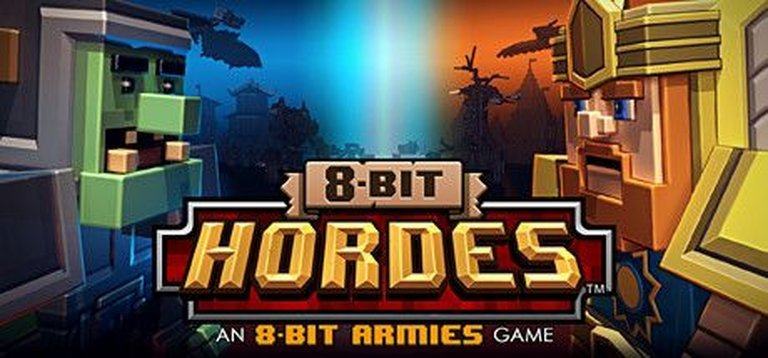
8-Bit Hordes is a standalone expansion for 8-Bit Armies set in a fantasy realm where two distinct factions clash: the Dark Orcs and their Deathsworn allies face off against the Humans, Dwarves, and Elves of the Lightbringers. Offering 24 campaign missions, 12 cooperative missions, and 10 multiplayer maps supporting up to 8 players, the game combines classic real-time strategy gameplay with a retro aesthetic and new music by Frank Klepacki.
Gameplay Videos
Where to Buy 8-Bit Hordes
8-Bit Hordes Free Download
8-Bit Hordes Cracks & Fixes
8-Bit Hordes Patches & Updates
8-Bit Hordes Mods
8-Bit Hordes Guides & Walkthroughs
8-Bit Hordes Reviews & Reception
dualshockers.com : …the charming art style, fun gameplay, and the massive number of soldiers you can take control of makes it an enjoyable experience.
playstationcountry.com : This really is that basic Command and Conquer style of gameplay and the immediacy of that really is welcome.
8-Bit Hordes: Review
In the crowded landscape of modern real-time strategy (RTS) games, 8-Bit Hordes emerges as a lovingly crafted, if somewhat flawed, homage to the genre’s golden age. Developed by Petroglyph Games—the venerable studio founded by Westwood Studios veterans responsible for Command & Conquer and Star Wars: Empire at War—this 2016 standalone expansion to 8-Bit Armies trades the latter’s modern military aesthetic for a vibrant fantasy universe. While it delivers on its promise of accessible, nostalgia-fueled RTS action, its repetitive design and lack of strategic depth prevent it from ascending beyond being a charming curio. This review delves into the game’s development, narrative, mechanics, artistry, and legacy to determine whether the hordes are worth joining.
Introduction
8-Bit Hordes arrives as the second entry in Petroglyph’s “8-Bit” series, positioning itself as a bridge between the series’ accessible base-building ethos and the rich lore of classic fantasy RTS titles like Warcraft. Its core appeal lies in its voxel-based art style, Frank Klepacki’s thunderous score, and streamlined mechanics aimed at both genre novices and veterans. However, beneath its charming exterior lies a game that struggles to escape the shadow of its predecessor and the genre giants it emulates. The central thesis of this analysis is that 8-Bit Hordes succeeds as a lightweight, accessible fantasy RTS but fails to transcend its status as a reskin of 8-Bit Armies, hampered by repetitive gameplay, shallow faction design, and a narrative vacuum. It is a delightful yet disposable footnote in the RTS canon.
Development History & Context
Petroglyph Games, founded in 2003 by ex-Westwood Studios alumni, brought 8-Bit Hordes to life in just a few months following the release of 8-Bit Armies in 2016. The studio’s vision was to quickly expand the “8-Bit” universe by introducing fantasy-themed factions after initially planning DLC for the modern-military setting. Using the same GlyphX engine as 8-Bit Armies, development focused on reskinning units (tanks became dragons, infantry became orcs) while maintaining the core gameplay loop. This rapid approach ensured compatibility with the original game, enabling cross-play multiplayer between Armies and Hordes factions—a forward-thinking move that maximized content without overhauling the underlying tech.
The 2016 gaming landscape saw RTS titles relegated to a niche, with console ports facing significant control challenges. Petroglyph aimed to address this by simplifying unit grouping and resource management. The voxel aesthetic, while retro, was a practical choice for modern hardware, allowing for partially destructible terrain and distinct unit silhouettes. However, this also meant the game inherited Armies‘s UI limitations, particularly on consoles, where radial menus and button-grouping created frustrating precision issues. The game’s budget development context is evident in its lack of innovation, but its commitment to accessibility and cross-platform functionality reflects Petroglyph’s understanding of its audience.
Narrative & Thematic Deep Dive
8-Bit Hordes presents a narrative so thin it might as well be parchment. The campaign pits the “good” Lightbringers (Humans, Dwarves, Elves) against the “evil” Deathsworn (Dark Orcs, Undead allies) in a generic war of conquest. Missions are delivered via brief text descriptions before each level, devoid of cutscenes, character arcs, or meaningful dialogue. Units grunt, squeal, or offer functional acknowledgments (“Yes, commander!”), but there are no named heroes or factions with distinct ideologies beyond “good vs. evil.” This thematic shallowness extends to the world-building: while maps feature haunted forests and underworlds, they lack lore or environmental storytelling beyond visual cues.
The game’s thematic core is pure fantasy trope—crusading knights rampaging against orcish hordes—yet it never subverts or explores these archetypes. The Lightbringers’ “annoyingly cheery” demeanor, noted in promotional materials, is never contextualized, and the Deathsworn’s “dark” alignment is expressed solely through visual design. This absence of narrative depth renders the campaign a sterile exercise in objective completion, stripping the fantasy setting of the immersive storytelling that made titles like Warcraft III enduring. It’s a missed opportunity to leverage the fantasy genre’s potential for rich world-building, reducing the experience to a mechanical war between faceless armies.
Gameplay Mechanics & Systems
At its core, 8-Bit Hordes replicates the classic Command & Conquer formula with fantasy reskins. Players start with a castle, gather gold via minecarts, build structures (barracks, farms), and amass armies to destroy enemy bases. The Lightbringers require farms to sustain population caps, while the Deathsworn uses similar mechanics with undead variations. Units are mapped to the square, triangle, or circle buttons on consoles, allowing players to control large groups simultaneously—a clever solution for controller limitations but a double-edged sword. This system enables satisfying “horde rushes” but sacrifices micro-management, reducing tactics to massing units and sending them into enemy lines.
The combat loop suffers from critical flaws. Rush tactics often dominate matches, as AI opponents struggle with pathfinding and strategic counterplay. Unit variety is superficial: Lightbringers feature knights, archers, and mages, while Deathsworn deploy orcs, skeletons, and dragons. Yet factions lack unique tech trees or asymmetrical mechanics, making battles feel interchangeable. The campaign’s difficulty spikes abruptly by mission four, with AI becoming punishingly aggressive while offering no increased strategic depth. Skirmish modes suffer similarly, with multiplayer matches often devolving into resource races.
Resource management is overly simplistic. Gold is abundant, and unit production queues are short, discouraging economic balancing. The “fog of war” mechanic obscures enemy movements, but the lack of scouting units (replaced by automatic exploration) removes strategic reconnaissance. Building destruction is visually satisfying but tactically inconsequential, as repairing structures is rarely viable. While the controls are functional for newcomers, the radial menus on consoles are clumsy, leading to accidental unit selection or building misplacement. Ultimately, 8-Bit Hordes prioritizes accessibility over depth, resulting in a gameplay experience that is easy to learn but quickly repetitive.
World-Building, Art & Sound
8-Bit Hordes’s world-building is a triumph of style over substance. The voxel-based art style, reminiscent of Crossy Road or Pac-Man 256, renders fantasy units with charming, blocky simplicity. Orcs snarl with jagged teeth, elves wield pixelated bows, and dragons belch fire with satisfying, chunky explosions. Maps like “Haunted Forest” and “Underworld” use vivid, saturated colors—teal, magenta, ochre—to create distinct atmospheres, even if environmental details are sparse. Destructible terrain adds dynamism, as trees shatter and rocks crumble during battles, though this rarely impacts strategy beyond visual flair.
Sound design, however, elevates the experience. Frank Klepacki’s score channels his Command & Conquer roots with orchestral melodies blended with 8-bit chiptunes, evoking epic battles without overwhelming the action. Unit sound effects are crisp: swords clank, arrows whistle, and orcs roar with guttural intensity. The lack of voice acting beyond grunts and acknowledgments is a missed opportunity, but the audio-visual cohesion creates a cohesive retro-fantasy vibe. On consoles, the art style holds up well, though frame rate drops occur during large-scale battles—noticeable but not game-breaking. While the world is visually appealing, it remains a static backdrop, lacking the environmental storytelling or interactive elements that would breathe life into its fantasy setting.
Reception & Legacy
8-Bit Hordes received a mixed-to-positive reception, reflecting its strengths and weaknesses. On MobyGames, it holds a 67% critic score (25 reviews), with PlayStation 4 reviews averaging 67% (18 ratings). Steam users awarded it a “Very Positive” rating (81% of 532 reviews), praising its accessibility and charm. Critics like GamingTrend (80%) and Video Chums (80%) highlighted the satisfying combat and Klepacki’s soundtrack, while GameStar (68%) and 4Players (67%) criticized repetitive gameplay. Console reviews noted control issues; PlayStation Universe scored it 40%, citing “poor AI,” while DualShockers (70%) enjoyed the art but lamented the lack of tactical depth.
Commercially, the game found a modest audience, selling $14.99 on Windows, PS4, and Xbox One. It was bundled with 8-Bit Armies and Invaders! in collections, suggesting Petroglyph marketed it as part of a cohesive series. Its legacy is as a “gateway RTS”—ideal for beginners but overshadowed by deeper titles like StarCraft II. The cross-play with 8-Bit Armies was a forward-thinking feature, but the game’s niche status and repetitive design limited its influence. It remains a cult favorite among Petroglyph loyalists and voxel-art enthusiasts, but its place in history is as a well-intentioned but ultimately minor entry in the genre.
Conclusion
8-Bit Hordes is a paradox: a charming, accessible fantasy RTS that delivers on its nostalgic promise yet fails to transcend its simplistic design. Petroglyph Games has crafted a visually delightful and mechanically sound experience, particularly for newcomers intimidated by complex RTS titles. The voxel art, Klepacki’s score, and streamlined controls create an inviting world where sending hordes of pixelated soldiers into battle is undeniably fun. However, the game’s lack of narrative depth, repetitive gameplay, and shallow faction design prevent it from achieving greatness. It is less a standalone title and more a reskin of 8-Bit Armies with dragons instead of tanks—a serviceable expansion but not a revolution.
For casual players or those seeking a lighthearted RTS fix, 8-Bit Hordes is a recommendable romp. Its short campaign, co-op missions, and cross-play offer value, especially at a discount. Yet for strategy veterans craving innovation or tactical complexity, it will feel like a missed opportunity. In the pantheon of RTS history, 8-Bit Hordes occupies a humble niche—a charming footnote that honors the genre’s past without contributing to its future. It is a testament to Petroglyph’s craftsmanship but not a landmark in its own right.