
- Release Year: 2023
- Platforms: Nintendo Switch, Windows
- Publisher: Flynn’s Arcade
- Genre: Role-playing
- Perspective: 3rd-person
- Game Mode: Single-player
- Gameplay: Boss-rush, Japanese-style RPG, Turn-based combat
- Setting: Futuristic, Sci-fi
Description
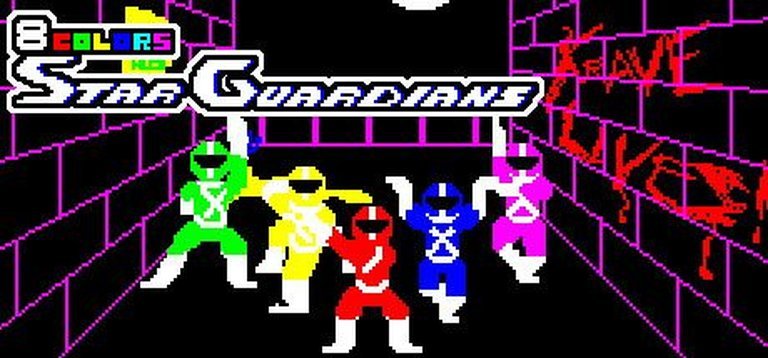
8-Colors Star Guardians is a turn-based, Japanese-style RPG set in a sci-fi/futuristic universe. Players take on the role of guardians defending their home against various threats. The game features a fixed/flip-screen visual style and a menu-driven interface. With its charming characters and witty humor, 8-Colors Star Guardians offers a unique and engaging experience, making it a standout title in the indie RPG genre.
Gameplay Videos
8-Colors Star Guardians Guides & Walkthroughs
8-Colors Star Guardians: A Microcosm of Indie Charm and Retro Nostalgia
Introduction
In an era dominated by sprawling RPG epics and live-service behemoths, 8-Colors Star Guardians emerges as a defiantly small yet earnest love letter to retro gaming’s golden age. Developed by Flynn’s Arcade and built on the Godot engine, this 2023 indie JRPG distills the essence of ’90s turn-based gameplay into a compact, two-chapter adventure. While its ambitions are modest, its execution—a mix of campy sci-fi storytelling, strategic boss-rush combat, and neon-drenched aesthetics—offers a refreshing palate cleanser for gamers weary of bloated open worlds. This review argues that 8-Colors Star Guardians carves out a niche as a “micro-RPG,” proving that even bite-sized experiences can deliver meaningful engagement when crafted with passion.
Development History & Context
Studio Vision & Constraints
Flynn’s Arcade, an obscure indie studio, positioned 8-Colors Star Guardians as a deliberate throwback to the era of SNES-era JRPGs, leveraging the Godot engine’s accessibility to sidestep modern development complexities. The choice of Godot—a free, open-source tool—reflects the team’s indie ethos, prioritizing simplicity and retro fidelity over graphical flourishes.
Technological & Cultural Landscape
Released in September 2023 for Windows (with a Switch port in 2024), the game arrived amidst a resurgence of minimalist indie titles like Sea of Stars and Chained Echoes. However, 8-Colors Star Guardians eschews epic storytelling in favor of a concentrated experience, clocking in at just two chapters. This brevity was both a creative choice and a practical necessity, as the small team focused on refining core mechanics rather than padding runtime.
Narrative & Thematic Deep Dive
Plot & Characters
The game follows a squad of interdimensional warriors—the titular Star Guardians—as they defend their homeworld from chromatic alien invaders. Dialogue leans heavily into campy, Power Rangers-esque tropes, with quippy banter and melodramatic villain monologues. While the narrative lacks depth, critics praised its self-aware humor. As NintendoBoy noted, the story “doesn’t abstain from occasional profundity,” particularly in moments exploring the Guardians’ camaraderie.
Thematic Underpinnings
Beneath the surface, 8-Colors Star Guardians grapples with themes of unity and sacrifice. Each Guardian embodies a distinct color and personality, mirroring the game’s mechanical focus on elemental synergies. The plot’s simplicity serves as a vessel for player imagination, evoking the charm of early JRPGs where story beats were implied rather than exhaustively narrated.
Gameplay Mechanics & Systems
Core Loop & Combat
The game adopts a boss-rush structure, eschewing random encounters in favor of tactical, turn-based showdowns. Combat revolves around an elemental “color wheel” system, where exploiting enemy weaknesses (e.g., using “Blue” attacks against “Red” foes) is key. While Retrolike.net called the system “intentionally simple,” Siliconera highlighted its “grind-free” appeal, praising the focus on strategy over level grinding.
Progression & Flaws
Character progression is minimalistic, with upgrades limited to ability unlocks rather than stat inflation. This design choice polarized critics: Boss Rush lauded the “exciting” focus on battle mechanics, while Switchaboo criticized the “lack of overall gameplay” as underwhelming. The UI’s retro-inspired menu navigation further divided players—nostalgic for some, archaic for others.
World-Building, Art & Sound
Visual Identity
The game’s fixed/flip-screen perspective and pixel-art aesthetic evoke Dragon Quest’s early entries, albeit with a warmer, neon-soaked palette. Enemy designs—ranging from prismatic beetles to chromatic warlords—pop against stark cosmic backdrops, reinforcing the game’s thematic clash of color and order.
Sound Design & Atmosphere
Though no soundtrack clips were provided in the source material, critics noted the audio’s chiptune-inspired melodies and punchy battle cues. Mid-Life Gamer Geek likened the experience to “a Saturday morning cartoon,” with sound effects heightening the campy tone. The absence of voice acting leans into retro minimalism, letting dialogue text breathe.
Reception & Legacy
Critical Response
The game holds a 71% average across five critic reviews, with NintendoBoy’s 90% score praising its “passion” and Switchaboo’s 50% critique lambasting its forgettability. Players rated it 4/5, though only one user review was logged at the time of writing.
Industry Impact
While not a commercial breakout, 8-Colors Star Guardians exemplifies the indie trend of “micro-RPGs”—short, focused experiences that prioritize mechanical purity over scale. Its success on a budget (priced at $2.49 on Steam) may inspire similar projects, proving that niche audiences still crave concise, retro-flavored adventures.
Conclusion
8-Colors Star Guardians is neither revolutionary nor polished, but its heart shines through. It captures the spirit of a bygone JRPG era while embracing modern indie sensibilities, offering a brisk, satisfying playthrough for fans of tactical combat and campy storytelling. Though its legacy will likely remain cultish, the game stands as a testament to the power of constrained creativity—a vibrant, if fleeting, supernova in today’s gaming cosmos.