
- Release Year: 2021
- Platforms: Nintendo Switch, PlayStation 4, PlayStation 5, Windows, Xbox One, Xbox Series
- Publisher: Neowiz Games Corporation, Red Art Games
- Developer: Rootless Studio
- Genre: Explorable platformer, Metroidvania
- Perspective: Side view
- Game Mode: Single-player
- Gameplay: Boss fights, Combat, Exploration, Metroidvania, Platforming
- Setting: Asia, Fantasy, Hell
Description
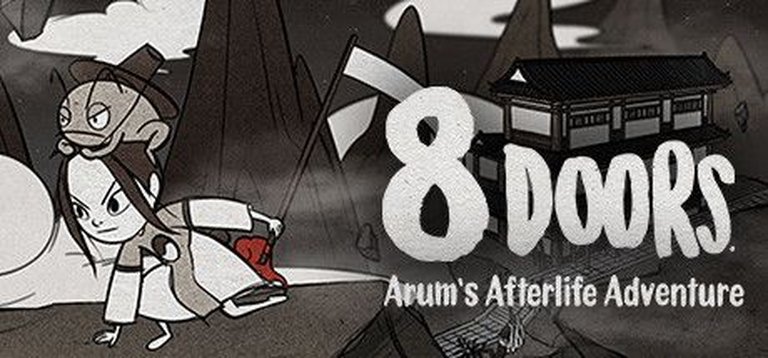
8Doors: Arum’s Afterlife Adventure is a side-scrolling Metroidvania set in a fantastical Asian afterlife, where players navigate eight distinct hellish realms filled with hostile landscapes and bloodthirsty devils. The game emphasizes exploration and progression, requiring players to unlock abilities and backtrack to overcome obstacles while battling enemies and challenging bosses.
Gameplay Videos
Where to Buy 8Doors: Arum’s Afterlife Adventure
8Doors: Arum’s Afterlife Adventure Mods
8Doors: Arum’s Afterlife Adventure Guides & Walkthroughs
8Doors: Arum’s Afterlife Adventure Reviews & Reception
geekmom.com : 8Doors was worth the wait.
fingerguns.net : when it comes to the gameplay, this is where 8Doors begins to fall back towards the pack.
primagames.com : the game throws all of this away for FromSoftware-esque boss battles that don’t meld with the rest of the experience, making it much harder to recommend than I would have preferred.
8Doors: Arum’s Afterlife Adventure: Review
Introduction
In the saturated landscape of modern Metroidvanias, where pixel art and Western mythology dominate, 8Doors: Arum’s Afterlife Adventure emerges as a bold, culturally distinct outlier. Developed by Seoul-based Rootless Studio and published by Neowiz, this 2021 release transports players to a purgatory inspired by Korean folklore—a realm of bureaucratic afterlife offices, talking frogs, and ink-painted horrors. Its arresting monochromatic aesthetic (a stark palette of black, white, and crimson) promises a journey unlike any other, marrying traditional storytelling with demanding gameplay. Yet, this ambitious debut, born from a tumultuous six-year development cycle marked by failed Kickstarters and engine shifts, straddles a precarious line. While its artistry and cultural foundation create an unforgettable atmosphere, 8Doors ultimately falters under the weight of repetitive combat, a disjointed narrative, and punitive difficulty spikes that test the patience of even the most dedicated explorers. This review deconstructs 8Doors as both a cultural artifact and a game, arguing that its strengths lie in its unique soul, while its weaknesses reflect the growing pains of an indie studio stretching beyond its means.
Development History & Context
Rootless Studio’s journey to bring 8Doors to life was as arduous as Arum’s trek through purgatory itself. Conceived in 2016 as a narrative RPG Maker project featuring eccentric characters—a potato-chip-eating pigeon, a diaper-clad fly—it evolved into a Unity-driven Metroidvania after securing Steam Greenlight. Three failed Kickstarter campaigns between 2017 and 2020 nearly doomed the project, highlighting the financial and logistical hurdles faced by small studios in a crowded market. The final release in April 2021 on PC, followed by console ports (Switch, PS4/5, Xbox) in 2022–2023, was a testament to the team’s persistence. Director Hyunjae Park’s vision was explicitly rooted in Korean folklore, particularly the myth of Princess Bari, a tale of a daughter’s journey to retrieve her father’s soul from the underworld. This cultural lens was intentional, aiming to offer a fresh perspective on the afterlife beyond Western tropes. Technologically, Unity provided flexibility but also exposed limitations: the game’s hand-drawn assets demanded meticulous frame-by-frame animation, while its 2D platforming engine, while functional, lacked the polish of genre benchmarks. Released amid a post-Hollow Knight boom in Metroidvanias, 8Doors arrived as a niche contender—visually distinctive but mechanically overshadowed by giants. Its long gestation left it feeling both a product of its time and slightly out of sync with the rapidly evolving genre.
Narrative & Thematic Deep Dive
At its core, 8Doors spins a poignant, if flawed, tale of familial devotion against the backdrop of a meticulously imagined Korean afterlife. Arum, a young girl orphaned by a mysterious village plague, voluntarily descends into purgatory to reclaim her father’s soul. Her quest is framed not as a battle between good and evil, but as a journey through a bureaucratic limbo where souls are processed, judged, and filed away with the same mundane efficiency as a DMV. This premise—infusing the supernatural with modern satire—8Doors’ most compelling theme: the absurdity of death as an institutionalized process. However, the execution stumbles. The narrative is conveyed through extensive, often stilted dialogue, marred by an English translation that misgenders characters, misuses pronouns, and renders key lines incomprehensible (“The Purgatory” is repeatedly referred to as a proper noun). Characters like the slick, obviously villainous bureaucrat Oxy are introduced with unsubtle omniscient cutscenes, telegraphing his corruption long before the game’s cast catches on, draining tension from the story’s central mystery. A late-game twist—revealing a hidden true antagonist—feels abrupt and underdeveloped, its impact muted by poor pacing and repetitive exposition.
Despite these flaws, the world brims with charm and cultural depth. The ghost hotel where Arum redirects fugitive souls serves as a narrative hub, populated by characters drawn from Korean folklore: the stylish squid-woman Okee Sae, the skittish ghost Chorom, and the security alligator Guard. These NPCs, with their expressive designs and backstories, breathe life into the afterlife. Arum herself, however, remains a frustratingly silent protagonist—a blank slate whose stoicism creates a jarring contrast with the vibrant world around her. Her emotional journey is limited to a single gear shift (from defeated to determined) early on, leaving her as a functional player avatar rather than a developed character. The narrative’s highlights come from its environmental storytelling and side quests, where players piece together legends like the Princess Bari myth through collectibles and rescued souls. Ultimately, 8Doors’ story is a double-edged sword: its setting and folklore are richly inventive, but its delivery is undermined by technical and structural issues.
Gameplay Mechanics & Systems
8Doors’ gameplay adheres rigidly to the Metroidvania template, with exploration, combat, and progression forming its core loop. As Arum, players navigate eight interconnected purgatorial zones, unlocking new abilities—wall-jumps, air dashes, and weapon upgrades—to backtrack and uncover secrets. Traversal is generally fluid, with tight controls that make platforming a pleasure in early areas. However, this foundation is weakened by systemic inconsistencies. The game boasts seven weapons (sickle, sword, bow, staff, fan, umbrella, bat), each with a basic attack and a special move triggered by combo inputs. While the weapons add variety, their combat applications are shallow; most players gravitate toward one or two reliable options, rendering others redundant. Enemy design follows a similar pattern: over 36 specters populate the world, but their attack patterns are simplistic and easily stun-locked, encouraging a repetitive “dodge-and-slash” strategy. Boss battles, numbering 21, are the game’s most divisive element. While visually inventive (e.g., the spirit tree Daredemian in the burning garden), they demand rote memorization and punishing precision. Multi-phase encounters, like the four-phase final boss, extend battles to absurd lengths—some reviewers noted spending hours on a single boss, with no save points or restock opportunities in between. These fights often feel detached from the rest of the game, introducing Sekiro-like difficulty into a framework that lacks the depth to support it.
Progression is tied to currency (“Dawns”) and skill points earned from defeating bosses or finding hidden shrines. Upgrades range from stat boosts (damage, defense) to new abilities (e.g., faster dodges), but the system lacks the meaningful choice seen in genre leaders. The map, a critical Metroidvania tool, is woefully underdeveloped. Pre-placed icons for collectibles are unlabeled and unintuitive, forcing players to rely on memory for navigation. Save points and warp doors are sparsely placed, turning backtracking into a slog. Optional content, including seven hidden bosses and fugitive souls, rewards completionism but highlights the game’s linearity—sequence breaks are impossible, and progression is strictly gated by story beats. Difficulty modes (“Normal” and easier “Story Mode”) offer accessibility, but even on easier settings, environmental hazards (spikes, poison water) and enemy placement (e.g., ambushes at screen edges) feel unfair. The inclusion of Ducroak, Arum’s frog familiar, adds a unique twist: players can switch control to him, using his size to move boulders or his tongue as a secret eighth weapon. This mechanic, however, is underutilized, relegated to occasional puzzles rather than integrated into core gameplay. In essence, 8Doors’ systems are functional but uninspired, held back by design choices that prioritize difficulty over fun.
World-Building, Art & Sound
8Doors’ greatest triumph is its world-building and art direction, a masterclass in evocative visual storytelling. Rootless Studio’s commitment to Korean folklore permeates every frame. The afterlife is rendered not as a fiery hellscape, but as a surreal, bureaucratic domain: mist-shrouded forests, crumbling libraries, and infernal offices where souls wait in numbered lines. Each of the eight zones— Misty Forest, Seocheon Flower Garden, Underground Mine—is distinct, with thematic hazards (icy waterfalls, steam pipes) and architectural details that reflect its lore. The art style is the game’s defining feature: hand-drawn characters and backgrounds use only black, white, and red, creating a stark, ink-wash aesthetic reminiscent of traditional Korean minhwa paintings. This limitation, far being a constraint, forces deliberate composition—red serves as a visceral accent for blood, attacks, and key objects, while monochrome environments enhance the game’s oppressive atmosphere. Character designs are a highlight: Arum’s determined expression, Ducroak’s sly smirk, and the grotesque yet charming bosses (e.g., the demonic Klap) are brimming with personality. However, consistency is a casualty of ambition; some environments, particularly late-game areas, feel repetitive, and platforming occasionally blends into background art, causing confusion.
Sound design complements the visuals effectively. The soundtrack, composed by Rootless Studio and Shauny Sion Jang, blends traditional Korean instruments (daegeum, janggu) with modern orchestration, creating a mood that is both melancholic and epic. Exploration tracks are hauntingly atmospheric, while boss themes escalate into frantic crescendos. Sound effects—from the clink of Ducroak’s helmet to the thud of Arum’s scythe—are crisp and tactile. Voice acting is absent, replaced by text, but the game’s audio richness compensates. Yet, technical blemishes mar the experience: screen tearing (with no Vsync option) plagues PC ports, and the Unity engine’s limitations are evident in occasional animation hiccups. Despite these issues, 8Doors’ art and sound coalesce into a cohesive, immersive world—one that honors its cultural roots while transcending genre clichés. It’s a testament to how aesthetic ambition can elevate even mechanically flawed gameplay.
Reception & Legacy
Upon release, 8Doors received a lukewarm reception, hovering around 74% on MobyGames and 74% on Metacritic (based on five critic reviews). Praise was almost universal for its art, music, and unique premise, with HonestGamers awarding it 90% for its “striking visuals” and “satisfying exploration.” Noisy Pixel (80%) echoed this, calling it “an excellent action-adventure” with “deeply rewarding” boss fights. However, criticism centered on gameplay and narrative flaws. PC Invasion (70%) lamented that “obnoxious boss battles eat away at any good feelings,” while Finger Guns (60%) deemed it “competent” but lacking originality. Player reviews on Steam were more polarized (80% positive), with some lauding its challenge and others decrying its “tedious” combat and “poor translation.”
Over time, 8Doors has carved a niche as a cult favorite among Metroidvania enthusiasts drawn to its cultural specificity and artistic boldness. Its ports to consoles expanded its reach, though physical releases on Switch and PlayStation did little to elevate its mainstream profile. The game’s legacy is twofold: it stands as a pioneering example of Korean folklore in gaming, inspiring interest in regional narratives, yet it also serves as a cautionary tale about the pitfalls of unfocused design. Compared to genre titans like Hollow Knight or Hades, 8Doors lacks the mechanical polish and narrative cohesion to be truly influential. Nevertheless, its visual identity and world-building have resonated, particularly with players seeking alternatives to Western-centric afterlife tales. Rootless Studio’s subsequent work (e.g., Dandy Ace) has shown refinement, suggesting 8Doors was a learning experience. In the indie landscape, it remains a visually striking, culturally rich, but mechanically uneven entry—a flawed gem that invites admiration more than emulation.
Conclusion
8Doors: Arum’s Afterlife Adventure is a game of stark contrasts, a testament to both the heights and depths of indie ambition. Its strengths—breathtaking art, a culturally rich afterlife, and a unique folklore-inspired narrative—elevate it above the Metroidvania churn. Rootless Studio’s commitment to visual storytelling and Korean mythology creates a world that is as haunting as it is imaginative, with Ducroak’s quips and the bureaucratic purgatory leaving a lasting impression. Yet, these strengths are consistently undermined by gameplay and narrative shortcomings. Repetitive combat, punishing boss fights that feel imported from a different genre, and a translation-burdened script prevent 8Doors from reaching its full potential. The game’s linearity, sparse save points, and underdeveloped map further alienate players seeking the organic discovery that defines the best Metroidvanias.
Ultimately, 8Doors is a commendable first effort from Rootless Studio—a flawed but fascinating artifact. It will appeal most to genre enthusiasts who prioritize atmosphere and art over mechanical perfection, or those drawn to its cultural specificity. For others, its frustrations may outweigh its charms. As a piece of interactive folklore, it succeeds; as a game, it merely coasts on its concept. 8Doors is not a masterpiece, but it is an unforgettable one—a journey through an afterlife as beautiful as it is bewildering, a reminder that even in purgatory, the road to enlightenment is paved with good intentions and questionable design choices.