
- Release Year: 1996
- Platforms: Macintosh, Windows 16-bit, Windows
- Publisher: Tribeca Interactive
- Developer: Tribeca Interactive
- Genre: Adventure
- Perspective: 1st-person
- Game Mode: Single-player
- Gameplay: Puzzle elements
- Setting: Mansion, Surreal
- Average Score: 67/100
Description
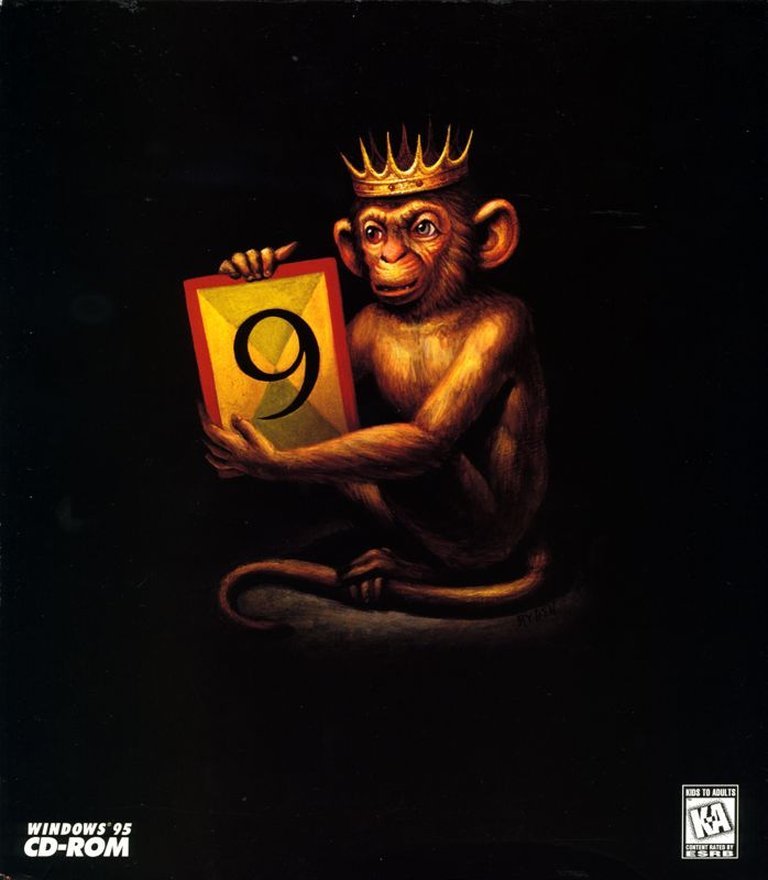
9: The Last Resort is a surreal point-and-click adventure game where players inherit a haunted mansion overrun by nine evil muses. Set in a first-person perspective akin to Myst, the game blends puzzle-solving with eerie, mechanical, and musical challenges, culminating in an arcade-style shooting sequence. Notable for its star-studded cast, including Robert De Niro, Cher, James Belushi, and Christopher Reeve, the game features striking, surreal visuals and a darkly whimsical atmosphere, though its complex puzzles and sparse narrative have divided critics.
Gameplay Videos
9: The Last Resort Free Download
9: The Last Resort Guides & Walkthroughs
9: The Last Resort Reviews & Reception
en.wikipedia.org (90/100): A triumphant return to form for the series.
pixelpacas.com (40/100): There are just too many annoying moments in 9: The Last Resort to recommend it.
mobygames.com (65/100): Myst-clone not delivered by the presentation alone.
mobygames.com (65/100): An inspired but flawed point and click game. Very creative presentation.
myabandonware.com (79/100): def loved the game growing up would love to roll up and play this on a quiet evening !!
9: The Last Resort Cheats & Codes
PC
Begin a new game and at the entrance door, type the code ‘120763-090665’. Hold the ‘CTRL’ key and click on ‘OK’. Push ‘CTRL’ and ‘0’ and choose not to save the game. Open one of your old savegames and from this point, you can use one of the following codes.
| Code | Effect |
|---|---|
| LOBBY | Transports you to the Lobby area |
| DRUM | Transports you to the Drum area |
| HALL1 | Transports you to the Hall1 area |
| TAPESTRY | Transports you to the Tapestry area |
| GARAGE | Transports you to the Garage area |
| CHASM | Transports you to the Chasm area |
| DALI | Transports you to the Dali area |
| ATTIC | Transports you to the Attic area |
| CELLAR | Transports you to the Cellar area |
| VRROOM | Transports you to the VRROOM area |
| JUNGLE | Transports you to the Jungle area |
PC
When prompted for the security code at the front door, enter the following code.
| Code | Effect |
|---|---|
| 0821 – 1996 – A92C | Unlocks the front door |
9: The Last Resort: A Surreal, Star-Studded Puzzle Adventure
Introduction
In the mid-1990s, the adventure game genre was dominated by Myst, a title that redefined what immersive, puzzle-driven experiences could be. Amid this landscape, 9: The Last Resort emerged as a bizarre, ambitious, and ultimately flawed attempt to blend Hollywood star power with avant-garde artistry. Produced by Robert De Niro’s Tribeca Interactive and featuring voices from Cher, Christopher Reeve, James Belushi, and members of Aerosmith, the game was a surreal, musical odyssey through a decaying hotel overrun by malevolent muses. While its visuals and atmosphere remain striking, its puzzles and gameplay mechanics have divided critics and players alike. This review explores 9: The Last Resort in exhaustive detail, examining its development, narrative, gameplay, and legacy to determine whether it stands as a forgotten gem or a cautionary tale of ambition overreach.
Development History & Context
The Birth of Tribeca Interactive
9: The Last Resort was the brainchild of Tribeca Interactive, a short-lived division of Robert De Niro’s Tribeca Productions. Founded in 1988, Tribeca Productions had already established itself as a powerhouse in film, but the mid-1990s saw De Niro and his producing partner, Jane Rosenthal, venturing into the burgeoning interactive entertainment market. The game was directed by Buzz Hays, a former Lucasfilm engineer who had worked on THX sound systems before being recruited by De Niro. Hays’ vision for 9 was to create a “more irreverent” take on Myst, a game that had captivated audiences with its atmospheric puzzles and lonely exploration.
A Star-Studded Collaboration
The development process was as unconventional as the game itself. The team operated out of a “seedy San Francisco warehouse,” where artist Mark Ryden—known for his surreal, childlike paintings—was commissioned to create over 1,200 individual artworks. Ryden’s distinctive style, blending eerie innocence with grotesque imagery, became the visual backbone of 9. Meanwhile, the voice cast reads like a who’s who of 1990s celebrity:
– Christopher Reeve as Thurston Last, the deceased uncle whose will sets the plot in motion.
– Cher as Isadora, a fortune-telling machine who also serves as the game’s save/load interface.
– James Belushi as Salty, a cigar-chomping, airplane-themed guide.
– Steven Tyler and Joe Perry of Aerosmith as the Toxic Twins, the game’s antagonistic duo.
The inclusion of such high-profile talent was unprecedented for a video game at the time, reflecting De Niro’s Hollywood connections and the game’s ambitious scope.
Technological Constraints and Market Trends
9: The Last Resort was developed for Windows and Mac OS, leveraging QuickTime video for its prerendered 3D environments—a cutting-edge approach in 1996. However, the game’s high system requirements and reliance on CD-ROM technology limited its accessibility. By the time of its release in October 1996, the gaming landscape was shifting toward action-oriented titles like Quake and Tomb Raider, leaving little room for niche puzzle adventures. This mismatch between the game’s artistic aspirations and market realities would ultimately contribute to its commercial underperformance.
Narrative & Thematic Deep Dive
Plot Overview
The player assumes the role of an unnamed protagonist who inherits The Last Resort, a once-grand hotel now overrun by nine malevolent muses. The hotel’s former owner, Thurston Last (voiced by Christopher Reeve), has passed away, leaving behind a will that tasks the player with restoring the resort to its former glory. The catch? The hotel is now a surreal nightmare, its halls filled with bizarre creatures and its atmosphere thick with dread. The primary antagonists are the Toxic Twins (Steven Tyler and Joe Perry), a pair of squatters who have corrupted the muses and turned the resort into a hostile environment.
The overarching goal is to reconstruct the “Muse Machine,” a device capable of banishing the Toxic Twins and restoring harmony to the hotel. Along the way, the player encounters a cast of eccentric characters, including:
– Salty (James Belushi): A gruff, airplane-themed guide who offers cryptic advice.
– Isadora (Cher): A fortune-telling machine who doubles as the game’s save/load menu, delivering witty one-liners.
– Various Muses: Each representing different artistic disciplines, now twisted by the Toxic Twins’ influence.
Themes and Symbolism
9: The Last Resort is steeped in themes of creativity, decay, and redemption. The hotel itself serves as a metaphor for the creative process—once a haven for artists, now a dilapidated shell overrun by chaos. The muses, traditionally symbols of inspiration in Greek mythology, are here depicted as corrupted entities, reflecting the game’s exploration of artistic stagnation and renewal.
The game’s surreal aesthetic, courtesy of Mark Ryden, reinforces these themes. Ryden’s art often juxtaposes innocence with the macabre, and 9 is no exception. The hotel’s interiors are filled with grotesque yet whimsical imagery—throbbing walls, distorted faces, and mechanical oddities—that create an unsettling yet fascinating atmosphere. The Toxic Twins, with their rock-star personas, embody the destructive side of creativity, while the player’s quest to rebuild the Muse Machine represents the struggle to reclaim inspiration.
Dialogue and Character Interactions
The game’s dialogue is a mixed bag. While the voice acting is undeniably star-studded, the writing often leans into campy humor and surrealism, which may not resonate with all players. Cher’s Isadora, for instance, delivers quippy one-liners that feel more like a celebrity cameo than a fully realized character. James Belushi’s Salty, on the other hand, provides a grounding presence amid the game’s absurdity, offering practical hints and a touch of levity.
The narrative’s biggest weakness is its lack of depth. Despite the intriguing premise, the story serves primarily as a framework for the puzzles, with little in the way of character development or emotional stakes. The Toxic Twins, while visually striking, are underutilized as villains, appearing only sporadically to taunt the player. This narrative thinness leaves 9 feeling more like an interactive art piece than a fully realized adventure game.
Gameplay Mechanics & Systems
Core Gameplay Loop
9: The Last Resort is a first-person point-and-click adventure, heavily inspired by Myst. The player navigates the hotel’s labyrinthine halls, clicking on objects to interact with them and solving puzzles to progress. The game’s structure is nonlinear, allowing players to tackle puzzles in various orders, though some sequences are gated behind specific solutions.
The puzzles themselves are a mix of mechanical, musical, and logical challenges. Many revolve around the game’s central motif: music. For example:
– The Pipe Organ Puzzle: A recurring challenge where the player must decipher and play musical codes on a grand organ. Each “floor” of the resort provides a new code sheet, with the sequences growing increasingly complex.
– Memory Games: Simple but frustrating challenges, such as matching sound effects in a Simon-like mini-game.
– Arcade Sequences: Late in the game, players must complete a shooting gallery sequence, a jarring shift from the otherwise cerebral gameplay.
Puzzle Design: Hits and Misses
The puzzle design is 9’s most polarizing aspect. On one hand, the musical puzzles are inventive, tying into the game’s themes of creativity and harmony. The organ sequences, in particular, are a standout feature, requiring players to interpret cryptic notations and input them correctly. However, the lack of in-game hints or feedback makes these puzzles unnecessarily opaque. As one reviewer noted, “without a walkthrough, I could never have managed the feat.”
Other puzzles fare worse. The memory games, while simple, feel like filler, lacking the depth or creativity of the musical challenges. The shooting gallery sequence, meanwhile, is a tonal mismatch, introducing twitch-based gameplay that clashes with the game’s otherwise methodical pace. This inconsistency in puzzle design undermines the game’s cohesion, leaving players oscillating between engagement and frustration.
Character Progression and Interaction
Character interactions in 9 are minimal but memorable. Salty, the airplane-man, appears sporadically to offer hints, while Isadora’s fortune-telling machine provides a quirky save/load interface. However, these interactions are largely superficial, serving more as atmospheric touches than meaningful narrative beats. The game’s lack of a traditional inventory system further limits player agency, reducing interactions to a series of puzzle-solving tasks.
UI and Controls
The game’s UI is sleek and intuitive, with a mouse-driven interface that allows for smooth navigation. Players can push, pull, and manipulate objects with ease, a feature that sets 9 apart from other Myst-clones of the era. However, the lack of a map or journal system can make navigation confusing, particularly in the hotel’s more labyrinthine sections. The game’s reliance on QuickTime videos also leads to occasional performance issues, particularly on lower-end systems.
World-Building, Art & Sound
The Last Resort: A Surreal Masterpiece
The true star of 9: The Last Resort is its world. Mark Ryden’s art direction transforms the hotel into a living, breathing nightmare, filled with grotesque yet beautiful imagery. The walls pulse with life, the furniture twists into impossible shapes, and the inhabitants—ranging from clowns to mechanical octopuses—are equal parts unsettling and fascinating. The hotel’s design evokes a carnival gone wrong, a place where creativity has curdled into madness.
Ryden’s influence extends beyond the visuals. The game’s environments are filled with symbolic details, from recurring motifs of eyes and clocks to the surreal juxtaposition of childlike innocence and adult horror. This attention to detail creates a cohesive, immersive world that lingers in the player’s mind long after the game is over.
Sound Design and Music
The game’s sound design is equally impressive. The ambient soundtrack, composed by Marco d’Ambrosio, blends eerie melodies with industrial noises, reinforcing the hotel’s unsettling atmosphere. The voice acting, while uneven in places, adds a layer of personality to the game’s eccentric cast. Cher’s Isadora, in particular, stands out for her witty delivery, while James Belushi’s Salty provides a welcome dose of humor.
The musical puzzles are accompanied by dynamic soundscapes, with the pipe organ sequences offering a haunting, almost liturgical experience. The Toxic Twins’ rock-star personas are reflected in the game’s occasional guitar riffs, though these moments are few and far between.
Reception & Legacy
Critical Reception
9: The Last Resort received mixed reviews upon its release. Critics praised its visuals, sound design, and star-studded cast but were divided on its gameplay. Entertainment Weekly gave it a perfect score, calling it “a highly absorbing interactive experience,” while GameSpot awarded it a 7.3, noting its beauty but criticizing its lack of depth. Other outlets, such as Computer Gaming World, were less kind, describing it as “hampered by exceptionally brief playing time” and unchallenging puzzles.
Player reactions were similarly polarized. Some appreciated the game’s surreal charm and inventive puzzles, while others found it frustrating and underwhelming. The game’s difficulty curve, particularly the final organ puzzle, was a common point of contention, with many players resorting to walkthroughs to progress.
Commercial Performance and Legacy
Despite its high-profile cast and ambitious design, 9: The Last Resort was a commercial failure. The game’s niche appeal, high system requirements, and the shifting tastes of the mid-1990s gaming market all contributed to its lackluster sales. Tribeca Interactive, having poured significant resources into the project, disbanded shortly after its release, making 9 the studio’s sole output.
In the years since, 9 has gained a cult following, appreciated for its bold artistic vision and unique place in gaming history. It remains a fascinating artifact of a time when Hollywood and the gaming industry briefly intersected, producing something that was neither a traditional game nor a conventional film. While it may not have achieved the success of Myst or other adventure classics, its legacy endures as a testament to the power of surrealism and star power in interactive storytelling.
Conclusion
9: The Last Resort is a game of contradictions—a stunning visual experience marred by inconsistent puzzle design, a star-studded cast underutilized in a thin narrative, and a surreal world that captivates even as it frustrates. It is, in many ways, a product of its time, reflecting both the ambitions and limitations of mid-1990s adventure gaming. While it may not be a classic in the traditional sense, its bold artistic vision and unique place in gaming history make it a title worth revisiting, if only to marvel at its audacity.
Final Verdict: A flawed but fascinating experiment, 9: The Last Resort is a cult curiosity that rewards patience and appreciation for the bizarre. It is not a game for everyone, but for those willing to embrace its surreal charm, it offers an experience unlike any other. 3.5/5