
- Release Year: 2023
- Platforms: Nintendo Switch, Windows
- Publisher: Freedom Games LLC
- Developer: Halberd Studios
- Genre: Action
- Perspective: Side view
- Game Mode: Single-player
- Gameplay: Metroidvania, Platform
- Setting: Fantasy
- Average Score: 74/100
Description
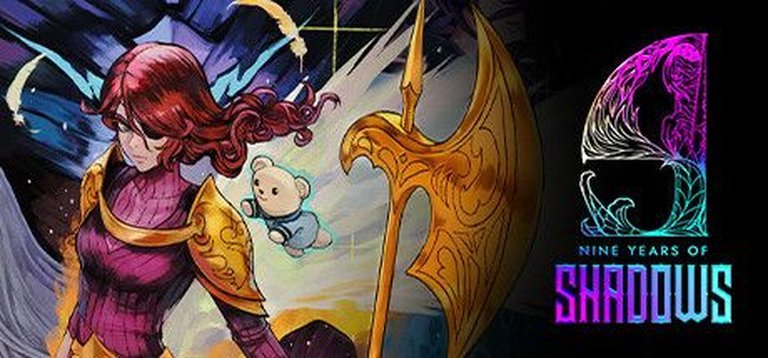
9 Years of Shadows is a fantasy Metroidvania action-platformer featuring a female protagonist navigating side-scrolling 2D environments plagued by shadows, with tight combat, extensive exploration, beautiful pixel art, and an acclaimed orchestral soundtrack composed by industry veterans.
Gameplay Videos
Where to Buy 9 Years of Shadows
9 Years of Shadows Mods
9 Years of Shadows Guides & Walkthroughs
9 Years of Shadows Reviews & Reception
metacritic.com (74/100): Mixed or Average
opencritic.com (74/100): A Good Game™ and a great time thanks to its careful crafting and implementation of a number of original ideas that elevate the gameplay.
en.wikipedia.org (74/100): received “mixed or average” reviews
cgmagonline.com (75/100): 9 Years of Shadows features a stunning 2D action-adventure title presentation, with solid level design and top of it’s class music
9 Years of Shadows: Review
Introduction
In a genre overflowing with shadowy castles, cursed protagonists, and pixelated power fantasies, 9 Years of Shadows arrives like a burst of restored color in a monochrome wasteland—a handcrafted Metroidvania that dares to weave healing music and emotional vulnerability into its combat loops. Developed by Mexico’s Halberd Studios and released in 2023, this debut title from a Kickstarter-backed indie team channels the spirit of Castlevania: Symphony of the Night and Metroid Fusion while introducing a teddy bear sidekick and elemental armors inspired by Greek mythology. Yet, for all its luminous highs, it falters in execution, delivering a poignant but brief adventure that prioritizes atmosphere over ambition. My thesis: 9 Years of Shadows is a heartfelt love letter to classic Metroidvanias, excelling in sensory splendor and thematic intimacy, but undermined by technical hiccups, shallow progression, and a world that feels more linear than labyrinthine—earning it a respectable place among indie gems, though not a timeless classic.
Development History & Context
Halberd Studios, a Guadalajara-based indie outfit founded by creative director Miguel Hasson and co-director Diego Mayorga, entered the spotlight after years of producing assets and commercials for other developers. Their first full game, 9 Years of Shadows, stemmed from a successful Kickstarter campaign that raised over $107,000, funding a vision blending pixel art reverence with mythological flair. Announced at PAX Online 2021 and Gamescom’s Future Games Show, it built hype through a Steam Next Fest demo in October 2022, showcasing its Unity engine polish and FMOD sound integration.
Freedom Games published the title, handling a staggered rollout: PC (Windows via Steam and GOG) on March 27, 2023, Nintendo Switch on November 9, 2023, and consoles (PS4/PS5, Xbox One/Series) on July 31, 2025. This delay allowed patches for launch bugs but highlighted indie constraints—crowdfunding success aside, the small team (111 developers credited, plus 2,986 “thanks”) faced optimization challenges across platforms.
The 2023 indie landscape was Metroidvania-saturated, with giants like Hollow Knight: Silksong looming and releases like Prince of Persia: The Lost Crown raising the bar for fluidity. Halberd leaned into retro appeal amid modern excess: no sprawling 40-hour maps, but a tight 5-10 hour experience emphasizing art direction by Juan Pablo Becerra and pixel work from talents like Humberto Segura. Composers Michiru Yamane (Castlevania), Norihiko Hibino (Metal Gear Solid), and Manami Matsumae (Mega Man 2) elevated it, tuning tracks to 432Hz for “healing” vibes—a novel touch reflecting Hasson’s vision of music as narrative core. Technological limits (e.g., Unity’s 2D constraints) kept it grounded, prioritizing vibe over VRAM-hungry effects, but launch crashes exposed the era’s pitfalls for underfunded indies.
Narrative & Thematic Deep Dive
At its heart, 9 Years of Shadows is a fable of loss, resilience, and restoration. Nine years ago, a curse from Talos Castle—an ancient orphanage turned mechanical behemoth—drained the world of color, joy, and life, orphaning protagonist Europa and smothering civilizations in grayscale despair. Europa, a halberd-wielding warrior haunted by self-doubt, ventures inside to confront the shadow demon Belial, the curse’s architect. Early failure introduces Apino, a ghostly teddy bear whose magic revives color and symbolizes childhood innocence reclaimed.
Plot Breakdown
The story unfolds non-linearly across Talos’s biomes: corrupted entry halls, fiery depths, watery abysses, earthen ruins, and a haunting orphanage apex. Europa collects elemental armors (Zeus’s lightning grace, Poseidon’s aquatic form, Gaia’s earthen might, Helios’s flames), battling bosses tied to ancient myths while aiding stranded musicians. Narrative delivery is subtle—loading-screen monologues, NPC dialogues, pixel cinematics by Valeriya Kim—culminating in revelations about Belial’s sorrow-fueled origin and Europa’s growth from isolated avenger to collaborative healer.
Characters & Dialogue
Europa embodies vulnerability rare in action heroes: her inner thoughts reveal anxiety, self-loathing, and therapy-like growth via Apino’s hugs (literal healing mechanics). Apino, enigmatic and mute (speaking in garbled babbles), acts as emotional anchor, purging corruption and firing projectiles. Guest NPCs like Yamane and Hibino as composers add meta-layers, their quests reuniting a band plagued by “musical” shadow bosses.
Themes: Healing Through Art and Connection
Music and color symbolize renewal—432Hz tracks soothe like Apino’s lullabies, countering the curse’s malaise. Themes of grief (Europa’s orphanhood mirrors Talos’s past), mental health (self-doubt, isolation), and art’s restorative power shine, with casual representation (queer NPCs, wheelchair users) enhancing inclusivity. Yet, the plot’s brevity (under 10 hours for 100%) and occasional tonal whiplash—mythic bombast vs. intimate hugs—dilute impact, feeling like a poetic sketch rather than epic saga.
Gameplay Mechanics & Systems
9 Years of Shadows nails Metroidvania fundamentals: side-scrolling exploration, ability-gated progression, and halberd-swinging combat, but innovates modestly with elemental swaps and Apino’s utility.
Core Loops: Combat & Progression
Europa’s kit starts basic: light/heavy halberd combos, backdash, Apino’s projectiles (fist, surface blast, boomerang cyclone). A light shield (replenished by hits, depleted by damage/projectiles) precedes two heart diamonds—deplete it for hugs (hold to trigger QTE lullaby) or “active reload” timing. Elemental armors add depth:
– Zeus (Yellow/Lightning): Charged strikes, air mobility.
– Poseidon (Blue/Water): Mermaid swim up waterfalls.
– Gaia (Green/Earth): Poison immunity, burrowing.
– Helios (Red/Fire): Heat resistance, gliding.
Swap on-the-fly exploits enemy color weaknesses (outlines signal affinities), enabling dynamic boss phases. Progression involves relics for shortcuts, music notes for upgrades (via musician hub), and 100% maps revealing secrets.
| Mechanic | Strengths | Flaws |
|---|---|---|
| Combat | Fluid combos, aggressive shield regen rewards risk; bosses (e.g., chess-piece patterns) shine. | Repetitive post-armors; lacks variety beyond swaps. |
| Exploration | Vertical Talos rewards backtracking; auto-swaps aid traversal. | Linear paths, vague maps (no pins); save rooms poorly placed. |
| UI/Progression | Intuitive armor HUD, color-coded maps. | No checkpoints; bugs reset progress. |
Innovations like Apino’s cleanse (reveals paths) and musical puzzles elevate it, but difficulty spikes (unforgiving bosses sans checkpoints) and ease elsewhere unbalance loops. Soulslike echoes in fragility, but forgiving heals suit newcomers.
World-Building, Art & Sound
Talos Castle is a vertical marvel: cylindrical sprawl blending Greek ruins, Viking lore, Japanese motifs, and derelict machinery. Biomes pop—fiery forges, aquatic caverns, thorny wilds—with corruption yielding to color bursts, mirroring themes. Pixel art (Humberto Segura et al.) dazzles: flowing dresses, anime-cutscene portraits, Spine animations. Lighting/particles amplify drama, though symmetry stifles “wow” moments.
Sound design soars: Hasson’s score, bolstered by Yamane’s gothic elegance, Hibino’s tension, Matsumae’s chiptune nostalgia—all 432Hz-tuned for ethereal calm. Apino’s lullaby heals viscerally; boss motifs pulse rhythmically. FMOD integration ensures immersion, making Talos feel alive—music isn’t backdrop, it’s salvation.
Atmosphere thrives: grayscale-to-vivid shifts evoke hope, but cramped rooms and repetition blunt wonder.
Reception & Legacy
Critically, 9 Years of Shadows earned “mixed or average” scores: MobyGames 7.6/10 (77% critics), Metacritic 74/100, OpenCritic 64% recommend. PC launch praised art/music (LadiesGamers 100%, Gamer Escape 90%) but docked for bugs/linearity (PC Invasion 67%, Niche Gamer 65%). Switch/PS5/Xbox ports improved slightly (Nintendo Life 80%), though performance lingered.
Commercially modest ($19.99, frequent sales to $7.99), Steam sees “Mostly Positive” (79%, 1,982 reviews). Players laud brevity/accessibility; detractors cite crashes, backtracking agony. Influenced by GBA-era titles, it inspires “back-to-basics” indies (e.g., Islets), proving small teams can rival AAA with star composers. Legacy: a cult favorite for Metroidvania purists, spotlighting Mexican talent amid genre fatigue—no revolution, but a polished proof-of-concept for Halberd’s future.
Conclusion
9 Years of Shadows captivates with its symphony of pixel poetry, healing harmonies, and Europa’s tender triumph over shadows, delivering 5-10 hours of addictive loops elevated by masterful art and sound. Yet, persistent bugs, shallow combat depth, and a labyrinth more maze-like in frustration than mystery prevent greatness—it’s a flawed fusion of nostalgia and novelty. As a debut, it cements Halberd Studios’ promise; for Metroidvania history, it’s a vibrant footnote: Recommended (8/10) for genre fans craving beauty over bloat, but play post-patches. In gaming’s endless castle, it restores a flicker of color worth cherishing.