
- Release Year: 2020
- Platforms: Windows
- Publisher: BASS
- Developer: BASS
- Genre: Adventure
- Perspective: 1st-person
- Game Mode: Single-player
- Gameplay: Graphic adventure, Puzzle elements
- Setting: Horror, Mystery
- Average Score: 67/100
Description
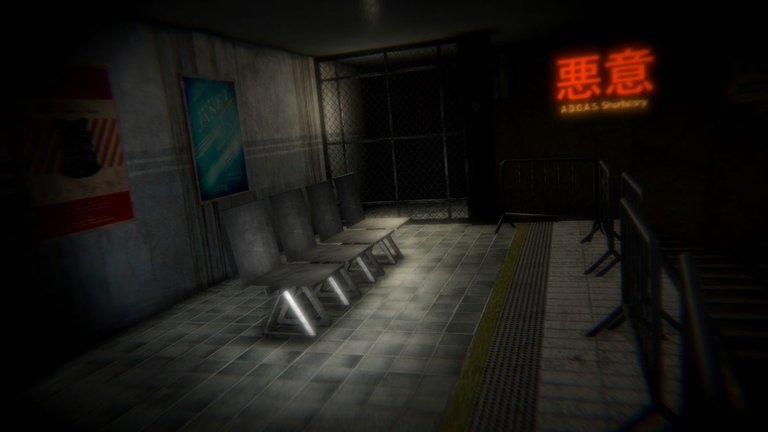
Akui is a short first-person mystery/horror adventure game set in an abandoned and desolate subway station. Players must navigate the eerie environment, solving puzzles and uncovering clues through environmental storytelling elements like graffiti on walls, old posters, and newspaper clippings. Originally created as a teaser for a larger project, it was eventually released as a standalone title that immerses players in a detective-style narrative as they attempt to escape the unsettling underground location.
Gameplay Videos
Crack, Patches & Mods
Guides & Walkthroughs
Reviews & Reception
steambase.io (67/100): Akui – The Insane Cultists has earned a Player Score of 67 / 100.
store.steampowered.com : A fist person dark mystery adventure in a parallel world peppered with monsters and puzzles.
Akui: A Phantom in the Subway – Dissecting a Teaser’s Troubled Legacy
In the vast catacombs of indie gaming, countless titles are released, forgotten, or achieve cult status. Some, however, occupy a far more peculiar space: they exist as phantoms, as questions without clear answers. Akui (and its expanded counterpart, Akui: The Insane Cultists) is one such entity. Originally a short, free teaser before morphing into a commercial release, it is a game defined by its origins, its limitations, and the stark divide between its ambitious thematic premise and its ultimately flawed execution. This is not merely a review; it is an archaeological dig into a curious artifact of indie development, a case study on how a project’s intent can be overshadowed by its reality.
Development History & Context
The Solo Vision of BASS
Akui is the brainchild of a single developer, Bernhard, operating under the studio name BASS. Its journey is a tale of two releases. First, the original Akui emerged on December 1, 2020, as a free-to-play, short-form experience built in the Unity engine. Described explicitly as a “teaser for a larger project,” its purpose was clear: to establish atmosphere and lore for a more expansive world. It was a proof of concept, a mood piece designed to lure players into its mysterious narrative web.
The gaming landscape of late 2020 was saturated with indie horror and mystery adventures, a genre thriving on digital storefronts like Itch.io. In this context, a short, free teaser was a sensible low-risk strategy to gauge interest. However, the project evolved. On August 16, 2023, Akui: The Insane Cultists was released on Steam as a commercial product priced at $3.99. This version purported to be the fuller realization of the teaser’s promise—a 2-3 hour adventure delving deeper into the dark parallel world and the enigmatic D.O.A.S. agency.
This development path—from free teaser to paid expansion—is fraught with challenge. The technological constraints of a solo developer are evident throughout: the use of stock Unity assets, simple environmental geometry, and a reliance on established genre tropes. The vision, however, was anything but small. Bernhard spoke of building a “DOAS Universe,” complete with a planned Fandom wiki, suggesting aspirations far beyond the scope of the initial subway station. This tension between grand ambition and minimalist execution is the central drama of Akui‘s existence.
Narrative & Thematic Deep Dive
A Mystery Shrouded in Obscurity
The narrative premise of Akui: The Insane Cultists is its most compelling asset. The player investigates the disappearance of a friend named Jona, who had sent concerning documents about a sinister group known as the “insane cultists.” After reviewing these materials, the player is drawn into a “dark parallel world,” a liminal space where reality has frayed. Woven into this is the intrigue of a shadowy state agency, the Department of Applied Science (D.O.A.S.), hinting at a larger conspiracy.
On paper, this is fertile ground for a psychological thriller exploring themes of friendship, obsession, institutional secrecy, and the fragility of perception. The original Akui teaser approached this with subtle environmental storytelling. Players wandered a desolate subway, piecing together clues from graffiti, weathered posters, and abandoned newspaper clippings. This “show-don’t-tell” approach was effective, evoking a sense of lonely dread reminiscent of classic creepypasta tales and games like PT.
Thematic Execution: Promise vs. Reality
Unfortunately, the transition to a fuller game appears to have struggled to expand this narrative effectively. The promised six levels and deeper lore, according to available player reviews and the lack of critical analysis, often devolve into a series of obtuse puzzles and instant-death scenarios against generic monsters. The lack of an inventory system forces players to mentally log clues, a design choice that can foster immersion but, if the puzzles are poorly communicated, leads overwhelmingly to frustration and narrative disconnect.
The dialogue and characters remain spectral, hinted at but never fully realized. Jona is a macguffin rather than a character, and the cultists and D.O.A.S. are concepts referenced rather than explored with any depth. The story becomes a destination players must fight the game itself to reach, often resulting in the themes being lost entirely in the struggle to progress. The potential for a deep dive into madness and conspiracy remains largely untapped, making the narrative feel like a tantalizing blueprint rather than a finished structure.
Gameplay Mechanics & Systems
A Loop of Frustration
The core gameplay loop of Akui is a straightforward first-person adventure formula: explore, find clues, solve puzzles, and evade threats to advance to the next area. However, nearly every aspect of this loop is described in sources as a point of contention.
- Puzzle Design: The puzzles are frequently cited as the game’s biggest hurdle. They range from “challenging” to “obtuse,” requiring players to “find their own clues” without an inventory system to log them. This places a heavy burden on player memory and intuition. When the environmental cues are unclear or illogical, it breaks immersion and transforms the experience from a mystery to be solved into a chore to be endured.
- Combat and Evasion: There is no combat. Encounters with creatures result in “instant death,” a mechanic that demands trial-and-error gameplay. This can be effective for tension in short bursts but becomes a source of aggravation over a 2-3 hour experience, especially when paired with unclear objectives.
- Progression and UI: The game features an autosave system and straightforward settings for resolution and quality. The UI is minimalist, which suits the immersive first-person perspective. However, the lack of any in-game guidance or hint system means that progression is often halted completely without external help—hence the developer’s inclusion of a “First Aid” help video on YouTube, an admission of the game’s inherent friction.
The gameplay systems feel at odds with themselves. The choice to forgo an inventory aims for realism but clashes with puzzles that require precise logic. The instant-death mechanics aim for horror but often achieve frustration. It is a game that seems to resist the player at every turn.
World-Building, Art & Sound
Atmosphere as a Saving Grace
If there is one unambiguously successful element of Akui, it is the atmosphere conjured by its aesthetic and sound design. The original teaser’s strength was its oppressive mood, and this carries into the larger project.
- Visual Direction: The game utilizes a stark, lo-fi 3D aesthetic. The abandoned subway setting of the original is a masterclass in desolation, using limited textures and lighting to create a palpable sense of place. The later levels, set in a “parallel world,” leverage Unity’s capabilities to create distorted, unnatural spaces that feel genuinely unsettling. The visual storytelling through environmental details—the graffiti, the posters—is the narrative’s primary vehicle and its most effective one.
- Sound Design: The inclusion of a 44-minute original soundtrack is a significant investment for a solo project and is crucial to the experience. The audio likely features ambient drones, unsettling drones, and sudden stings that heighten the sense of dread. The sound of footsteps echoing in empty halls, the distant drip of water, and the panic-inducing noise of an approaching creature are the tools that build tension where the gameplay might otherwise fail to.
While not technically sophisticated, the art and sound work in concert to create a cohesive and genuinely creepy vibe. It is a world that feels worth exploring, even if the act of exploring it is often punished.
Reception & Legacy
A Whisper in the Dark
Akui‘s reception is best described as muted and mixed. The original 2020 teaser exists on databases like MobyGames and Adventure Game Database as a curious footnote, noted but not reviewed. The 2023 commercial release, Akui: The Insane Cultists, exists in a vacuum of critical attention. As of this writing, there are no professional critic reviews on Metacritic or MobyGames. Its entire critical corpus consists of a handful of user reviews.
On Steam, the game has a small number of reviews, with a Steambase Player Score of 67/100 derived from just three user reviews. The reviews themselves point to the central conflict: praise for the “cool atmosphere” and “spooky” setting countered by vehement criticism of the “frustrating” and “confusing” puzzles that render the game “unplayable” without a guide.
Its legacy, therefore, is not one of influence but of caution. It serves as an example of the immense difficulty of scaling a compelling teaser into a satisfying full game, especially for a solo developer. It highlights how opaque puzzle design can strangle an otherwise intriguing narrative. Its connection to a larger “DOAS Universe” remains the most fascinating aspect—a ambitious lore project that, as of now, exists almost entirely outside the game itself on a Fandom wiki, a universe more developed in the developer’s mind than in the player’s hands.
Conclusion
The Verdict: A Fascinating Failure, A Promising Phantom
Akui: The Insane Cultists is a game of profound duality. It is a title with a compelling atmospheric premise shackled to deeply flawed and frustrating gameplay mechanics. The eerie, lo-fi world of deserted subways and cosmic dread is a place you want to uncover, but the game consistently erects barriers to that discovery through punishing and obscure design choices.
Its place in video game history is not as a landmark title but as a specific type of indie artifact: the ambitious teaser that couldn’t quite transition into a fulfilling experience. It is a case study for developers on the importance of balancing mystery with clarity and atmosphere with accessibility. For players, it remains a curiosity—a short, often irritating experience with a kernel of a great idea buried deep within. Ultimately, Akui is less a game to be played and more a phantom to be studied; a haunting reminder that the most terrifying thing of all is not a monster, but potential left unfulfilled.