
- Release Year: 2022
- Platforms: Windows
- Genre: Role-playing (RPG)
- Perspective: Behind view
- Game Mode: Single-player
- Gameplay: Action RPG, Open world, Sandbox
- Setting: Fantasy
Description
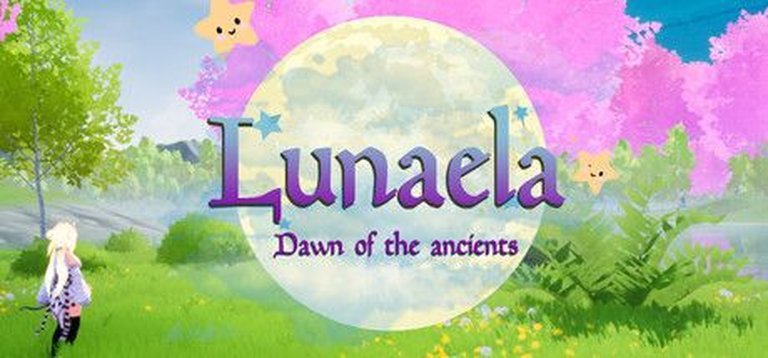
Lunaela: Dawn of the Ancients is a fantasy action RPG set in a beautiful open world spanning three interconnected regions. Players choose from eight starting classes, each with advanced evolutions, to unravel the mystery of ancient gods and save the world of Lunaela. The game features extensive online co-op and PVP for up to five players, a deep crafting system for equipment and potions, collectible enemy cards with unique benefits, and legendary beasts to tame as mounts or familiars. Exploration is rewarded with discoveries every few steps, including the legendary nine ancient diamonds.
Gameplay Videos
Lunaela: Dawn of the Ancients: A Monumental Vision Hamstrung by Ambition
Introduction
In the vast, ever-expanding cosmos of indie RPGs, a new star flickers to life, promising the heavens but often delivering a glimmer. Lunaela: Dawn of the Ancients, released quietly onto Steam in May 2022, is one such celestial body—a game of staggering ambition that seeks to condense a universe of MMO-like features into a modest, solo-developed package. Its very existence is a testament to the democratization of game development, powered by accessible engines like Unreal Engine 4, yet it serves as a simultaneous case study in the perils of unchecked scope. This is not merely a game; it is a sprawling, chaotic tapestry of ideas, a digital cabinet of curiosities where every drawer is jammed full of mechanics, systems, and promises. Our journey through Lunaela is not just a review of a game, but an archaeological dig into the very nature of modern indie ambition, where vision and execution engage in a constant, often tragic, battle for supremacy.
Development History & Context
Studio: The development of Lunaela: Dawn of the Ancients is shrouded in the typical mystery of a one-person or extremely small indie team. The sole credit on MobyGames points to a contributor known as “Koterminus,” who added the game to the database in late August 2024, over two years after its release. This delay in documentation itself speaks volumes about the game’s trajectory—it launched, existed, and was largely absorbed by the silent void of the Steam marketplace until a historian took note.
Vision & Technological Context: The game was built using Unreal Engine 4 and Nvidia’s PhysX physics engine, tools that empower small developers to achieve a level of visual fidelity once reserved for major studios. The creator’s vision, as gleaned from the official description, was breathtakingly vast: to create a seamless, interconnected open world spanning 18 square kilometers, populated with a deep class system, robust crafting, creature taming, card collecting, photography, and full online multiplayer integration for both cooperative and competitive play. This was an attempt to create a miniature World of Warcraft or Guild Wars 2 as a solo project, a goal that borders on the Herculean.
The Gaming Landscape of 2022: By 2022, the indie scene was saturated with action RPGs and open-world games. Titles like Elden Ring had redefined scale and depth, while successful indie RPGs like CrossCode proved that a sharp focus on a core mechanic was often more rewarding than maximalist ambition. Lunaela entered this landscape as a paradox: a game using cutting-edge technology to chase a design philosophy that was inherently outdated—the “kitchen sink” approach of early 2000s MMORPGs, but without the persistent world or player base to sustain it.
Narrative & Thematic Deep Dive
The narrative framework of Lunaela is classic high fantasy, albeit thinly sketched in the available materials. The player is positioned as a champion rising to save the world of Lunaela from the corrupting influence of a dark god, a power that has twisted the behavior of the land’s fauna. The central thread involves earning the favor of a goddess and unraveling the mystery of the titular Ancients.
The promised story beats include:
* The Legend of the Nine Ancient Diamonds: A classic collectathon questline that suggests a focus on exploration and secret-hunting.
* The Corruption of the Beasts: This provides the thematic justification for the game’s taming mechanics, positioning the player not just as a destroyer of evil but as a potential redeemer of nature.
* The Path of the Champion: A hero’s journey to become the goddess’s chosen warrior.
However, the depth of this narrative remains a critical unknown. With no critical reviews or player testimonials, we are left with the promise of an “epic story” on the Steam page. The potential for rich lore exists—especially surrounding the 24 different classes and their place in the world—but without executed depth in the writing, character dialogue, and quest design, it risks being a generic framework purely in service of the gameplay mechanics. The theme of light versus dark, corruption versus purity, is well-trodden ground, and its effectiveness hinges entirely on execution that the available data cannot confirm.
Gameplay Mechanics & Systems
Lunaela’s gameplay is a Russian nesting doll of interconnected systems, each vying for the player’s attention. It is here that the game’s ambition is most evident—and where its potential pitfalls are most apparent.
-
The 24-Class System: This is the game’s most compelling hook. The progression from a base class (Archer) through an advanced class (Hunter) to a master class (Sniper) suggests a deep and rewarding progression tree. With eight starting paths branching into three specializations, the theory is one of immense replayability and character customization. The inclusion of unique classes like Dancer -> Singer -> Diva hints at a desire to move beyond combat-focused roles, potentially offering support or buff-based gameplay, especially in the promised online mode.
-
The Open World & Exploration: The promise of three interconnected worlds totaling 18km² is significant for a small project. The Steam description emphatically states, “you will find something interesting every 5 steps while you explore!” This suggests a density of interactivity—foraging for mushrooms, mining stone and iron, and encountering beasts—that could make exploration feel constantly rewarding, or hopelessly cluttered and grindy.
-
Crafting & Economy: The forge allows for the creation of equipment from gathered materials, a standard but effective feedback loop. The alchemy system for potions adds another layer of preparation.
-
The Card Collection System: This is a fascinating, albeit bizarre, addition. Enemies drop collectible cards that grant unique benefits. The stated intention to add player-to-player trading for duplicates is a clear attempt to foster a community and create an in-game economy. However, labeling this as a “future update” for a game already launched is a major red flag, indicating a potential history of unmet promises and early access-style growing pains that weren’t formally communicated.
-
Online Multiplayer: The ability to host servers for up to five players for PvE or PvP is arguably the game’s most ambitious technical feat. The promise that a character can move seamlessly between offline and online play is a strong feature on paper, aiming to provide the best of both worlds. Yet, implementing stable netcode, server browsing, and balance for 24 classes is a monumental task for a large team, let alone a solo developer.
-
Additional Systems: The game also includes photography (for a scenic album), legendary beast taming (for mounts and familiars), and the diamond hunt. This is a breathtaking amount of content for a $9.99 game. The central question is not if these systems exist, but if they are polished, balanced, and meaningfully integrated into the core loop, or if they are a disjointed collection of half-finished ideas.
World-Building, Art & Sound
Powered by Unreal Engine 4, Lunaela likely boasts a certain level of visual competence. The term “three beautiful… open worlds” in the description suggests an emphasis on environmental beauty, with varied landscapes to explore. The art direction, while unviewable in screenshots (as none were contributed to MobyGames), would need to be distinct to sell the fantasy of Lunaela and make its world feel cohesive amidst the mechanical chaos.
The sound design is a complete unknown. A compelling score and impactful sound effects are crucial for selling the weight of combat, the serenity of exploration, and the allure of discovery. Their absence from the historical record is a silent void that often plagues games of this scale, where audio is frequently sacrificed due to budget and resource constraints.
The world-building is attempted through environmental storytelling (the corruption), lore (the Ancients), and the sheer variety of activities. However, world-building requires consistency and detail, and it remains to be seen if the world of Lunaela feels like a lived-in place with a history, or merely a large playground designed to host its many gameplay systems.
Reception & Legacy
Critical & Commercial Reception: As of its documentation on MobyGames in August 2024, Lunaela: Dawn of the Ancients has zero critic reviews and zero player reviews. It was collected by only a single player on the database. This is perhaps the most telling aspect of its legacy. It was a game that launched, sold for $9.99 (and later $2.99, according to conflicting data on the pages), and seemingly vanished without a trace. It failed to capture the attention of critics, the gaming community, or even preservationists for over two years after its release.
Evolution of Reputation & Influence: Its reputation is that of an obscurity, a footnote. It has no visible influence on the industry or subsequent games. Its legacy is as a cautionary tale—a symbol of the modern development dilemma. The technology exists for a single person to build a world of seemingly infinite possibilities, but without the focus, marketing, polish, and perhaps realistic scope, that world can easily become a ghost town upon arrival. It stands as a monument to ambition alone, a game whose most detailed historical record is its own store page description.
Conclusion
Lunaela: Dawn of the Ancients is a fascinating artifact. It is a game built from a blueprint of incredible potential: 24 classes, a vast open world, multiplayer, crafting, collecting, and taming. On paper, it is the ultimate RPG power fantasy. In practice, based on its complete absence from the critical and cultural conversation, it appears to be a classic case of catastrophic overreach.
The final verdict on its place in history is clear, if unkind. It is not a hidden gem waiting to be discovered, but rather a quintessential example of a project that prioritized a long list of features over the focused refinement of any single one. It is a game that promised the cosmos—a dawn of ancients—but based on the available evidence, likely delivered a sky mostly empty of stars. Its value to historians and journalists is not as a great game to be played, but as a perfect case study in the immense gap between vision and viability in the indie gaming space. It is a poignant reminder that true greatness in game design is not born from a feature list, but from the execution of a vision with clarity, purpose, and polish.