
- Release Year: 2020
- Platforms: Macintosh, Windows
- Publisher: HexWar Games Ltd.
- Developer: HexWar Games Ltd.
- Genre: Strategy, tactics
- Perspective: Diagonal-down
- Game Mode: Single-player
- Gameplay: Turn-based strategy, Wargame
- Setting: Historical events, North America
- Average Score: 67/100
Description
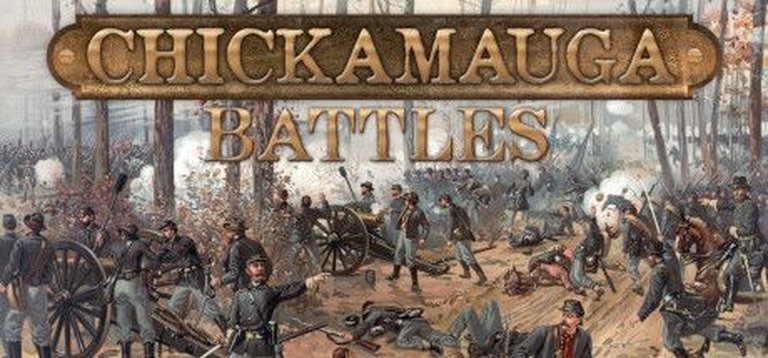
Chickamauga Battles is a turn-based strategy wargame that recreates the historic Battle of Chickamauga, a major Civil War engagement fought in Georgia in September 1863. Players command either the Union Army of the Cumberland under General William Rosecrans or the Confederate Army of Tennessee under General Braxton Bragg across multiple detailed scenarios. The game features a tutorial campaign, several historical campaigns focusing on key events from September 19th and 20th, and a large-scale final mission that recreates the entire battle at a strategic level, allowing players to refight one of the Civil War’s bloodiest conflicts.
Where to Buy Chickamauga Battles
PC
Guides & Walkthroughs
Reviews & Reception
steambase.io (67/100): Chickamauga Battles has earned a Player Score of 67 / 100
Chickamauga Battles: A Deep Dive into a Niche Historical Wargame
Introduction
In the vast and often overwhelming landscape of digital wargaming, where titles range from grandiose operational simulations to abstracted tactical affairs, there exists a quiet, dedicated corner for the purists. Chickamauga Battles, a 2020 turn-based strategy game from HexWar Games, does not seek to revolutionize the genre or capture a mass audience. Instead, it aims for a far more focused and, some would argue, more noble goal: to serve as a detailed, accessible, and historically grounded interactive study of one of the American Civil War’s most brutal and consequential engagements. This review will argue that while Chickamauga Battles is a deeply flawed product in terms of presentation and commercial impact, it succeeds remarkably as a focused, educational wargame that delivers a granular and authentic refight of its namesake battle, albeit for a vanishingly small audience of dedicated acolytes.
Development History & Context
HexWar Games Ltd., the Scottish developer and publisher behind Chickamauga Battles, has carved out a specific niche since its founding. Their portfolio is a catalog of historical conflicts, from ancient Rome to World War II, all delivered through a consistent, proprietary engine optimized for hex-based, turn-based warfare. Their vision is not one of cinematic spectacle but of functional clarity, creating digital equivalents of the tabletop wargames found on hobbyists’ shelves.
Released on August 27, 2020, for Windows and Macintosh, and later on mobile platforms, Chickamauga Battles entered a gaming landscape dominated by live-service titans and photorealistic blockbusters. Its development was undoubtedly constrained by a modest budget and a small team, realities reflected in its utilitarian presentation. The technological ambition here was not to push graphical boundaries but to create a stable, efficient system for calculating the myriad factors of 19th-century combat—morale, leadership, terrain, and unit fatigue—within a streamlined interface. It was a game built for a specific purpose, unconcerned with the trends of the broader industry, existing as a digital artifact for a community that values historical detail over polish.
Narrative & Thematic Deep Dive
Chickamauga Battles forsakes a traditional narrative in favor of a historical one. There are no fictional protagonists or contrived plot twists; the drama is provided by history itself. The game’s “narrative” is the actual chronology of the Battle of Chickamauga (September 18-20, 1863), and its “characters” are the historical commanders—the methodical Union General William S. Rosecrans and the oft-maligned Confederate General Braxton Bragg.
The game’s structure is its storytelling device. Through its 20+ scenario-based campaigns, it methodically deconstructs the sprawling three-day battle into digestible vignettes: the initial “Opening Shots” at Jay’s Mill, the fierce struggle for Brotherton Farm on the 19th, the catastrophic Union breach in the center on the 20th, and the desperate last stand on Snodgrass Hill. This compartmentalized approach allows players to understand the battle not as a monolithic event but as a series of critical, interconnected actions where command decisions, both brilliant and flawed, cascaded into a decisive Confederate victory.
The overarching themes are those inherent to the Civil War and military history itself: the fog of war, the immense cost of command error, the resilience of the common soldier, and the brutalizing effect of terrain on warfare. The game communicates these themes not through cutscenes or dialogue trees, but through gameplay. The frustration of misdirecting a brigade due to unclear orders mirrors the historical confusion that plagued both armies. The triumph of holding a wooded salient against overwhelming odds echoes the legendary stand of General George Thomas, the “Rock of Chickamauga.” The game’s primary thematic success is making the player feel the weight of history through mechanics, not exposition.
Gameplay Mechanics & Systems
At its core, Chickamauga Battles is a classic hex-and-counter wargame translated to digital form. The gameplay loop is deliberate and cyclical: assess the situation, issue orders to regiments and brigades, execute movement and combat, and manage the aftermath of fatigue and morale.
Core Mechanics: Movement is constrained by terrain—dense woods slow advancement, hills provide defensive bonuses, and roads allow for rapid redeployment. Combat is resolved through a dice-roll calculation hidden behind the UI, factoring in unit strength, range, leadership, terrain, and flanking positions. The game employs a coherent system of Zones of Control, preventing isolated units from moving freely around enemy formations.
The Two-Scale Approach: A defining and innovative feature is the game’s dual scaling. The individual campaign missions focus on specific actions like “Winfrey Field” or “Kelly Field,” portraying the fight at a tactical, regimental level with detailed terrain. In stark contrast, the final “Battle of Chickamauga” scenario zooms out to an operational scale, where units represent larger brigades and divisions, and the map encompasses the entire battlefield. This clever design acknowledges the practical limitations of simulating a battle involving over 100,000 men while still offering a holistic experience.
UI and Systems Flaws: The interface is the game’s greatest weakness. It is functional but starkly utilitarian, often feeling like a desktop application rather than an immersive game. Tooltips are essential but not always comprehensive, leaving new players to grapple with opaque mechanics. The most common criticism from its handful of Steam reviews revolves around a lack of clarity regarding unit scale (e.g., men per strength point, time per turn) and detailed rules, a hallmark of HexWar’s design philosophy that assumes prior wargaming knowledge rather than teaching it.
Progression: There is no character progression or meta-game. Progression is purely intellectual—the player’s growing understanding of the battle, the strengths and weaknesses of the commanders, and the effective use of period tactics.
World-Building, Art & Sound
The “world” of Chickamauga Battles is a faithful recreation of north Georgia in September 1863. The visual direction is minimalist and symbolic. The map is a colorful, clean, top-down representation where green hexes denote woods, beige hexes clear fields, and blue lines represent streams like the Chickamauga Creek itself. Unit sprites are simple, color-coded icons (blue for Union, grey for Confederate) with flags denoting their brigade affiliation.
This approach is not meant to evoke realism but to provide absolute functional clarity. The art serves the gameplay, ensuring the player can instantly assess unit positions, terrain advantages, and the overall flow of the battle without visual clutter. It is the digital equivalent of a well-drawn paper map with detailed counters.
The sound design is equally sparse. The audio landscape consists of muted ambient sounds of nature, the crisp reports of musket volleys, and the deeper thud of artillery. A stirring, if repetitive, martial score underscores the action. It is adequate and period-appropriate but unmemorable, again prioritizing function over atmosphere. The overall experience is not one of cinematic immersion but of analytical engagement, as if the player is a general studying a large-scale map in a command tent.
Reception & Legacy
Chickamauga Battles was released to a whisper, not a bang. With only six user reviews on Steam years after its release, it clearly failed to make any significant commercial impact. The reviews themselves are mixed (4 positive, 2 negative), with praise directed at its historical focus and the depth of its scenarios, while criticism is aimed squarely at its dated presentation and lack of accessible onboarding for newcomers.
Its legacy is not one of broad influence but of quiet endurance. It exists as a specific tool for a specific purpose. For Civil War buffs and wargaming enthusiasts, it stands as one of the most accessible digital treatments of Chickamauga, a battle often overshadowed by Gettysburg in popular media. It has no notable industry influence; it did not spawn a franchise or shift design paradigms. Its legacy is its preservation—a detailed, interactive record of a pivotal historical moment, ensuring that the complexities of Bragg’s and Rosecrans’s decisions are not confined to textbooks but can be experienced and understood firsthand by those who seek it out.
Conclusion
Chickamauga Battles is a difficult game to evaluate through a conventional lens. Judged as a mainstream commercial product, it is an unqualified failure: visually dated, poorly explained, and lacking in broad appeal. Yet, as a focused historical simulation, it is an unmitigated success for its target audience. It achieves its explicit goal with commendable focus and integrity.
Its place in video game history is not on the main stage but in the specialized archives. It is a testament to the enduring appeal of historical wargaming and a reminder that the medium can be a powerful tool for education and historical exploration, even without a AAA budget. It is not a game for everyone, but for the student of the Civil War seeking to understand the ebb and flow of those bloody September days in Georgia, it is an invaluable, if flawed, resource. Final verdict: A compelling and authentic historical simulation hamstrung by its inaccessible presentation, recommended solely for dedicated Civil War and turn-based strategy enthusiasts.