
- Release Year: 2020
- Platforms: Nintendo Switch, PlayStation 4, Windows, Xbox One, Xbox Series
- Publisher: Forever Entertainment S. A., Live Motion Games Sp. z o. o., PlayWay S.A., Ultimate Games S.A.
- Developer: Live Motion Games Sp. z o. o.
- Genre: Simulation
- Perspective: 1st-person
- Game Mode: Single-player
- Gameplay: Cleaning, Object Placement, Renovation
- Setting: Contemporary
- Average Score: 70/100
Description
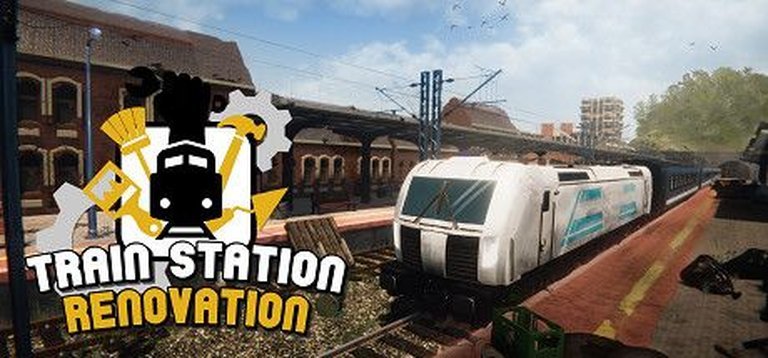
Train Station Renovation is a first-person simulation game set in contemporary times where players take on the role of a renovation specialist tasked with restoring dilapidated train stations to their former glory. The core gameplay involves cleaning up litter, removing graffiti, repairing broken objects, and clearing overgrown vegetation from platforms and station interiors. As players progress, they must also strategically place new furniture, decorations, and functional items to meet renovation objectives, transforming neglected stations into clean, functional, and welcoming transit hubs.
Gameplay Videos
Where to Buy Train Station Renovation
PC
Train Station Renovation Free Download
Crack, Patches & Mods
Guides & Walkthroughs
Reviews & Reception
imdb.com (70/100): For anyone who enjoys cleaning and design within video games, I strongly recommend this game.
Train Station Renovation: A Detailed Autopsy of a Niche Simulator
In the vast and often chaotic landscape of video games, there exists a quiet, methodical corner dedicated to the art of virtual tidying. This is the realm of the renovation simulator, a genre that asks players to find satisfaction not in vanquishing foes, but in the meticulous restoration of order from chaos. Among these digital janitors and carpenters stands Train Station Renovation, a 2020 title from Polish studio Live Motion Games. It is a game that embodies both the serene appeal and the inherent limitations of its genre, offering a deeply relaxing yet ultimately repetitive experience that found a small, appreciative audience while leaving others questioning its premise.
Development History & Context
Live Motion Games, a studio based in Poland, developed Train Station Renovation under the publishing umbrella of PlayWay S.A., a company renowned for its extensive portfolio of simulation games. PlayWay’s strategy often involves identifying niche, real-world activities and transforming them into accessible digital experiences, with titles like House Flipper, Car Mechanic Simulator, and Tank Mechanic Simulator forming the bedrock of their catalog.
The development team, led by CEO Michał Kaczmarek and Producer Marcin Bednarski, comprised a modest group of 47 credited individuals. This core team had prior experience within the PlayWay ecosystem, with many contributors having worked on similar titles like Barn Finders and Bum Simulator. This shared DNA is immediately apparent; Train Station Renovation operates on a familiar framework, built in the Unity engine, and follows a proven formula of task-based, first-person simulation.
Released into an early access period on April 30, 2020, before its full launch on October 1st of the same year, the game entered a market already receptive to so-called “comfort games.” The timing was notable, coinciding with a global period of heightened stress and isolation during the COVID-19 pandemic. Games that offered a sense of control, tangible progress, and mindful repetition were in high demand. Train Station Renovation was poised to be a perfect balm for anxious minds, a digital equivalent of power-washing your driveway or organizing a cluttered garage.
Narrative & Thematic Deep Dive
To call Train Station Renovation’s narrative “thin” would be generous. The game operates on a purely functional premise: you are the sole proprietor of a renovation company that inexplicably specializes exclusively in restoring derelict train stations. The “story” is your progression from small, rural stops to sprawling metropolitan hubs.
The game begins in a small office where you design your company logo—a fleeting moment of creativity before the work begins. From there, the narrative is driven entirely by the environmental storytelling of each station. You are an archaeologist of neglect, piecing together the history of these places not through dialogue or text, but through the layers of grime, the faded graffiti, and the scattered debris of forgotten journeys.
The overarching theme is one of reclamation and order. There are no characters to interact with, no passengers to save, no corporate villain responsible for the decay. The conflict is purely between the player and entropy itself. This absence of a traditional narrative is both the game’s greatest strength and its most significant weakness. It allows for a purely zen, uninterrupted flow state, free from the obligations of plot. However, it also fails to provide any meaningful context or emotional investment. Why are these stations abandoned? What community do they serve? The game offers no answers, leaving the act of renovation feeling somewhat hollow, a beautiful gesture performed for an audience of none.
Gameplay Mechanics & Systems
The core gameplay loop of Train Station Renovation is a trinity of tasks: Clear, Clean, and Fix. This loop is executed through a first-person perspective with a tool wheel offering a modest arsenal of implements.
- Clear: The initial phase involves tackling the sheer volume of litter. Players manually pick up countless cans, bottles, and papers. A key mechanic here is recycling; using a segregated dumpster and sorting trash correctly (glass, metal, plastic, paper) nets a small monetary bonus, adding a minor strategic layer to the mindless collection.
- Clean: This phase involves dealing with larger, non-recyclable debris like crates and tires, which must be carried or comically thrown into a mixed waste bin. It also includes the cathartic use of tools like a crowbar or axe to smash broken furniture, shelves, and barricades into splinters. A sponge is used to wipe away grime and a surprising highlight: intricate and often beautiful graffiti that players may feel conflicted about removing.
- Fix: The final phase is the actual renovation. This involves using a wrench to repair broken elements like light switches, a crowbar to replace rotten railway sleepers, sandpaper to buff rust off tracks, and a paint roller to refresh walls. Crucially, it also involves using an in-game tablet to purchase and place new items—benches, vending machines, clocks, and decorations—to meet each level’s objectives.
The game features a light progression system in the form of a skill tree. Completing stations earns stars that can be spent on upgrades that marginally improve tool efficiency or unlock new items. However, as noted by several critics and players, this system is undercooked and offers little tangible impact on the gameplay.
The most significant and frequently cited flaws reside in this mechanical layer:
* Repetition: The core loop does not evolve. While stations grow larger, the tasks remain identical, leading to a feeling of monotony that sets in after a few hours.
* Placement System: The object placement tool is described as “fiddley.” Alignment is difficult to judge, and the game prioritizes simply placing the required number of items from a category over thoughtful or realistic decoration, undermining the creative potential.
* Lack of Depth: Repairing items is often a simple animation trigger (e.g., using a wrench on a broken switch magically fixes it) rather than a detailed, engaging process. This lack of mechanical depth was a point of criticism for players seeking a more involved simulation.
* Technical Issues: On consoles, the controls were often described as clunky, with a “walking through stroop” feeling, and precision when picking up small objects was frustratingly imprecise.
A novel addition is a scanner tool (mapped to the ‘B’ button on controllers) that pulses out a circle, highlighting remaining tasks in red—a essential feature for players aiming for 100% completion.
World-Building, Art & Sound
Train Station Renovation presents a visually inconsistent world. The textures and environmental models are functional but unremarkable, often described as bland and lacking polish, especially on consoles where the frame rate was locked and performance was merely adequate.
Yet, the game has moments of visual charm. The lighting is often well implemented, casting satisfying shadows, and the graffiti art on the walls is a genuine highlight, displaying a level of detail and character that the rest of the environment sometimes lacks. The game’s hub world—a office leading to a detailed diorama of a model train set that players can actually assemble and drive—is a delightful and unexpected touch that showcases the developers’ passion for the subject matter.
The audio design is serviceable but unoriginal. Sound effects for tools are satisfyingly chunky but were noted by reviewers to be eerily similar to those in other PlayWay titles like House Flipper, suggesting asset recycling. The soundtrack, however, is a standout success. It consists of soft, instrumental chillhop that is perfectly engineered to facilitate a state of relaxation, effectively complementing the mindful gameplay.
The “world” is ultimately a series of sterile dioramas. There is no life in these stations beyond the player. No trains ever arrive, no passengers ever appear. The world feels static and lonely, which reinforces the game’s thematic focus on the act of renovation itself but sacrifices any sense of revitalizing a living, breathing space.
Reception & Legacy
Upon release, Train Station Renovation received a mixed to average critical reception. It holds a MobyScore of 6.6 based on 14 critic reviews, with scores ranging from 80% (KeenGamer, Rapid Reviews UK) down to 57% (Nindie Spotlight). The aggregate critical consensus painted it as a relaxing but fundamentally repetitive experience that would only appeal to a specific niche.
Critics praised its therapeutic, zen-like quality. Reviewers from GameSpew and LifeisXbox explicitly highlighted its value as a tool for stress relief and mental unwinding. The core satisfaction of transforming a messy space into a clean one was universally acknowledged.
The criticisms were equally consistent: the repetition, the shallow mechanics, the underwhelming object placement, and the lack of narrative context. A player review on MobyGames perfectly encapsulated the experience: “Relaxing, but boring,” noting that the fun evaporated after about three hours once the repetitive nature became apparent.
Commercially, while exact figures are not public, data from GameRebellion estimated lifetime sales around 73,000 units—a respectable number for a niche simulator from a mid-tier publisher.
Its legacy is subtle. Train Station Renovation did not redefine its genre but rather solidified a template within the PlayWay portfolio. It stands as a competent, if unambitious, entry in the wider “clean-’em-up” subgenre that would later be dominated by titles like PowerWash Simulator. It demonstrated that almost any mundane activity could be gamified for a specific audience seeking comfort and routine. Its influence is seen less in grand innovations and more in the continued confidence of publishers to greenlight increasingly specific simulators, trusting that there is always an audience for a well-executed, if simple, concept.
Conclusion
Train Station Renovation is a game of specific intentions and limited ambitions. It is a title that knows its audience and serves them a straightforward, uncomplicated experience. For players seeking a podcast game—a hands-on activity to perform while listening to audio content—or for those who find genuine meditation in methodical virtual chores, it can be a brief but satisfying journey.
However, its failure to evolve its gameplay, its lack of narrative heart, and its technical shortcomings prevent it from reaching the heights of its genre peers like House Flipper or the cultural phenomenon of PowerWash Simulator. It is a perfectly adequate simulation that executes on a simple premise without ever aspiring to be more.
In the annals of video game history, Train Station Renovation will not be remembered as a landmark title. Instead, it will be a footnote, a curious artifact representing a specific moment in time when the gaming industry realized the potent appeal of digital comfort food. It is the video game equivalent of a satisfying, albeit forgettable, afternoon spent organizing a shed—pleasurable in the moment, but leaving little lasting impression once the work is done.