
- Release Year: 2016
- Platforms: Windows
- Publisher: Nordic Games GmbH
- Genre: Compilation, Real-time tactics, Strategy
- Perspective: Bird’s eye view
- Game Mode: Internet, Single-player
- Gameplay: Base Building, Resource Management, Squad Control, Tactical Combat
- Setting: Cold War, Historical, World War II
Description
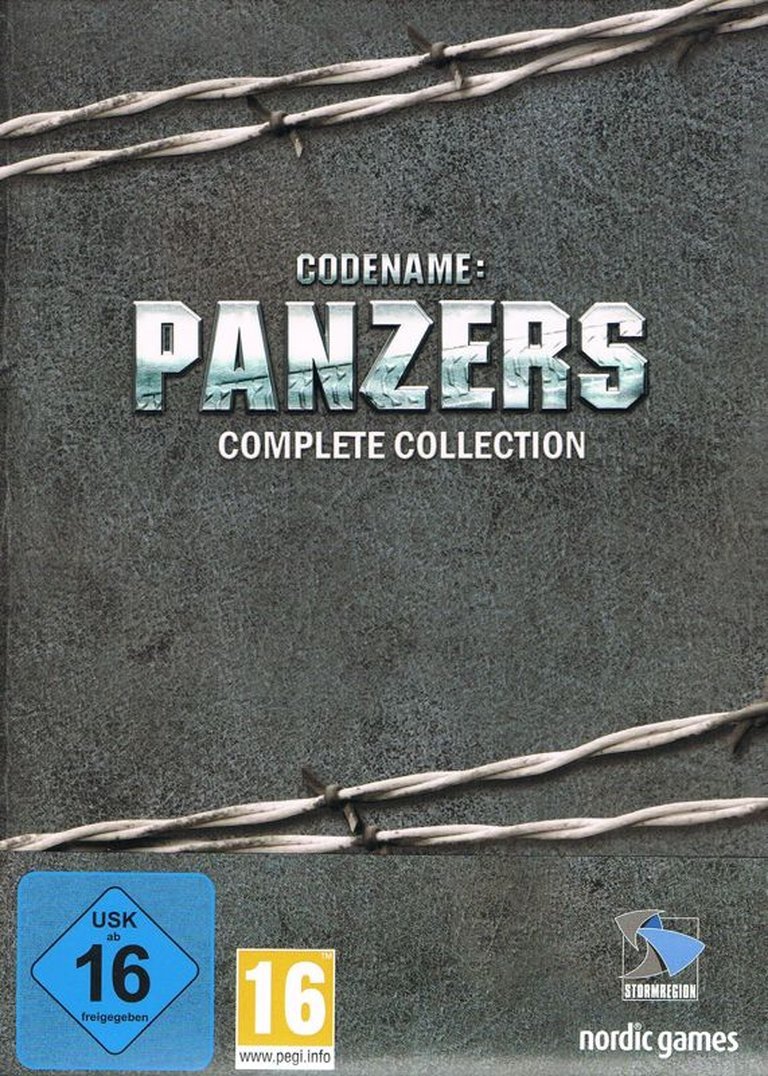
Codename: Panzers – Complete Collection is a compilation of three real-time strategy games set across pivotal 20th-century conflicts. The collection includes Codename: Panzers – Phase One and Phase Two, which immerse players in the major European battles of World War II, commanding tanks and infantry across historically inspired campaigns. It is rounded out by Codename: Panzers – Cold War, which shifts the action to a fictional 1949 conflict between NATO and Warsaw Pact forces, offering a ‘what-if’ scenario at the dawn of the atomic age. This complete set provides a comprehensive tactical warfare experience spanning from the battlefields of WWII to the tense brinkmanship of the early Cold War.
Codename: Panzers – Complete Collection: A Historian’s Verdict on a Forgotten Trilogy
Introduction
In the vast, meticulously cataloged archives of video game history, some titles are celebrated as revolutionary masterpieces, while others fade into obscurity, their contributions known only to the most dedicated archivists. The Codename: Panzers trilogy, and its 2016 repackaging as the Complete Collection, exists in a curious space between these two poles. It is a series that, for a brief moment in the mid-2000s, stood as a technically ambitious and narratively bold contender in the real-time strategy genre, only to be largely forgotten in the subsequent decades. This collection, bundling the World War II-centric Phase One and Phase Two with the audacious Cold War-themed spin-off, represents not just a value proposition but a time capsule of a specific era in PC gaming. This review posits that while the Complete Collection itself is a bare-bones compilation, the games within are fascinating, flawed gems that deserve a closer examination for their innovative mechanics, cinematic aspirations, and their poignant reflection of a genre in transition.
Development History & Context
To understand the Codename: Panzers series, one must first look to its creator, the Slovak development studio Stormregion. Operating in the early 2000s, Stormregion was part of a wave of Eastern European studios leveraging talented, cost-effective development to compete on the global stage. Their earlier work, Sudden Strike, had already established them as masters of intricate, tactical combat, but with Codename: Panzers, their ambitions grew exponentially.
The gaming landscape of 2004, when Phase One launched, was dominated by titans like Warcraft III and Command & Conquer: Generals. The RTS genre was leaning heavily into either high fantasy or near-future sci-fi, with base-building and hero units being the order of the day. Stormregion’s vision was different. They sought to create a more cinematic, character-driven World War II experience that focused less on base construction and more on the tactical command of a persistent company of units across a sprawling campaign. This was a direct challenge to the established norms.
Technologically, the games were a marvel for their time. Built on a proprietary engine, it featured impressive visual details for the era: fully destructible environments, dynamic lighting, and highly detailed vehicle and infantry models. The constraints of the era are still visible—the need for a DVD-ROM indicates the hefty asset size, and the minimum specs (a Pentium 4 and 512MB RAM) were substantial for 2004. The development of the trilogy was a rapid-fire affair; Phase Two arrived just a year after the first game, a testament to Stormregion’s focused production but also a likely contributor to the feeling that it was more of an expansive sequel than a revolutionary one.
The final entry, Cold War (2009), arrived in a radically different landscape. The RTS genre was beginning to wane in mainstream popularity, and Stormregion itself had been acquired by and was operating under Gamecock Media Group. Its shift to an alternate-history Cold War setting was a bold, desperate gamble to stand out, released into a market that was increasingly moving towards console-friendly action games and the nascent MOBA genre. The Complete Collection, published years later by Nordic Games (now THQ Nordic) in 2016, was a quiet, almost archival release, a final bundling of a series whose studio had long since faded away.
Narrative & Thematic Deep Dive
The trilogy presents a fascinating evolution in narrative approach, each game reflecting a different facet of wartime storytelling.
-
Phase One & Two: The Personal War: Set across the key theatres of World War II, these games reject the impersonal, omniscient commander perspective. Instead, they anchor the conflict through three protagonists: Lt. Mark Armstrong (US forces), Sgt. Franz von Groebel (German Afrika Korps), and Lt. Piotr Smirnov (Soviet Red Army). This was a daring choice, particularly humanizing a German soldier not as a caricatured Nazi but as a professional, often disillusioned, officer. The narrative doesn’t shirk from the horrors of war—missions involve partisan warfare, desperate last stands, and the moral ambiguities of conflict. The dialogue is functional, delivered with a straight-faced earnestness that fits the B-war movie tone it often evokes. The overarching theme is one of perseverance and the bonds forged in combat, tracing the personal journeys of these men from the deserts of Africa to the frozen hell of Stalingrad and the final push into Berlin.
-
Cold War: Alt-History Paranoia: This 2009 entry is the series’ most narratively ambitious and tonally divergent work. Abandoning historical fact for a speculative “what if,” it posits a world where World War II never ended, morphing into a protracted Cold War conflict fought with conventional forces across 1949 Europe. The narrative leans hard into pulp thriller tropes: a shadowy conspiracy, a rogue German general with a private army, and a trio of protagonists (an American OSS agent, a German journalist, and a Soviet NKVD officer) caught in the middle. The themes shift from the personal cost of war to the paranoia and intrigue of a spy novel. The dialogue embraces this shift, becoming more melodramatic and laden with conspiracy theories. It’s a flawed but fascinating experiment, a attempt to inject the tactical RTS format with a dose of cinematic espionage.
Gameplay Mechanics & Systems
The core gameplay loop across all three titles is a refined, tactical real-time strategy experience that distinguishes itself from its peers through several key systems:
-
The Persistent Army: This is the series’ masterstroke. Unlike most RTS games where units are expendable resources, your core company of veterans carries over from mission to mission. They gain experience, improving their accuracy, armor, and morale. Losing a veteran tank crew or a five-star infantry squad is a devastating blow, not just a temporary setback. This system creates a powerful emotional investment and encourages careful, considered tactics over brute-force zerg rushes.
-
Tactical Combat & Morale: Combat is less about overwhelming numbers and more about positioning, suppression, and combined arms. Units have a morale state that fluctuates based on incoming fire, nearby explosions, and the loss of comrades. A suppressed squad will cower and become ineffective, allowing for flanking maneuvers. This adds a crucial psychological layer to the battlefield, reminiscent of the later Company of Heroes but implemented here years prior.
-
Logistics and Support: Base-building is minimal to non-existent. Instead, players call in support via a points system earned through capturing strategic points on the map. This can include off-map artillery strikes, air support, or reinforcements delivered by truck or parachute. This keeps the focus squarely on the tactical command of the battlefield rather than resource micromanagement.
-
Destruction & Terrain: The fully destructible environments are not just cosmetic. A building providing cover for enemy infantry can be reduced to rubble by tank fire. Forests can be set ablaze with flamethrowers. This constant evolution of the battlefield ensures that no engagement is static.
The UI is functional for its time, though showing its age. The control scheme is classic RTS, with unit selection and command queues working as expected. The flaw, particularly evident in Cold War, is a sometimes-unreliable AI for pathfinding and unit commands, which can frustrate the otherwise precise tactical planning the game demands.
World-Building, Art & Sound
Stormregion’s commitment to a cinematic experience is most evident in its presentation.
-
Visual Direction & Atmosphere: For 2004-2005, the games were visually stunning. The art direction is grounded and realistic, with a keen eye for the grim aesthetic of World War II—the dusty ochres of North Africa, the grim grays and whites of the Eastern Front, the rain-slicked cobblestones of European towns. Cold War extends this to a more stylized, contrast-heavy look fitting its noir-ish tone. The unit models, from the iconic Panzer IV to the humble Sherman, are rendered with loving detail and animate convincingly. The destruction physics sell the impact of high-explosive shells on the environment.
-
Sound Design: The audio work is a critical pillar of the immersion. The soundscape is a cacophony of war: the distinct report of a Kar98k versus an M1 Garand, the terrifying whine of incoming artillery, the satisfying crunch of a tank shell penetrating enemy armor. The voice acting for unit acknowledgments and campaign dialogue is consistently solid, selling the gravity of the situations.
-
Musical Score: The orchestral score, composed by Dynamedion, is a standout. It swells dramatically during key moments of battle and recedes into somber, reflective tones during lulls. It successfully apes the grand, emotional style of a Hollywood war film, effectively elevating the on-screen action. The inclusion of the soundtrack disc in the Complete Collection is a fitting tribute to its quality.
Reception & Legacy
At launch, the original Codename: Panzers games were met with strong critical acclaim. Reviewers praised their fresh take on the WWII RTS, the innovative persistent army system, and the impressive production values. They were considered among the best examples of the genre upon release, often drawing favorable comparisons to Company of Heroes, which would popularize many similar ideas two years later.
However, the legacy of the series is complex. While critically successful, it was arguably overshadowed by the titans of the genre and perhaps lacked the marketing muscle to achieve blockbuster status. Cold War, released later into a changing market, was met with a more mixed reception, its alt-history premise dividing fans of the historically grounded earlier games.
The true legacy of Codename: Panzers is one of influence rather than direct imitation. It demonstrated a viable alternative to base-building-heavy RTS design, emphasizing tactical depth and player investment in individual units. One can see echoes of its systems in later tactical games, though no direct lineage can be drawn. The Complete Collection itself did little to revive the series’ profile; it was a simple, no-frills repackaging for a bargain bin era, ensuring the games remained available but not necessarily rediscovered.
Conclusion
The Codename: Panzers – Complete Collection is not a remaster or a revival. It is a historical document, a straightforward compilation of three games that capture a specific moment in time for both their developer and their genre. To play them today is to experience ambitious, sometimes flawed, but always fascinating games that dared to be different. Phase One and Phase Two remain excellent tactical RTS titles whose persistent army system still feels engaging and rewarding. Cold War stands as a bizarre, ambitious curio that doesn’t always succeed but commands respect for its sheer audacity.
For historians and genre enthusiasts, this collection is an essential deep dive into a road not taken. For the modern player, its dated aspects may require patience, but the core tactical gameplay retains its punch. The Codename: Panzers trilogy may not have achieved the legendary status of its peers, but its place in video game history is secure as a bold, innovative, and deeply cinematic effort from a talented studio that left us too soon. It is a forgotten pillar worthy of remembrance.