
- Release Year: 2020
- Platforms: Nintendo Switch, PlayStation 4, Windows
- Publisher: Wild River GmbH
- Developer: Independent Arts Software GmbH
- Genre: Driving, Racing
- Perspective: Behind view
- Game Mode: Single-player
- Gameplay: Arcade, Open World
Description
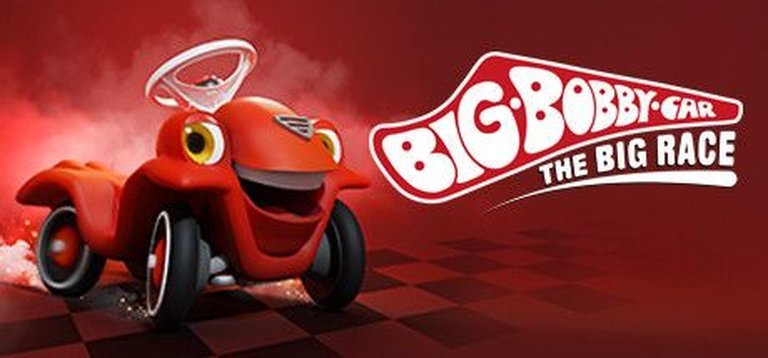
BIG-Bobby-Car: The Big Race is a family-friendly arcade racing game set in an open-world environment where players race in iconic Big Bobby Cars. Designed primarily for children, the game offers a gentle difficulty curve with plenty of exploration opportunities, unlockable content, and a colorful, accessible world to discover. While providing simple entertainment for younger audiences, older players may find it a brief, undemanding experience perfect for casual play.
Gameplay Videos
Crack, Patches & Mods
BIG-Bobby-Car: The Big Race: A Monument to Niche, A Lesson in Jank
Introduction
In the vast, often self-serious pantheon of video games, where every release seems to vie for the title of most epic narrative or most competitive esport, there exists a quieter, more peculiar corner of the industry. This is the domain of the licensed children’s game, a genre often dismissed yet perpetually fascinating for its specific, unyielding focus on a young audience. Into this arena rolled BIG-Bobby-Car: The Big Race in late 2020, a title based on a classic German preschool push-toy. To the uninitiated, it may seem like the nadir of cynical product placement. But for the game historian, it represents something far more intriguing: a perfect case study in targeted design, technical ambition, and the stark divide between a game’s intended audience and its critical reception. This is not a game that aspires to dethrone Forza or Mario Kart; it is a singular artifact built with a specific child in mind, and its successes and failures are a direct reflection of that unwavering, if flawed, commitment.
Development History & Context
Developed by Independent Arts Software and published by Wild River GmbH, The Big Race emerges from a very specific and robust German tradition of creating video games based on domestic toy brands and children’s media properties. Independent Arts Software is not a greenhorn studio; their credits, as glimpsed through the MobyGames collaboration data, include a slew of family-friendly titles such as Eldrador Creatures, Winter Games 2023, and Bayala: The Game. This is a team with a proven, if specialized, track record in this niche.
Built on the ubiquitous Unity engine, the developers’ vision was clear from the official description: to translate the simple, tactile joy of scooting around on a brightly colored plastic car into a open-world video game adventure. The technological constraints were not those of hardware limitations from a bygone era, but rather the creative and budgetary constraints of a mid-tier licensed project. The gaming landscape of 2020 was dominated by AAA blockbusters and a thriving indie scene, but the market for dedicated, safe, and explorative games for very young children remains a constant, if underserved, sector. The Big Race was engineered specifically to fill that void, aiming to provide a sandbox where the primary goals are exploration, light mission completion, and the thrill of customizing one’s own digital Bobby-Car, free from the pressures of complex mechanics or online competition.
Narrative & Thematic Deep Dive
The narrative framework of The Big Race is elegantly simple and perfectly pitched to its preschool audience. The player’s ultimate goal is to win the annual “Big Race,” a town-wide event that serves as the championship of Bobby-Car prowess. This overarching objective provides a clear, understandable endpoint for a young mind.
To reach this goal, the player must engage with a small open world, meeting other Bobby-Car characters and undertaking over 40 missions. These tasks are the heart of the “story,” such as it is. The themes are those of friendly competition, community assistance, and discovery. There is no grand villain or world-ending catastrophe; the conflict is the personal challenge of improving one’s skills and becoming the local champion. The dialogue, fully voiced in German with an English option, reinforces this gentle, supportive atmosphere. It is designed to be encouraging and straightforward, helping to guide its young audience through the game’s objectives without overwhelming them with complex text or dark themes. The narrative is a vehicle for gameplay, a thin but effective thread meant to tie together the acts of driving, exploring, and collecting.
Gameplay Mechanics & Systems
At its core, The Big Race is an arcade-style driving game with open-world elements. The controls are intentionally simplified for direct, intuitive handling—akin to the toy itself, there are no complex gear shifts or drift mechanics. The primary gameplay loop involves navigating the environment, accepting missions from NPCs (other Bobby-Cars), and completing them to progress toward the ultimate championship race.
A key feature is the Character Editor, allowing players to design and customize their own Bobby-Car. This taps directly into the creative, personalizing impulse so strong in young children, letting them create a digital avatar that feels like their own. The game boasts three models: the classic original, the NEO, and the NEXT, offering a slight sense of progression and choice.
However, this is where the chasm between intent and execution becomes most apparent. While the German review from Gamer’s Palace praised the “open playing world” and “lots to explore and unlock” with a “very moderate level of difficulty,” the Nintendo Life review brutally highlighted the game’s core flaw: jank. The review notes the game is “so poorly optimised that you’re going to need a strong tolerance for jankiness.” This suggests significant issues with frame rates, physics, collision detection, and general polish on the Nintendo Switch port. The gameplay, while designed to be simple and accessible, is reportedly undermined by technical inconsistencies that could frustrate players of any age, even if the objectives themselves are child-friendly. The UI, built by Lidija Marinovic, is likely bright and icon-driven, but its effectiveness is contingent on the stable performance it sits atop.
World-Building, Art & Sound
The artistic direction of The Big Race is its most immediately successful aspect. The developers had a clear blueprint: the iconic, primary-colored, rounded plastic aesthetic of the Bobby-Car toy itself. The screenshots and promotional materials indicate a world built to mirror a child’s imagination—a vibrant, sunny, and safe environment where everything is sized for a small driver. Environment artists Jessica Hassenewert, Elias Hoschkara, and Thomas Nowicki were tasked with creating a world that feels explorable and inviting, not realistic and intimidating.
The sound design, helmed by Julian de Freitas, is crucial. The choice to fully voice all dialogues in German (with English optional) is a significant investment for a children’s title, ensuring that non-readers can still engage with the game’s missions and story. The soundtrack and sound effects would logically be cheerful, upbeat, and full of satisfying plastic clunks and rumbles to mimic the sound of the toy on pavement. The art and sound work in concert to build a cohesive atmosphere of harmless, playful fun. It is a world completely divorced from the grit and gray of more “mature” games, a digital playground in the purest sense.
Reception & Legacy
The critical reception for BIG-Bobby-Car: The Big Race was mixed, yet perfectly illustrative of its nature. With a MobyScore of 60% based on just two reviews, it exists in a critical limbo. The Gamer’s Palace review (70%) represented the view of someone assessing it on its own terms: “a really good… open-world racing game for children, as it should be.” It recognized the value in its focused design and gentle difficulty curve. Conversely, Nintendo Life (50%) judged it by the broader standards of the medium, finding it lacking in content and, most damningly, technical competence, ultimately branding it only “a perfectly fine option” for very young children with cheap price tags and low expectations.
Its legacy is not one of industry-wide influence but of niche fulfillment. It stands as a testament to a specific type of game development that prioritizes a narrow audience above critical acclaim. It will be remembered not for revolutionizing gameplay, but for being a specific, albeit janky, answer to a parent’s search for a harmless digital toy for their child. In the annals of video game history, it is a footnote, but an important one that highlights the diverse purposes video games can serve.
Conclusion
BIG-Bobby-Car: The Big Race is a fascinating artifact. It is not a “good” game by conventional critical metrics that prioritize polish, challenge, and narrative depth. It is, however, a remarkably specific game. It understands its audience—the preschooler who owns a Bobby-Car—with a clarity that many more ambitious titles lack. Its failures are largely technical, a result of ambition outstripping budget or expertise, particularly on the Nintendo Switch. Its successes are foundational: a bright, safe, open world to explore, a simple goal to pursue, and the pure joy of customizing your own car. It is the video game equivalent of the toy it’s based on: simple, colorful, fun in short bursts, and primarily designed for a very specific stage of life. For historians and journalists, it serves as a perfect example of a genre that critics often ignore but the market consistently demands. Its place in history is secured not by its greatness, but by its unwavering commitment to being exactly what it set out to be: a Big Race for very small drivers.