
- Release Year: 2020
- Platforms: Macintosh, Nintendo Switch, Windows, Windows Apps, Xbox Cloud Gaming, Xbox One, Xbox Series
- Publisher: Raw Fury AB
- Developer: Oskar Stålberg
- Genre: Simulation
- Perspective: Diagonal-down
- Game Mode: Single-player
- Gameplay: City building, Construction simulation
- Average Score: 79/100
Description
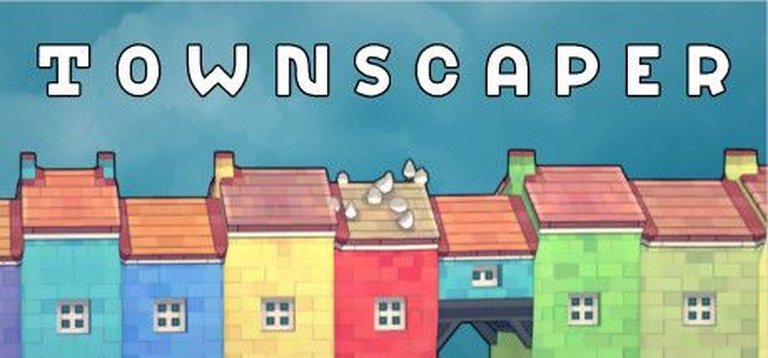
Townscaper is an experimental city-building toy rather than a traditional game, set in a serene, open-ended environment. Using a simple point-and-click interface, players effortlessly construct colorful, whimsical towns and structures on a grid over water, with an algorithm automatically generating charming architectural details like arches, stairways, and bridges. There are no goals, resources, or challenges—just pure, meditative creativity as you watch your idyllic island town grow block by block.
Gameplay Videos
Where to Buy Townscaper
Townscaper Free Download
Crack, Patches & Mods
Guides & Walkthroughs
Reviews & Reception
opencritic.com (69/100): A pleasant toy for building your own idyllic seaside getaways.
pcgamer.com (80/100): A pleasant toy for building your own idyllic seaside getaways.
metacritic.com (63/100): This is a very unique and beautiful concept that rewards the player even when they don’t know what they’re doing.
steambase.io (95/100): Townscaper has earned a Player Score of 95/100. This score is calculated from 21,243 total reviews which give it a rating of Overwhelmingly Positive.
gaming-charts.com (89/100): Townscaper is a charming and relaxing indie simulation game that lets you build picturesque island towns with ease.
Townscaper: A Digital Toybox and Its Quiet Revolution
In the vast pantheon of video games, where complex systems, gripping narratives, and competitive multiplayer often reign supreme, there exists a serene, almost meditative outlier. Townscaper, the creation of Swedish developer Oskar Stålberg, is not a game in any traditional sense. It is a toy, a sandbox, a digital zen garden. It asks for no victory condition, offers no fail state, and provides no narrative. Its thesis is simple yet profound: the act of creation, unburdened by goal or consequence, is an experience and an emotion unto itself. It is a deliberate and brilliant subversion of the city-building genre, stripping it down to its purest, most aesthetic form to create what might be the most relaxing software utility ever sold as a video game.
Development History & Context: The Decade-Long Prototype
The story of Townscaper is not one of a sudden spark of inspiration, but of a slow, methodical evolution of a single idea across a decade and multiple projects. To understand Townscaper is to understand the technical and artistic journey of its creator, Oskar Stålberg.
Stålberg’s fascination with procedural generation began during his tenure as a Technical Artist at Ubisoft Massive, working on Tom Clancy’s The Division. Observing the tools used to construct Manhattan’s skyscrapers, he became preoccupied with a question: how do you create urban structures that feel organic and respect weird, non-rectilinear topographies? His answer was a small prototype called Brick Block (c. 2016), a simple 5x5x7 grid where placed blocks would automatically form into coherent building facades. This prototype utilized an algorithm similar to Marching Cubes, which generates a polygonal mesh from a 3D grid of points. It was the first iteration of the core idea: a system that intelligently decorates player-placed blocks based on their neighbors.
The next major evolutionary step was 2018’s Bad North, a minimalist real-time tactics game. Here, Stålberg faced a more complex challenge: procedurally generating entire islands that were not only visually cohesive but also playable, with clear navigation paths for units. The solution was a bespoke adaptation of the Wave Function Collapse (WFC) algorithm. In essence, WFC is a constraint-solving algorithm. For Bad North, hundreds of hand-crafted terrain tiles (cliffs, beaches, stairwells) were imported into Unity, and their edges were scanned to define rules for which tiles could legally be placed next to each other. The generator would then create a “possibility space” for an island and “collapse” it into a final, valid layout by respecting these adjacency constraints. This was a monumental leap from Brick Block, solving the issue of repetitive output and enabling vast, diverse, and logically consistent generation.
The final piece of the puzzle came from Stålberg’s brief work on Night Call, a noir adventure game set in a realistic Paris. The project required deforming a standard grid to fit the city’s irregular street layouts. This experimentation led to the breakthrough of the irregular, relaxed quadrilateral grid that defines Townscaper. Inspired by Amit Patel’s work on hexagonal grids, Stålberg developed a method of taking a fixed grid, breaking it into quads, and then moving points to create a more natural, European-style urban plan.
Townscaper, released into Steam Early Access in June 2020 and fully in August 2021, is the synthesis of these three projects:
* The irregular grid from Night Call for organic layouts.
* The Wave Function Collapse logic from Bad North for procedural decoration.
* The Marching Cubes-like block placement from Brick Block for fitting structures together.
Developed over three intense months as a personal passion project and published by Raw Fury, Townscaper was released into a gaming landscape increasingly receptive to “cozy games.” It arrived not as a competitor to Cities: Skylines, but as its aesthetic and philosophical opposite.
Narrative & Thematic Deep Dive: The Beauty of Absence
To analyze the narrative of Townscaper is to analyze the narrative of a blank canvas or a set of LEGO bricks. There is no plot, no characters, no dialogue, and no textual lore. The narrative and themes are not presented but are projected by the player.
The overarching theme is one of tranquil creation. The game is a direct rejection of the capitalist, expansionist drive that underpins most city-builders, where efficiency, production, and growth are the ultimate metrics of success. Townscaper has no resources, no budget, no unhappy citizens. Its only currency is imagination. The theme is the joy of the process itself—the “plop” of a new block, the surprise of seeing an arch form, the satisfaction of a color-coordinated district emerging from the sea.
The “characters” are the emergent, ambient life of the town itself. Flocks of seagulls that perch on rooftops and scatter when disturbed; washing lines and flags that appear between close-set buildings; the subtle flicker of interior lights as the day cycle progresses. These are not AI-driven agents with schedules but visual flourishes that imply a life lived off-screen. They create a Thriving Ghost Town—a place that feels inhabited through evidence rather than population. This absence is its own statement, encouraging the player to imagine the lives within rather than having them simulated.
The narrative is the one the player crafts in their own mind. Is this a lonely lighthouse keeper building a refuge? A monarch constructing a floating citadel? A humble fisher’s village growing organically over generations? The game provides the beautiful, wordless setting and lets the player’s imagination write the story. Its themes are therefore universal: peace, solitude, creativity, and the simple human desire to build a home.
Gameplay Mechanics & Systems: The Elegance of Constraint
The gameplay of Townscaper is breathtakingly simple yet underpinned by incredibly complex systems. The player has three primary interactions:
1. Left-Click: Place a colored block on the grid.
2. Right-Click: Remove a block.
3. Mouse Movement: Rotate the camera.
A color palette on the left and minimal options for changing the time of day and taking screenshots constitute the entire UI. There is no tutorial because none is needed. The genius of Townscaper is in its output-heavy, input-light design. The player provides a simple intention (a block of a certain color in a certain location), and the game’s WFC engine performs a massive amount of work to determine the best possible architectural outcome.
The core loop is one of experimentation and discovery:
1. Place: The player places a block.
2. Observe: The game’s algorithm instantly assesses the entire connected structure. It checks the new block’s position relative to all its neighbors against a vast library of pre-defined “recipes” and constraints.
3. Adapt: The new block and often many surrounding blocks are re-decorated to fit the new configuration. A flat roof might become a staircase; two towers close together might sprout a bridge with laundry lines; an enclosed courtyard will transform into a lush garden with trees and stone paths.
4. Learn: The player internalizes these rules through play. They learn that certain shapes beget certain features, turning the process into a conversation with the algorithm.
This is a mixed-initiative AI system at its finest. The player sets the direction, and the AI fills in the breathtaking details. The “reward” is not points or unlocks but the discovery of new visual possibilities: a spire, a dome, a vaulted arch.
However, the system has its flaws, noted by some reviewers. The WFC algorithm struggles with long, thin structures, sometimes resulting in illogical or “silently failed” connections, like hanging support beams that don’t touch the ground. The irregular grid, while beautiful, can frustrate players seeking perfect symmetry, leading to “jagged” builds. Furthermore, the complete lack of any traditional goals or progression means players seeking directed gameplay will find their engagement limited to a short, albeit pleasant, experience.
World-Building, Art & Sound: A Scandinavian Daydream
The world of Townscaper is an endless, calm sea under a vast sky—a literal and figurative tabula rasa. The setting is intentionally abstract, yet its architectural language is distinctly and purposefully Scandinavian. Stålberg chose this vernacular not only for its familiarity to him but for its aesthetic suitability: it is colorful and detailed but not overly ornate, allowing the shapes to read clearly even when zoomed out. This choice prevents visual clutter and lets the player’s imagination fill in the finer details.
The visual direction is low-poly, but not simplistic. It’s a clean, bright, and cheerful aesthetic that feels like a living storybook. The lighting model is soft, casting long, gentle shadows that dramatically highlight the contours of the town as the player moves the sun across the sky. The ability to change the time of day is not a gameplay feature but an artistic one, allowing players to see their creation in the golden glow of dawn, the deep blue of twilight, or the inky black of night, punctuated by the warm glow of windows.
The sound design, by Martin Mathiesen Kvale and Oda Tilset, is a masterclass in minimalist feedback. The core interaction—placing a block—is accompanied by a deeply satisfying “plop” or “bloop” sound, a tiny auditory reward that makes the simple act feel weighty and impactful. The ambient soundtrack is the sound of wind and gentle waves, a constant, soothing white noise that perfectly sells the fantasy of a remote island paradise. The occasional cry of a gull sells the illusion of life. There is no music, by design; the only melody is the one the player creates through construction.
Together, the art and sound create an atmosphere of profound tranquility. It is a world built not for conflict or drama but for quiet contemplation. It is a digital diorama, and every element of its presentation is crafted to make the act of building it feel like a relaxing escape.
Reception & Legacy: From Curiosity to Cultural Artifact
Upon its release, Townscaper was met with a divided yet understanding critical reception. On PC, it holds a Metacritic score of 86/100, indicating “generally favorable” reviews, while the Switch version sits at a more mixed 63/100. This platform divide is telling: critics reviewing it as a PC experience often viewed it through the lens of a digital toy or creative tool, while some console reviewers judged it more harshly against traditional games.
Publications like Eurogamer and PC Gamer praised its unique appeal. Natalie Clayton of PC Gamer called it “an absolutely joyous little time waster,” while Eurogamer‘s Christian Donlan labeled it “an art toy to savour.” Critics universally applauded its aesthetic, sound design, and relaxing nature. The negative reviews, such as the one from Pure Nintendo (4/10), almost exclusively cited its lack of goals, depth, and “incomplete” feeling as fundamental flaws, missing the point by evaluating a toy against the metrics of a game.
Commercially, it was a resounding success, far surpassing Stålberg’s expectations. He had priced it at a low $5.99, anticipating that most players would engage for only about an hour. Instead, it found a massive audience, with Steam reviews sitting at an “Overwhelmingly Positive” rating from over 21,000 users. It transcended the typical gaming audience, appealing to artists, architects, children, and anyone seeking a moment of digital peace.
Its legacy is twofold. First, it is a technical benchmark. Stålberg’s bespoke implementation of WFC for organic, real-time generation is a landmark achievement in procedural content generation, studied and admired by developers worldwide. Second, and more importantly, it is a cultural touchstone for the “wholesome game” movement. It proved that there is a significant market for experiences focused purely on emotion and creativity, devoid of conflict or stress.
The game has influenced a wave of similarly relaxed, experimental builders and has fostered a vibrant community online where players share intricate screenshots and even 3D-print their creations (thanks to an in-game export feature). While Stålberg has expressed little interest in creating thematic DLC (e.g., a Japanese pack), seeing it as a solved problem, Townscaper‘s true legacy is in the space it carved out: a proof-of-concept that the journey of creation can be a destination in itself.
Conclusion: A Permanent Vacation
Townscaper is an exception to nearly every rule of game design. It has no mechanics to master, no story to unravel, and no world to save. It is a curated, guided daydream. To judge it for what it lacks is to miss its entire purpose. It is not a game to be beaten; it is a tool for mindfulness, a digital equivalent of knitting or sketching.
Its place in video game history is secure not as a titan of the industry but as a cherished curiosity—a beautifully crafted, technically ingenious pallet cleanser. It is the video game equivalent of a deep breath. For players weary of epic quests and competitive ladders, Townscaper offers a permanent vacation to a quiet island of their own making. It is a brief, beautiful reminder that sometimes, the most profound goal is simply to create something beautiful, for no other reason than to see it exist.