
- Release Year: 2020
- Platforms: Windows
- Publisher: JoyCity Corp
- Developer: JoyCity Corp
- Genre: Sports
- Perspective: 3rd-person
- Game Mode: Online PVP
- Gameplay: Basketball
Description
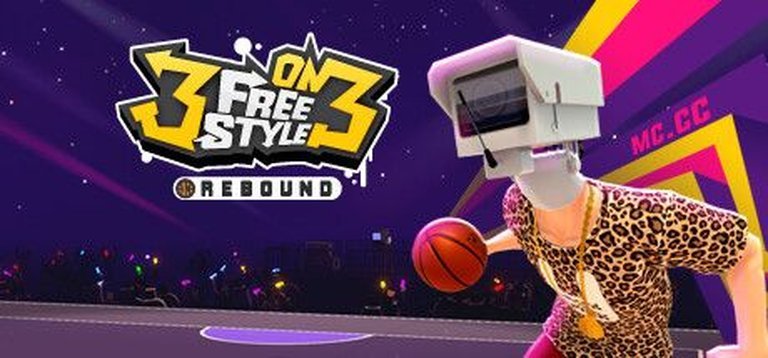
3on3 FreeStyle: Rebound is a free-to-play, third-person basketball game developed and published by JoyCity Corp. It is part of the 3on3 FreeStyle series and focuses on fast-paced, 3-on-3 street basketball matches. Players can engage in competitive online multiplayer games, showcasing their skills in an urban court setting.
Gameplay Videos
Where to Buy 3on3 FreeStyle: Rebound
PC
Guides & Walkthroughs
3on3 FreeStyle: Rebound: Review
Introduction
In the sprawling metropolis of live-service gaming, where titans like Fortnite and Apex Legends dominate the skyline, the niche sports title carves out a precarious existence. Enter 3on3 FreeStyle: Rebound, a 2020 iteration of a series that has, since 2016, doggedly pursued a singular vision: to capture the fast-paced, stylized essence of street basketball. Developed and published by South Korea’s JoyCity Corp, this free-to-play title is not a revolutionary sequel but a strategic repositioning—a “Rebound” aimed at a new platform and a new audience. This review posits that Rebound is a fascinating case study not of innovation, but of preservation and adaptation. It is a game deeply entrenched in the legacy of its predecessors, a competent but unambitious port that serves as both a gateway to its unique subgenre and a stark reflection of the free-to-play model’s most entrenched practices. To understand Rebound is to understand a studio’s unwavering commitment to a specific, arcade-hoops fantasy, for better and for worse.
Development History & Context
JoyCity Corp is a name synonymous with persistent online experiences, most notably the long-running Freestyle Street Basketball series that dates back to 2005. 3on3 FreeStyle, launched in 2016 on PlayStation 4 and PC, was their modernized take on that formula, leveraging the free-to-play structure that had become the industry standard for competitive online titles. By the time Rebound was released on Windows in July 2020, the gaming landscape was intensely competitive. The battle royale genre was at its peak, and player attention was a scarce commodity.
Rebound’s development was likely less about technological breakthrough and more about strategic expansion. The source material lists numerous “Character Packs” (Deacon, Mika, Fei, etc.) released between 2018 and 2020 for the original game, indicating a live-service title with a steady content drip. Rebound, therefore, appears less as a from-the-ground-up sequel and more as a curated version or a relaunch, potentially aimed at streamlining the experience for a new wave of players on PC via Steam, or perhaps as a technical update to the existing codebase. The constraints were not those of hardware, but of design philosophy: how to maintain the identity and monetization systems of a four-year-old game while presenting it as a fresh experience. The decision to keep it free-to-play was a given, positioning it as an accessible, low-risk proposition in a crowded market, albeit one with a very specific hook: 3v3 arcade basketball.
Narrative & Thematic Deep Dive
It is here that we must address the elephant in the room. 3on3 FreeStyle: Rebound is a sports simulation, and like most titles in its genre, its narrative is not delivered through cutscenes or a scripted campaign. The “narrative” is one of player-generated drama—the story of a rising crew making a name for itself on the asphalt courts of a stylized urban landscape.
The characters themselves are archetypes, each with a implied backstory conveyed through their visual design. The roster, built up through years of DLC packs like the “Jason Nightout Package” or “Rebecca Character Pack,” functions as a collection of basketball tropes. You have the slick ball-handler, the powerful center, the sharpshooting guard—all dressed in a variety of streetwear and basketball gear. The dialogue is likely limited to pre-and-post-game quips, taunts, and celebratory exclamations, designed to add flavor rather than depth. The underlying theme is one of authentic street culture and individual expression. This isn’t the sterilized, professional environment of the NBA 2K series; it’s a world where style is as important as substance, where a killer crossover or a flashy dunk is a statement of identity. The core thematic pursuit is the elevation of self and crew through skill and flair, a fantasy of urban sports glory.
Gameplay Mechanics & Systems
The core gameplay loop of Rebound is undoubtedly inherited from its 2016 predecessor: fast-paced, 3-on-3 basketball matches emphasizing individual player skills and teamwork. The perspective is third-person, offering a clear view of the action and the player’s custom character.
The mechanics are built around accessibility and spectacle. Controls are likely simplified compared to simulation-heavy titles, prioritizing intuitive moves like dribble animations, crossover sequences, and context-sensitive dunks and blocks. The depth emerges from character roles and special abilities. Each character, from Ginger to Jimmy, presumably possesses unique stats and signature “Freestyle” moves—exaggerated, game-changing skills that can turn the tide of a match. This creates a rock-paper-scissors meta-game where team composition and understanding each character’s strengths and weaknesses are key.
The progression and monetization systems are the heart of the free-to-play model. While the source material does not detail them, we can extrapolate from industry standards and the listed DLC. Players likely earn in-game currency through play to purchase cosmetic items, while more desirable cosmetics, new characters, and potentially experience boosters are sold directly for real money in packs like the “Rookie Pack” or character-specific DLC. This creates a system where the core gameplay is free, but customization and roster expansion are gated behind a grind or a paywall. The UI must serve this dual purpose: clearly presenting the action on the court while seamlessly integrating storefront prompts and progression trackers, a common trait of games in this genre. The potential flaw here is a sense of repetition if the grind is too arduous, or a pay-to-win environment if stats are tied to purchasable items.
World-Building, Art & Sound
The world of Rebound is not a open world but a curated set of courts. The art direction leans heavily into a vibrant, slightly cartoonish style that complements its arcade aspirations. This is not photorealism; it’s a heightened reality where animations are fluid and exaggerated for maximum visual impact. The courts themselves are likely designed to reflect different urban vibes—a classic playground under a bridge, a glossy indoor court, a rooftop game with a city skyline backdrop—each acting as a stage for the players’ performances.
The sound design is crucial in a game of this pace. The satisfying swish of a perfect jump shot, the hard slap of a ball being stolen, the thunderous clang of a dunk on the rim—these audio cues provide essential feedback and visceral satisfaction. The soundtrack undoubtedly features a mix of hip-hop and electronic music, reinforcing the street culture aesthetic and keeping energy levels high during menus and matches. Together, the art and sound create a cohesive and specific atmosphere: it’s cool, it’s fast, and it’s entirely focused on the spectacle of the sport.
Reception & Legacy
The MobyGames page for Rebound is tellingly sparse. At the time of writing, it has no MobyScore, no critic reviews, and no player reviews. This absence is a form of data in itself. It suggests a game that flew under the radar of major Western gaming publications and failed to generate a significant critical or community discourse on that platform. This is not entirely surprising for a free-to-play title that is more of a platform update than a groundbreaking new release.
Its legacy, therefore, is intrinsically tied to the broader 3on3 FreeStyle and Freestyle series legacy. JoyCity Corp has cultivated a dedicated, likely niche audience for this specific style of basketball game, primarily on consoles. Rebound’s role was to extend that lifecycle onto PC and serve as a continuation of that service. Its influence is minimal on a grand scale, but within its own microcosm, it represents the studio’s commitment to its model. It stands as an example of a very specific type of live-service game: one that prioritizes a steady flow of character-based DLC and cosmetic monetization over critical acclaim or mass-market appeal. It is a game that exists for its players, not for the critics.
Conclusion
3on3 FreeStyle: Rebound is a difficult game to review in a traditional sense. It is not an artistic masterpiece pushing boundaries, nor is it a broken mess. It is a functional, competent, and highly specific video game product. Its value is almost entirely dependent on a player’s appetite for fast, arcade-style basketball and a tolerance for free-to-play monetization structures.
As a historical artifact, it is a clear marker of JoyCity Corp’s sustained strategy. It is a game built to serve an existing community and to hopefully catch a few new players in its net. It does not seek to redefine its genre but to faithfully execute a proven formula. For the right player, it offers endless hours of competitive, stylized hoops action. For the broader gaming audience, it is likely an invisible entry in a long-running series. Its place in video game history is that of a footnote—a testament to the fact that the industry has room not only for blockbusters but also for sustained, niche-supported services that operate on their own terms, far from the spotlight of critical discourse.