
- Release Year: 2003
- Platforms: PlayStation 2, Windows, Xbox
- Publisher: Hip Interactive Corp., Hip Interactive Europe, Namco Hometek Inc., Sony Computer Entertainment Europe Ltd.
- Developer: Namco Hometek Inc.
- Genre: Action
- Perspective: Third-person
- Game Mode: Single-player
- Gameplay: Blindfire combat, Cover System, Offensive Cover System
- Setting: Futuristic, Sci-fi
- Average Score: 75/100
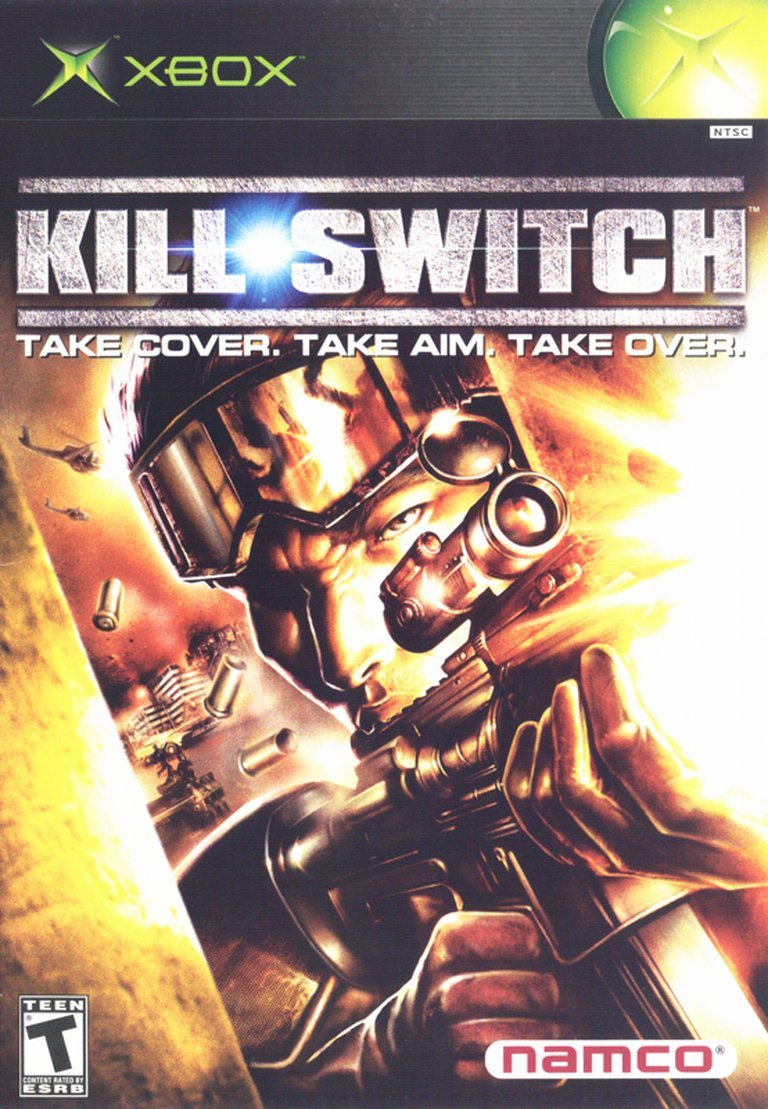
Description
Kill.switch is a third-person shooter set in a sci-fi/futuristic world where you play as an enhanced soldier with no memory of your past. The game features an innovative cover system, allowing you to attach to objects for safe firing positions. Over fifteen missions across five levels, you uncover the true enemy and their objectives through FMV cinematics, engaging in action-packed gunfights across global hotspots.
Gameplay Videos
Cracks & Fixes
Mods
Guides & Walkthroughs
Reviews & Reception
metacritic.com (85/100): It’s filled with cool ideas and a control system to die for. You’re not really sneaking around, but you are hiding a lot – and it’s the mechanics behind the hiding that makes the game so damn satisfying.
ign.com (78/100): Easy to pick-up, difficult in all the right places, and oozes Hollywood atmosphere without sacrificing too many gameplay convictions.
imdb.com (70/100): Pretty much from the get-go, this grabbed me. Control is quite easy to get into, the interface is very quickly gotten used to and anyone who’s tried a shooter before can pretty much sit down with this right away.
gamefaqs.gamespot.com (70/100): The gameplay is where it’s at here. The controls are simple and the game is run and gun at its finest for the time.
kill.switch: Review
Introduction
In the annals of video game history, few titles have left as indelible a mark on the third-person shooter genre as kill.switch. Released in 2003 by Namco Hometek, this innovative title introduced mechanics that would later become staples in modern shooters. Despite its relatively short lifespan and mixed reception, kill.switch pioneered the “Offensive Cover System” (OCS), a groundbreaking feature that would influence blockbuster franchises like Gears of War and Uncharted. This review aims to dissect kill.switch across its development, narrative, gameplay, and legacy, ultimately assessing its place in video game history.
Development History & Context
Studio and Creators
kill.switch was developed by Namco Hometek, the American branch of the renowned Japanese company Namco. The game was helmed by lead producer Matt Sentell and producer Chris Esaki, who were dissatisfied with the mechanics of Dead to Rights, another Namco title. They sought to create a game that emphasized realistic cover tactics and intense firefights. The development team included lead programmer Gil Colgate and writer Alvin Muolic, who crafted the game’s narrative.
Technological Constraints and Gaming Landscape
Developed during the early 2000s, kill.switch faced the technological limitations of the PlayStation 2 and Xbox era. The game utilized the RenderWare engine, which was cost-effective and time-efficient, allowing the team to focus on gameplay innovation rather than engine development. The gaming landscape at the time was dominated by titles like Metal Gear Solid and Splinter Cell, which emphasized stealth and cinematic storytelling. kill.switch aimed to carve out its own niche by focusing on fast-paced, cover-based combat.
Narrative & Thematic Deep Dive
Plot and Characters
The game’s protagonist, Nick Bishop, is a super-soldier controlled via a neural link by a mysterious figure known only as “Controller.” Bishop is tasked with carrying out missions designed to escalate tensions between two global powers, “the North” and “the West.” The narrative unfolds through a series of missions, revealing Bishop’s suppressed memories and the true nature of his missions.
The story takes a dark turn as it is revealed that Bishop’s wife was killed by Archer, a profiteer who seeks to sell the technology used to control Bishop. The game’s themes explore the dehumanization of soldiers and the ethical implications of remote-controlled warfare, adding a layer of depth to the otherwise action-packed gameplay.
Dialogue and Presentation
The dialogue in kill.switch is delivered through full-motion video (FMV) cinematics, which were a hallmark of the era. The voice acting is generally well-executed, with notable performances by Marcus McCollum as Bishop and Adam Baldwin as Archer. The cinematics serve to advance the plot and provide context for the missions, though some players found them to be unskippable and repetitive.
Gameplay Mechanics & Systems
Core Gameplay Loops
The core gameplay of kill.switch revolves around its innovative cover system. Players can take cover behind various objects, such as walls, crates, and vehicles, and engage in combat from these positions. The “Offensive Cover System” allows for blind firing, peeking around corners, and moving along cover while maintaining protection. This system was revolutionary for its time and set the stage for future cover-based shooters.
Combat and Character Progression
Combat in kill.switch is fast-paced and intense. Players have access to a variety of weapons, including assault rifles, shotguns, and sniper rifles. The game features a health regeneration system, where Bishop’s health slowly recovers when not under fire. However, taking excessive damage can permanently reduce the health bar, necessitating the use of med kits scattered throughout the levels.
The game lacks traditional character progression, focusing instead on mastering the cover mechanics and completing missions efficiently. The difficulty is balanced to provide a challenge without being overly punishing, making it accessible to both casual and hardcore players.
UI and Innovative Systems
The user interface in kill.switch is straightforward and functional. The HUD displays health, ammunition, and weapon information, allowing players to focus on the action. The game’s innovative systems, such as the cover mechanics and blind firing, were ahead of their time and influenced subsequent titles in the genre.
World-Building, Art & Sound
Setting and Atmosphere
kill.switch is set in a near-future world where global tensions are high. The game’s levels span various locations, including the Middle East, North Korea, and a submarine pen. The environments are detailed and immersive, with destructible elements and dynamic lighting enhancing the atmosphere.
Visual Direction
The game’s visuals are impressive for its time, featuring detailed character models and environments. The art style is realistic, with a focus on creating a believable military setting. The animations are smooth, and the character movements are fluid, adding to the overall immersion.
Sound Design
The sound design in kill.switch is top-notch, with realistic gunfire, explosive sounds, and ambient noise enhancing the gameplay experience. The soundtrack features a mix of techno-like tunes and film-like scores, complementing the game’s intense action sequences. The voice acting is well-executed, with notable performances by the cast.
Reception & Legacy
Critical and Commercial Reception
kill.switch received mixed reviews upon its release. Critics praised the game’s innovative cover system and intense gameplay, but criticized its short length and simplistic level design. The Xbox version of the game received the highest scores, with an average Metacritic rating of 75 out of 100. The PlayStation 2 and PC versions received lower scores, with Metacritic ratings of 73 and 66, respectively.
Despite its mixed reception, kill.switch has left a lasting legacy in the gaming industry. Its cover system influenced subsequent titles like Gears of War and Uncharted, which credited kill.switch as a source of inspiration. The game’s innovative mechanics have been recognized as foundational to modern third-person shooters.
Influence on Subsequent Games
The “Offensive Cover System” introduced in kill.switch became a staple in the third-person shooter genre. Games like Gears of War and Uncharted adopted and refined the cover mechanics, making them a standard feature in modern shooters. The influence of kill.switch can also be seen in titles like CT Special Forces: Fire for Effect and Tom Clancy’s Rainbow Six: Vegas, which implemented similar cover systems.
Conclusion
kill.switch is a groundbreaking title that pioneered the cover system in third-person shooters. Despite its short length and mixed reception, the game’s innovative mechanics have left a lasting impact on the genre. Its influence can be seen in subsequent titles like Gears of War and Uncharted, which have become blockbuster franchises. While kill.switch may not have achieved commercial success, its legacy as a trailblazer in the genre is undeniable. It stands as a testament to the power of innovation and the enduring impact of groundbreaking gameplay mechanics.