
- Release Year: 2004
- Platforms: J2ME, Windows
- Publisher: Comport Interactive, GameHouse, Inc., Reaxion Corporation, Skunk Studios, LLC.
- Developer: Snowstep Development
- Genre: Puzzle
- Perspective: Third-person
- Game Mode: Single-player
- Gameplay: Arcade, Falling block puzzle, Tile-matching
- Setting: Inca
Description
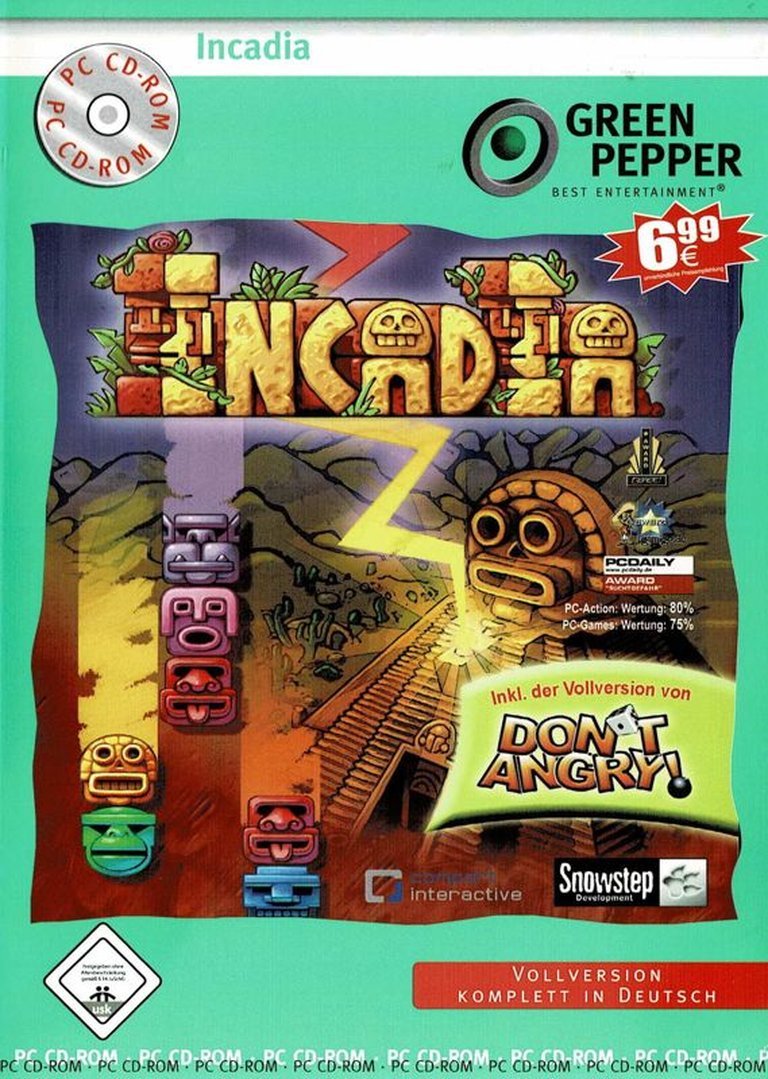
Incadia is a Columns-style tile matching game set in an Inca theme, where players arrange falling columns of tiles at the bottom of the screen to create matches and clear lines, with various special tiles and obstacles adding complexity to the gameplay.
Gameplay Videos
Guides & Walkthroughs
Incadia: A Forgotten Gem of the Puzzle Genre
Introduction
Released in 2004, Incadia is a Columns-style tile-matching puzzle game that has largely faded from the gaming spotlight. Developed by Snowstep Development and published by GameHouse, Inc., this game brought a fresh wave of excitement to the puzzle genre with its innovative mechanics and Inca-themed setting. This review aims to provide an in-depth analysis of Incadia, exploring its development history, gameplay mechanics, narrative, and overall impact on the gaming industry.
Development History & Context
Incadia was created in a period when the puzzle game genre was highly competitive, with titles like Tetris and Columns dominating the market. Snowstep Development, a relatively small studio, sought to carve out a niche with Incadia by combining traditional puzzle gameplay with unique elements. The game’s development was marked by the technological constraints of the time, with the Windows version being released as a downloadable shareware title. The team, comprising 12 members, worked under the guidance of producer Garrett Link, with notable contributions from quality assurance testers like Bill Beach and Brandon Godfrey.
The gaming landscape in 2004 was diverse, with the rise of 3D graphics and complex narratives in mainstream games. However, puzzle games remained a staple, with many developers focusing on casual, accessible experiences. Incadia’s release as a downloadable title was strategic, targeting players looking for quick, engaging experiences.
Narrative & Thematic Deep Dive
Incadia’s narrative is relatively simplistic, with the game divided into 20 “adventure” levels that gradually introduce players to its mechanics and themed elements. The Inca setting is used to create an immersive atmosphere, with totem heads and other culturally inspired elements incorporated into the gameplay. The story is not a primary focus, serving instead as a backdrop to the puzzle gameplay.
The game’s themes revolve around progression and challenge, with players needing to clear levels and achieve high scores. The use of special power tiles, such as the dynamite stack and hammer, adds a layer of strategy and complexity to the game. The bonus levels, where players must cover holes in the background with tiles, introduce a new challenge and break the monotony of the main gameplay.
Gameplay Mechanics & Systems
Incadia’s core gameplay is based on the Columns formula, where columns of three tiles fall from the top of the screen, and players must arrange them at the bottom to create matches. The game introduces several innovative mechanics, including special power tiles that can be used to clear rows, columns, or specific colors. The “totem” tile, which grants access to bonus levels when assembled vertically, adds a new layer of depth.
The gameplay is real-time, with the columns falling at a gradually increasing speed as the game progresses. Players can move and position the columns using the mouse, and swap the order of the tiles with the right mouse button. The controls are intuitive, making the game accessible to new players.
However, the game is not without its flaws. The fixed resolution was a point of contention among critics, limiting the game’s flexibility and appeal to some players. The relatively short campaign, with only 40 levels across the arcade and adventure modes, also limited the game’s replay value.
World-Building, Art & Sound
The Inca-themed setting is a unique aspect of Incadia, with the game’s art direction drawing heavily from Inca culture. The totem heads and other elements are well-integrated into the gameplay, creating an immersive atmosphere. The visuals, while not cutting-edge, are simple and effective, with clear tile graphics and a clean interface.
The sound design is relatively minimalist, with basic sound effects accompanying tile matches and other gameplay events. While not particularly memorable, the sound design complements the game’s atmosphere without being intrusive.
Reception & Legacy
Incadia received mixed reviews upon its release, with an average critic score of 60% based on four ratings. Reviewers praised the game’s addictive gameplay and innovative mechanics, with PC Action (Germany) noting its “Suchtfaktor” (addiction factor). However, critics also highlighted the game’s short length and fixed resolution as significant drawbacks.
Despite these limitations, Incadia has maintained a loyal following, with players drawn to its challenging gameplay and high score tables. The game’s influence on subsequent puzzle titles is difficult to quantify, but it remains an interesting footnote in the evolution of the genre.
Conclusion
Incadia is a game that, despite its flaws, offers a unique and engaging puzzle experience. While it may not have achieved mainstream success, its innovative mechanics and themed setting make it a notable title in the history of puzzle games. As a snapshot of early 2000s gaming culture, Incadia provides insight into the casual, downloadable game market of the time. For players looking for a challenging puzzle experience with a touch of cultural flair, Incadia remains worth exploring.