
- Release Year: 2020
- Platforms: Nintendo Switch, PlayStation 4, Windows
- Publisher: Visualnoveler
- Developer: Visualnoveler
- Genre: Role-playing, RPG
- Perspective: Behind view
- Game Mode: Single-player
- Gameplay: Action RPG, Puzzle elements
- Setting: Fantasy
- Average Score: 67/100
Description
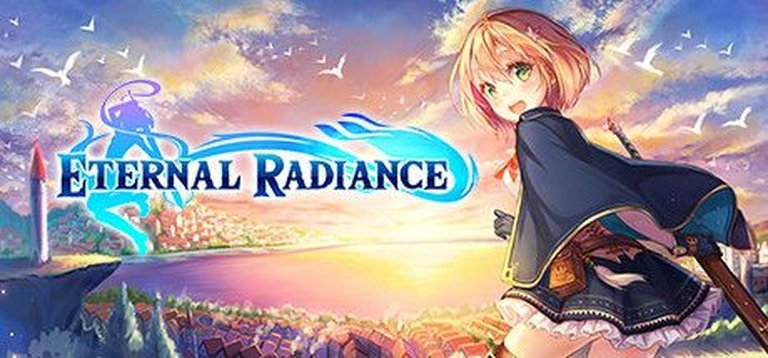
Eternal Radiance is an action RPG that blends anime-inspired visuals with puzzle-solving and direct control gameplay, set in a fantasy world where players follow Celeste on her journey to become a legendary knight. The game combines visual novel segments with adventure-based exploration and combat, presenting a story of battling beasts and bandits while uncovering a conspiracy that threatens the land.
Gameplay Videos
Where to Buy Eternal Radiance
Cracks & Fixes
Guides & Walkthroughs
Reviews & Reception
opencritic.com (65/100): The finished product is fine, and quite nice to look at, but it is something that makes me want to play something else instead.
metacritic.com (55/100): Eternal Radiance is a nice little visual novel with some mediocre action RPG elements.
ladiesgamers.com : Overall, I liked Eternal Radiance.
thedrastikmeasure.com : upon playing Eternal Radiance, I was honestly underwhelmed.
Eternal Radiance: A Tale of Ambition and Compromise in the Indie RPG Landscape
Introduction
In the crowded pantheon of indie RPGs, Eternal Radiance emerges as a fascinating study in genre fusion and developer ambition. Developed by the Taiwanese studio Visualnoveler, this hybrid title attempts to bridge the gap between visual novels and action RPGs, promising the narrative depth of the former with the visceral combat of the latter. Yet, as we journey through Celeste’s path to knighthood, we uncover a tale of both promise and compromise—a game where stunning artistry occasionally clashes with mechanical simplicity, and heartfelt character dynamics struggle against repetitive gameplay loops. This review will dissect Eternal Radiance through its development history, narrative tapestry, mechanical foundations, and artistic execution, ultimately assessing its place in the modern RPG canon and its legacy for Visualnoveler’s future endeavors.
Development History & Context
The Vision of Visualnoveler
Founded as a studio with roots in visual novels, Visualnoveler embarked on Eternal Radiance as a deliberate pivot into uncharted territory. As revealed in their 1Print Games interview, the project was born post-release of their previous visual novel, driven by a desire to “try something new” and leverage their team’s passion for classic JRPGs like Kingdom Hearts and Ys VIII. This dual heritage—visual novel storytelling meets action RPG combat—became the game’s core identity, with developers explicitly stating their goal: “to merge visual novel scenes for the story and 3D action combat for gameplay.”
Technological Constraints and Creative Cuts
Built on Unity, the game faced significant budgetary hurdles. The developer interview candidly admits the high costs of RPG development, noting “costs add up quickly as we add in more content such as new characters.” This reality forced painful sacrifices: extended story arcs were truncated, party member talent trees were scrapped entirely, and late-game content underwent severe rewrites to fit a manageable scope. The Steam changelog (v1.01R1) reveals a studio in constant refinement—optimizing performance, adjusting enemy damage, and adding features like air attacks post-launch—demonstrating a commitment to polish despite resource limitations.
The 2020–2022 Gaming Landscape
Eternal Radiance arrived during a transitional period for RPGs. On PC, it followed the explosive success of Hades and early access darlings like Valheim, while its 2022 Switch release coincided with the console’s golden age of indie RPGs, competing against titles like Trials of Mana and EarthBound Beginnings+. Its anime-inspired aesthetic positioned it alongside the burgeoning “c-core” trend, but its hybrid nature made it a niche offering amid a market dominated by pure action or narrative experiences. The studio’s decision to port to consoles, announced in their Steam announcements (December 2020), reflected a savvy bid to capture the Switch’s portable RPG audience—a demographic later validated by the platform’s 60% critic score average.
Narrative & Thematic Deep Dive
The Plot’s Pillars: Duty and Redemption
At its heart, Eternal Radiance is a coming-of-age story. Celeste, a squire of the Ashen Order, fails her initiation quest when a thief, Kylia, steals an artifact, sparking a continent-spanning pursuit. This premise evolves into a meditation on institutional duty versus personal morality. Celeste’s journey—marked by choices like saving an innkeeper over securing an artifact—culminates in a final, poignant decision: abandoning critical intelligence to save Kylia, earning her knighthood despite her unconventional priorities. This “friend-or-idol” dilemma bookends her arc, subverting typical RPG heroism by valorizing compassion over pragmatism.
Character Dynamics and Thematic Resonance
The trio of Celeste, Ruby, and Valana embodies the game’s thematic core:
– Celeste: The “skilled but naive” knight whose textbook knowledge fails in real-world dilemmas. Her growth from rigid rule-follower to compassionate leader mirrors the game’s critique of institutional rigidity.
– Valana: The “jerk with a heart of gold” mercenary, whose guarded exterior hides trauma from a mercenary team massacre. Her arc explores trust and redemption, particularly in her dynamic with Ruby.
– Ruby: The researcher whose paranoia strains the group, reflecting the game’s theme of how fear corrupts judgment. Her Famous Ancestor, Zaneth, inadvertently caused the Akleim Cataclysm—parallels to the protagonist’s own potential for well-intentioned harm.
Supporting characters deepen these themes. Quinn’s arc—from hostile superior to reconciled friend—examines forgiveness, while Eldareth’s Well-Intentioned Extremism (destroying the Shadowborn to avenge his village) raises questions of cyclical violence. The narrative’s strength lies in these character-driven moments, though some critics note the overarching plot feels “undercooked” (Keengamer), relying heavily on familiar tropes.
Dialogue and Worldbuilding
Dialogue is split between earnest character exchanges and optional skits inspired by the Tales series. Celeste’s interactions with companions—like Valana sarcastically rejecting a play’s script—inject humor, while worldbuilding is woven through NPC dialogues that evolve with the plot. The ancient Akleim civilization’s mysteries drive the narrative, though their history lacks the depth of more ambitious RPGs, with the Media Mix Wiki acknowledging its “elusive past” remains largely unresolved.
Gameplay Mechanics & Systems
Action Combat: Accessibility vs. Depth
The combat system embodies the game’s central tension. Inspired by Ys VIII, it emphasizes real-time action with Celeste wielding quick/heavy attacks, dodges, and timed parries. “Just Frame” mechanics reward precision—perfect dodges grant speed boosts, while perfect guards enable critical hits—but the AI enemies’ predictability (as noted by Sequential Planet) undermines challenge. Bosses like Kylia and Eldareth employ telegraphed patterns, reducing encounters to memorization exercises.
The party system adds strategic layers. Valana and Ruby provide support, activating “Finisher” skills when their meters fill, but their lack of direct control limits player agency. Equipment and enchanting offer customization, with scrolls adding passive stats, though The Drastik Measure criticizes the “minimal difference” early talent tree makes until significant leveling. Difficulty settings (Easy/Normal/Hard) adjust damage multipliers but Hard mode’s lack of MP healing at save points feels punitive rather than engaging.
Narrative Integration and Quest Design
Visual novel segments dominate the first 30 minutes, with Celeste’s decisions occasionally yielding rewards. However, LadiesGamers notes the “overly bloated” text disrupts pacing, while side quests—largely fetch tasks—lack meaningful integration into the main plot. The “formulaic loop” of “collect side quests, explore, return to town” (LadiesGamers) highlights a design disconnect between narrative and gameplay.
UI and Technical Polish
The UI is functional but inconsistent. Story segments allow free saving, but action areas restrict saves to designated points, punishing exploration. The mini-map fails to clarify objectives, forcing players to “fight waves of enemies while trying to find where to go” (Sequential Planet). Post-launch patches addressed collision and camera issues, but texture jank persists on console ports (Keengamer).
World-Building, Art & Sound
Visual Duality: Still Life and Motion
Eternal Radiance‘s art direction is its crowning achievement. Visual novel segments feature “gorgeous” character portraits (Keengamer) with meticulous linework and expressive shading, while combat shifts to colorful 3D environments. This contrast creates a striking aesthetic—TVTropes compares it to Code Lyoko‘s blend of 2D/3D—but the transition highlights disparities: character art outshines battlefields, which lack detail and suffer from enemy repetition. The Akleim ruins and fantasy towns (e.g., Ancora) evoke classic JRPGs, though environments feel small despite their scale.
Sound Design: Functional but Forgettable
The soundtrack fits the “lighthearted and humorous” tone described by the developer but lacks memorability. Keengamer notes “ambience and very little else,” while The Drastik Measure praises its “fitting” nature. Sound effects grow repetitive, with “attack sounds” and “damage cues” lacking distinctiveness. Voice acting is absent, relying entirely on text, which limits emotional resonance.
Atmosphere and Thematic Cohesion
The art reinforces narrative themes. Celeste’s vibrant armor symbolizes her idealism, while Shadowborn locales use muted palettes to reflect moral ambiguity. The Akleim artifacts’ corrupting influence visualizes “With Great Power Comes Great Insanity” (TVTropes), though the game rarely explores this visually beyond enemy transformations.
Reception & Legacy
Launch and Critical Consensus
Upon PC release (December 2020), Eternal Radiance scored a modest 60% on MobyGames based on three reviews. Chalgyr’s Game Room (65%) praised the “enjoyable” hybrid experience on Switch, while LadiesGamers (60%) called it “solid but formulaic.” Noisy Pixel (55%) criticized its “subpar elements,” and Sequential Planet awarded a low 6, citing combat monotony. Metacritic’s 2022 Switch release aggregated to “tbd” with Pocket Tactics decrying “clunky combat” and Digitally Downloaded deeming it “fine but bland.”
Player Response and Longevity
Steam players offered warmer reception, awarding an 83/100 “Very Positive” score based on 469 reviews. Highlights included “satisfying” combat (Steambase) and “great character interaction” (Keengamer), while negatives focused on “repetitive quests” and “low enemy variety.” The game’s 13-hour length and accessibility made it a palatable entry point for JRPG newcomers.
Legacy and Influence
Eternal Radiance holds a modest legacy as a proof-of-concept for hybrid RPGs. Its success enabled Visualnoveler’s follow-up, Nezori (a “fox-girl RPG” teased in Steam announcements), but it never achieved genre-defining status. Influences are apparent in titles like Eternal Light (2024), which adopted its anime aesthetic, while its emphasis on character-driven stories resonates with indie RPGs like Citizen Sleeper. Yet, its combat and quest design remain cautionary tales about prioritizing narrative over gameplay depth.
Conclusion
Eternal Radiance stands as a testament to the risks and rewards of genre fusion. Visualnoveler crafted a visually stunning, narratively rich experience where Celeste’s journey of knighthood resonates far more deeply than her combat encounters. The game excels in its character dynamics and art direction, with Celeste’s growth and the trio’s camaraderie offering genuine emotional weight. However, these strengths are undermined by gameplay systems that feel underdeveloped—combat devolves into repetitive hack-and-slash, and quest design lacks innovation.
For fans of character-driven stories and JRPG aesthetics, Eternal Radiance is a worthwhile, if flawed, adventure. Its legacy lies not in revolutionizing the genre, but in embodying the indie spirit of experimentation—a hybrid that dares to blend the novel and the action, even if it doesn’t always perfect the blend. As Visualnoveler moves forward, Eternal Radiance serves as both a stepping stone and a reminder: ambition must walk hand-in-hand with polish to achieve true radiance.
Final Verdict: A flawed but fascinating hybrid, Eternal Radiance shines brightest in its narrative heart and artistic vision, leaving gameplay ambition only half-realized.