
- Release Year: 2022
- Platforms: Windows
- Publisher: Bulkhead Interactive
- Developer: Bulkhead Interactive
- Genre: Action
- Perspective: 1st-person
- Game Mode: Single-player
- Gameplay: Platform, Shooter
- Setting: Cyberpunk, dark sci-fi
Description
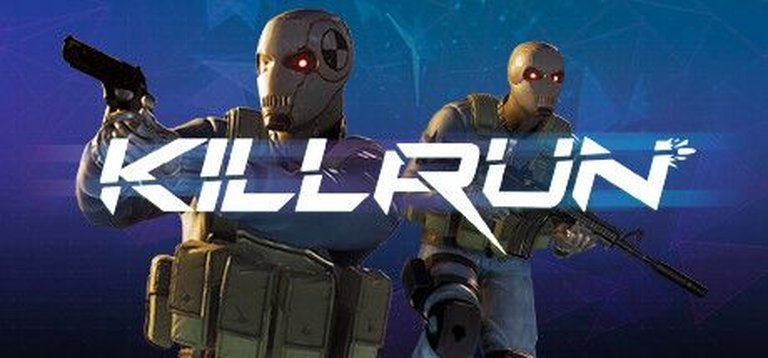
KILLRUN is a first-person shooter set in a cyberpunk/dark sci-fi environment, blending parkour mechanics with speedrunning challenges. Players race to set the best times by creating custom routes, mastering techniques like strafing and sliding, while engaging in run-and-gun gameplay to beat pro times and unlock weapon packs as they progress through replayable FPS levels.
Gameplay Videos
Where to Buy Killrun
PC
Killrun Free Download
Reviews & Reception
steamcommunity.com : Good game, but it’s basically the same as the free PROMOD beta with just a few new maps, which feels very shady.
Killrun: Review
Introduction
In the hyper-competitive landscape of 2022’s indie FPS scene, Killrun emerged as a defiant, minimalist manifesto from UK-based studio BULKHEAD. Promising a “run n’ gun parkour speedrunner” experience, it distilled the studio’s decade-long obsession with pure movement and mechanical precision into a $4.99 Steam release. Born from their seminal Call of Duty 4 mod revival project “Promod,” Killrun ultimately stood as both a technical showcase and a controversial pivot away from multiplayer ambitions. This review dissects Killrun not merely as a product, but as a cultural artifact—an artifact capturing the tensions between indie experimentation, player expectations, and the enduring appeal of arcade-like perfectionism. Its legacy, though fraught with debate, lies in its unflinching commitment to distilled FPS mechanics.
Development History & Context
Studio and Vision
BULKHEAD, the Derby-based studio behind Battalion 1944 and The Turing Test, positioned Killrun as the culmination of their “Feelback” philosophy—the meticulous refinement of movement, shooting, and environmental interaction. As Creative Director Mark Pinney stated in a Games Press release, Killrun was “born out of our passion project ‘Promod’,” a multiplayer mod for Call of Duty 4 famed for its fluid gunplay. Originally conceived as a revival of that community-driven experience, the game underwent a radical transformation during development. The studio shelved multiplayer entirely, pivoting to a single-player “prototype playground” designed to test “wacky ideas” in玩家’s hands. This shift, controversial among early backers, reflected BULKHEAD’s transition from an indie studio to one prepping AAA titles like WARDOGS: King of the Hill.
Technological and Era-Specific Constraints
Built on Unreal Engine 4, Killrun embraced technical constraints as design choices. Flat-shaded environments, inspired by competitive Call of Duty maps, stripped visual clutter to enhance target visibility—a necessity for high-speed gameplay. The game’s “Jumper” mode (dedicated to pacifist parkour) and minimalist UI underscored the era’s trend toward distilled, replayable experiences. Released on August 25, 2022, it capitalized on post-pandemic demand for solo challenges amid crowded live-service titles, targeting a niche of speedrunners and movement purists.
Narrative & Thematic Deep Dive
Plot and Setting
Killrun dispenses with traditional narrative, substituting it with a conceptual framework: players navigate an “infected simulation” run by the Phantech corporation, battling robotic AI in cyberpunk-inspired arenas. The setting—a “prototype playground”—is deliberately ambiguous, functioning as a testing ground for movement mechanics rather than storytelling. Levels are abstract challenges, devoid of cutscenes or exposition. This absence forces thematic interpretation: the sterile environments and robotic enemies evoke critiques of corporate control, while the game’s focus on optimization mirrors the dehumanizing pressures of digital labor.
Characters and Dialogue
No named characters or dialogue exist. The player is a silent agent, enemies are faceless turrets, and the environment is the sole “character.” This void amplifies the game’s core theme: the primacy of mechanical skill over narrative immersion. As one Backloggd reviewer noted, “funny how removing stuff from cod can actually make it a lot better”—highlighting how stripping away lore paradoxically heightens the experience for players seeking purity.
Underlying Themes
The game explores obsession and perfectionism through its star-collecting and time-trial systems. Each level is a puzzle to be solved, encouraging iterative mastery. The “Jumper” mode deepens this by separating “kill” from “run,” pacifism becoming its own form of triumph. Themes of simulation and reality permeate the gameplay, as players grind against “pro times”—ghostly representations of ideal performance—echoing real-world speedrunning culture.
Gameplay Mechanics & Systems
Core Loops and Combat
Killrun revolves around two synergistic loops: speedrunning and “run n’ gun” combat. Players race through over 60 maps, collecting stars by creating custom routes via strafe-hopping, sliding, and wall-bounces. The shooting, BULKHEAD’s signature “Feelback” system, prioritizes tactile feedback—bullet impacts, recoil, and reload animations are tuned for visceral satisfaction. Weapons range from SMGs to sniper rifles, unlocked via “MOD KITS” earned by beating pro times. However, combat is secondary to movement; encounters are brief, and the “Jumper” mode renders it optional entirely.
Character Progression and Innovation
Progression is skill-gated, not leveled. Players unlock weapon packs by mastering leaderboards, turning each map into a persistent challenge. The game’s innovation lies in merging parkour and shooting: wall-bounces enable aerial snipes, while strafe-hopping creates bullet-dodging trajectories. Yet, systems like the checkpoint save (inspired by CoD Jumper) lack QoL features; one Backloggd review lamented the absence of a quick-restart key, forcing players to navigate menus after failed attempts.
UI and Flaws
The UI is brutally minimalist, displaying only time, stars, and weapon swaps. While aiding focus, it obscures critical information like enemy health or objective clarity. Level design also faces criticism: some Backloggd players reported “blocky” bounces inconsistent with CoD’s momentum-based physics, particularly in window-jump challenges. These flaws, however, are inherent to its prototype ethos—a playground for ideas, not a polished product.
World-Building, Art & Sound
Setting and Atmosphere
Killrun’s world is a cyberpunk dreamscape: neon-drenched corridors, floating platforms, and glitched-out data zones evoking a “dark sci-fi” simulation. Despite the “infected” premise, environments lack narrative context, serving purely as obstacle courses. The atmosphere is one of controlled chaos—stark geometric shapes contrast with explosive particle effects, creating a visual rhythm that mirrors the gameplay’s stop-start intensity.
Visual Direction
Art direction prioritizes functionality over fidelity. Flat-shaded enemies and environments, a nod to competitive FPS tradition, ensure targets are instantly recognizable. This extends to user-defined “stylized” and “colorful” tags on Steam, with vibrant palettes offsetting the sterile sci-fi backdrop. It’s a functional beauty, designed for speed, not spectacle.
Sound Design
Powered by Wwise, the audio is a study in subtle reinforcement. Gunshots deliver satisfying “cracks,” and movement generates tactile “thuds,” cementing the “Feelback” philosophy. Environmental ambience is sparse—hums of machinery and static bursts reinforce the simulation theme—yet the lack of dynamic music leaves long stretches of silence, heightening focus but risking monotony. As a Steambase reviewer noted, the sound design “makes every bullet rip through the simulation,” even if the overall soundscape is utilitarian.
Reception & Legacy
Launch and Player Sentiment
Killrun launched with “Mostly Positive” Steam reviews (70% of 150), praising its mechanics but questioning its scope. Player scores on Backloggd (2.8/5) and Steambase (65/100) reflected division: hardcore speedrunners lauded its purity, while others criticized its “shady” shift from multiplayer. A common refrain, echoed in a Backloggd review, lamented the game’s “lack of levels” after the free Promod beta’s promise. Controversy surrounded BULKHEAD’s decision to monetize what players perceived as a stripped-down version of a previously free project.
Evolution of Reputation
Over time, Killrun found its niche. PlayTracker estimates 118K players, with median playtime of 1.3 hours—suggesting high engagement among enthusiasts. Its legacy is dual: it’s revered for pioneering hybrid parkour-FPS mechanics but derided as an unfinished experiment. As one Backloggd user summarized, “it’s fun, but just doesn’t have enough levels.”
Influence and Industry Impact
BULKHEAD repurposed Killrun’s systems for WARDOGS, proving the “Feelback” framework’s viability. More broadly, it revitalized the speedrunner genre, inspiring titles like Dusk and Prodeus to prioritize mechanical depth. Yet, its cautionary tale—balancing player expectations with iterative design—reminds studios that prototypes marketed as full products risk damaging trust.
Conclusion
Killrun stands as a brilliant, flawed artifact of 2022’s indie renaissance. As a pure expression of FPS movement and gunplay, it’s unmatched—each strafe-hop and noscope shot a testament to BULKHEAD’s technical prowess. Yet, its narrative void and controversial development history underscore the perils of ambition over polish. For speedrunning purists, it’s a cult classic; for broader audiences, a curio. In the end, Killrun’s place in history is secured not as a masterpiece, but as an uncompromising experiment—a game that dared to ask, “What if Call of Duty was distilled to its most essential joy?” For that, it deserves both admiration and scrutiny, forever etched in the annals of FPS evolution.