
- Release Year: 2006
- Platforms: Windows
- Publisher: HPS Simulations
- Developer: HPS Simulations
- Genre: Strategy, Tactics
- Perspective: Top-down
- Game Mode: Single-player
- Gameplay: Flight, Wargame
- Setting: World War II
- Average Score: 57/100
Description
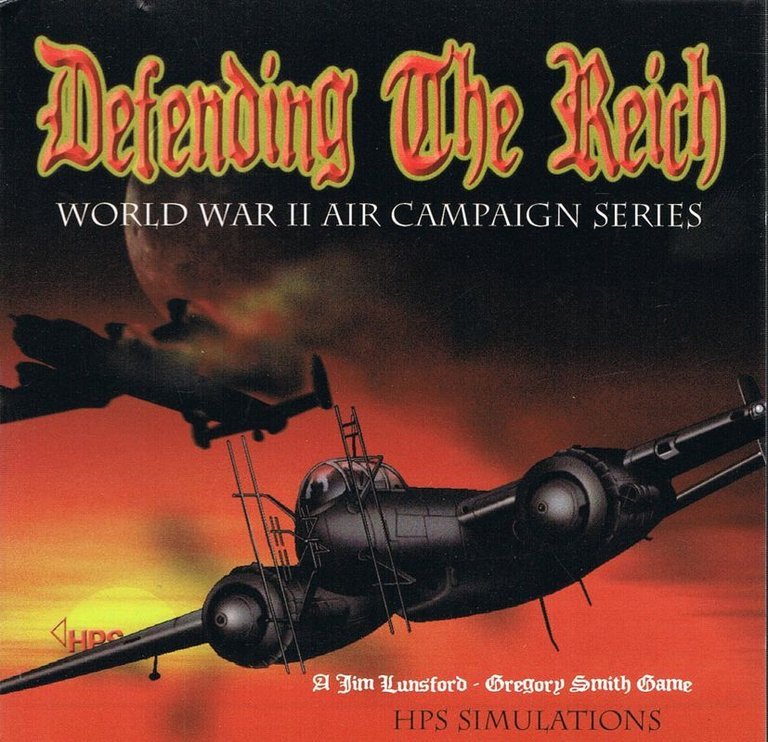
Defending the Reich is a World War II aerial strategy game where players command either the RAF or Luftwaffe between 1943-1944. As the RAF, the goal is to destroy German infrastructure, while as the defender, players protect cities and factories. The game features top-down tactical gameplay, allowing players to plan bomber routes, select payloads, and position anti-aircraft guns and interceptors.
Gameplay Videos
Patches & Updates
Reviews & Reception
forums.matrixgames.com : It was very simplistic.
Defending the Reich: Review
Introduction
Released in 2006 by HPS Simulations, “Defending the Reich” is a World War II air campaign simulation game that pits the player against the historical backdrop of the aerial war between the Royal Air Force (RAF) and the Luftwaffe from 1943 to 1944. Designed by Jim Lunsford and Gregory Smith, the game is part of the World War II Air Campaign Series, aiming to simulate the operational level of air warfare during this critical period. Players can choose to command either the RAF Bomber Command or the Luftwaffe’s Nachtjagdflieger (night fighters), engaging in a cat-and-mouse game of strategic bombing and defense.
This review will dissect the game’s development history, narrative and thematic depth, gameplay mechanics, world-building and aesthetic elements, reception, and legacy, to provide a comprehensive analysis of “Defending the Reich” and its standing in the pantheon of video games.
Development History & Context
“Defending the Reich” was developed and published by HPS Simulations, a studio known for its wargames. The game was designed by Jim Lunsford and Gregory Smith, with Lunsford bringing his experience from other wargames and Smith contributing his insight into air campaign simulations. The game was released in September 2006 for Windows.
The development context was marked by the studio’s aim to create a game that would appeal to fans of air warfare simulations without overwhelming them with complexity. The designers sought to balance simplicity with depth, ensuring the game was accessible yet challenging.
Technologically, the game was constrained by the hardware and software limitations of its time, utilizing a CD-ROM and requiring a relatively modest PC specification to run. This period was also seeing the rise of other air combat and strategic games, setting a competitive landscape for “Defending the Reich.”
Narrative & Thematic Deep Dive
The game’s narrative is centered around the night bombing campaign conducted by the RAF against Nazi Germany and the Luftwaffe’s efforts to defend against these raids. The player takes on the role of either Air Marshal Arthur Harris, commanding RAF Bomber Command, or Generalmajor Josef Schmidt, in charge of the Nachtjagd (Nightfighter Command).
The gameplay revolves around planning and executing bombing raids for the RAF or defending against them as the Luftwaffe. The game incorporates various historical elements, such as the development and deployment of radar technology, electronic countermeasures, and the introduction of new aircraft and tactics.
The theme of “Defending the Reich” is deeply rooted in the strategic and operational aspects of air warfare during World War II. It explores the cat-and-mouse game between the bombers and the night fighters, reflecting the historical significance of this campaign in the outcome of the war.
Gameplay Mechanics & Systems
Gameplay in “Defending the Reich” is turn-based, with each turn representing a week in the campaign. The game is divided into four phases: planning, combat, recovery, and victory point calculation. During the planning phase, players allocate resources, plan missions, and make strategic decisions.
The combat phase resolves the air battles, with the game modeling individual aircraft engagements while the player makes decisions at the squadron or gruppe level. The recovery phase updates the status of units and airfields, and the victory point calculation assesses the success of each side based on their objectives.
The game features a mix of strategic resource management and tactical decision-making, requiring players to balance immediate objectives with long-term strategies.
World-Building, Art & Sound
“Defending the Reich” presents a straightforward, functional aesthetic, with maps and statistical displays dominating the game’s visuals. The UI is designed to facilitate the management of air campaigns, with minimal but effective use of sound to enhance the atmosphere.
The game’s setting is abstract, focusing on the operational level of war rather than detailed, realistic depictions of air battles. This abstraction allows players to focus on the strategic and tactical challenges of commanding air forces.
Reception & Legacy
Upon release, “Defending the Reich” received a mixed reception. Critics praised its depth and historical accuracy but noted its simplicity and lack of flashy graphics compared to other titles in the genre.
The game’s legacy is marked by its contribution to the niche of air warfare simulations. While it may not have achieved mainstream success, it remains a respected title among enthusiasts of the genre.
Conclusion
“Defending the Reich” is a notable entry in the genre of air warfare simulations, offering a deep and challenging experience that captures the strategic and operational complexities of the night bombing campaign during World War II. Its design reflects a careful balance between simplicity and depth, making it accessible to new players while retaining enough complexity to engage experienced gamers.
In the context of video game history, “Defending the Reich” represents a significant effort to simulate a critical aspect of World War II, contributing to the educational and entertainment value of the wargaming genre. Its influence can be seen in later air campaign simulations, and it remains a title of interest for those looking to explore this aspect of military history through gaming.