
- Release Year: 2006
- Platforms: Windows
- Publisher: Idee Software
- Developer: Idee Software
- Genre: Compilation
- Game Mode: Single-player
- Average Score: 89/100
Description
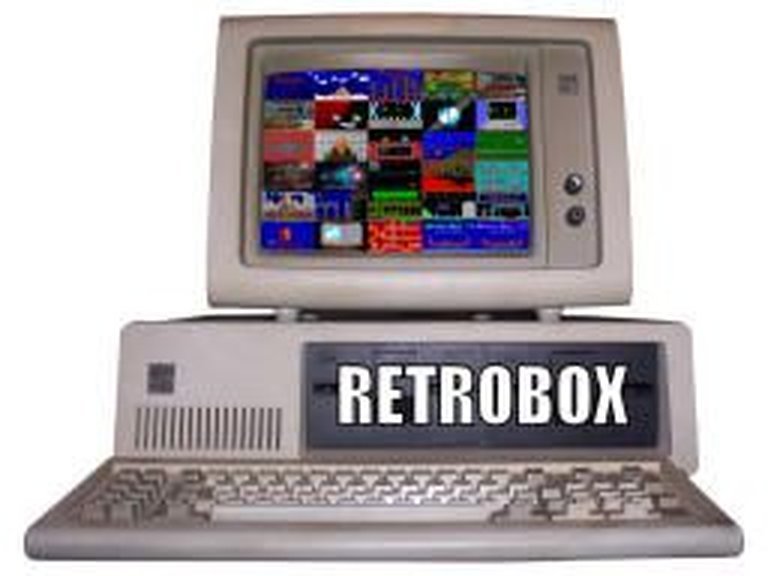
Retrobox is a compilation of 18 DOS games from Idee Software, brought to Windows and run through DOSBox. It includes the full versions of games that were originally shareware, where available. The collection features titles such as Aktie-Bal, Asteroïde, The Geddies: De verloren diamanten, and others.
Retrobox Reviews & Reception
engadget.com (89/100): Resistance: Fall Of Man (89/100)
Retrobox: Review
In an era defined by high-definition spectacles and sprawling open worlds, the 2006 compilation Retrobox stands as a poignant time capsule, a digital museum of shareware history lovingly curated by Idee Software. This anthology gathers 18 DOS-era titles—many of them lost to time without this archival effort—into a single package, preserved through DOSBox for modern Windows systems. Its legacy lies not in revolutionary innovation but in its role as a cultural artifact, offering unfiltered access to the foundational experiments of 1990s game design. Yet, while its historical value is undeniable, Retrobox remains a double-edged sword: a vital preservation effort whose technical limitations and dated mechanics underscore the chasm between past and present gaming sensibilities. This review deconstructs the compilation’s significance, exploring its context, contents, and enduring impact as both a historical document and a playable artifact.
Development History & Context
Idee Software’s Retrobox emerged from a confluence of two pivotal moments in gaming history: the waning days of shareware culture and the rise of digital preservation. Released on August 17, 2006, the compilation was born from a pragmatic need to rescue obscure DOS games from obsolescence. Many titles—such as Aktie-Bal (1994), Asteroïde (1992), and Kerker (1994)—were originally distributed as shareware freeware, but their full versions had vanished over time. Idee Software’s team, led by figures like Hendrik Knaepen and Jan Van Nieuwerburgh, undertook the arduous task of recovering these lost files, ensuring that Retrobox contained “the full versions for the games were the full versions were not lost.”
Technologically, the compilation was constrained by its era. Running on Windows XP and Vista, Retrobox relied on DOSBox, an emulator that translated 16-bit DOS code into 32-bit Windows executables. This approach solved compatibility issues but introduced inherent limitations: pixel-perfect accuracy was elusive, and performance varied across titles. The gaming landscape of 2006 was dominated by AAA releases like The Elder Scrolls IV: Oblivion and Prey, which showcased the id Tech 4 engine’s dynamic portals and gravity manipulation—a stark contrast to the text-based menus and keyboard-dependent controls of Retrobox’s included games. Idee Software’s vision was not to compete with modern giants but to serve as digital archivists, preserving the raw, unfiltered creativity of a pre-3D era. The absence of modern conveniences like save states or rewinding gameplay further grounded the compilation in its historical context, forcing players to engage with games as they were originally intended.
Narrative & Thematic Deep Dive
Retrobox defies cohesive narrative analysis, serving instead as a mosaic of fragmented storytelling across its 18 titles. Yet, common threads emerge from this eclectic assortment: themes of isolation, exploration, and transformation recur across genres. In Aktie-Bal, a series of puzzle games, players manipulate grids of colored blocks, reflecting themes of order and chaos. The Info Harry titles (1994–1995), conversely, blend detective narratives with wordplay, casting players as a sleuth solving cryptic clues—echoing the cyberpunk ethos of information as power.
The compilation’s most overt narrative depth lies in The Geddies: De verloren diamanten (1995) and De muur (1992). The Geddies follows a treasure hunt through surreal, dreamlike landscapes, where dialogue is sparse but evocative, using environmental storytelling to convey mystery. De muur (“The Wall”), a minimalist puzzle game, uses its titular barrier as a metaphor for psychological confinement, with players chipping away at its structure to reveal hidden truths. Even lighter titles like WoordMaker (1996)—a Dutch anagram game—embed thematic nuance, framing language as both a tool and a prison.
Collectively, Retrobox’s narratives are less about linear plots and more about experiential abstraction. They reflect the experimental spirit of 1990s shareware, where gameplay mechanics often superseded storytelling. The absence of voice acting or cutscenes places the burden of interpretation on the player, turning each game into a personal allegory about problem-solving and persistence—a stark contrast to the cinematic narratives dominating 2006 releases like Final Fantasy XII.
Gameplay Mechanics & Systems
The core appeal of Retrobox lies in its mechanical diversity, a testament to the experimental ethos of 1990s shareware. Gameplay loops range from twitch reflexes (Asteroïde, a 1992 asteroid clone) to cerebral strategy (Chaos, a 1994 chess variant). Each title operates within its own rigid system, demanding adaptation from players accustomed to modern RPG or FPS conventions.
Innovative mechanics are rare but telling. B-7 (1995) introduces a grid-based tactical combat system where positioning trumps raw stats, foreshadowing the tactical RPG boom of the late 2000s. Mormels (1997), an episodic adventure, employs branching dialogue choices—a feature ahead of its time in a pre-BioWare era. Conversely, Speel een kaart (“Play a Card”) suffers from clunky interface design, relying on mouse clicks for card selection in a DOSBox environment that struggles with precise input.
Character progression is minimal and often opaque. Titles like Letter Zetter (1994), a word-construction game, offer no leveling system; mastery comes from rote memorization of letter combinations. This contrasts sharply with contemporary games like Oblivion, where skill trees and dynamic scaling defined progression. The UI, uniformly bare-bones across all titles, prioritizes functionality over accessibility, with text menus and monochrome color schemes dominating. DOSBox’s performance further compounds these issues, with occasional stutters or input lag—issues absent in native 2006 titles like Prey, which leveraged id Tech 4’s optimization.
World-Building, Art & Sound
Retrobox’s visual and auditory design is a masterclass in “imperfect preservation.” The compilation’s art direction is inherently tied to the limitations of VGA and EGA palettes, resulting in a muted, pixelated aesthetic. De muur uses stark monochrome contrasts to heighten its oppressive atmosphere, while Asteroïde employs vibrant greens and reds for its space backdrop—a visual language that feels both nostalgic and archaic.
Sound design is similarly emblematic of its era. Beep-heavy chiptunes dominate (Aktie-Bal’s cheerful jingle vs. Kerker’s ominous drones), with MIDI renditions of classical themes in Chaos underscoring the game’s cerebral tone. DOSBox’s audio emulation occasionally distorts these tracks, but the imperfections add to the compilation’s authenticity. The absence of voice acting or ambient soundscapes—present in games like S.T.A.L.K.E.R.’s 2007 release—heightens the sense of isolation, turning each game into a self-contained auditory world.
World-building is often implied rather than explicit. The Geddies’ environments, though rudimentary, suggest a rich lore through environmental details (e.g., crumbling ruins hinting at an ancient civilization). Conversely, abstract titles like WoordMaker eschew setting entirely, reducing the world to a grid of letters. This juxtaposition of concrete and abstract mirrors the broader 2006 gaming landscape, where titles like Syndicate (1993) offered dystopian narratives, while Retrobox prioritizes distilled gameplay experiences.
Reception & Legacy
Retrobox arrived in 2006 with near-critical silence. MobyGames’ own review section remains barren decades later, with no critic or user reviews logged—a fate shared by many niche compilations of its era. Commercially, it left little impact in a market dominated by console juggernauts and high-profile PC releases. Yet, its legacy is quietly profound. As one of the first curated compilations of DOS shareware, it anticipated the rise of digital preservation services like GOG.com, which would later rescue similar titles with enhanced emulation and modern interfaces.
The compilation’s influence is most evident in its role as a historical document. Games like Mormels and Info Harry, which might have vanished entirely, endure thanks to Retrobox. This aligns with the ethos of the 2006 gaming zeitgeist, where titles like Prey were celebrated for reviving classic concepts (e.g., portals) with modern polish. Retrobox inverted this formula, preserving raw, unrefined prototypes without modernization—a approach that now feels radical in an age of “remastered” classics.
Culturally, Retrobox resonates with retro gaming communities, serving as a reference point for studies in 1990s shareware economics and design philosophy. Its release coincided with the closure of classic gaming magazines and the shift toward digital distribution, making it a transitional artifact. While it never achieved the acclaim of Syndicate or the historical weight of the Brown Box (1967), Retrobox occupies a unique niche: a tribute to the unsung pioneers of PC gaming.
Conclusion
Retrobox is less a game and more a historical document, a lovingly assembled museum of 1990s shareware ingenuity. Its value lies not in polish or innovation but in its role as a time capsule, offering unfiltered access to the raw creativity that defined pre-3D PC gaming. The technical constraints of DOSBox and the dated mechanics of its included titles may frustrate modern players, but these imperfections are inseparable from its authenticity.
In the pantheon of game history, Retrobox occupies a modest but vital space. It stands as a testament to Idee Software’s vision as archivists, preserving titles that might otherwise have been lost to time. While it lacks the narrative depth of Prey or the systemic innovation of Syndicate, its legacy endures in the digital preservation movement it inadvertently championed. For historians and enthusiasts, Retrobox is an invaluable resource—a window into the DIY spirit of shareware culture. For the average gamer, it remains a curiosity, a reminder of how far the medium has evolved. In the end, Retrobox is not a masterpiece of gameplay but a masterpiece of preservation, ensuring that the pixelated ghosts of DOS gaming haunt the digital age.