
- Release Year: 2012
- Platforms: Macintosh, Windows
- Publisher: Brackeys
- Developer: Brackeys
- Genre: Action
- Perspective: First-person
- Game Mode: Single-player
- Gameplay: Shooter
- Setting: Fantasy
- Average Score: 87/100
Description
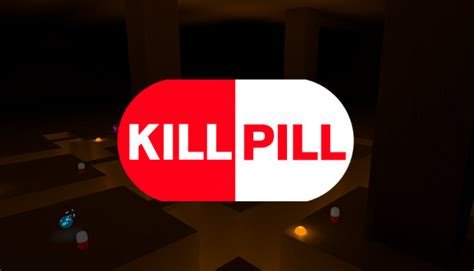
Kill Pill is a basic first-person shooter set in a fantasy world where the player must defend themselves from enemies represented by multi-coloured capsules called ‘pills’. With unlimited ammo, the objective is to survive as long as possible, with the player’s score being a direct measure of their survival time.
Where to Buy Kill Pill
PC
Kill Pill Patches & Updates
Kill Pill Guides & Walkthroughs
Kill Pill: A Minimalist Masterpiece or Forgotten Curiosity?
Introduction
Kill Pill (2012) is a deceptively simple first-person shooter that defies easy categorization. At first glance, it appears to be a basic arcade-style game where players shoot multicolored “pills” in an endless survival mode. However, beneath its minimalist facade lies a game that challenges players’ reflexes, endurance, and adaptability. Developed by Brackeys and released on November 26, 2012, Kill Pill is a testament to how constrained creativity can yield surprisingly engaging experiences. This review will dissect its development, mechanics, and legacy, ultimately arguing that Kill Pill is a forgotten gem of early 2010s indie gaming—a game that, despite its simplicity, offers a unique and addictive challenge.
Development History & Context
The Studio and Its Vision
Kill Pill was developed by Brackeys, a developer known for creating accessible, often experimental games. The studio’s approach was rooted in simplicity, leveraging the Unity engine to create a game that was easy to develop but hard to master. The game’s core concept—shooting pills in an arena—was likely inspired by classic arcade shooters like Robotron: 2084 or Smash TV, but with a twist: the enemies were abstract, colorful capsules rather than traditional foes.
Technological Constraints and the Gaming Landscape
Released in 2012, Kill Pill arrived during a transitional period in gaming. The indie scene was booming, with platforms like Steam and the Unity Asset Store making it easier for small developers to publish games. Kill Pill benefited from this environment, offering a low-poly, minimalist aesthetic that was both a creative choice and a necessity given the technological limitations of the time. The game’s reliance on simple geometry and vibrant colors allowed it to run smoothly on modest hardware, making it accessible to a broad audience.
Narrative & Thematic Deep Dive
A Game Without a Story?
Kill Pill is, at its core, a score-attack game with no overt narrative. There are no characters, no dialogue, and no world-building beyond the arena itself. This absence of storytelling is intentional, as the game prioritizes pure gameplay over thematic depth. However, one could argue that the game’s minimalism allows for interpretation. The pills, with their bright colors and abstract shapes, could be seen as a metaphor for distractions or obstacles in life—something the player must “kill” to survive.
Themes of Repetition and Mastery
The game’s core loop—shooting pills to survive—reinforces themes of repetition and mastery. Players must adapt to increasingly chaotic waves of enemies, a mechanic that mirrors the way humans develop skills through repetition. The lack of a narrative allows players to project their own meanings onto the experience, making Kill Pill a blank canvas for interpretation.
Gameplay Mechanics & Systems
Core Gameplay Loop
Kill Pill is a survival shooter where the player’s goal is to stay alive as long as possible while racking up points. The game features two modes:
– Classic Mode: Features only red pills that charge at the player.
– Arcade Mode: Introduces four types of pills (red, orange, blue, and green), each with unique behaviors.
Power-Ups and Progression
The game includes several power-ups that add variety to the gameplay:
– Speed (Red): Increases player movement speed.
– Jump (Blue): Enhances the player’s jump height.
– Automatic Firing (Green): Allows continuous shooting without holding the fire button.
– Collateral Damage (Purple): Causes explosions that damage nearby pills.
– Shotgun (Orange): Replaces the standard weapon with a shotgun.
– Freezing Time (White): Slows down time temporarily.
These power-ups encourage strategic play, as players must decide whether to chase them or focus on survival. However, the game lacks traditional progression systems like unlockable weapons or levels, which may limit long-term replayability.
User Interface and Controls
The UI is minimal, with a score counter and a health bar being the primary elements. The controls are straightforward: WASD for movement, mouse for aiming, and left-click for shooting. The simplicity of the controls ensures that the game is easy to pick up but hard to master, as players must develop muscle memory to survive increasingly difficult waves.
World-Building, Art & Sound
Visual Design
Kill Pill features a low-poly, abstract aesthetic that is both a strength and a weakness. The vibrant colors and simple shapes create a visually distinct world, but the lack of detailed environments or enemy designs may feel underwhelming to some players. The game’s art style is reminiscent of early 2010s indie games, where minimalism was often a deliberate choice to emphasize gameplay over graphics.
Sound Design
The sound design is equally minimal, with simple gunshots, pill explosions, and ambient background music. The audio cues are effective at reinforcing gameplay feedback, but the soundtrack lacks variety, which can make long play sessions feel monotonous.
Reception & Legacy
Critical and Commercial Reception
Kill Pill received mixed reviews upon release. Critics praised its addictive gameplay and simple controls but criticized its lack of depth and repetitive nature. The game’s low system requirements and free-to-play model helped it reach a broad audience, but it never became a mainstream hit.
Influence on Subsequent Games
While Kill Pill may not have had a direct influence on major AAA titles, it fits into the broader trend of minimalist, arcade-style indie games that emerged in the early 2010s. Games like Super Hexagon and Nidhogg share Kill Pill‘s focus on simple mechanics and high skill ceilings. The game’s use of power-ups and survival mechanics also foreshadowed later titles like Enter the Gungeon and Risk of Rain, though Kill Pill lacks the depth and variety of those games.
Conclusion
Kill Pill is a game of contradictions. It is simple yet challenging, minimalist yet vibrant, and forgettable yet oddly addictive. Its lack of narrative and depth may deter some players, but its core gameplay loop is undeniably fun. In the grand tapestry of video game history, Kill Pill is a small but noteworthy thread—a game that proves that even the simplest ideas can create engaging experiences when executed well.
Final Verdict: Kill Pill is a forgotten gem of early 2010s indie gaming, a testament to the power of minimalism and arcade-style gameplay. While it may not be a masterpiece, it is a worthy curiosity for fans of retro shooters and arcade challenges. Its legacy may be modest, but its influence can be seen in the countless indie games that followed in its footsteps.