
- Release Year: 2012
- Platforms: Macintosh, PlayStation 3, Windows, Xbox 360
- Publisher: Telltale Games, Telltale, Inc.
- Developer: Telltale Games, Telltale, Inc.
- Genre: Adventure
- Perspective: Third-person (Other)
- Game Mode: Single-player
- Gameplay: Graphic adventure, Puzzle elements, Quick Time Events (QTEs)
- Setting: Post-apocalyptic
- Average Score: 90/100
Description
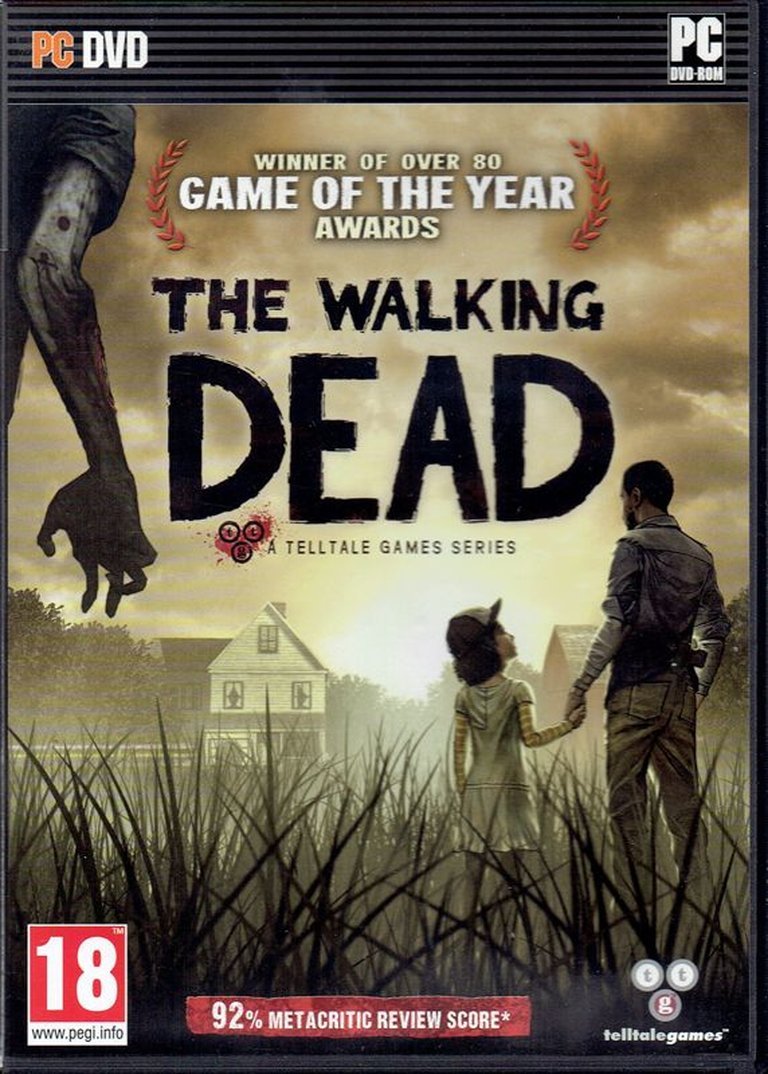
The Walking Dead: Season One is a five-part episodic adventure game set in the United States during the early stages of a zombie apocalypse. Players follow Lee Everett, a convicted murderer who escapes prison during a crash and takes in a young girl named Clementine after her home is overrun. The game emphasizes narrative-driven gameplay, focusing on moral choices, emotional bonds, and survival tactics as Lee and Clementine encounter other survivors and navigate hostile environments filled with undead threats.
Gameplay Videos
Where to Buy The Walking Dead: Season One
PC
The Walking Dead: Season One Free Download
The Walking Dead: Season One Cracks & Fixes
The Walking Dead: Season One Mods
The Walking Dead: Season One Guides & Walkthroughs
The Walking Dead: Season One Reviews & Reception
infinityretro.com : The final moments of the last episode had me in tears.
gamesreviews.com (90/100): Telltale Games have truly outdone themselves this time, providing such a phenomenal, interactive experience which would make any Walking Dead fan proud.
The Walking Dead: Season One Cheats & Codes
Xbox One
| Code | Effect |
|---|---|
| DadsRock | |
| TWAnn3 | |
| TWAnn4 | |
| TWAnn5 | |
| TWAnn6 | |
| TWDSFilmSpeak | |
| twd2oKw | |
| twd9dRl5 |
The Walking Dead: Season One: Review
Introduction
The Walking Dead: Season One is not just a game; it is a landmark in interactive storytelling. Released in 2012 by Telltale Games, this episodic adventure redefined what narrative-driven games could achieve. Set in the same universe as Robert Kirkman’s acclaimed comic series, it tells a parallel story of Lee Everett, a convicted criminal who becomes the guardian of a young girl named Clementine amidst a zombie apocalypse. This review will delve into the game’s development history, narrative depth, gameplay mechanics, world-building, critical reception, and lasting legacy.
Development History & Context
Telltale Games, known for its episodic adventures like Sam & Max and Tales of Monkey Island, secured a deal with Robert Kirkman and Warner Bros. in 2011 to develop The Walking Dead. The studio aimed to focus on player choice and character-driven storytelling rather than action, drawing inspiration from narrative-driven games like Heavy Rain and Mass Effect. Kirkman provided oversight while allowing Telltale creative freedom, ensuring the game aligned with the comics.
The game was developed using Telltale’s proprietary engine, optimized for multi-platform release. However, the development team faced technical challenges, particularly with save data and release scheduling. Despite these hurdles, the game was released in five episodes between April and November 2012 on various platforms, including PC, Xbox 360, PlayStation 3, and later iOS and PlayStation Vita.
Narrative & Thematic Deep Dive
Plot and Characters
The game follows Lee Everett, a former university professor convicted of murder, who escapes during a zombie outbreak. He meets Clementine, a young girl whose parents are missing, and becomes her protector. Their journey is filled with moral dilemmas, emotional turmoil, and survival challenges.
Key characters include Kenny, a survivalist with a strong sense of family; Lilly, a resourceful but hardened survivor; and Glenn, a familiar face from the comics. The narrative explores themes of redemption, sacrifice, and the moral complexities of survival in a post-apocalyptic world.
Dialogue and Choices
The game’s dialogue is rich and nuanced, with choices that have significant consequences. Players must make decisions that affect the fate of characters and the story’s direction. These choices are not just binary but often morally ambiguous, reflecting the game’s themes of survival and ethics.
Themes
The game delves into the psychological impact of the apocalypse on its characters. It explores the breakdown of society, the struggle for survival, and the moral compromises people make in desperate situations. The relationship between Lee and Clementine is a central theme, highlighting the bond between a mentor and a child in a world gone mad.
Gameplay Mechanics & Systems
Core Gameplay Loop
The game is a point-and-click adventure with action sequences and quick-time events (QTEs). Players explore environments, interact with objects, and make dialogue choices. The gameplay is linear but branching, with choices affecting the story’s outcome.
Combat and Stealth
Combat is minimal and often relies on QTEs. Stealth mechanics are used sparingly, primarily in sequences where players must avoid walkers. The game’s focus is on narrative rather than action, making combat a secondary concern.
Character Progression
There is no traditional character progression. Instead, the game tracks player choices and their impact on the story. The rewind feature allows players to revisit decisions, adding replayability.
UI and Controls
The UI is straightforward, with a reticle for interactions and dialogue options. The game supports both standard and minimal UI modes, catering to different player preferences.
World-Building, Art & Sound
Setting and Atmosphere
The game is set in Georgia, with locations like Macon and Savannah. The world is grim and realistic, reflecting the harshness of the apocalypse. The art style is cel-shaded, giving it a comic-book aesthetic that aligns with the source material.
Visual Direction
The visuals are detailed and atmospheric, with a focus on creating a sense of dread and tension. The character models and environments are well-designed, enhancing the immersive experience.
Sound Design
The soundtrack, composed by Jared Emerson-Johnson, complements the game’s tone. It uses minimalistic, eerie melodies to build tension and emotion. Voice acting is exceptional, with standout performances by Dave Fennoy as Lee and Melissa Hutchison as Clementine.
Reception & Legacy
Critical and Commercial Reception
The Walking Dead: Season One received widespread acclaim for its emotional depth, character development, and impact on the adventure game genre. It won numerous awards, including Game of the Year from several publications. By the end of 2012, it had sold over 8.5 million episodes, making it the best-selling adventure game of all time.
Influence on the Industry
The game revitalized the adventure game genre, which had experienced a decline in popularity since the 1990s. Its emphasis on narrative-driven, choice-based gameplay paved the way for subsequent titles like Life Is Strange and The Quarry. It demonstrated that games could be a powerful medium for storytelling, comparable to films and literature.
Conclusion
The Walking Dead: Season One is a masterpiece of interactive storytelling. Its narrative depth, character development, and innovative gameplay mechanics set a new standard for adventure games. It is not just a game but a cultural touchstone that redefined what video games could achieve. Its legacy continues to influence the industry, and it remains a benchmark for narrative-driven experiences. For those seeking a story that is as emotionally resonant as it is engaging, The Walking Dead: Season One is an essential experience.