
- Release Year: 2006
- Platforms: Windows
- Publisher: Evolved Games
- Developer: Project-Z development, Wings Simulations GmbH
- Genre: Action, Strategy, Tactics
- Perspective: First-person/Third-person
- Game Mode: Online PVP
- Gameplay: Shooter
- Setting: Modern
Description
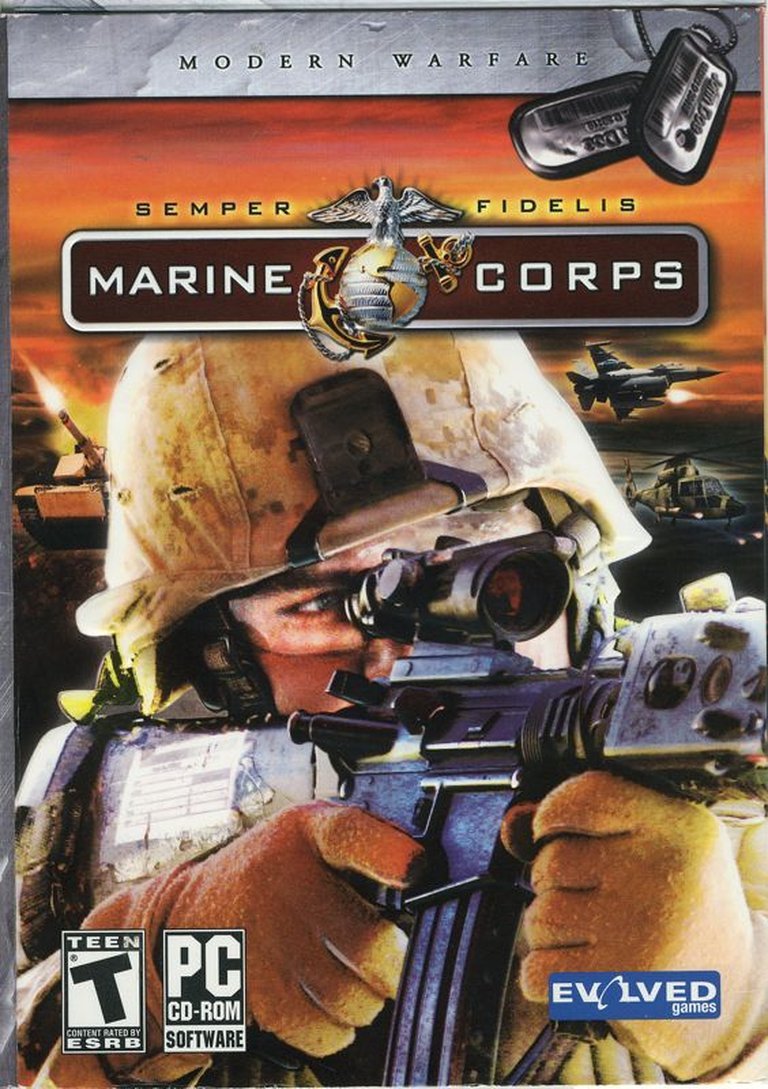
Semper Fidelis: Marine Corps is a team-based multiplayer warfare shooter released in 2006, which is actually a re-release of the game Söldner: Secret Wars bundled with its expansion pack. Developed by Wings Simulations and Project-Z development, the title was renamed to distance itself from its poorly received predecessor. Set in a modern combat environment, the game allows for large-scale online battles with over 100 players and features both first-person and third-person perspectives, offering a tactical military experience.
Gameplay Videos
Semper Fidelis: Marine Corps Mods
Semper Fidelis: Marine Corps Reviews & Reception
gamersnirvana.blogspot.com : Soldner was catapulted into a world whose gameplay, depth, and audio‑visual quality stand shoulder to shoulder with Battlefield 2.
Semper Fidelis: Marine Corps: A Comprehensive Review
Introduction
Semper Fidelis: Marine Corps (2006) is a game that defies simple categorization. Marketed as a fresh title, it is, in reality, a reimagined version of Söldner: Secret Wars (2004) and its expansion, Söldner: Marine Corps (2005). Developed by the remnants of Wing Simulations and the new team Project-Z Development, this game was an attempt to distance itself from the poorly received Söldner series while retaining its core mechanics. The result is a hybrid of tactical shooter, vehicular combat, and large-scale multiplayer warfare, wrapped in the thematic mantle of the U.S. Marine Corps. This review will dissect its development, narrative, gameplay, and legacy to determine whether Semper Fidelis: Marine Corps deserves a place in gaming history.
Development History & Context
The Studio and Its Vision
Semper Fidelis: Marine Corps was developed by a fractured team from Wing Simulations, a studio known for its work on Jane’s Combat Simulations and other military-themed games. After the underwhelming reception of Söldner: Secret Wars, the studio faced significant challenges. The decision to rebrand the game under a new title—Semper Fidelis: Marine Corps—was likely an attempt to escape the stigma of its predecessor. The name itself is a direct nod to the U.S. Marine Corps motto, Semper Fidelis (“Always Faithful”), which underscores the game’s thematic focus on military loyalty and camaraderie.
Technological Constraints and the Gaming Landscape
Released in 2006, Semper Fidelis: Marine Corps arrived during a transitional period in gaming. The mid-2000s saw the rise of large-scale multiplayer shooters like Battlefield 2 (2005) and Call of Duty 2 (2005). However, Semper Fidelis distinguished itself by offering a blend of first-person and third-person perspectives, vehicular combat, and a commander mode that allowed players to oversee battles from a top-down view. The game’s engine, while not cutting-edge, supported large, seamless maps (6,500 x 3,500 km) and an impressive array of weapons and vehicles.
The Rebranding and Patching
A key aspect of Semper Fidelis was its compatibility with Söldner players, provided all patches were applied. The game was patched up to version 33671, addressing numerous bugs and balancing issues. Notably, the North American release toned down the Advanced Gestures System (AGS), removing swearing to comply with regional standards. This decision reflects the game’s attempt to appeal to a broader audience while maintaining its hardcore military sim roots.
Narrative & Thematic Deep Dive
Plot and Setting
Semper Fidelis: Marine Corps lacks a deep, cinematic narrative. Instead, it focuses on the experience of being a mercenary soldier in a near-future conflict. The single-player campaign serves primarily as a training ground for multiplayer, featuring missions that introduce players to the game’s mechanics. The absence of a strong story is mitigated by the game’s thematic depth—its emphasis on teamwork, strategy, and the gritty reality of modern warfare.
Characters and Dialogue
The game’s characters are archetypal military figures—mercenaries, commanders, and soldiers—with minimal personality development. Dialogue is sparse and functional, serving mostly to convey mission objectives. The lack of narrative depth is a missed opportunity, as a more fleshed-out story could have elevated the game’s thematic weight.
Themes of Loyalty and Combat
The game’s title and setting evoke the values of the U.S. Marine Corps: discipline, loyalty, and sacrifice. The commander mode, in particular, reinforces the idea of leadership and strategic thinking, aligning with the Corps’ emphasis on unit cohesion. However, the game’s mercenary focus somewhat undercuts this theme, as players are technically fighting for profit rather than patriotism.
Gameplay Mechanics & Systems
Core Gameplay Loops
Semper Fidelis: Marine Corps blends first-person shooting, vehicular combat, and tactical planning. Players can engage in traditional infantry combat, pilot vehicles, or assume the role of a commander, issuing orders to their team. The game’s Advanced Destruction System (ADS) allows for environmental interaction, such as destroying buildings and terrain, adding a layer of strategy to battles.
Combat and Progression
The combat is weighty and realistic, with weapons handling that rewards precision. The Unit Customization System (UCS) lets players personalize their soldiers’ appearance and gear, adding a layer of role-playing to the experience. However, the single-player AI is notoriously poor, with enemies often behaving erratically or getting stuck in geometry.
Multiplayer and Commander Mode
The game’s multiplayer is its strongest suit, supporting up to 100+ players in large-scale battles. The Commander Mode is a standout feature, allowing one player to oversee the battlefield from a top-down perspective, issuing orders and managing resources. This mode adds a layer of strategy that sets Semper Fidelis apart from other shooters of its era.
User Interface and Accessibility
The UI is functional but dated, with menus that feel clunky by modern standards. The learning curve is steep, particularly for newcomers to tactical shooters. The game’s tutorials are helpful but not exhaustive, leaving some mechanics unexplained.
World-Building, Art & Sound
Setting and Atmosphere
The game’s maps are vast and detailed, ranging from deserts to islands, each designed for large-scale vehicular and infantry combat. The sheer scale of the environments is impressive, though the graphics are dated by 2006 standards. Weapons and vehicles are well-modeled, but animations (such as pistol slides not moving) detract from immersion.
Sound Design
The sound design is a mixed bag. Weapon sounds are realistic, with distinct audio cues for different firearms. However, some vehicles (like the M1A2 tank) have incorrect engine sounds, which can be jarring. The lack of voice acting in multiplayer detracts from immersion, though the Advanced Gestures System (hand signals and emotes) helps convey intent.
Reception & Legacy
Critical and Commercial Reception
Semper Fidelis: Marine Corps received mixed reviews at launch. Critics praised its ambition and depth but criticized its bugs, poor single-player AI, and dated graphics. The game’s rebranding from Söldner may have helped it find a new audience, but it never achieved the same level of success as Battlefield or Call of Duty.
Influence and Cult Following
Despite its flaws, Semper Fidelis developed a cult following among tactical shooter enthusiasts. Its large-scale multiplayer and commander mode influenced later games like Hell Let Loose (2019) and Post Scriptum (2018). The game’s re-release as Söldner: Secret Wars – Remastered (2020) further cemented its legacy as a niche but beloved title.
Conclusion
Semper Fidelis: Marine Corps is a flawed but fascinating game. Its rebranding from Söldner allowed it to carve out a niche in the crowded military shooter market, and its multiplayer and commander mode remain innovative even by modern standards. While its single-player campaign and graphics have aged poorly, its influence on tactical shooters is undeniable. Ultimately, Semper Fidelis: Marine Corps is a forgotten gem—a game that, with more polish and narrative depth, could have been a landmark title. As it stands, it remains a testament to the passion of its developers and the resilience of its community.
Final Verdict: A flawed but visionary tactical shooter that deserves recognition for its ambition and influence.