
- Release Year: 1986
- Platforms: Arcade, Nintendo Switch, PlayStation 4, Sharp X68000, TurboGrafx-16, Wii, Windows
- Publisher: Hamster Corporation, MediaKite Distribution Inc., Micomsoft, Namco Bandai Games Inc., Namco Limited
- Developer: Namco Limited
- Genre: Action
- Perspective: Side view
- Gameplay: Arcade, Platform
- Setting: Fantasy
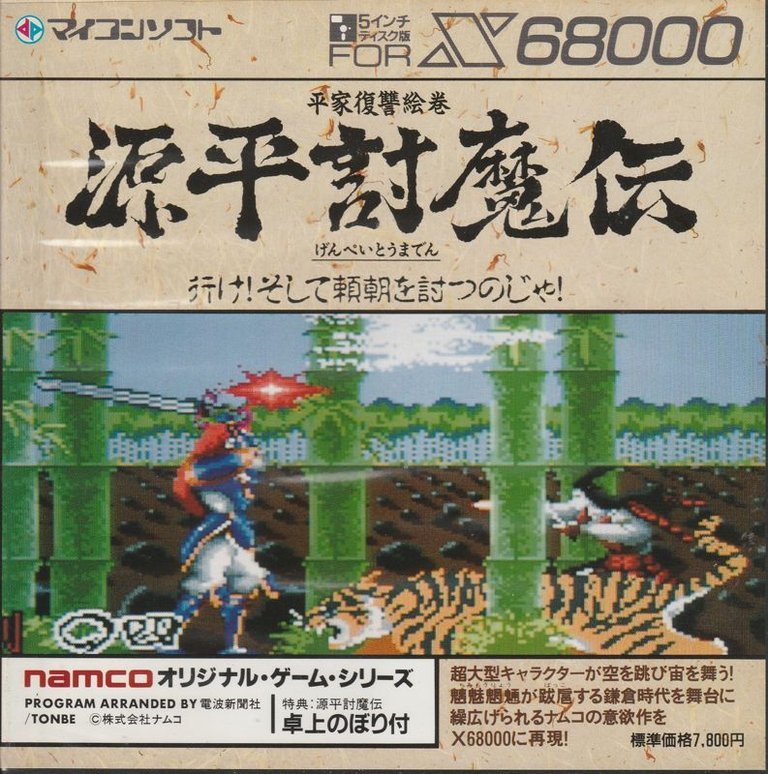
Description
Set in Japan during the year 1192 amidst the historical Genpei War, Genpei Tōma Den follows Taira no Kagekiyo, a resurrected warrior from the lost Heike clan, as he battles the malevolent Minamoto clan led by Minamoto no Yoritomo. The game features three distinct gameplay modes: ‘side mode’ for side-scrolling platforming, ‘big mode’ for large-scale combat, and ‘flat mode’ for overhead action, all requiring players to defeat enemies, collect items, and progress before their life bar (represented by burning candles) expires.
Gameplay Videos
Where to Buy Genpei Tōma Den
PC
Genpei Tōma Den Mods
Genpei Tōma Den Guides & Walkthroughs
Genpei Tōma Den Reviews & Reception
videogameden.com : Unlike other action games of its time, Genpei Tōmaden combines three different gameplay mechanics.
Genpei Tōma Den Cheats & Codes
NES
Enter codes at the title screen.
| Code | Effect |
|---|---|
| Start + Select | Flashier attack graphics |
| 00D1:00 | Quickly Kill Enemies |
| 00D8:63 | Infinite Energy |
| 00DB:FF | Infinite Money |
| 04B1:03 | Infinite Magic |
| 00D4:99 | Max Attack |
| 00D5:99 | Max Flame |
| 00D6:99 | Max 3rd Stat |
| 00D7:99 | Max Speed Stat |
| 00D9:FF | Infinite Gems |
PC-Engine
Enter code at the title screen when showing ‘Press Run Button’.
| Code | Effect |
|---|---|
| Up, Right, Down, Left, I, II | Access hidden option menu (difficulty, life points, stage select, sound effects, speeches) |
TurboGrafx-16
Enter code at the title screen.
| Code | Effect |
|---|---|
| Up, Right, Down, Left, I, II | Access options menu |
Genpei Tōma Den: Review
Introduction
Genpei Tōma Den, released in 1986, stands as a unique and enigmatic title in Namco’s arcade catalog. This game, steeped in Japanese history and mythology, follows the resurrected samurai Taira no Kagekiyo on a quest to avenge his fallen clan and defeat the tyrannical Minamoto no Yoritomo. With its innovative gameplay mechanics, rich narrative, and striking visuals, Genpei Tōma Den is a testament to the creativity of early arcade development. This review will delve into the game’s development history, narrative depth, gameplay mechanics, and its lasting legacy in the gaming industry.
Development History & Context
Namco’s Vision and Technological Constraints
Developed by Namco and released in October 1986, Genpei Tōma Den was designed to push the boundaries of arcade gaming. The game was created by a small but talented team, including director Norio Nakagata, designer Nobuhiko Abe, and composer Norio Nakagata. The game ran on Namco System 86 hardware, which allowed for detailed sprites and complex gameplay mechanics that were cutting-edge for the time.
The arcade landscape of the mid-1980s was dominated by fast-paced action games and platformers. Genpei Tōma Den stood out by blending multiple genres into a cohesive experience. The game’s unique blend of side-scrolling action, overhead strategy, and large-scale boss battles was a bold departure from the norm.
The Gaming Landscape
In 1986, the arcade industry was thriving, with titles like The Legend of Zelda and Metroid pushing the boundaries of narrative and exploration. Genpei Tōma Den drew inspiration from these innovations but added its own twist by incorporating elements of Japanese mythology and history. The game’s non-linear progression and multiple gameplay modes set it apart from contemporaries like Double Dragon and River City Ransom.
Narrative & Thematic Deep Dive
Plot and Characters
Genpei Tōma Den is set in a mythical version of feudal Japan, where the Genpei War has left the country in chaos. The protagonist, Taira no Kagekiyo, is a historical figure who was killed in the Battle of Dan-no-ura. In this alternate history, Kagekiyo is resurrected to seek revenge against Minamoto no Yoritomo and his clan, who have turned Japan into a realm of demons and darkness.
The game’s narrative is rich with historical and mythological references. Characters like Minamoto no Yoshitsune and Saito Musashibo Benkei are drawn from real history, adding a layer of authenticity to the game’s world. The inclusion of mythological figures like Emma-o, the god of the Underworld, and the Sun Goddess Amaterasu further enriches the game’s lore.
Themes and Motifs
The game explores themes of revenge, redemption, and the struggle between good and evil. Kagekiyo’s journey is not just a quest for vengeance but also a path to redemption. The game’s use of the Sanzu River, a place believed to separate the living from the dead, underscores the game’s exploration of life, death, and the afterlife.
The visual and auditory elements of the game reinforce its themes. The game’s art style, inspired by traditional Japanese aesthetics, creates a sense of immersion. The soundtrack, composed by Norio Nakagata, features traditional Japanese instruments and melodies that enhance the game’s atmosphere.
Gameplay Mechanics & Systems
Core Gameplay Loops
Genpei Tōma Den features three distinct gameplay modes: Small Mode, Big Mode, and Plain Mode. Small Mode is a side-scrolling action platformer where players navigate Kagekiyo through levels filled with enemies and obstacles. Big Mode features large-scale battles against formidable bosses, while Plain Mode offers an overhead perspective for strategic gameplay.
The game’s non-linear progression allows players to choose different paths through the game, leading to varied experiences. The inclusion of torii gates, which transport the player to different stages, adds a layer of exploration and discovery.
Combat and Progression
Kagekiyo’s sword is the primary weapon, and players can upgrade it by collecting purple orbs left behind by defeated enemies. The sword can also lose power if Kagekiyo hits indestructible objects, adding a strategic element to combat.
The game features a unique life bar represented by burning candles, which adds a sense of urgency to the gameplay. Players must collect items and reach the end of each stage before the candles burn out.
UI and Innovations
The game’s user interface is simple but effective, with clear indicators for health, power-ups, and progress. The inclusion of voice samples, a rarity in arcade games of the time, adds to the game’s immersive experience.
World-Building, Art & Sound
Visual Direction
Genpei Tōma Den features detailed sprite work and vibrant backgrounds that bring the mythical world to life. The character designs are inspired by traditional Japanese aesthetics, with Kagekiyo and the various enemies reflecting the cultural and historical influences of the period.
The game’s use of torii gates and other traditional Japanese elements creates a cohesive and atmospheric world. The game’s visuals are a testament to Namco’s commitment to quality and attention to detail.
Sound Design
The soundtrack complements the visual elements, with traditional Japanese music themes that enhance the game’s immersive experience. The audio design, including sound effects and musical cues, aligns with the game’s mythological setting.
Reception & Legacy
Critical and Commercial Reception
In Japan, Genpei Tōma Den received acclaim, being seen among Namco’s best and most-beloved arcade games. The Japanese arcade trade publication Game Machine reported it as being among the best-selling arcade games in November 1986. It received multiple awards from Gamest magazine, including the sixth Grand Prize, third Best Ending, and third Best Graphic awards.
Outside Japan, the game received a more mixed reaction. Critics like Jeff Gerstmann of GameSpot felt it was one of the worst titles in any of the Namco Museum anthologies, calling it a “joke” and “preposterous” as an arcade classic. However, the game’s unique blend of history and mythology has earned it a cult following among retro gaming enthusiasts.
Influence and Legacy
Genpei Tōma Den has inspired sequels, remakes, and adaptations. The game’s influence can be seen in titles that explore historical and mythological narratives, blending action and storytelling in creative ways. Its cultural impact is particularly notable in Japan, where the game’s themes and characters continue to hold significance in popular media.
The game’s legacy extends beyond its initial release, with re-releases on various platforms allowing new generations of players to experience its unique blend of history and legend. The game’s innovative design and storytelling continue to be celebrated as a testament to the creative possibilities of video game narratives.
Conclusion
Genpei Tōma Den is a remarkable fusion of history, mythology, and innovative gameplay that has left a lasting impact on the gaming landscape. Its engaging story, distinct visual style, and dynamic gameplay mechanics have cemented its status as a classic. By transporting players to a mythical version of the Genpei War, Genpei Tōma Den not only entertains but also educates players about a fascinating period of Japanese history.
The game’s legacy is evident in the continued interest and admiration it receives from both fans and developers. As a pioneer in blending narrative and gameplay, Genpei Tōma Den set a standard for future titles that aim to explore historical and mythological themes. Its influence can still be felt today, as modern games draw inspiration from its storytelling techniques and cultural depth.
In summary, Genpei Tōma Den is more than just an arcade game; it is a cultural artifact that showcases the rich tapestry of Japanese mythology and history. Its enduring appeal and impact highlight the timeless nature of storytelling in gaming, making it a must-play for enthusiasts of both retro games and Japanese culture.