
- Release Year: 2004
- Platforms: Windows
- Publisher: Buka Entertainment, FIP Publishing GmbH, Frogster Interactive Pictures AG
- Developer: Targem Games
- Genre: Role-playing (RPG), Strategy, Tactics
- Perspective: Diagonal-down
- Game Mode: LAN, Online PVP, Single-player
- Gameplay: Magic, Questing, Real-time strategy, Role-playing, Unit experience
- Setting: Fantasy
- Average Score: 72/100
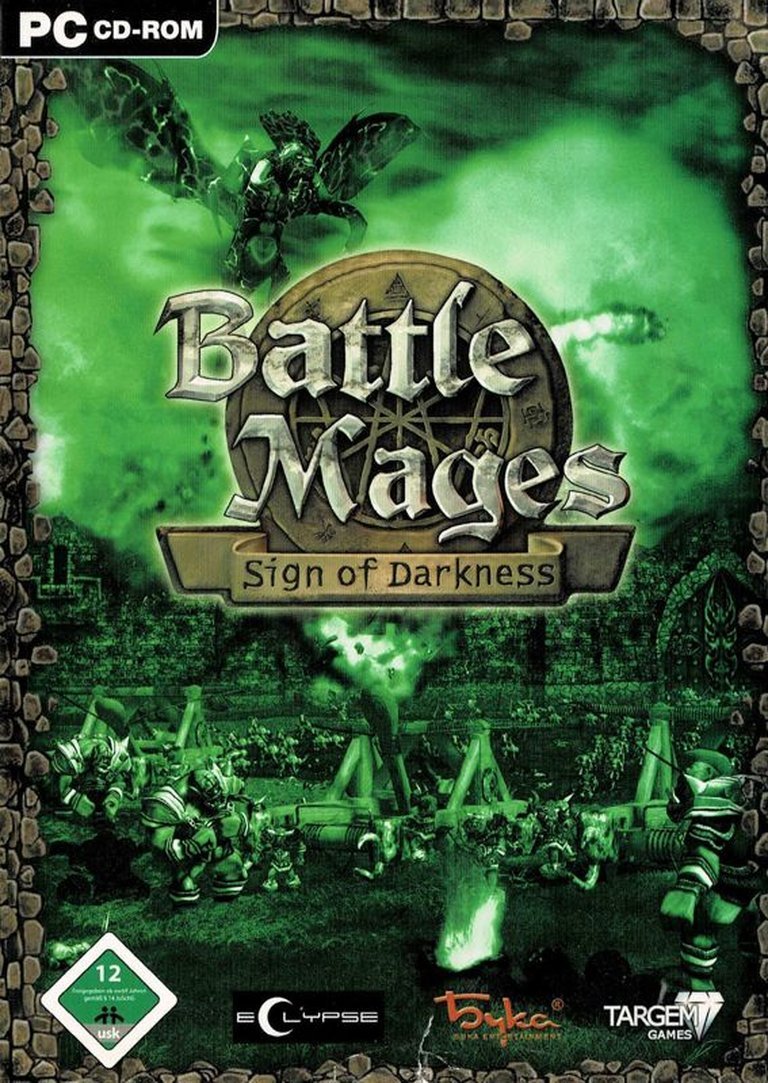
Description
Battle Mages: Sign of Darkness is a real-time strategy role-playing game set in a fantasy world before the original Battle Mages. The player takes control of a soul ghost that commands units across four campaigns, combining RTS excitement with RPG depth. Units gain experience through quests and battles, unlocking new abilities, while the ghost uses magic to influence the tide of war. The game explores the origins of conflict between humans, dwarves, elves, and orcs.
Gameplay Videos
Where to Buy Battle Mages: Sign of Darkness
PC
Battle Mages: Sign of Darkness Cracks & Fixes
Battle Mages: Sign of Darkness Patches & Updates
Battle Mages: Sign of Darkness Mods
Battle Mages: Sign of Darkness Guides & Walkthroughs
Battle Mages: Sign of Darkness Reviews & Reception
gamepressure.com (78/100): The story begins, when a young neophyte journeys north, to learn from an eccentric wizard, one of the most ancient and powerful Guild’s members.
gamesreviews2010.com : Battle Mages: Sign of Darkness is an enthralling journey into a world of magic, darkness, and epic battles.
mobygames.com (61/100): The four cohesive campaigns of this game show how this could happen.
Battle Mages: Sign of Darkness Cheats & Codes
PC
Press [Enter] during gameplay to display the console window.
| Code | Effect |
|---|---|
| gimmegimmegimme | 1,000 gold |
| perfektwarrior | Cyborg-Krieger |
| arisemywarriors | 1 troop Paladine |
| brainstorm | All high-speed charm fields |
| EasyWin | Win level |
| iamgreatcornholio | More experience points |
| ShamefulLoss | Lose level |
| exit | Quit game |
Battle Mages: Sign of Darkness: Review
Introduction
In the crowded landscape of early 2000s real-time strategy (RTS) and role-playing game (RPG) hybrids, Battle Mages: Sign of Darkness (2004) emerged as a niche but intriguing title from Russian developer Targem Games. Positioned as a standalone expansion to the original Battle Mages (2003), Sign of Darkness offered players a deeper dive into the fractured world of Daenmor, where humans, dwarves, elves, and orcs clashed in a conflict that would shape the future. This review will dissect the game’s development, narrative, gameplay mechanics, and lasting impact, arguing that while it may not have achieved mainstream acclaim, Sign of Darkness remains a fascinating artifact of its era—a game that blended strategy and RPG elements with a dark fantasy narrative, albeit with some notable shortcomings.
Development History & Context
Battle Mages: Sign of Darkness was developed by Targem Games, a studio known for its work on other strategy titles like Hard Truck: Apocalypse and Operation: Matriarchy. The game was published by Buka Entertainment, a company that played a significant role in bringing Russian-developed games to Western audiences. The development team, led by Project Leader Ilya Molochnikov and Executive Producer Stanislav Scorb, aimed to expand on the original Battle Mages by introducing new campaigns, factions, and gameplay mechanics.
The game was released in December 2004, a time when the RTS genre was dominated by titans like Warcraft III: Reign of Chaos (2002) and Age of Empires II: The Conquerors (2000). Sign of Darkness sought to carve out its own identity by blending RTS with RPG elements, a formula that was not entirely new but was executed with a unique twist. The game’s development was constrained by the technological limitations of the early 2000s, resulting in graphics and gameplay mechanics that, while functional, felt dated even at the time of release.
Narrative & Thematic Deep Dive
Plot and Setting
Battle Mages: Sign of Darkness is set a thousand years before the events of the original Battle Mages, during a time when the world of Daenmor is recovering from a cataclysmic battle between the Lord of Chaos and the forces of Order. The game’s four campaigns explore the events that led to the fracturing of the four major races—humans, dwarves, elves, and orcs—each campaign offering a unique perspective on the conflict.
The player takes on the role of a young neophyte who journeys north to learn from an eccentric wizard, unaware that his teacher is one of the Keepers, an ancient order tasked with safeguarding the realm from darkness. The neophyte soon discovers that he is destined to play a pivotal role in the events that will shake Daenmor to its core. The narrative is rich with themes of destiny, betrayal, and the struggle between order and chaos, though it is delivered through often clichéd dialogue and a somewhat predictable plot structure.
Characters and Factions
The game features four distinct factions, each with its own campaign:
1. The Order of the Keepers: A human-led order of mages tasked with protecting Daenmor from the forces of darkness. Their campaign focuses on uncovering the secrets of the Keepers and confronting the rising tide of evil.
2. The Treacherous Elves: A faction seeking vengeance against the humans who wronged them. Their campaign revolves around reclaiming ancestral lands and exacting retribution.
3. The Vengeful Orcs: A brutal horde seeking conquest and domination. Their campaign is a relentless march of destruction, with the player leading the orcs in a campaign of conquest.
4. The Forces of Chaos: A malevolent faction seeking to plunge Daenmor into eternal night. Their campaign involves summoning demonic legions and spreading corruption.
Each faction offers a unique perspective on the conflict, though the narratives are somewhat formulaic and lack the depth seen in other RTS/RPG hybrids of the era.
Themes and Dialogue
The game’s themes of destiny, betrayal, and the struggle between order and chaos are explored through a lens of dark fantasy. The dialogue, while serviceable, often feels clichéd and lacks the nuance seen in other titles of the genre. The voice acting is adequate but not exceptional, with some performances feeling stiff and unnatural.
Gameplay Mechanics & Systems
Core Gameplay Loop
Battle Mages: Sign of Darkness is a hybrid of real-time strategy and RPG elements. The player controls a “soul ghost” that flies over the map, issuing orders to units and casting spells. The game features a mix of classical RTS mechanics, such as resource management and unit control, with RPG elements like experience points, leveling, and skill trees.
Units gain experience points through completing quests and defeating enemies, allowing them to level up and improve their abilities. The soul ghost can also cast spells, with the player able to choose which spells to improve as they gain experience. This dual-progression system adds a layer of depth to the gameplay, though it is not without its flaws.
Combat and Strategy
Combat in Sign of Darkness is a mix of RTS and RPG mechanics. Units can be commanded in real-time, with the player able to issue orders and cast spells to turn the tide of battle. The game features a variety of units, each with unique abilities and strengths, requiring players to carefully select and combine their forces to create an effective army.
The game’s magic system allows players to cast powerful spells that can turn the tide of battle. Spells range from offensive spells like fireballs and lightning bolts to defensive spells like healing and shielding. The magic system is well-integrated into the gameplay, though it can feel somewhat underpowered at times.
Character Progression and UI
The game’s character progression system is one of its strongest features. Units can level up five times, improving their abilities and unlocking new skills. The soul ghost can also level up, with the player able to choose which spells to improve. This dual-progression system adds a layer of depth to the gameplay, though it can feel somewhat grindy at times.
The user interface is functional but somewhat clunky. The minimap is small and difficult to read, and the unit selection system can be finicky. The game’s inventory system is also somewhat cumbersome, with items needing to be transported by units rather than stored in a central inventory.
Innovations and Flaws
Sign of Darkness introduced several innovative features, such as the soul ghost mechanic and the dual-progression system. However, the game also suffered from several flaws, including a lack of innovation in its core gameplay mechanics and a somewhat dated graphical presentation. The game’s AI was also criticized for being somewhat simplistic, with enemy units often making predictable and easily exploitable decisions.
World-Building, Art & Sound
Setting and Atmosphere
The world of Daenmor is a dark fantasy realm filled with magic, monsters, and political intrigue. The game’s setting is rich with lore, though it is not always well-explored through the narrative. The world is divided into four major regions, each corresponding to one of the game’s factions. The game’s atmosphere is enhanced by its dark fantasy aesthetic, though the graphical presentation is somewhat dated.
Visual Direction
The game’s visuals are a mix of 3D models and 2D sprites, a common approach for RTS games of the era. The 3D models are somewhat blocky and lack detail, while the 2D sprites are somewhat pixelated. The game’s environments are well-designed, with a variety of terrains and structures that add to the game’s atmosphere. However, the game’s visuals have not aged well, and they can feel somewhat dated even by the standards of the early 2000s.
Sound Design
The game’s soundtrack is a mix of orchestral and electronic music, with a focus on creating a dark and atmospheric experience. The music is well-composed and enhances the game’s setting, though it can sometimes feel repetitive. The sound effects are adequate but not exceptional, with some effects feeling somewhat generic.
The voice acting is a mixed bag. Some performances are well-delivered, while others feel stiff and unnatural. The dialogue is often clichéd and lacks the nuance seen in other titles of the genre. However, the voice acting does add a layer of immersion to the game, and it helps to bring the game’s world to life.
Reception & Legacy
Critical and Commercial Reception
Battle Mages: Sign of Darkness received mixed reviews upon its release. Critics praised the game’s unique blend of RTS and RPG elements, as well as its dark fantasy setting and atmospheric soundtrack. However, the game was criticized for its dated graphics, simplistic AI, and lack of innovation in its core gameplay mechanics.
The game’s commercial performance was also mixed. While it found a niche audience among fans of RTS and RPG hybrids, it did not achieve the same level of success as other titles in the genre. The game’s reputation has evolved somewhat over time, with some retro gaming enthusiasts appreciating its unique blend of genres and dark fantasy setting.
Influence and Impact
Sign of Darkness did not have a significant impact on the gaming industry, but it did contribute to the growing trend of RTS/RPG hybrids. The game’s unique blend of genres and dark fantasy setting influenced later titles, such as Might & Magic: Heroes VI (2013) and SpellForce: The Breath of Winter (2004).
The game’s legacy is somewhat overshadowed by its contemporaries, but it remains a fascinating artifact of its era—a game that blended strategy and RPG elements with a dark fantasy narrative, albeit with some notable shortcomings.
Conclusion
Battle Mages: Sign of Darkness is a flawed but fascinating game that blends real-time strategy and RPG elements with a dark fantasy narrative. While it may not have achieved mainstream acclaim, the game remains a noteworthy title in the history of RTS/RPG hybrids. Its unique blend of genres, dark fantasy setting, and atmospheric soundtrack make it a worthwhile experience for fans of the genre.
However, the game’s dated graphics, simplistic AI, and lack of innovation in its core gameplay mechanics hold it back from greatness. Sign of Darkness is a game that is best appreciated for its ambition and unique blend of genres rather than its execution. It is a title that deserves to be remembered as a curious artifact of its era, a game that dared to blend genres in a way that was both innovative and flawed.
In the grand tapestry of video game history, Battle Mages: Sign of Darkness may not be a masterpiece, but it is a game that deserves to be remembered for its ambition and unique blend of genres. It is a title that offers a glimpse into the early 2000s gaming landscape, a time when developers were experimenting with new ways to blend genres and create unique gaming experiences. While it may not have achieved the same level of success as other titles of its era, Sign of Darkness remains a fascinating and worthwhile experience for fans of RTS and RPG hybrids.