
- Release Year: 2002
- Platforms: Windows
- Publisher: Megaware Multimedia B.V.
- Developer: Insidia srl
- Genre: Strategy, Tactics
- Perspective: First-person
- Game Mode: Single-player
- Gameplay: Mini-games
- Setting: Ancient, Egypt
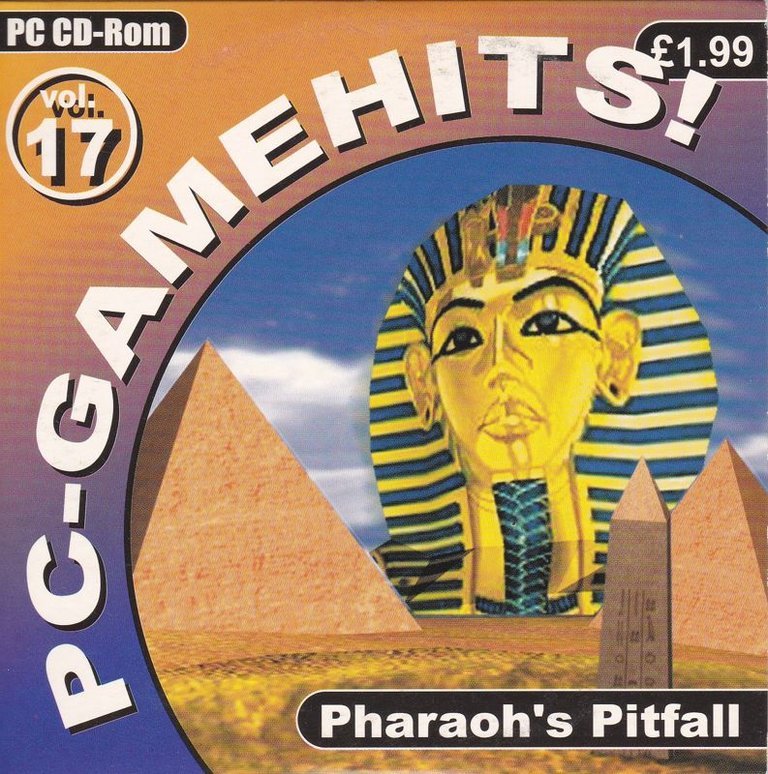
Description
Pharaoh’s Pitfall (2002) is a commercial Windows puzzle collection set in Ancient Egypt, featuring four distinct mini-games: Pyramid’s Panic (a tomb maze runner collecting gems while avoiding ghosts), Egypt Pairs (a Mahjong solitaire variant), Nylus Danger (a Minesweeper-style game with crocodiles and a jumping frog), and Moboc (a Mastermind clone using scarabs). Each mini-game offers both Relax and Time Attack modes for single-player gameplay.
Where to Buy Pharaoh’s Pitfall
PC
Pharaoh’s Pitfall: A Forgotten Gem of Early 2000s Puzzle Gaming
Introduction
In the early 2000s, as the gaming landscape was shifting from the 2D era into the dawn of 3D graphics and online multiplayer, niche puzzle games like Pharaoh’s Pitfall (2002) offered a quiet refuge for players seeking cerebral challenges. Developed by Insidia srl and published by Megaware Multimedia B.V., this collection of Egyptian-themed mini-games was a modest but ambitious title that blended classic puzzle mechanics with a rich historical aesthetic. Though overshadowed by blockbuster releases of the time, Pharaoh’s Pitfall deserves recognition as a well-crafted, underappreciated title that captured the essence of puzzle gaming before the rise of mobile apps dominated the genre.
This review will dissect Pharaoh’s Pitfall across multiple dimensions—its development history, narrative depth, gameplay mechanics, artistic direction, and legacy—to determine whether it was a fleeting curiosity or a title that deserved a longer shelf life.
Development History & Context
The Studio and Creators’ Vision
Pharaoh’s Pitfall was developed by Insidia srl, an Italian studio known for its puzzle and strategy games. The title was published by Megaware Multimedia B.V., a Dutch company that specialized in niche PC titles. The game’s development coincided with a transitional period in gaming, where CD-ROMs were becoming the standard media format, and digital distribution was still in its infancy.
The game’s creators aimed to capitalize on the enduring appeal of Egyptian mythology, a theme that had been explored in titles like Tomb Raider and Age of Empires. However, rather than opting for action or strategy, Pharaoh’s Pitfall focused on puzzle-solving, making it a unique entry in the Egyptian-themed gaming landscape.
Technological Constraints of the Era
Released in 2002, Pharaoh’s Pitfall was designed for Windows 95/98/ME and required a Pentium II 266 MHz processor, 32 MB of RAM, and an 8 MB graphics card. These specifications were modest by 2002 standards but ensured compatibility with a broad range of PCs. The game’s reliance on CD-ROM media was a nod to the era’s distribution methods, though it also limited its accessibility in later years as physical media became obsolete.
The gaming landscape in 2002 was dominated by titles like Halo: Combat Evolved, The Sims, and Grand Theft Auto: Vice City. Against this backdrop, Pharaoh’s Pitfall was a niche offering, but its puzzle mechanics and Egyptian theme provided a refreshing alternative to the action-heavy releases of the time.
Narrative & Thematic Deep Dive
Plot and Characters
Pharaoh’s Pitfall lacks a traditional narrative, instead framing its four mini-games as challenges set within an ancient Egyptian tomb. The absence of a story is offset by the game’s thematic cohesion, which immerses players in a world of pharaohs, scarabs, and crocodile-infested waters.
The game’s title is a clever play on words, referencing both the historical setting and the literal pitfalls (both physical and mechanical) that players encounter. The lack of character development is compensated by the game’s atmospheric design, which evokes a sense of adventure and discovery.
Dialogue and Themes
Since Pharaoh’s Pitfall is a puzzle game, dialogue is minimal. However, the game’s themes of exploration, danger, and ancient mysteries are conveyed through its visuals and sound design. The Egyptian setting is more than just window dressing; it informs the gameplay mechanics, such as the crocodile hazards in Nylus Danger and the scarab-based puzzles in Moboc.
Gameplay Mechanics & Systems
Core Gameplay Loops
Pharaoh’s Pitfall consists of four distinct mini-games, each with two modes: Relax and Time Attack. This structure allows players to engage with the game at their own pace or challenge themselves against the clock.
- Pyramid’s Panic: A maze-based game where players collect gems while avoiding ghosts of Tutankhamun. The maze is filled with treasure boxes containing power-ups, adding a layer of strategy to the gameplay.
- Egypt Pairs: A Mahjong solitaire variant where players match tiles by drawing lines with no more than two direction changes. The game’s difficulty scales with the number of tiles.
- Nylus Danger: A Minesweeper-like game where players navigate a frog across stone blocks to avoid crocodiles. The game’s risk-reward mechanics make it a tense and engaging experience.
- Moboc: A Mastermind variant where players deduce the sequence of four scarabs in eight attempts. The game’s simplicity belies its depth, as players must rely on logic and deduction.
Combat and Character Progression
Combat is minimal in Pharaoh’s Pitfall, with the primary challenge being puzzle-solving. However, Pyramid’s Panic introduces a combat element where players can shoot ghosts to stun them temporarily. The game lacks traditional character progression, but players can improve their scores and high scores, adding a competitive edge.
UI and Innovative/Flawed Systems
The user interface is straightforward, with clear instructions and intuitive controls. The game’s reliance on point-and-click mechanics is a nod to the era’s design trends, though it may feel dated by modern standards. One notable flaw is the lack of a high-score table in Moboc, which detracts from its replayability.
World-Building, Art & Sound
Setting and Atmosphere
Pharaoh’s Pitfall excels in its world-building, transporting players to an ancient Egyptian tomb. The game’s visuals are rich in detail, with intricate tile designs and atmospheric lighting that enhance the sense of exploration. The sound design complements the visuals, with ambient Egyptian music and sound effects that immerse players in the setting.
Visual Direction
The game’s art style is a blend of 2D and 3D elements, with the mini-games featuring distinct visual identities. Pyramid’s Panic uses a first-person perspective, while Egypt Pairs and Nylus Danger employ a top-down view. The visuals are functional and aesthetically pleasing, though they show their age in terms of texture quality and animation.
Sound Design
The sound design is a highlight of Pharaoh’s Pitfall, with a soundtrack that blends traditional Egyptian instruments with modern electronic elements. The sound effects are well-integrated, from the eerie whispers of the ghosts in Pyramid’s Panic to the satisfying clicks of matching tiles in Egypt Pairs.
Reception & Legacy
Critical and Commercial Reception
Pharaoh’s Pitfall received limited critical attention upon release, with no known professional reviews on platforms like MobyGames. Its commercial performance was likely modest, given its niche appeal and the dominance of action and RPG titles in the early 2000s.
Influence on Subsequent Games
While Pharaoh’s Pitfall did not leave a significant mark on the industry, its puzzle mechanics and Egyptian theme influenced later titles. The game’s blend of classic puzzle genres with a historical setting foreshadowed the rise of mobile puzzle games that combine education with entertainment.
Evolution of Reputation
Over time, Pharaoh’s Pitfall has gained a cult following among puzzle enthusiasts and retro gaming communities. Its inclusion in discussions about forgotten puzzle games highlights its enduring appeal, even if it never achieved mainstream success.
Conclusion
Pharaoh’s Pitfall is a hidden gem of early 2000s puzzle gaming, offering a unique blend of classic mechanics and Egyptian-themed challenges. Its development history, gameplay depth, and artistic direction make it a title worth revisiting. While it may not have achieved the same level of recognition as its contemporaries, its legacy as a well-crafted puzzle game is undeniable.
In the grand tapestry of video game history, Pharaoh’s Pitfall occupies a small but significant thread—one that reminds us of the diversity and creativity that defined the early days of PC gaming. Whether you’re a puzzle enthusiast or a historian of gaming, Pharaoh’s Pitfall is a title that deserves your attention.