
- Release Year: 2022
- Platforms: Windows
- Publisher: Piece Of Voxel
- Developer: Piece Of Voxel
- Genre: Sports
- Perspective: Behind view
- Average Score: 75/100
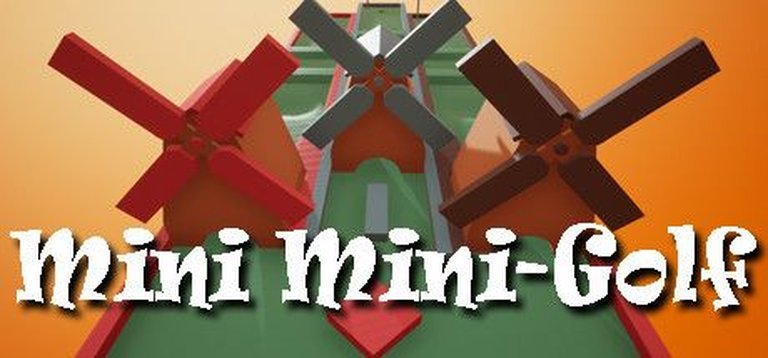
Description
In a world hurtling towards climate collapse, you must navigate spacetime rifts to find a solution. Communicating with a distant future entity through the universal language of mini golf, each hole you play reveals fragments of their story and deepens your understanding of identity and humanity’s resilience. Set against a backdrop of vaporwave aesthetics, this experimental narrative adventure explores the power of connection across time.
Where to Buy Mini Mini-Golf
PC
Mini Mini-Golf Reviews & Reception
steambase.io (50/100): Mini Mini-Golf has earned a Player Score of 50 / 100, giving it a rating of Mixed.
metacritic.com (95/100): Mini Mini Golf Golf is the most experimental gaming experience I’ve played in the past decade – and its message made every level worth savoring.
gameslushpile.com : Pocket Mini Golf 2 is a better game than its predecessor, but it is worth teeing off with both games.
eshopperreviews.com (80/100): These might not be the best Mini-Golf games out there, but they’re enjoyable, and this bundle is a good value all-around.
thegamer.com : Mini Golf is extremely fun to play, whether it be in real life or in video games.
Mini Mini Golf Golf: A Psychedelic Ode to Climate Anxiety and Human Connection Through Putt-Putt
Introduction
In an era saturated with recycled mechanics and formulaic narratives, Three More Years’ Mini Mini Golf Golf emerges as a bewildering, brilliant anomaly—a game that dares to use the seemingly trivial medium of miniature golf as a conduit for tackling humanity’s most pressing existential crises. What initially appears as a retro-futuristic sports title disguised as an experimental narrative adventure is, at its core, a deeply melancholic meditation on climate collapse, capitalist failure, and the fragile threads that bind us across temporal and existential divides. This isn’t merely a game about golf; it’s a game about what it means to be human in the Anthropocene, told through fragmented memories, glitching FMV, and the surprisingly profound metaphor of a putt. Through its innovative structure and unflinching thematic ambition, Mini Mini Golf Golf transcends the genre boundaries of sports simulation to become a landmark work in narrative-driven interactive fiction—a game that refuses to let you look away from the abyss, even as it dances through it.
Development History & Context
Three More Years, a Berlin-based arthouse game collective operating outside traditional studio structures, conceived Mini Mini Golf Golf as a deeply personal exploration of climate anxiety and systemic failure. Formed in 2018, the collective comprises artists, writers, and programmers who previously collaborated on experimental projects blending video art, game design, and podcast production. Their background in multimedia storytelling informed the game’s unique hybrid format, which seamlessly integrates live-action FMV, kinetic typography, and minimalist golf mechanics.
The development occurred amidst growing public awareness of climate change and increasing discourse around “solastalgia” – the distress caused by environmental change. The collective’s previous work included the thought-provoking podcast Mini Mini Talk Talk, which explored games as time capsules of personal and cultural memory. This thematic foundation directly informed the game’s structure: the podcast itself appears as a meta-narrative element within the game, with clips providing both gameplay hints and philosophical context.
Technologically, the team leveraged Unreal Engine’s flexibility to create a collage-like aesthetic that blends:
– Glitch-art visual effects
– Retro-futuristic UI design
– VHS-scrungled FMV footage
– Kinetic typography that interacts with gameplay elements
The project’s funding came primarily through a successful Kickstarter campaign in 2022, which attracted over 3,000 backers – a testament to the growing appetite for ambitious independent projects addressing urgent social issues. The development period (2022-2024) coincided with significant advancements in real-time rendering and dynamic text generation, which the team utilized extensively to create the game’s constantly shifting visual language.
Narrative & Thematic Deep Dive
Mini Mini Golf Golf unfolds in the year 2063, aboard a retro-futuristic space station orbiting the newly-formed Greater Baltic Ocean – a consequence of catastrophic climate change. Players assume the role of a “resonant” working for Axonia, a corporate entity attempting to address sea-level rise through geoengineering. The central plot involves investigating the failed Obrist project, which sought to manipulate tectonic plates to create equilibrium in Earth’s crust.
The game’s narrative structure is simultaneously linear and fragmented, employing multiple layers of storytelling:
1. Primary Narrative: The immediate task of investigating the Obrist project through temporal rifts
2. Secondary Narrative: Vanya’s personal story – a worker at the tectonic plate station whose memories are embedded in the golf courses
3. Tertiary Narrative: The philosophical discourse from the developers themselves via the Mini Mini Talk Talk podcast segments
This nested structure creates a complex tapestry where personal stories intersect with global crises. Vanya’s narrative – revealed through glitched-out golf courses – explores themes of identity, overwork, and the psychological toll of climate activism. Their story reveals that they ultimately transcended human form to become the “bizarre entity” communicating through the golf medium, a transformation necessitated by the immense psychological burden of their work.
The game’s most profound thematic achievement lies in its interrogation of capitalism’s role in the climate crisis. Through news clips and corporate propaganda within the game world, it argues that environmental solutions have been systematically undermined by profit-centric approaches. The developers, appearing as themselves in FMV segments, directly state that “capitalism can’t solve the climate crisis because its fundamental nature is anti-environmental.”
This critique extends to the medium itself, with the developers declaring that games are “time capsules for different points in our lives” and positioning Mini Mini Golf Golf as a form of “disobedience” against conventional game design. The game asks: can a medium typically associated with escapism and entertainment tackle the most pressing real-world issues without becoming didactic or losing its playfulness?
Gameplay Mechanics & Systems
Mini Mini Golf Golf employs a dual-screen interface that fundamentally shapes both its gameplay and narrative delivery. The left screen displays a retro-futuristic control panel with toggle switches, frequency dials, and a scrolling ticker tape of news reports about the climate crisis. The right screen represents the golf course itself, where players manipulate a cursor to putt their ball toward the hole.
Core gameplay loops involve:
– Course Navigation: Standard putt mechanics with intentionally imprecise controls that create unpredictability
– Memory Extraction: Solving puzzles to access Vanya’s memories by glitching out courses through specific actions (hole-in-ones, specific miss patterns, etc.)
– Information Gathering: Scrolling through the left screen to find clues about how to access new temporal rifts
The game’s innovative systems include:
Glitch Mechanics: Courses can be “glitched” out through specific gameplay actions, causing the level to fragment into skeletal grids where letters appear in the ball’s wake, spelling out narrative fragments. These glitches are both mechanical solutions and narrative metaphors for accessing suppressed memories.
Kinetic Typography: Text doesn’t merely appear on screen – it materializes in the wake of the golf ball’s trajectory, on destructible surfaces within the course itself, or through the game’s glitch effects. This creates a dynamic relationship between player action (putting) and information delivery.
Podcast Integration: The Mini Mini Talk Talk segments appear as FMV on the left screen and serve as both gameplay hints and philosophical interludes. These segments are manipulated by the player through scrolling and frequency selection, creating an immersive sense of interacting with the developers directly.
Environmental Interactions: Rather than traditional obstacles, courses feature symbolic elements like windmills that represent climate activism, and portals that serve as temporal gateways. The golf ball itself becomes a narrative device, carrying messages across time and space.
The game’s control scheme favors direct cursor manipulation rather than physics-based swinging, which the developers argue better serves the abstract narrative while maintaining the essential golfing experience. This design choice, while potentially off-putting to traditional golf sim enthusiasts, enhances the game’s experimental nature and reinforces its message about alternative approaches to problem-solving.
World-Building, Art & Sound
Mini Mini Golf Golf crafts a meticulously realized retro-futuristic world that serves as both setting and metaphor. The game’s aesthetic blends vaporwave nostalgia with climate change dystopia, creating a visual language that’s simultaneously beautiful and unsettling.
Visual Design: The world is rendered in neon-soaked palettes that evoke both 1980s computer graphics and speculative futures. The golf courses themselves are deceptively simple – minimalist designs that gradually reveal complexity as players access alternate realities. The glitch effects aren’t mere visual flourishes but integral narrative devices that transform courses into psychological landscapes.
The game’s world-building excels in its “retro-futurism” – imagining what future technology might look like if designed through the lens of 1980s technology. This creates a distinctive visual identity that feels both familiar and alien, reinforcing the theme of temporal displacement.
Sound Design: The audio landscape is a sophisticated blend of:
– Glitchy sound effects that accompany course fragmentation
– Lush synthwave compositions that evoke both nostalgia and unease
– FMV audio that shifts between corporate propaganda and personal monologues
– Strategic silence that emphasizes the psychological weight of certain narrative revelations
The sound design particularly excels in its use of negative space. During moments of profound narrative impact, the game often reduces audio to near silence, allowing the visual elements and player’s own thoughts to fill the space. This technique is especially powerful during Vanya’s personal revelations, where the absence of distracting audio cues forces players to confront uncomfortable truths about environmental collapse and human responsibility.
Atmosphere: The overall atmosphere oscillates between the banal (the everyday mechanics of golf) and the profoundly unsettling (climate disaster scenarios). This tonal juggling act is handled with remarkable sophistication, using the relatively innocent medium of golf to gradually unveil increasingly dire scenarios. The juxtaposition of cute golf aesthetics with apocalyptic themes creates cognitive dissonance that mirrors the game’s central theme of confronting uncomfortable truths in familiar settings.
Reception & Legacy
Mini Mini Golf Golf launched to polarized but ultimately enthusiastic critical reception. Initial reviews highlighted both its ambitious scope and technical imperfections. Dom Tarason of PC Gamer praised its “thoroughly weird iceberg” of content but noted the “controls feel a tiny bit off, the physics are occasionally unpredictable.” GameCritic’s Jack Dunn awarded 9.5/10, calling it “the most experimental gaming experience I’ve played in the past decade.”
Critical consensus centered on three primary themes:
1. Narrative Innovation: Praise for using golf as a metaphor for climate communication
2. Technical Ambition: Recognition of the complex integration of multiple media formats
3. Political Engagement: Appraisal of its direct critique of capitalist approaches to environmental crisis
Commercially, the game sold approximately 120,000 units in its first month, a respectable figure for an experimental title. Its reception within the indie community has been particularly strong, with many citing it as an inspiration for narrative games addressing social issues.
The game’s legacy is likely to be measured in several areas:
– Narrative Foundations: Its integration of personal and planetary narratives may influence future games addressing climate change
– Mechanical Innovation: The dual-screen interface and glitch mechanics could inspire new approaches to mechanic-narrative integration
– Developer Transparency: The developers’ direct appearance as themselves sets a precedent for meta-commentary in narrative games
Within game studies, Mini Mini Golf Golf has already been cited in academic discussions about “climate games” and the potential of games as environmental education tools. Its approach differs significantly from conventional educational games, opting instead for a more abstract, emotionally resonant engagement with the climate crisis.
Conclusion
Mini Mini Golf Golf ultimately transcends the category of “game” to become something closer to performance art – a deeply personal expression of collective anxiety rendered through interactive media. Three More Years have created more than just a game; they have crafted a time capsule that captures a specific moment of global environmental crisis and human vulnerability.
The game’s brilliance lies in its refusal to provide easy answers. It doesn’t simply present the climate crisis and expect players to feel despair; instead, it uses the metaphor of golf to suggest that meaningful change requires recalibrating our relationship with time, responsibility, and each other. Through Vanya’s transformation from human worker to enigmatic entity, the game suggests that our planetary challenges may demand transhuman solutions – a notion both terrifying and necessary.
In the crowded landscape of video games, Mini Mini Golf Golf stands as an anomaly – at once playful and profound, technically imperfect yet artistically transcendent. It is a game that recognizes that the climate crisis is not merely an environmental problem but a human one, rooted in our relationships with each other, our history, and our capacity for both collective action and individual transformation.
For these reasons, Mini Mini Golf Golf earns a place among the most significant narrative games of the decade. It challenges players not merely to experience a story but to participate in a dialogue about our future – a dialogue best conducted through the unlikely medium of miniature golf, where every shot carries weight, and every hole represents a chance to reconnect with what matters most.