
- Release Year: 2013
- Platforms: Windows, Xbox 360
- Publisher: Fun Infused Games
- Developer: Fun Infused Games
- Genre: Action
- Perspective: Top-down
- Game Mode: Single-player
- Gameplay: Arcade, Shooter
- Average Score: 94/100
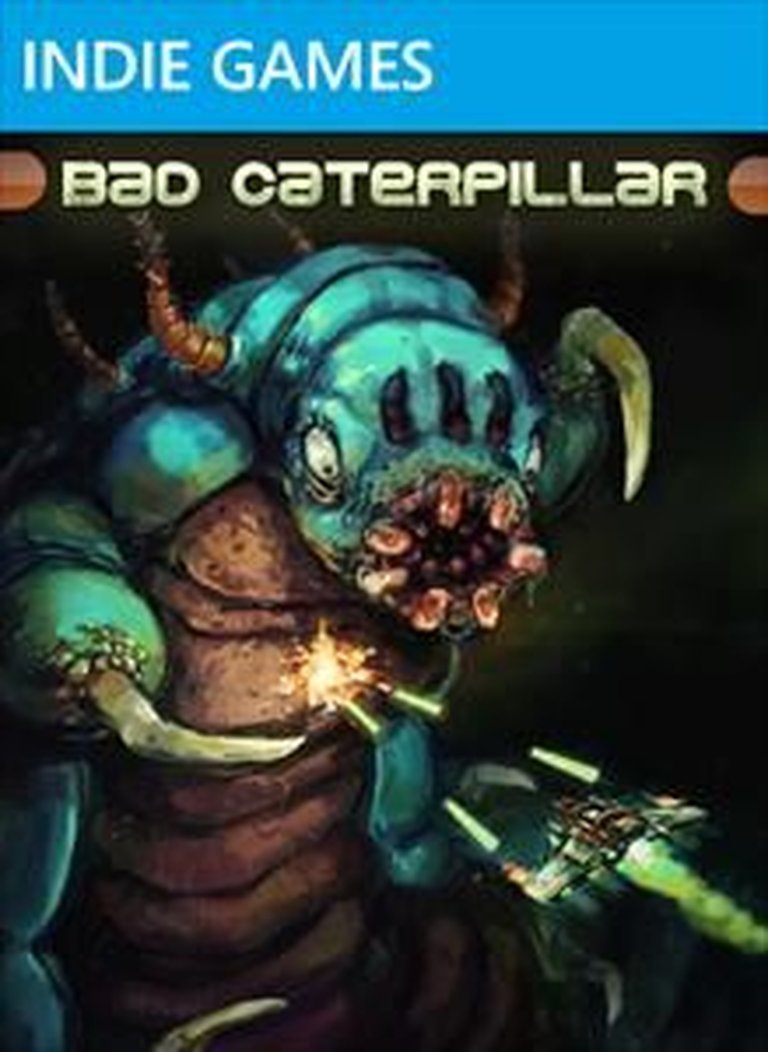
Description
Bad Caterpillar is a high-intensity, top-down shooter that reinvents the classic Centipede experience with modern gameplay upgrades. Navigate through waves of enemies as the agile caterpillar protagonist, collecting frequent power-ups and surviving as long as possible in this heart-pounding game that never slows down.
Where to Buy Bad Caterpillar
PC
Bad Caterpillar Mods
Bad Caterpillar Guides & Walkthroughs
Bad Caterpillar Reviews & Reception
realotakugamer.com : A clever blending of different game styles and genres, with a good end result.
Bad Caterpillar Cheats & Codes
PC (Cheat Engine Table, version 1.0 and above)
Start the game first, then select the game process and enable the cheats using Cheat Engine (CE v7.0 or higher required).
| Code | Effect |
|---|---|
| see them in the app | Refers to the 47 trainer options available in the Cheat Engine table, which provide various in-game advantages (specific functions not explicitly listed) |
Bad Caterpillar: Review
Introduction
In the crowded landscape of indie gaming, few titles embody the spirit of retro revival quite like Bad Caterpillar. Released in 2013 on Xbox Live Indie Games (XBLIG) and later ported to Steam in 2016, this top-down shooter positions itself as a modern reimagining of the classic Centipede formula. Yet, despite its clear lineage and passionate execution, it remains a cult favorite—overshadowed by mainstream releases and often overlooked despite its quality. This exhaustive review dissects every facet of Bad Caterpillar, from its humble origins in the XNA development scene to its meticulously crafted gameplay loop, arguing that it stands as a superior, if underappreciated, iteration of its inspiration—a “pretty good caterpillar” disguised by a deliberately misleading title.
Development History & Context
Bad Caterpillar is the brainchild of Fun Infused Games, a largely solo endeavor spearheaded by developer Kris Steele. Steele handled a staggering breadth of work: concept, coding, sound design, and game design, while collaborating with a small team of specialized talents. Artist Alex Hanson-White (credited as Alex H-W) crafted the in-game visuals, musician Nick Dragonas (Dragon Music) delivered the soundtrack, and Nate Kling designed the title graphics (MobyGames). This lean structure was necessitated by the constraints of the XNA framework—the Microsoft toolset for Xbox Live Indie Games—which democratized game development but imposed strict technical and visual limitations. The result is a game that embraces its arcade heritage with fixed, flip-screen visuals and a minimalist aesthetic (MobyGames).
The XBLIG platform itself was a double-edged sword. It offered indie developers like Steele a low-barrier pathway to Xbox 360 distribution but was notoriously plagued by discoverability issues and a perception of lower quality. Bad Caterpillar launched on February 14, 2013, amidst a surge of retro-inspired shooters but struggled to gain traction. Steele openly acknowledged this limitation, attributing the game’s obscurity in part to the platform’s confines (Indie Gamer Chick). Undeterred, he continuously refined the post-launch, driven by player feedback. A pivotal update amplified power-up frequencies and weapon variety, transforming the game into a “Centipede after smoking crystal meth” according to Indie Gamer Chick—a faster, more chaotic evolution of its template (Indie Gamer Chick).
The broader gaming landscape in 2013 was dominated by the rise of digital storefronts and indie darlocks, but the XBLIG ecosystem was a niche within a niche. The game’s 2016 Steam port, utilizing the cross-platform MonoGame engine, provided a second chance at visibility with a budget-friendly $1.99 price tag (MobyGames, Niklas Notes). However, even on Steam, it remained a quiet release, reflecting the challenges of breaking through in a saturated market.
Narrative & Thematic Deep Dive
Bad Caterpillar wears its narrative lightly, prioritizing arcade action over storytelling. The official premise is a tongue-in-cheek B-movie setup: “Bad Caterpillars and their swarms of insect hordes are invading. Get to your ship, man the lasers, and save the galaxy from caterpillars, scorpions, spiders, and a slew of other ill-tempered giant killer insects” (Steam Store). This serves as a flimsy justification for the gameplay, with no named characters, dialogue, or complex lore. The narrative is conveyed entirely through gameplay—a lone defender against overwhelming odds.
The themes are equally straightforward: perseverance, high-score obsession, and humanity’s primal struggle against monstrous insects. The game’s humor is subtle and self-aware, embedded in its presentation. The title Bad Caterpillar itself is ironic, juxtaposing a seemingly innocuous creature with apocalyptic threat. The fictional quote from “Commissioner Gordman”—“Bad Caterpillar is the game you deserve, but also the one you need” (Steam Store)—adds to this playful, absurdist tone, aligning with the arcade ethos where narrative was secondary to visceral thrills. This minimalism is a strength, ensuring the focus remains squarely on the core mechanics without unnecessary distractions.
Gameplay Mechanics & Systems
At its core, Bad Caterpillar is a top-down, fixed-screen shooter that relentlessly builds upon the Centipede blueprint. The player controls a ship at the screen’s bottom, moving horizontally to fire upward at descending insects and a massive caterpillar navigating through destructible block mazes (MobyGames, Indie Gamer Chick). The gameplay loop is deceptively simple yet masterfully layered:
-
Movement and Shooting: The ship responds with tight, responsive controls, though not without compromise. Joystick-based movement on Xbox 360 can’t replicate the precision of a classic trackball, making shots on low caterpillar segments occasionally finicky (Indie Gamer Chick). Steam’s mouse/keyboard support introduces its own quirks, with some users reporting “oddness” in cursor behavior (Steam Community Discussions). Despite this, the overall feel is smooth and satisfying.
-
Enemies and Progression: The titular caterpillar is segmented; destroying its parts breaks it into smaller, faster segments. Secondary threats include erratic moths (criticized as “unfair”) and scorpions that descend unpredictably. Levels escalate in difficulty, with enemies increasing in speed and number. A unique pressure mechanic, “MAD TIME,” triggers if players linger too long, unleashing chaotic swarms and forcing aggressive play (Indie Gamer Chick).
-
Power-ups and Weaponry: Post-launch updates significantly enhanced this aspect. Power-ups include score multipliers, bombs for screen-clearing devastation, and weapon upgrades like multi-shot or homing missiles. A selection of distinct ships (e.g., Kabuki, Champ) offers slight stat variations, allowing player customization, though differences are superficial (Indie Gamer Chick, Real Otaku Gamer). The homing gun exemplifies the game’s risk/reward design—powerful early but potentially hazardous if misused (Indie Gamer Chick).
-
Scoring and Competition: Points are awarded for efficiency and combos, but the scoring system lacks transparency, with no visible multipliers (Steam Community Discussions). Online leaderboards drive competitive high-score chasing, though they omit character-specific data, leaving player strategies shrouded in mystery (Indie Gamer Chick).
The gameplay is praised for its “balls-to-the-wall shooting action” and addictive loop (Indie Gamer Chick). Yet, it’s not flawless. Difficulty progression is slower than in arcade classics, delaying the sense of dread that defines titles like Centipede. Some weapons, like the homing gun, feel inconsistently balanced, and the moths’ erratic movement can frustrate (Indie Gamer Chick).
World-Building, Art & Sound
Bad Caterpillar‘s world is a minimalist arcade fantasy—a grid-like battlefield where giant, mutated insects reign supreme. There’s no environmental storytelling; the art and sound exist solely to heighten the retro atmosphere.
The visual direction is a deliberate homage to 1980s coin-ops. Alex Hanson-White’s art uses simple, bold shapes and a neon-drenched pastel palette, evoking Centipede while adding a modern sheen. The caterpillar is a multi-colored segmented serpent, the ship a compact agile vessel, and enemies stylized insects (Indie Gamer Chick). The fixed, flip-screen panels and XNA-era font (critiqued as “ugly-ass” but nostalgic) reinforce the retro aesthetic (Indie Gamer Chick).
Sound design is split between music and effects. Nick Dragonas’s soundtrack blends chiptune melodies with rock influences, described as “energetic” and “great,” albeit repetitive (Niklas Notes, Real Otaku Gamer). Sound effects—explosions, weapon fire—are crisp and tactile, especially with controller rumble, creating satisfying feedback (Real Otaku Gamer). The art and sound synergy crafts an atmosphere of chaotic fun, ensuring clarity amidst the visual and auditory onslaught.
Reception & Legacy
Upon its XBLIG debut, Bad Caterpillar garnered little mainstream attention but found appreciation in indie circles. Indie Gamer Chick championed it as the “best (and cheapest) version of Centipede on Xbox,” criticizing official ports for loose controls (Indie Gamer Chick). It earned a spot on the Indie Gamer Chick Leaderboard, ranking in the top 77th percentile of reviewed titles (Indie Gamer Chick).
The Steam release in 2016 secured stronger user feedback. With over 120 reviews, it holds a “Very Positive” rating (94% on Steambase) (Niklas Notes). Common praises include nostalgia, addictive gameplay, and value-for-money. A typical Steam review notes: “Simple and short but very fun and addictive” (Steambase). Criticisms, however, emerged: short playtime (averaging 3-4 hours), technical issues (e.g., game failing to close properly), and perceptions of lacking innovation beyond being a Centipede clone (Niklas Notes, Steambase).
Commercially, it was modestly successful at its low price point but never achieved blockbuster status. Indie Gamer Chick awarded it the “You Heartless Bastards” title for being a quality game that “never found its audience” (Indie Gamer Chick).
Its legacy lies in influencing subsequent retro shooters. Steele’s emphasis on power-ups and high-score chasing is evident in games like Centipede: Recharged, though the latter adopts a slower, survival-focused approach (Indie Gamer Chick). His iterative, community-driven development model also set a precedent for indie refinement.
Conclusion
Bad Caterpillar stands as a testament to the enduring power of arcade-inspired design. Kris Steele’s passion and iterative refinement transformed a niche XBLIG title into a polished, addictive experience. While it may not revolutionize the genre, it perfects the Centipede formula with modern enhancements: chaotic pacing, robust weapon variety, and relentless high-score chasing. Its flaws—occasional unfairness, technical quirks, and minimal narrative—are outweighed by its sheer, unbridled fun.
In the annals of video game history, Bad Caterpillar occupies a unique space: a loving homage that surpassed its inspiration in execution. For fans of retro shooters or those seeking a budget thrill, it is far from “bad”—it is a diamond in the rough, a reminder that great games are forged from passion, not pretense. As Indie Gamer Chick aptly declared: “Bad Caterpillar is a lie. It’s actually a pretty good caterpillar” (Indie Gamer Chick). For a mere $1.99, it offers hours of cathodic chaos—a small masterpiece of indie ingenuity.