
- Release Year: 2010
- Platforms: Windows, Xbox 360
- Publisher: Microsoft Corporation, Uber Entertainment, Inc.
- Developer: Uber Entertainment, Inc.
- Genre: Action
- Perspective: Third-person
- Game Mode: Co-op, Online PVP
- Gameplay: Class-based, Co-op, Online PVP, Resource Management, Shooter, Tower defense, Turret building
- Setting: Futuristic, Sci-fi
- Average Score: 77/100
Description
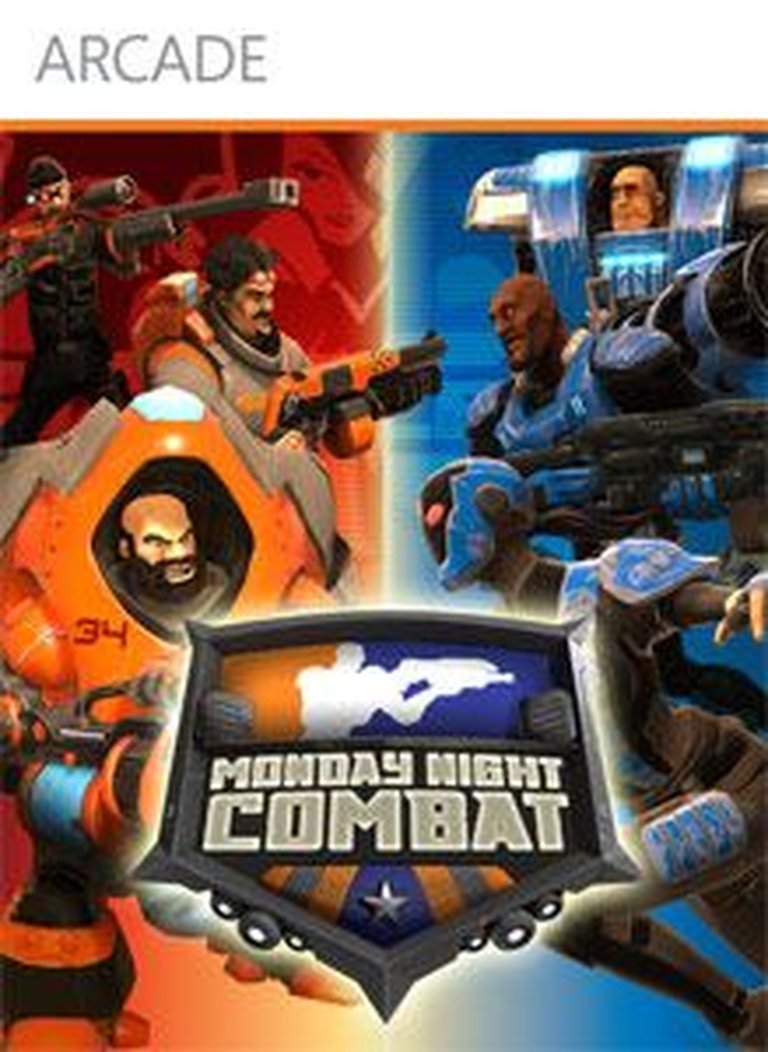
Monday Night Combat is a vibrant, futuristic third-person shooter where cloned soldiers compete in a high-energy team sport within enclosed arenas, complete with a live announcer and audience. Players assume specialized roles across six distinct classes—Assault, Tank, Personal, Assassin, Gunner, and Sniper—each with unique weapons and abilities, battling in two core modes: Blitz (cooperative wave defense) and Crossfire (objective-based team combat). Teams strategically manage in-game currency to purchase upgrades, deploy turrets, and activate skills while defending their Moneyball or breaching enemy defenses in fast-paced, arena-style matches.
Gameplay Videos
Where to Buy Monday Night Combat
PC
Monday Night Combat Cracks & Fixes
Monday Night Combat Mods
Monday Night Combat Guides & Walkthroughs
Monday Night Combat Reviews & Reception
metacritic.com (79/100): This is one of the best examples of downloadable content and how the digital experience can slingshot far past games sitting on store shelves.
calitreview.com (70/100): It’s wholly derivative, but doesn’t care; it’s too concerned with trying to provide a maximum of fun in a minimum of time while looking good doing it.
ign.com (80/100): Monday Night Combat doesn’t offer a large variety of modes or maps, but all of the content being offered is focused and fun.
steambase.io (79/100): Monday Night Combat has earned a Player Score of 79 / 100.
Monday Night Combat: Review
Introduction
In the pantheon of downloadable games that dared to defy convention, Monday Night Combat stands as a vibrant, if underappreciated, gem. Released in 2010 by indie studio Uber Entertainment, this third-person shooter blended tower defense mechanics with class-based combat, creating a unique hybrid that captivated a niche audience. At its core, Monday Night Combat was a bold experiment—a fusion of genres that, while not perfect, offered a refreshing departure from the tired tropes of mainstream shooters. This review will dissect the game’s development, narrative, gameplay, and legacy, ultimately arguing that Monday Night Combat deserves recognition as a visionary, if flawed, title that pushed the boundaries of multiplayer gaming.
Development History & Context
The Studio and Its Vision
Uber Entertainment, a small studio based in Kirkland, Washington, was founded by a group of veterans from established companies like Microsoft and Valve. Their goal was to create innovative, player-centric experiences that prioritized fun over formula. Monday Night Combat was their first major project, born from a desire to blend the strategic depth of tower defense games with the adrenaline of a third-person shooter. The team’s vision was to craft a game that felt like a futuristic sports spectacle, complete with over-the-top commentary and a cast of colorful characters.
Technological Constraints and the Gaming Landscape
The game was developed using the Unreal Engine 3, a powerful but demanding tool that allowed for vibrant visuals and dynamic gameplay. However, the engine’s complexity posed challenges, particularly for a small team working with limited resources. The gaming landscape in 2010 was dominated by blockbuster franchises like Call of Duty and Halo, which emphasized cinematic storytelling and polished production values. Monday Night Combat stood out by focusing on innovative mechanics and replayability, carving a niche in the crowded market of downloadable titles.
Narrative & Thematic Deep Dive
Plot and Setting
Monday Night Combat is set in a dystopian future where cloned soldiers, known as “Pros,” battle in a televised sport for cash, fame, and endorsements. The game’s world is a satirical take on corporate excess and the commodification of violence, with a darkly humorous tone that underscores the absurdity of its premise. The narrative is delivered through in-game announcer commentary, which adds a layer of meta-humor and keeps players engaged with the game’s lore.
Characters and Dialogue
The six playable classes—Assault, Tank, Personal, Assassin, Gunner, and Sniper—each have distinct personalities and backstories, adding depth to the gameplay. The Assault, for example, is a well-rounded character with a penchant for slapping bald men, while the Assassin is a stealthy, brooding figure who despises the consumerist society that created her. The dialogue is witty and self-aware, often breaking the fourth wall to comment on the game’s mechanics or the absurdity of its setting.
Themes
The game explores themes of identity, consumerism, and the dehumanizing effects of spectacle. The Pros are clones, their lives dictated by corporate overlords who profit from their battles. The announcer’s commentary frequently references the bleakness of their world, from food dispensed through government-issued tubes to a curfew enforced by a “President-for-life.” Despite its dark undertones, the game maintains a lighthearted tone, using humor to critique the society it portrays.
Gameplay Mechanics & Systems
Core Gameplay Loops
Monday Night Combat features two primary modes: Blitz and Crossfire. Blitz is a cooperative mode where players defend their Moneyball—a central structure—against waves of robots. Crossfire is a competitive mode where two teams of six players battle to destroy each other’s Moneyballs. Both modes emphasize strategic resource management, as players must balance spending money on upgrades, turrets, and abilities.
Combat and Character Progression
Each class has unique abilities and weapons, encouraging players to experiment with different playstyles. The Assault, for instance, excels at close-quarters combat with a shotgun and grenade launcher, while the Sniper is a long-range specialist with a sniper rifle and SMG. Players earn money by defeating enemies and destroying turrets, which can be spent on upgrades or defensive structures. The game’s progression system allows players to unlock custom classes and cosmetic items, adding depth to the gameplay.
UI and Innovative Systems
The user interface is clean and intuitive, with a minimalist HUD that keeps the focus on the action. One of the game’s most innovative features is its “Juice” system, which grants players temporary superpowers when their Juice meter is filled. This mechanic adds a layer of strategy, as players must decide when to use their Juice for maximum impact.
World-Building, Art & Sound
Setting and Atmosphere
The game’s futuristic arenas are vibrant and chaotic, filled with neon lights, holographic advertisements, and cheering crowds. The setting is a blend of retro-futurism and dystopian grit, creating a visually striking world that feels both familiar and alien. The arenas are designed to facilitate strategic gameplay, with elevated platforms, hazards, and chokepoints that encourage tactical play.
Visual Direction
The art style is cartoonish and exaggerated, with bright colors and stylized character designs. This aesthetic choice helps to differentiate the game from more serious shooters and reinforces its satirical tone. The character models are detailed and expressive, with animations that convey personality and emotion.
Sound Design
The soundtrack is a mix of electronic beats and orchestral swells, creating a dynamic audio landscape that complements the game’s frenetic pace. The announcer’s commentary is a standout feature, with witty, self-aware dialogue that adds depth to the game’s world. Sound effects are crisp and impactful, from the satisfying thunk of a sniper rifle to the explosive boom of a grenade.
Reception & Legacy
Critical and Commercial Reception
Monday Night Combat received generally positive reviews from critics, with an average score of 79 out of 100 on Metacritic. Reviewers praised the game’s innovative mechanics, vibrant art style, and humorous tone. The game sold over 307,000 copies on Xbox Live Arcade by the end of 2011, a respectable figure for an indie title. However, its commercial success was overshadowed by larger franchises, and it failed to achieve mainstream recognition.
Influence and Legacy
Despite its relatively short lifespan, Monday Night Combat left a lasting impact on the gaming industry. Its blend of tower defense and shooter mechanics influenced later games like Overwatch and Team Fortress 2, which also emphasize class-based combat and strategic gameplay. The game’s humor and self-awareness set a precedent for titles that use satire to critique gaming culture. While it may not be remembered as a classic, Monday Night Combat remains a testament to the power of innovation in game design.
Conclusion
Monday Night Combat was a bold experiment that pushed the boundaries of multiplayer gaming. Its unique blend of genres, vibrant art style, and humorous narrative created a memorable experience that stood out in a crowded market. While it may not have achieved the commercial success of its contemporaries, its influence can be seen in the games that followed. Monday Night Combat deserves recognition as a visionary title that dared to be different, and its legacy continues to inspire developers to think outside the box. In the annals of gaming history, it stands as a testament to the power of innovation and the enduring appeal of a well-crafted multiplayer experience.