
- Release Year: 1997
- Platforms: PlayStation, SEGA Saturn, Windows
- Publisher: KOEI Co., Ltd.
- Developer: KOEI Co., Ltd.
- Genre: Strategy, Tactics
- Perspective: Diagonal-down
- Game Mode: Single-player
- Gameplay: Business simulation, Managerial, Real-time simulation, Turn-based tactical battles
- Setting: Ancient, China, Chinese Song Dynasty, Historical events, Imperial
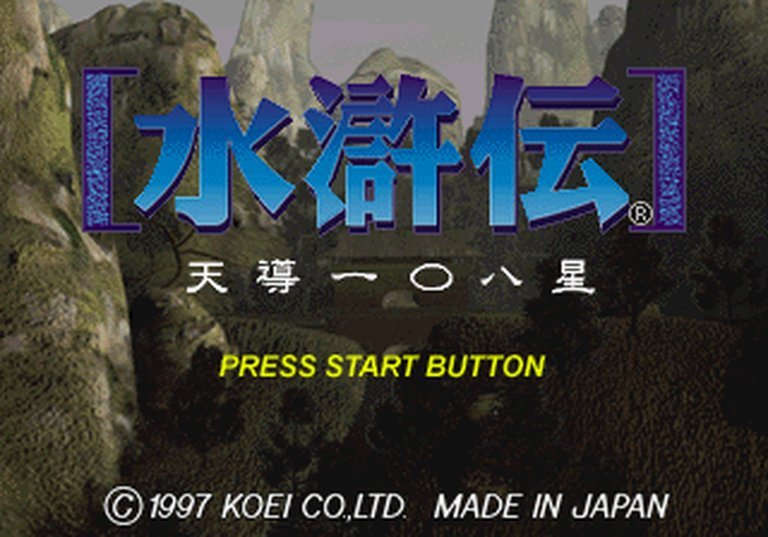
Description
Suikoden: Tendō 108-sei is a historical simulation game based on the classic Chinese novel Water Margin, set in 12th-century China. Players take the role of a warlord managing their stronghold in real-time while engaging in turn-based tactical battles against competing factions. The game features enhanced simulation mechanics, deep character development, and multiple scenarios to challenge the corrupt minister Gao Qiu.
Gameplay Videos
Suikoden: Tendō 108-sei Serial Keys
Suikoden: Tendō 108-sei Mods
Suikoden: Tendō 108-sei Reviews & Reception
gamefaqs.gamespot.com : Suikoden Tendou 108 Sei: the unjustly forgotten sequel to a little known gem.
Suikoden: Tendō 108-sei: Review
Introduction
Suikoden: Tendō 108-sei stands as a unique blend of strategy simulation and role-playing adventure set against the backdrop of ancient China. This lesser-known gem in the Suikoden series offers a rich tapestry of narrative depth, strategic gameplay mechanics, and a captivating world inspired by the classic Chinese novel Water Margin. As a sequel to Bandit Kings of Ancient China, it refines and expands upon the concepts introduced in its predecessor, delivering a gameplay experience that is both immersive and innovative for its time.
Development History & Context
Released in 1997 by KOEI Co., Ltd., Tendō 108-sei was developed for multiple platforms including Windows, Sega Saturn, and PlayStation. The vision behind the game sought to merge real-time managerial simulation with turn-based tactical combat, crafting an experience that would differentiate itself within the strategy-RPG genre.
Despite facing the technological constraints of late-90s hardware, the developers managed to create a visually stunning and mechanically rich world. Set against the backdrop of the Song Dynasty, the game’s setting reflected a period of Chinese history marked by political intrigue and military conflict, providing a fertile ground for the narrative.
The gaming landscape of the time was dominated by both real-time strategy games like Age of Empires and turn-based RPGs such as Final Fantasy, making Tendō 108-sei’s hybrid approach a bold yet underappreciated innovation. While KOEI was known for historical simulation games like Romance of the Three Kingdoms, this particular entry pushed the boundaries by integrating deeper character management and narrative storytelling into its gameplay loop.
Narrative & Thematic Deep Dive
The story of Tendō 108-sei is centered around a player-controlled warlord whose goal is to unite the 108 Stars of Destiny and challenge the corrupt minister Gao Qiu. The narrative delves into themes of loyalty, sacrifice, and the struggle against tyranny. Draws from Water Margin are evident in the characters and their relationships, each bringing unique skills and backstories to the unfolding tale.
Key themes explored throughout the game include:
1. Destiny & Free Will: The concept of the 108 Stars and their predestined roles versus the player’s agency in shaping their journey.
2. Political Intrigue: Navigating the complex web of alliances and betrayals within the imperial court.
3. Companionship & Brotherhood: Building a loyal band of followers who share the common goal of justice.
Character development is a core strength, with each of the 108 recruitable characters having distinct personalities, motivations, and skills. Their stories enrich the gameplay with emotional depth, and their interactions drive both the main narrative and side quests.
The plot is structured around multiple scenarios, each offering different starting conditions and challenges. This adds replayability as players can explore various paths and outcomes. The narrative is delivered through a mix of in-game events, dialogues, and cutscenes, effectively immersing players in the world of Tendō.
Gameplay Mechanics & Systems
Tendō 108-sei offers a robust gameplay experience that combines real-time management of the player’s stronghold with turn-based tactical battles. Here’s a breakdown of the core mechanics:
-
Base Building & Management:
- Real-time management of facilities such as farms, workshops, and training grounds.
- Resource management including food, funds, and materials.
- Upgrading facilities to unlock new capabilities and improve efficiency.
-
Character Recruitment & Classes:
- Recruiting up to 108 unique characters with varying classes (Artisans, Wizards, Doctors, etc.).
- Each character contributes to building facilities and executing tasks based on their class.
- Relationships between characters can influence their performance and loyalty.
-
Turn-Based Combat:
- Tactical battles with strategic deployment of units on grid-based maps.
- Class-based abilities and attributes affect combat effectiveness.
- Ransacking enemies’ facilities yields rewards and affects stamina.
-
Exploration & Interaction:
- Traversing the world map to interact with other factions, engage in trade, or initiate combat.
- Random events and scripted scenarios add depth to the world and provide surprises.
Innovative features such as the class system influencing facility construction and the ransack command add layers of strategy. The game encourages players to adapt to varying circumstances based on their recruits and the evolving political landscape.
World-Building, Art & Sound
The game’s isometric presentation and detailed 2D sprites transport players to a vibrant ancient Chinese world. Environments range from bustling cityscapes to serene landscapes, each beautifully rendered with attention to detail. Character designs are expressive and distinct, capturing the essence of their roles and personalities.
The sound design complements the visuals with a soundtrack that blends traditional Chinese instrumentation with modern symphonic elements. Battle themes are epic and motivating, while peaceful tracks soothe during downtime. Voice acting, though limited, is well done and adds to immersion.
Reception & Legacy
Upon release, Tendō 108-sei received mixed reviews, with some critics appreciating its deep strategy and narrative while others found the interface and pacing challenging. The lack of localization outside Japan limited its global reach. However, it has since garnered a cult following among Suikoden fans and strategy enthusiasts for its unique blend of genres and storytelling.
The game’s influence can be seen in subsequent KOEI strategy games and in the Suikoden series’s continued exploration of ensemble storytelling. Despite not achieving mainstream success, its legacy endures through fan dedications and its position as a quirky gem in the strategy-RPG genre.
Conclusion
Suikoden: Tendō 108-sei is a masterful fusion of strategy simulation and narrative-driven gameplay. Its rich world, deep mechanics, and compelling story make it a must-play for fans of the genre. While its obscurity may have prevented it from achieving wider recognition, it remains a cherished entry in the Suikoden saga and a testament to KOEI’s innovative spirit during the heyday of strategy gaming.