
- Release Year: 2023
- Platforms: PlayStation 4, PlayStation 5, Windows, Xbox One, Xbox Series
- Publisher: Dracma Studios
- Developer: Dracma Studios
- Genre: Action
- Perspective: Side view
- Game Mode: Single-player
- Gameplay: Hack and Slash, Platform
- Setting: Fantasy
- Average Score: 73/100
Description
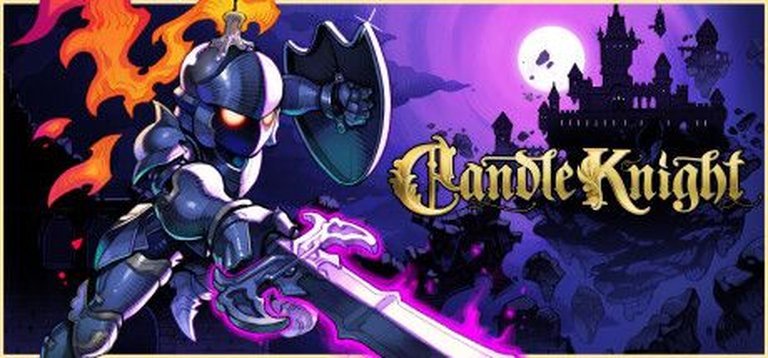
In the enchanting realm of Candle Knight, players embark on a daring adventure through richly detailed environments as a brave knight armed with a candle. Blending Metroidvania exploration with challenging Souls-like combat, the game offers dynamic level design, innovative fire-based mechanics, and an atmospheric score. Despite clunky controls and occasional physics issues, the knight’s quest is illuminated by stunning visuals, engaging puzzles, and a seductive musical backdrop, making it a must-play for those who enjoy a captivating challenge.
Gameplay Videos
Where to Buy Candle Knight
PC
Candle Knight Free Download
Candle Knight Cracks & Fixes
Candle Knight Patches & Updates
Candle Knight Mods
Candle Knight Guides & Walkthroughs
Candle Knight Reviews & Reception
ladiesgamers.com : Candle Knight is a solid game with some interesting ideas, but rough edges.
metacritic.com (70/100): Candle Knight will take you on a glorious journey, one complete with lovely visuals and rare cut scenes.
opencritic.com (80/100): Overall, Candle Knight by Dracma Studios is a great game that any platformer fan might want to check out.
devuego.lat (75/100): Candle Knight is a solid game with some interesting ideas. This is definitely a title that fits into the category of a diamond with some rough edges.
Candle Knight: Review
Introduction
In the shadowed corridors of contemporary game development, where behemoths and indies vie for player attention, Candle Knight emerges as a luminous, if flawed, ember. Developed by Mexican studio Dracma Studios and released in 2023, this 2.5D action-platformer tasks players with reigniting hope in a forsaken castle, wielding a candle’s flame against encroaching darkness. Its premise—a sentient candle-knight battling a gothic ruin—recalls the whimsy of Castle of Illusion fused with the stoic melancholy of Dark Souls. Yet, Candle Knight is more than a pastiche; it’s a bold experiment in adaptive difficulty and surreal world-building. This review dissects its place in gaming history, arguing that while its execution is hampered by technical and design inconsistencies, its core concepts and artistic vision carve a unique, albeit niche, legacy.
Development History & Context
Dracma Studios’ Vision and Origins
Founded in Mexico, Dracma Studios operated as a lean, passionate team of seven, guided by co-founder Mario Vallarta’s vision to blend “classic PlayStation side-scrollers” (Castle of Illusion) with “soulsborne mechanics” (Dark Souls, Elden Ring). Their goal was not to reinvent the wheel but to infuse the Metroidvania genre with organic risk-reward through the “Ignis” system—a dynamic difficulty tied to the player’s flame. This ambition was ambitious but constrained by indie realities: a custom engine, limited resources, and a compressed timeline. As Vallarta noted in a 2023 interview, the team aimed to create “a beautiful action platformer that burns a little too brightly,” a nod to both its aesthetic and technical instability.
Technological Constraints and Gaming Landscape
Released during the indie boom of the early 2020s, Candle Knight entered a saturated market dominated by polished Metroidvanias like Hollow Knight and Ori. Its 2.5D perspective—handcrafted 3D models on 2D planes—was a stylistic choice to evoke Saturn-era classics like Clockwork Knight, yet it highlighted limitations: poor optimization (e.g., RTX 2060 overheating) and jank physics. The game’s launch on Steam (May 2023) preceded console ports (2024), capitalizing on PC’s indie-friendly ecosystem but exposing it to harsh scrutiny. Dracma’s Mexican roots also positioned it as part of a burgeoning Latin American indie scene, bolstered by its Nordic Game Discovery Contest win, signaling promise amid industry pressures.
Narrative & Thematic Deep Dive
Minimalism and Symbolism
Candle Knight embraces narrative austerity, eschewing exposition for environmental storytelling. Players assume the role of an anthropomorphic candle—a literal “light-bringer”—on a quest to restore illumination to a decaying castle. The plot is a fable: darkness consumes the realm, and the knight’s flame symbolizes hope, but its escalating heat (via the Ignis system) risks destruction, a duality underscored by the game’s tagline: “Does your flame represent hope, or will it bring nothing but destruction?” Dialogue is sparse, confined to cryptic NPC interactions (e.g., a witty merchant offering upgrades) and boss encounters, leaving lore to be inferred from crumbling architecture and shadowy enemies.
Character and Thematic Resonance
The knight is a vessel for player identity, its flame a metaphor for perseverance. Enemies—corrupted knights, shadowy beasts—represent the castle’s fallen inhabitants, their designs hinting at tragedy through decaying armor and malformed silhouettes. Themes of decay and rebirth permeate: libraries with books as platforms, armories frozen in time, and paintings serving as liminal spaces between reality and imagination. The merchant, a recurring figure, embodies commerce’s role in survival, his quips (“Gold buys light, light buys life”) contrasting the castle’s grimness. While the narrative lacks depth, its symbolism—light as both tool and liability—elevates the game beyond a simple hack-and-slash.
Gameplay Mechanics & Systems
The Ignis System: Adaptive Difficulty
The heart of Candle Knight is its Ignis system, where the knight’s flame cycles through three states: yellow (balanced), orange (high attack/defense), and red (high attack/low defense). Attacking enemies or unlit candles fuels this flame, rewarding aggression but punishing recklessness. Blocking consumes two Ignis bars, while a “cool-down” mechanic allows deliberate difficulty reduction. This creates a tense risk-reward loop: a red-flame knight deals devastating damage but crumbles to enemy strikes, while yellow favors caution. However, the system feels underdeveloped—flame levels shift abruptly, and blocking is often impractical (e.g., unblockable boss attacks), making the mechanic feel punitive rather than strategic.
Combat and Platforming
Combat is a serviceable hack-and-slash: sword attacks have weight, shield blocking is functional but clunky, and projectiles/dashes unlock later. Boss battles are uneven—some (e.g., a serpentine foe) feel uninspired, while others leverage the castle’s architecture. Platforming, however, is the game’s Achilles’ heel. Movement is floaty, with wall-jumps and dashes lacking precision. Traps like spike pits are exacerbated by Ignis: a red-flame knight takes extra environmental damage, turning navigation into a chore. The absence of a map exacerbates disorientation, forcing players to rely on memory and visual cues—a cardinal sin in Metroidvanias. Abilities like double-jumps and dashes unlock post-boss, but backtracking without waypoints often devolves into aimless wandering.
UI and Progression
The UI is minimalistic, with a clean overlay for health, Ignis, and currency (gold). Upgrades—sword/shield enhancements and health-boosting armor—are purchased from the merchant, but their visual changes are minor. Collectibles (hidden chests, armor pieces) offer little incentive beyond completionism, as many chests are empty or contain trivial rewards. The painting mechanic—teleporting to surreal, puzzle-filled realms—is a highlight, offering respite from the castle’s gloom and introducing 3D puzzles, but its underutilization feels like a missed opportunity.
World-Building, Art & Sound
Gothic Surrealism and Environmental Storytelling
The castle is a character unto itself, a labyrinth of interconnected zones: libraries (books as platforms), armories (rusted traps), and balconies (vertigo-inducing drops). Its art style blends Castlevania-inspired gothic grandeur with Little Nightmares-esque grotesquerie. Lighting is paramount: the knight’s flame casts dynamic shadows, while unlit corridors shroud secrets in ambiguity. “Breathtaking vistas” (per Steam’s description) are achieved through detailed textures—stone walls, cracked tapestries—and painterly depth, even in 2.5D. Paintings are standout set pieces, shifting to a canvas-textured, top-down perspective for puzzles, evoking surrealist art.
Sound Design and Atmosphere
The soundtrack, described as “Elfman-inspired” (Danny Elfman’s work with Tim Burton), mixes melancholic piano with orchestral crescendos during boss battles. It complements the castle’s mood: soothing during exploration, tense in combat. Sound effects—sword swishes, flame hisses, enemy growls—are crisp but unremarkable. Voice acting is limited to NPCs, with the merchant’s witty lines providing rare levity. The audio-visual synergy is strongest when the knight’s flame flickers against dark backdrops, creating an atmosphere of fragile hope in a decaying world.
Reception & Legacy
Critical Consensus and Player Feedback
Upon release, Candle Knight received mixed-to-average reviews. Critics praised its art style and Ignis system: Way Too Many Games lauded its “outstanding graphics” and “bizarre, charming world,” while Gert Lush Gaming noted its “Souls sense of danger.” However, common criticisms plagued it: GameCritics.com deemed it “impossible to recommend” due to “hollow” story and “sapped” gameplay, and Metacritic aggregated a 59% score (based on 7 reviews). Players echoed these sentiments, citing floaty controls and the lack of a map as dealbreakers. Steam’s user reviews sit at a “Mixed” 67%, with praise for atmosphere balanced by complaints about technical jank.
Commercial Performance and Longevity
Commercially, Candle Knight was a modest success, peaking at #6,614 on Steam’s action charts (per MobyGames). Its $5.99 price point (during sales) and console ports expanded its reach, but it failed to achieve breakout status. Its legacy lies in its niche appeal: for Metroidvania enthusiasts, the Ignis system and painting mechanics offer fresh ideas, while its Mexican roots highlight underrepresented voices in gaming. Dracma Studios’ post-launch patches addressed some issues (e.g., collision tweaks), but the game remains a cult curiosity—a “diamond with rough edges” (LadiesGamers.com) rather than a genre benchmark.
Conclusion
Candle Knight is a testament to ambition over polish. Its core tenets—a dynamic flame system, surreal painting worlds, and gothic atmosphere—elevate it above generic indies, yet technical flaws and design oversights (no map, clunky controls) prevent it from reaching its potential. As a Metroidvania, it innovates little but delivers a distinct, if uneven, experience. For genre fans seeking a challenge with a unique risk-reward hook, it’s a worthy, if frustrating, journey. Historically, it stands as a footnote—a promising indie that burned brightly but briefly. In the ever-evolving landscape of action-platformers, Candle Knight reminds us that even flawed embers can illuminate bold ideas. Final Verdict: A flawed but fascinating flicker in the dark, worth kindling for patient adventurers.