
- Release Year: 2018
- Platforms: Nintendo Switch, PlayStation 4, Windows, Xbox One
- Publisher: Drageus Games S.A., Flying Islands Team, Xitilon
- Developer: Flying Islands Team
- Genre: Action
- Perspective: Side view
- Game Mode: Single-player
- Gameplay: Platform, Puzzle elements, RPG elements
- Setting: Fantasy
- Average Score: 56/100
Description
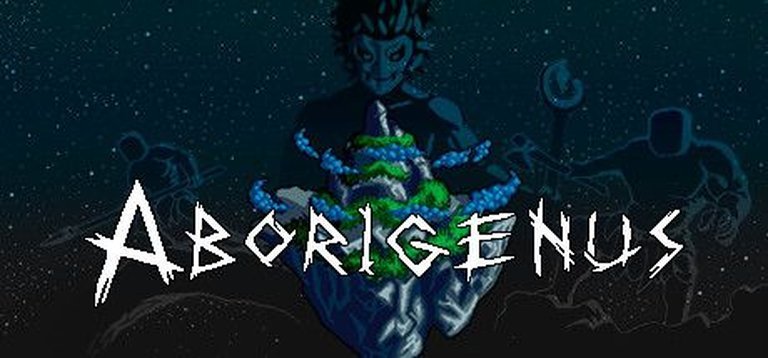
Aborigenus is a fantasy action-platformer that combines RPG and puzzle elements. The game stands out with its beautiful pixel-art cutscenes and artistic direction, offering a short but immersive narrative experience. However, its minimal gameplay mechanics, including basic platforming and combat, might leave players wanting more. Reviews highlighted the game’s strong visual presentation but wished for deeper gameplay.
Where to Buy Aborigenus
PC
Aborigenus Reviews & Reception
metacritic.com (30/100): Aborigenus on Xbox One feels like an idea that was good inside the developer’s head, but a sloppy mess when put to paper.
opencritic.com (61/100): This is just one of those titles where I’m not certain what to say in many regards…
Aborigenus Cheats & Codes
Nintendo Switch (Switch) – Atmosphere / EdiZon / SXOS
Load the following memory edits into a custom payload or homebrew memory editor (for example, using the Atmosphere/EdiZon memory editor).
| Code | Effect |
|---|---|
| 580F0000 00B2C698 580F1000 00000058 580F1000 00000010 580F1000 000001B0 780F0000 00000014 640F0000 00000000 43000000 |
Grants infinite health. |
| 80000001 580F0000 00B3A6E8 580F1000 00000430 580F1000 00000068 580F1000 00000010 780F0000 0000010C 640F0000 00000000 C1300000 20000000 |
Enables a high jump (moon jump). |
Aborigenus: A Primal Struggle for Recognition in the Indie Wilderness
Introduction
In the vast and ever-expanding ecosystem of indie gaming, certain titles emerge with the potential to redefine genre boundaries or deliver transcendent experiences. Aborigenus, developed by the diminutive Flying Islands Team and released in 2018, represents a different possibility—a game whose very existence embodies the precarious balance between creative ambition and practical execution. While superficially positioned as a primal action-platformer with RPG elements, Aborigenus actually serves as a fascinating case study in the limitations faced by solo developers working with minimal resources. Its journey—from a Steam Greenlight hopeful to a multi-platform release with dwindling critical enthusiasm—mirrors the broader challenges confronting indie developers in an increasingly saturated market. This review will analyze Aborigenus not merely as a gameplay experience but as a cultural artifact reflecting the constraints, compromises, and occasional triumphs of independent game development in the late 2010s.
Development History & Context
Aborigenus emerged from the collaborative efforts of the Flying Islands Team, a development group whose composition and background remain largely obscure. According to MobyGames credits, the studio consisted of just two core developers—Durbek Nuritdinov (credited for both coding and art) and sound composer Alexandr Zhelanov—with nine additional contributors receiving special thanks. This extremely lean structure immediately explains many of the game’s mechanical and aesthetic limitations.
The project utilized GameMaker, the engine that has democratized game development for countless indie creators since the 1990s. Its choice reflects both the studio’s technical capabilities and their creative priorities; GameMaker’s accessibility allows for rapid prototyping but imposes constraints on assets, animation complexity, and potentially code optimization. The studio’s reliance on external collaborators (as evidenced by the special thanks list) suggests they attempted to compensate for limited internal expertise in areas where they lacked capacity.
Aborigenus’ release timeline reveals a pattern common to indie developers navigating platform distribution: initial launch on PC (October 2018), followed by staggered releases across Nintendo Switch (2019), Xbox One (2019), and PlayStation 4 (2021). This approach allowed the team to address technical challenges specific to each platform while building momentum across systems. The game’s presence on Steam Greenlight indicates it passed community voting thresholds before release, suggesting some initial fan interest. However, its commercial performance was modest, with reports of $0.79 pricing during sales and minimal marketing presence.
The game existed within a crowded indie landscape where platformers like Cuphead (2017), Celeste (2018), and Hollow Knight (2017) had set exceptionally high standards for both visual design and gameplay refinement. Aborigenus operated in their stylistic shadow, lacking comparable polish or innovation while attempting similar genre conventions.
Narrative & Thematic Deep Dive
At its core, Aborigenus presents a remarkably straightforward narrative arc, compressed into what one reviewer described as “a short story (around a half hour) that you just so happen to get to play.” The story follows a warrior from a peaceful tribe whose community has been enslaved by invaders. After the clan’s best fighters were dispatched to rescue their people but failed to return, the protagonist assumes the role of last hope. The narrative offers character selection between shaman, warrior, or hunter—a superficial layer of customization that doesn’t meaningfully affect story progression.
Thematic exploration remains disappointingly shallow. While the premise suggests potential for examining themes of tribal loyalty, cultural survival, and resistance against oppression, the execution reduces these concepts to transactional gameplay elements. The invaders serve primarily as obstacles rather than meaningful antagonists with identifiable motivations. Similarly, the “divine landscapes” and “unique enemies” mentioned in promotional materials rarely transcend generic fantasy tropes.
The game’s pseudo-RPG elements, particularly the “flexible perks system,” appear to exist more as checkboxes to satisfy genre conventions than as platforms for meaningful narrative expression. Abilities learned during gameplay—which include both combat techniques and environmental interactions—function mechanically without establishing emotional resonance or advancing thematic concerns. When a reviewer described the health system as “unclear” and potentially “a glitch,” this technical deficiency further undermines any thematic immersion.
The narrative’s most memorable moment, according to player guides, involves “chicken riding”—a playful mechanic that ironically represents the game’s most distinctive innovation. While this feature demonstrates creative potential, its isolation from the broader narrative context reinforces Aborigenus’ fundamental disconnect between its conceptual ambitions and execution.
Gameplay Mechanics & Systems
Aborigenus’ gameplay combines platforming, light stealth elements, and minimal RPG progression, creating a hybrid experience that ultimately satisfies none of these expectations. The platforming mechanics—the core of the experience—suffer from imprecise controls and poorly calibrated difficulty. Reviewers consistently noted the basic nature of these mechanics, with one describing them as “bare-bones and minimal” while another called them “downright uninspired, bland and boring.”
Combat systems similarly exhibit significant shortcomings. Players begin with a spear that functions as a basic attack, but enemies (including chickens) demonstrate excessive durability, requiring multiple attacks to defeat. Enemy AI displays predictable patterns that quickly become monotonous. The stealth mechanics, described by one reviewer as “enough to startle Solid Snake,” consist primarily of crouching and approaching enemies from behind—mechanics that offer minimal strategic depth and often feel more like work than gameplay.
The RPG elements manifest primarily as skill trees for attack, health, and other improvements. These mechanics suffer from the same pacing issues as the platforming: upgrades become available “so thick and fast that it’s hard to truly appreciate any sense of progression,” effectively preventing meaningful development. The health system’s opacity, with a bar that “never seemed to go down or represent any of my abilities,” suggests either poor design or bugs that undermine player agency.
Technical implementation reveals further issues. Despite being built in GameMaker (which generally handles well), the game exhibits performance issues and bugs that detract from experience. The “barebones approach to that system that could have been implemented” extends beyond gameplay to basic interface design, loading times, and asset presentation. The game’s short length—approximately 30 minutes according to one review—further compounds these deficiencies, as players have little time to develop skills or appreciate subtle systems.
World-Building, Art & Sound
Aborigenus’ world-building remains curiously undeveloped, with environments described as “removed of character” and lacking sufficient variety to sustain engagement. The “flying islands” setting promised in promotional materials never materializes into a fully realized environment, instead functioning as a backdrop for generic platforming challenges. Enemy design suffers from similar limitations, with creatures lacking distinct personalities or meaningful ecological roles beyond serving as obstacles.
Visually, the game employs pixel art that reviewers described as “beautifully crafted pixel art cut scenes do very well to bolster the overall presentation.” This praise suggests that cutscenes represent the game’s strongest artistic achievement, using carefully composed visuals to communicate narrative moments effectively. However, this strength doesn’t extend to gameplay assets, where characters and environments remain generic and repetitive.
Sound design presents another mixed picture. Alexandr Zhelanov’s composition receives no specific praise in critical reviews, but one mention of “great soundtrack” in user tags suggests some memorable musical elements. Sound effects appear functional but unremarkable. The disconnect between promotional materials highlighting “divine landscapes” and actual implementation reflects a broader pattern of unfulfilled potential throughout the experience.
Atmosphere suffers from the game’s short duration and mechanical limitations. While the setting offers promising thematic elements—primal world, peaceful tribe, invading forces—the execution fails to establish emotional resonance. The “atmospheric” user tag suggests some success in this domain, but this achievement remains isolated rather than integral to the overall experience.
Reception & Legacy
Aborigenus’ reception demonstrates the challenges indie developers face in acquiring meaningful critical attention. At launch, the game received seven critic reviews with an average score of 38% from respected outlets including SwitchRPG, Gaming Boulevard, and TheXboxHub. These reviews consistently highlighted the game’s brevity, simplistic mechanics, and lack of engaging content. TheXboxHub’s scathing assessment—”feels like an idea that was good inside the developer’s head, but a sloppy mess when put to paper”—summarized the critical consensus.
Player reception proved even more critical, with an average score of 2.1 out of 5 stars across three player reviews. The disconnect between enthusiast expectations and actual experience suggested that Aborigenus failed to engage its target audience beyond the most casual players. One Steam user noted the game’s “flexible perks system” positively, while another described it as “poorly-implemented” and “nothing worth wasting your time on.”
Commercial performance remained modest, with the game frequently discounted to $0.79-1.99 despite its $3.99 MSRP. It never appeared on major sales charts or generated significant buzz within the gaming community. While the creators’ small team structure may have limited marketing budgets, Aborigenus lacked both the viral potential of surprise hits and the development polish of games that build lasting critical legacies.
The game’s legacy remains negligible within the broader gaming landscape. Unlike contemporaries such as Hollow Knight or Cuphead, Aborigenus failed to inspire sequels, spiritual successors, or significant community engagement beyond basic player counts and Steam achievements. The Flying Islands Team’s subsequent projects—primarily Pixel Gladiator and MobyGames appearances—suggest continued development but without notable commercial or critical success.
Within the historical context of indie development, Aborigenus represents a cautionary tale about the challenges of balancing creative ambition with technical execution. Its journey from Steam Greenlight to multi-platform release documents the difficulties small teams face in competing within an increasingly sophisticated market.
Conclusion
Aborigenus occupies a peculiar position within video game history—a game that is simultaneously a testament to the accessibility of modern game development tools and a demonstration of the high bar indie creators must clear to achieve meaningful success. While Durbek Nuritdinov and Alexandr Zhelanov showcase technical competence through their work on coding, art, and music, their project ultimately fails to transcend its developmental limitations.
The game’s most significant achievement—the creation of a functional, albeit simple, platformer with RPG elements—comes at the cost of meaningful innovation or memorable experience. Aborigenus answers a fundamental question of indie development: it demonstrates that with sufficient determination and basic technical skills, one can create a playable game. However, it also illustrates that accessibility alone doesn’t guarantee quality, engagement, or lasting impact.
In evaluating Aborigenus’ place in video game history, one must recognize it as part of the essential ecosystem of experimental and accessible game development that has democratized creation over the past two decades. While it won’t appear on lists of greatest games, Aborigenus represents the countless independent projects that form the foundation upon which more successful works stand. Its existence proves that platforms like Steam Greenlight and GameMaker Studio have succeeded in their mission of broadening access.
Ultimately, Aborigenus serves as both a representative artifact of indie development’s promise and limitations. It deserves recognition for its creators’ perseverance but should not be confused with the transformative works that define gaming history. As a case study, it offers valuable lessons about the balance between ambition and execution that will continue to inform indie development for years to come.